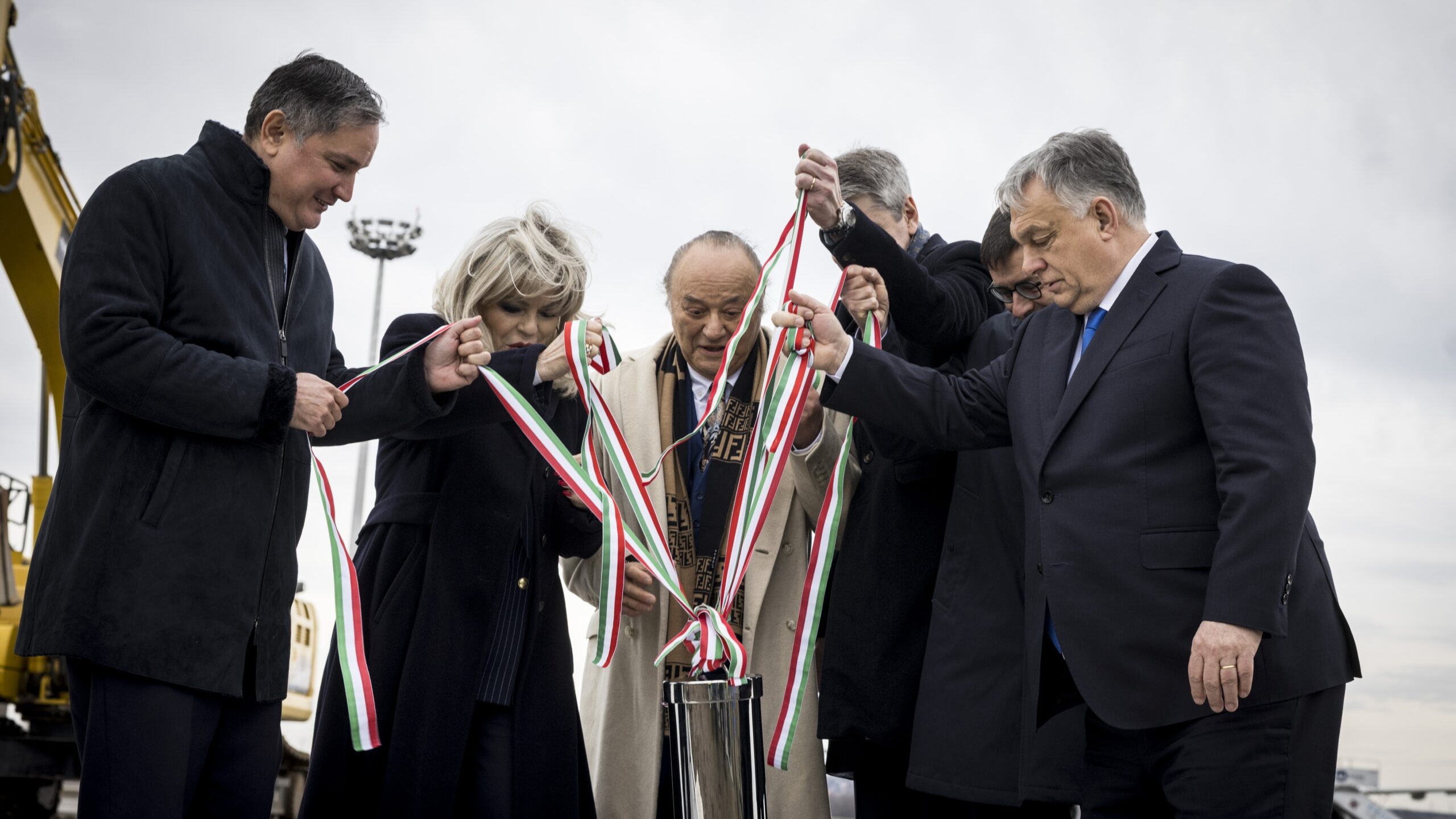
After returning from a 38-hour trip to the United States, Viktor Orbán delivered a speech at Liszt Ferenc International Airport during the foundation-stone ceremony of the airport’s new terminal, outlining major development plans and emphasizing the importance of keeping strategic investments in Hungarian hands.
The prime minister said that as long as Hungary has a national government, the country’s airport and several other strategic assets will remain under Hungarian ownership and generate benefits for Hungarian citizens. ‘This flight departs from Budapest and does not require a transfer in Brussels,’ he said, referring to Hungary’s independent economic path.
Speaking at the ceremony marking the construction of Terminal 3, the prime minister recalled the agreement through which the Hungarian state regained ownership of the country’s largest airport in cooperation with the French infrastructure company Vinci. According to him, this deal was the most significant agreement he had concluded on behalf of the Hungarian government.
Orbán said the arrangement allowed Hungary to avoid the trap of managing airport operations without the necessary expertise, while ensuring that the airport’s value would be preserved and expanded and that professional services could continue to be provided.
He stressed that beyond investments, ownership structures and development plans, the airport’s success ultimately depends on the work of the people employed there. The prime minister highlighted the importance of skilled workers in Hungary’s production and service sectors, saying that without them, the country would not have such an airport.
Orbán also described the cooperation with Vinci as more than a standard investor relationship, saying Hungary had welcomed the company as a partner. He noted that Hungarians tend to be cautious about whom they allow into strategic sectors, but once accepted, partners are treated as part of the national community.
‘The prime minister highlighted the importance of skilled workers in Hungary’s production and service sectors, saying that without them, the country would not have such an airport’
He also recalled that a previous government had sold the airport to a foreign investor group focused mainly on short-term profit. Those investors, he said, were satisfied with maintaining an airport of moderate size and international significance. Hungary, however, aims to develop a world-class airport that grows rapidly and becomes a meeting point for the region.
According to Orbán, the number of tourists arriving in Hungary has increased by one and a half times since 2020, while tourism spending reached a record level in 2024. He added that Hungary had long worked to regain ownership of the airport and eventually found a suitable French partner to achieve that goal.
He outlined that two key development projects are already under way. One involves a concession tender for a railway line linking the airport with Nyugati pályaudvar, while the construction of the new terminal is also beginning. The terminal alone will cost about one billion euros and is expected to become the largest airport development project of its kind in Central Europe.
If plans proceed as scheduled, Hungary could become the region’s leading commercial and tourism hub by the end of the decade, Orbán Viktor said. However, he warned that the biggest risk to economic development is the ongoing war in the region, which he said has negative effects on the economy and tourism.
He emphasized that Hungary must stay out of the conflict and urged voters to consider carefully how they want the country to move forward after April. According to the prime minister, maintaining national control over key strategic assets is crucial for the country’s future.
Related articles:
At a time when public debate is increasingly polarized and superficial, Hungarian Conservative remains committed to depth, intellectual honesty, and independent conservative thought.
Producing high-quality journalism requires resources. Your contribution helps us expand our coverage, reach new audiences, and keep our content accessible.

Please consider supporting our mission.