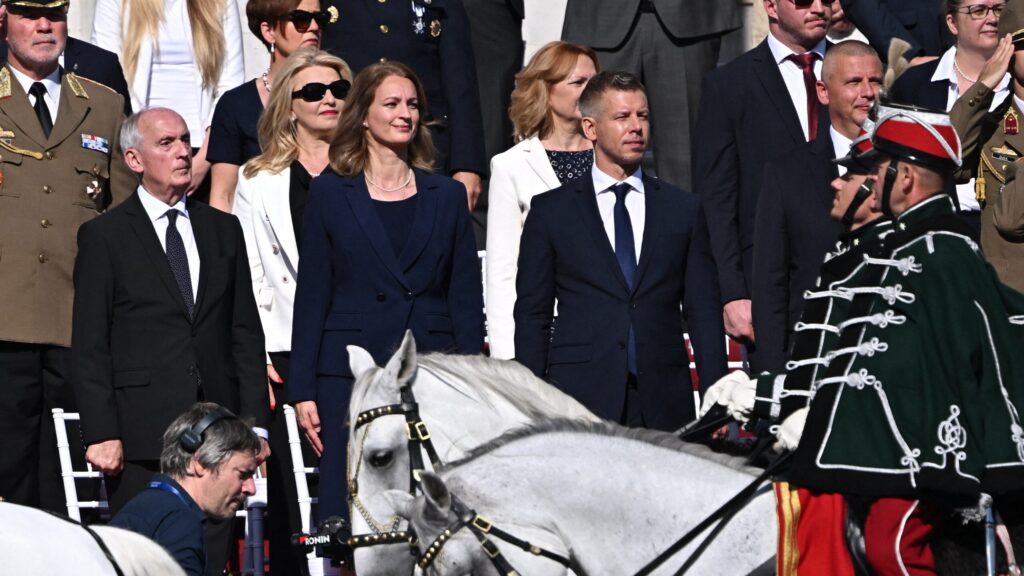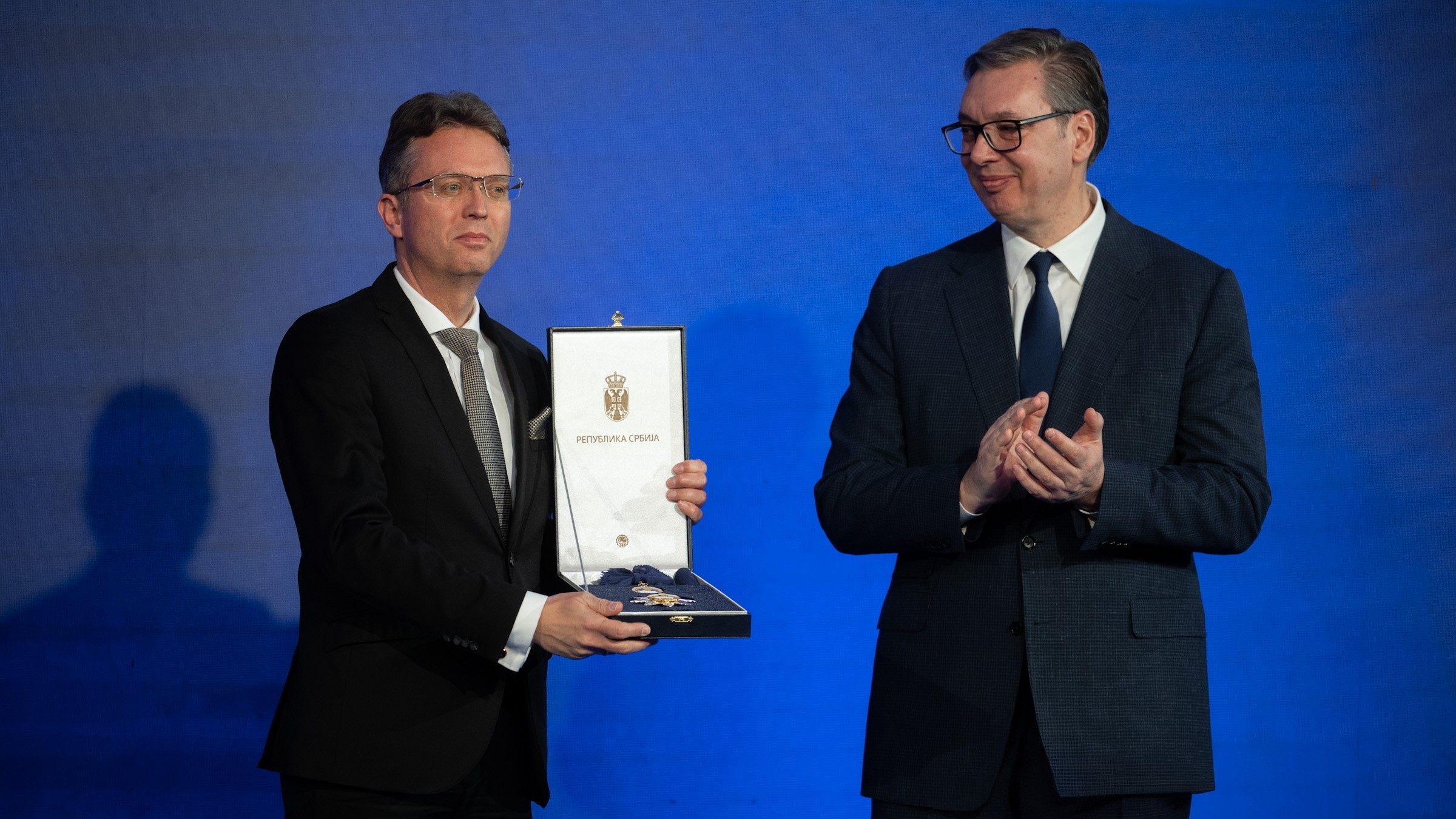
Cooperation between Hungary and Serbia extends well beyond economic relations and is strengthened by what both governments describe as patriotic Christian leadership, Minister for Culture and Innovation Balázs Hankó said on Wednesday.
Hankó spoke on TV2’s Mokka programme after receiving the Order of the Serbian Flag, First Class, from Serbian President Aleksandar Vučić on Monday. He said the partnership between the two countries was reinforced by shared values and contributed to a stronger Europe through strong nations.
As an example, he cited the Hungarian–Serbian cultural season launched last autumn, featuring events almost every second day. Among the highlights are concerts by singer Magdi Rúzsa across Serbia, including in Vojvodina, while numerous programmes are also being organized for the Serbian community living in Hungary.
The cultural season also includes gastronomy events and several trumpet festivals. Hankó said the Budapest–Belgrade railway line would also be filled with cultural content at the start of operations.
He added that family policy cooperation between the two countries was also strong, as both stand up for families based on what he called the order of the created world. Serbia’s family support system incorporates several elements similar to Hungary’s, he said, and the two countries have also established a joint innovation fund.
Hankó noted that the close relationship between Serbia and Hungary was also due to the late István Pásztor, former head of the Alliance of Vojvodina Hungarians, as well as to the leaders of the two countries.
During the programme, the minister also spoke about the initiative titled ‘Do Not Look Away, Let Us Pay Attention to Each Other’, which aims to promote safer entertainment for young people. The initiative was launched by the Ministry of Culture and Innovation in cooperation with the National Ambulance Service and the Bethesda Children’s Hospital, following an approach by the For Our Families Foundation.
Hankó said parents also need education on the issue, as leisure habits have changed compared with previous generations. Teachers will also receive briefings on the risks young people may face.
He added that young people themselves must be reached and made aware of potential dangers, with the goal of encouraging them to look out for and protect one another when they go out.
Related articles:
At a time when public debate is increasingly polarized and superficial, Hungarian Conservative remains committed to depth, intellectual honesty, and independent conservative thought.
Producing high-quality journalism requires resources. Your contribution helps us expand our coverage, reach new audiences, and keep our content accessible.

Please consider supporting our mission.