This article was originally published in Vol. 5 No. 3 of our print edition.
Russell Kirk’s magnum opus, The Conservative Mind, starts with an insult to conservatives: ‘The Stupid Party’.1 Of course, this insult towards conservatives was not made by Kirk himself, but by the nineteenth-century liberal-cum-socialist John Stuart Mill. Conservatives who have been fighting in the battle of ideas have been fighting with this millstone around their necks. The claim is as follows: conservatives are indeed stupid and lack intellectual curiosity, and the progressives, be they liberals or socialists (or both if you are J. S. Mill), have the intellectual firepower on their side.
Kirk’s riposte to Mill is that ‘like certain other summary dicta which nineteenth-century liberals thought to be forever triumphant, his judgment needs review’.2 Indeed, I view The Conservative Mind as a book-length refutation of that very insult by Mill. The book is also a refutation of the assumption that the rootless, secular progressives have the intellectual upper hand. On the contrary, they are the agents of detrimental socio-cultural and institutional change in our societies and should be coherently opposed, as Kirk so skilfully does. Fourteen years before the publication of Kirk’s book, Michael Oakeshott noted that the political philosophy ‘broadly to be called Liberalism’ had become ‘intellectually boring’.3
Other than being intellectually boring, why does Kirk see Mill’s dicta as needing review? The reason is that we live in an ‘age of disintegrating liberal and radical philosophies’.4 Indeed, the liberals and the radicals do not have the intellectual edge at all—on the contrary, their philosophy is faddish, shallow, and hollow, and is in fact disintegrating. Thus, the world we live in, according to Kirk, is ‘a world that damns tradition, exalts equality, and welcomes change’. Kirk adds that it is ‘a world that has clutched at Rousseau, swallowed him whole, and demanded prophets yet more radical’. This world has been ‘crippled by war’ and is ‘trembling between the colossi of East and West’. Thus, our age is ‘peering over a smashed barricade into the gulf of dissolution’.5 If you go to some of the big cities in the United States, such as Chicago, or to Birmingham, England, you will see some of this dissolution firsthand. Nevertheless, Kirk wrote this 70 years ago. He points out that this ‘is the society Burke foretold’. Smashing the barricades will not lead to a new paradise here on Earth, though it ‘may make a hell’.6
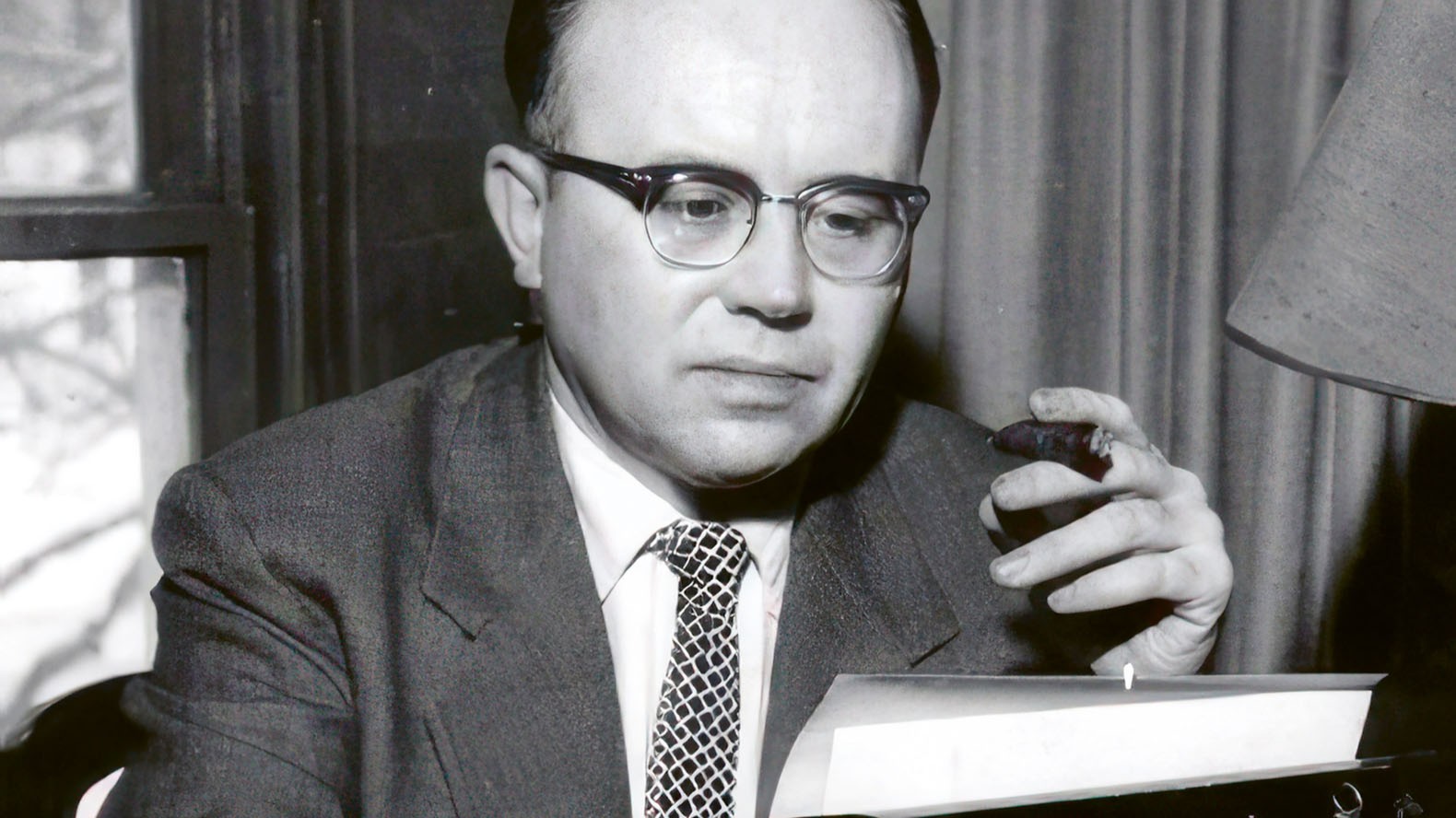
Kirk studied at Michigan State College (now University), Duke University, and then at the University of St Andrews. He published 32 books, with The Conservative Mind his second and most famous non-fiction book. The Conservative Mind is now 72 years old and is a ‘fat’ book, to use a term that Kirk himself used to describe long and thick books. It has been through seven editions from 1953 to 1986 (but there has not been a radical change in the content of the editions). The book still has tremendous explanatory power, or, to put it in a more Kirkean way, The Conservative Mind has the power of imagination. The Conservative Mind demonstrates distinctly and with clarity that conservatives do have the power of imagination. This was the most pleasing aspect of the book for me.
It is wonderful to see The Conservative Mind published in Hungarian 31 years after Dr Kirk’s death in 1994.7 Translating the Hungarian title back to English, the Hungarian version has been called A konzervatív eszme – Történelmi útmutató a józan észhez (The Conservative Idea: A Historical Guide to Common Sense). This provides us with a juncture to step back a moment. The Conservative Mind has an interesting antecedence. Kirk had the idea for such a book when he was lecturing at Michigan State College in East Lansing, Michigan. He noted the lack of a book on American conservative thought and ‘began thinking of preparing an anthology’, which at the time Kirk thought about calling The Tory’s Home Companion. This anthology did not materialize, as Kirk went to study at the University of St Andrews in the United Kingdom. His original intention was to write his doctorate on Edmund Burke, which then expanded to include what Kirk called ‘a book about Burke and his followers and his long tradition of thought both in America and Britain’.8 This became The Conservative Mind, in which Burke is still paramount.
The first edition carried the subtitle ‘From Burke to Santayana’, yet this subtitle was dropped for the UK edition of the book, and it was published without a subtitle. Why was it published without its subtitle in the UK? T. S. Eliot purchased the book through the publishing house Faber and Faber. Eliot said to Henry Regnery, the American publisher, that Santayana was not of sufficient stature to be included in the subtitle alongside Burke, so the subtitle was dropped. For further editions of the book, the subtitle ran From Burke to Eliot. This change was made without Eliot’s knowledge.
‘Kirk’s great achievement stemming from the book and other projects is to have provided conservatives in the United States with much-needed coherence’
More importantly, the main title of the book was changed from the original doctoral dissertation title, The Conservatives’ Rout: An Account of Conservative Ideas from Burke to Santayana. This, to my mind, was a fundamental change and of paramount importance for the success of the book. Note that the new Hungarian version has the word ‘idea’ in the title. In the first chapter, called ‘The Idea of Conservatism’, Kirk makes two key points: (1) that the book is about conservative thought [emphasis in the original]; and (2) that ‘by and large radical thinkers have won the day’ while conservatives have ‘yielded ground in a manner…that must be described as a rout’.9 As the Kirk biographer Bradley J. Birzer has put it, ‘the story itself was the essence of decay’10 from the high water mark of Burke. I argue that the change in title has meant that the influence and focus of the book has been on conservative thought and the intellectual conservative tradition, rather than on the rout of conservatism. The title, I suggest, inclines the reader towards the examination of the conservative mind and consequently conservative thought becomes the protagonist in the story and the rout becomes a supporting actor. Perhaps, if readers had been nudged towards considering the defeat of conservatives, it may not have had the same intellectual purchase that it has had and continues to have. I must admit when I first read Kirk’s The Conservative Mind many years ago, the power of the imagination in all those men that Kirk called forth, in his ‘prolonged essay in definition’, was the most intellectually transformative and stimulating read. It struck a chord deep in my soul.
Who are the protagonists in the story? The Conservative Mind is ‘limited to British and American thinkers who have stood by tradition and old establishments’,11 plus the Frenchman Alexis de Tocqueville. Kirk calls to our attention 26 individuals and multiple concepts, such as Burke and the Politics of Prescription; John Adams and Liberty under Law; and Romantics and Sir Walter Scott. Other thinkers covered in the book include John Randolph of Roanoke, James Fitzjames Stephen, Henry Adams, George Gissing, Irving Babbitt, Paul Elmore More, and others. Kirk, later in life, identified Burke as the most important thinker from the British side of the Anglo-American conservative tradition, with the second most important from the British side being the former Victorian Prime Minister, Benjamin Disraeli. ‘The most eminent American political thinkers’ are John Adams and John C. Calhoun.12
Indeed, Kirk beautifully ties all this together to provide a rigorous précis of intellectual conservatism, but one that is generally not taught on university campuses. The persons Kirk draws upon are certainly not fashionable in academia. This, of course, is part of the story of conservative thought: the process of loss and rout. Nonetheless, this is not the main or even the most fundamental thing we should learn from the book. Kirk’s great achievement stemming from the book and other projects is to have provided conservatives in the United States with much-needed coherence.
There is one criticism of the book, or perhaps not a criticism at all, but a thought on the role of the author in writing such a volume. As the book originated from Kirk’s doctoral studies, one thinks about the examination of the research. An evaluating scholar would look for an independent voice and stance. One could argue that one cannot distinguish between Kirk’s ‘voice’ and ideas from the ‘voice’ and ideas of the people and concepts he covers. However, this is a rather academic critique. Nevertheless, the impact of reading The Conservative Mind in this style and as one voice, so to speak, from Burke to Eliot, was extremely impactful. The narrative of the long story of conservatism as one voice was exhilarating and edifying, as well as—perhaps paradoxically—being truly Kirkean in style and substance.
The Conservative Mind is undoubtedly a classic of the conservative intellectual canon in the Eliotian sense. Eliot, in What Is a Classic?, expressed what he meant by the term ‘classic’. He narrowed it down to a single word: ‘maturity’.13 The Conservative Mind continues to grow into its maturity and continues to engage our imagination and develop our understanding of the ‘permanent things’. These are, according to Kirk, ‘the health of the family, inherited political institutions that ensure a measure of order and justice and freedom, a life of diversity and independence, a life marked by widespread possession of private property’.14 The fundamental impact of Kirk’s second book showed me that conservatives can be, and more importantly have been, romantic and imaginative and not merely hard-headed bean counters. This is what the book teaches us 73 years after its publication.
Let us zoom in on the chapter that had the most profound impact on me when I first read The Conservative Mind. It is also the chapter I think contemporary conservatives can learn from and build upon in our own age, namely, ‘Conservatism with Imagination: Disraeli and Newman’. Kirk starts this chapter with a quote from Disraeli’s book Coningsby, which was published in 1844:
‘We are not indebted to the Reason of man for any of the great achievements which are the landmarks of human action and human progress. It was not Reason that besieged Troy; it was not Reason that sent forth the Saracen from the Desert to conquer the world; that inspired the Crusades; that instituted the Monastic orders; it was not Reason that produced the Jesuits; above all, it was not Reason that created the French Revolution, Man is only truly great when he acts from the passions; never irresistible but when he appeals to the imagination.’15
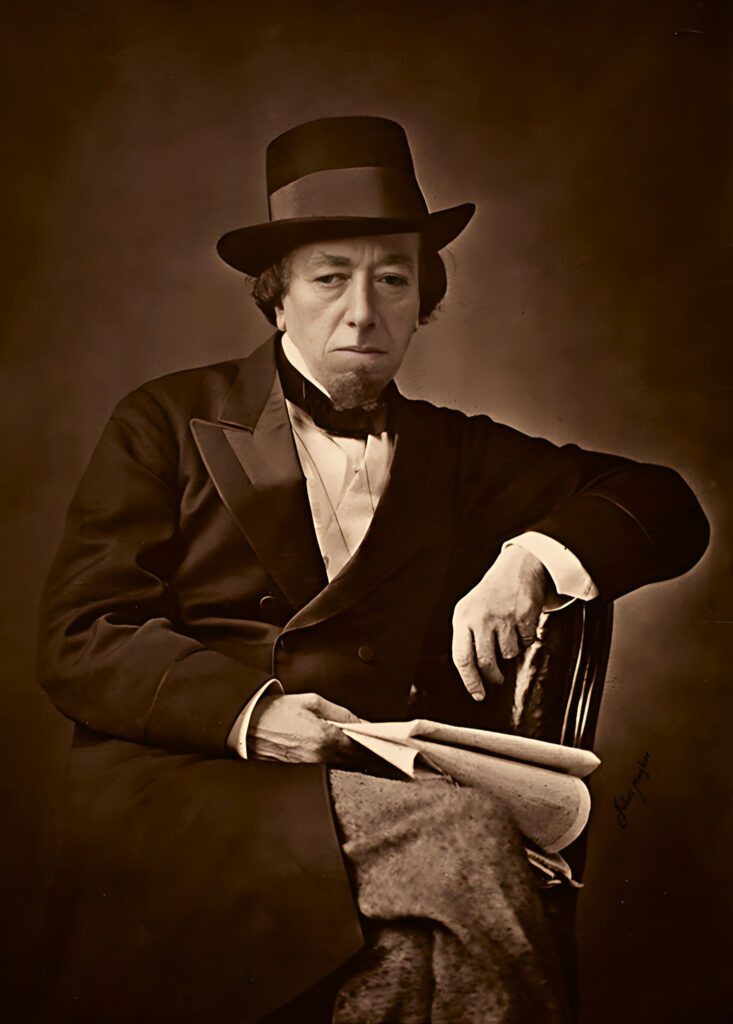
This is vital for conservatives. They must appeal to people’s passions (especially the young); their hearts as well as their heads. Literary imagination is crucial for our children’s development, both in the home from their parents and at school from their teachers. It is paramount to fire up their imaginations as well as instilling in them a love of place and an inclination towards gratitude. Kirk was exceptional at utilizing literary works to reinforce his social and political arguments and thoughts. His work demonstrates that we can derive truth from fiction. Indeed, we can learn a great deal from literary imagination about an order within ourselves and the nation.
Whilst discussing Newman, Kirk also reminds us that ‘real conservatism…transcends politics’16 and of the importance of providence to conservative thought. Kirk argued that ‘religious sanction’ is an essential ‘basis of any conservative order’. Indeed, conservatives’ past and present have affirmed this view, as in the works of Burke and Disraeli. Kirk warned us of the dangers of a Godless world, writing of a time when ‘God is dead and everything is permitted’. Of course, virtue, objective morals, and trust are not permitted, but unchecked will and appetite certainly are. Kirk makes the case that political problems are fundamentally ‘religious and moral problems’. Relatedly, cultural renewal requires solutions that economics alone cannot fix. Moreover, Kirk stresses the importance of the ‘restoration of the ethical understanding and the religious sanction upon which any life worth living is founded’. Indeed, order, justice, and freedom, as well as community and tradition, are vital to human prosperity and flourishing.
‘The Conservative Mind is truly a classic that speaks to us across space and time because it asks us to think about how we should live our lives, how we should cherish and replenish our value-creating institutions’
In his third-person autobiography, The Sword of Imagination, Kirk recounts being told about Hugh Gaitskell, a Labour MP and the Shadow Chancellor of the Exchequer at the time, saying about The Conservative Mind in 1954, ‘this book will set back socialism a generation!’ Kirk notes ‘actually that book made less of a stir in Britain than in America’.17 This was indeed the case, though it did cause quite a stir in America. The Conservative Mind has been reviewed over one hundred times. In 1953, Time magazine devoted its entire book section to it.
In the acknowledgements of The Conservative Mind, Kirk writes that ‘this book is an endeavour to aid in conserving the tradition which gives them their being’. The enduring appeal of the book, as well as Kirk’s other works, is that it deals with perennial human concerns and not the ephemeral details of the politics of the time or an overly dogmatic legislative programme to fix our issues a priori. It focuses on those traditions and institutions that make us who we are. Thus, The Conservative Mind is truly a classic that speaks to us across space and time because it asks us to think about how we should live our lives, how we should cherish and replenish our value-creating institutions that make life meaningful, and which institutions ought to be conserved and/or restored. This book provides us with the rigour and scholarship to feel confident in our intellectual tradition and sure that imaginative, romantic conservatism is the way forward for us today, just as it was in the 1950s.
NOTES
1 Russell Kirk, The Conservative Mind: From Burke to Santayana (Henry Regnery Company, 1953), 3.
2 Kirk, The Conservative Mind, 3.
3 Michael Oakeshott, The Social and Political Doctrines of Contemporary Europe (Cambridge University Press, 1939), xiv.
4 Kirk, The Conservative Mind, 3.
5 Kirk, The Conservative Mind, 4.
6 Russell Kirk, The Essence of Conservatism (Russell Kirk Center 2007), https://kirkcenter.org/politics-and-social-order/essence-1957/.
7 Russell Kirk, A konzervatív eszme. Történelmi útmutató a józan észhez (The Conservative Idea: A Historical Guide to Common Sense) (Alapjogokért Központ, 2024), 703. The Hungarian translation is from the seventh edition of the book (Regnery, 2001).
8 See the interview with Russell Kirk in the Spring/Fall issues of Continuity: A Journal of History in 1994.
9 Kirk, The Conservative Mind, 4–5.
10 Bradley J. Birzer, ‘“The Conservative Mind”: A Chaotic Story of Decay?’, The Imaginative Conservative (10 May 2024), https://theimaginativeconservative.org/2024/05/conservative-mind-story-chaotic-decay-bradley-birzer.html.
11 Kirk, The Conservative Mind, 5.
12 Continuity: A Journal of History (Spring/Fall 1994).
13 T. S. Eliot, On Poetry and Poets (London, 1957), 54–55.
14 Continuity: A Journal of History (Spring/Fall 1994).
15 Kirk, The Conservative Mind, 227.
16 Kirk, The Conservative Mind, 224.
17 Kirk, The Sword of Imagination (Wm. B. Eerdmans Publishing, 2002), 201.
Related articles: