The following is a translation of an article written by Vivien Pesztericz-Kalas, head of department and a researcher at the University of Public Service Institute for Strategic Studies, originally published on the Five Minutes Europe blog of Ludovika.hu.
The European Commission presented its action plan on the English Channel migration route last week.
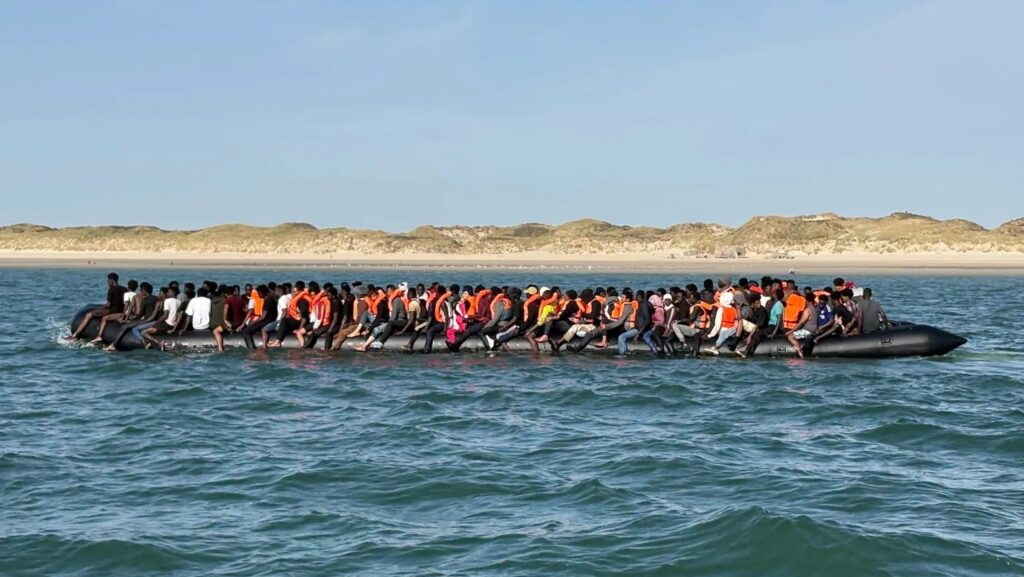
The European Commission published the EU Action Plan for the Channel Migratory Route in June 2026, which outlines a new, comprehensive approach to tackling irregular migration along the route between the European Union and the United Kingdom. The document is based on the premise that crossings across the English Channel are not just a border security issue, but also a complex security, humanitarian, and organized crime challenge. People smuggling networks exploit the hopes of those seeking better living conditions, while encouraging them to make life-threatening sea crossings.
The Commission believes that the phenomenon cannot be confined to the English Channel only and that tackling it requires a route-wide approach: the pressure on the UK actually stems from the entire system of migration routes to Europe. The plan, therefore, takes a so-called ‘whole-of-route’ approach, that is, it examines the migration process from countries of departure through transit countries to the UK. The document emphasizes that as long as the UK remains an attractive destination for irregular migrants, smuggling routes will continue to operate.
The action plan is based on three main pillars. The first is to strengthen migration diplomacy. The EU intends to step up its cooperation with countries of origin in Africa, the Middle East, and Asia to reduce the number of irregular migrants, increase the effectiveness of readmission agreements, and facilitate the implementation of deportations. The Commission is paying particular attention to the potential misuse of visas and residence permits, as well as to information campaigns raising awareness of the risks of dangerous migration routes.
‘One of the key political messages of the action plan…is that it treats the UK as a strategic partner’
The second pillar is to dismantle people smuggling networks. The plan details how smuggling is no longer just about transporting people, but also about logistical, financial, and digital infrastructure. The EU is therefore planning to take more targeted action, involving Europol, Eurojust, and Frontex, against ship supply chains, illegal financial transactions, and online recruitment and organizing activities. Joint investigation teams, information sharing, and the suppression of smuggling activities on social media platforms will play a key role in this.
The third pillar is strengthening border management. The Commission calls for a reinforced Frontex presence, improved maritime and air surveillance capabilities, and more effective data sharing between the member states concerned. Rapid identification and registration of migrants, as well as speeding up return procedures, are also important goals. The document points out the more intensive use of the Schengen Information System and other European databases, too.
One of the key political messages of the action plan the Commission presented last week is that it treats the UK as a strategic partner. According to the Commission, the key to success is mutual information exchange, joint operations, and a coordinated migration policy. In addition, the document mentions that the UK should contribute financially to EU measures, as they also directly serve British interests.
Overall, the action plan reflects the increasingly security-focused direction of EU migration management. While continuing to refer to the respect for fundamental rights and international obligations, the focus is clearly on preventing irregular migration, increasing returns, dismantling smuggling networks, and deepening operational cooperation with the United Kingdom. The document is therefore not only about managing the Channel route, but also clearly demonstrates the current priorities and direction of European migration policy.
Related articles:
Click here to read the original article.
At a time when public debate is increasingly polarized and superficial, Hungarian Conservative remains committed to depth, intellectual honesty, and independent conservative thought.
Producing high-quality journalism requires resources. Your contribution helps us expand our coverage, reach new audiences, and keep our content accessible.

Please consider supporting our mission.