Christmas markets are among Europe’s most beloved cultural traditions, dating back as far as the 13th century. The scent of mulled wine, cinnamon, cloves and orange draws millions of visitors to historic towns across the continent at this time of year—from Strasbourg to Stuttgart, from Berlin to Wien, and from Warsaw to Budapest. However, in Western Europe, Christmas markets are no longer synonymous with calm, safety and festive nostalgia. Since the turn of the millennium—and increasingly after 2010—the spirit of celebration has been overshadowed by seasonal terror: Christmas markets have become prime targets of radical Islamist attacks during the holiday period.
The first reported terrorist activity linked to a Christmas market dates back to 2000, with the Strasbourg bombing plot. In December of that year, an al-Qaeda-linked group planned to bomb the market at the foot of Strasbourg Cathedral on New Year’s Eve. The plot was foiled by French and German police after a terrorist network operating in Frankfurt was dismantled. According to reports, 14 people were convicted in connection with the case—four in Germany and ten in France—including the operational leader Mohammed Bensakhria, believed to have been a European deputy to Osama bin Laden.
That first attempt was unsuccessful. After the foiled Strasbourg plot, the Western alliance—led by the US and joined by Russia—launched the so-called war on terror, invading Afghanistan in 2001, Iraq in 2003, and later intervening in Syria in 2014. These military actions contributed to growing migratory pressure on the European Union, primarily from Arab and Muslim-majority countries.
‘In 2017, the EU Counter-Terrorism Coordinator stated that more than 50,000 radicals and jihadists were present in Europe’
This was followed by the Arab Spring in 2015, when hundreds of millions from the Middle East and North Africa set out for the Old Continent. In that year alone, more than 1.3 million migrants arrived in the EU, mostly from Syria, Afghanistan and Iraq. Over the past decade, the number of asylum seekers—both legal and illegal—entering the EU has exceeded eight million.
Combined with Western European member states’ long-standing policy of addressing workforce shortages and demographic decline by inviting and importing large numbers of economic migrants, this influx resulted in the arrival of thousands of radicals and so-called ‘sleeping cells’. Operatives of the Islamic State reportedly travelled to Europe along the migration routes used in 2015. In 2017, the EU Counter-Terrorism Coordinator stated that more than 50,000 radicals and jihadists were present in Europe.
Soft Targets for Islamist Terror
Accordingly, the terror began. 16 years after the foiled Strasbourg plot, on 19 December 2016, a heavy truck was deliberately driven into the Christmas market at Breitscheidplatz in Berlin. The attack claimed the lives of 13 people and injured more than 50 others. The perpetrator was Anis Amri, a 24-year-old Tunisian national and failed asylum seeker, who hijacked the truck, murdered its original driver, and drove it into the crowd. Amri fled the scene and was killed by Italian police near Milan four days later during a shootout. ISIS claimed responsibility for the attack immediately. The Berlin Christmas market attack ranks among the deadliest terrorist attacks in Germany in recent years.
German Chancellor Angela Merkel, the main architect of the EU’s open-border policy and Willkommenskultur during the 2015 migration crisis, expressed the nation’s grief and shock, stating that Germans could not live ‘paralyzed by the fear of evil’. Yet borders remained open in Germany and across much of Western Europe.
Just two years later, on 11 December 2018, the Strasbourg Christmas market was once again targeted by terrorists—and this time, they succeeded. A man, Chérif Chekatt, armed with a revolver and a knife, attacked civilians in and around the market, killing five people and wounding 11 others before fleeing the scene. The perpetrator was known to police and had been flagged as a suspected extremist. He was killed on 13 December after a 48-hour manhunt. Chekatt was reported to have pledged allegiance to ISIS prior to the attack.
Germany once again witnessed terror before Christmas. Almost exactly a year ago, on 20 December 2024, a van was driven into the crowd at the Christmas market in Magdeburg, the capital of Saxony-Anhalt, killing six people and injuring more than 300. Right-wing anti-immigration Alternative für Deutschland organized a large rally in Magdeburg on 24 December, where co-chair Alice Weidel delivered an emotional speech calling for national unity, expressing empathy with the bereaved, and criticizing the federal government’s migration and security policies.
At the same time, European security services have foiled several high-profile terrorist plots targeting Christmas markets across the continent. Beyond the 2000 Strasbourg bombing plot, one of the most notable cases was the disruption of a planned attack involving the Vienna Christmas market in December 2019. The plot involved three Chechen migrants influenced by ISIS ideology, who planned to carry out bombings at the market in front of St Stephen’s Cathedral. The conspiracy was uncovered following tip-offs to police, and the suspects were detained before any devices were deployed.
Most recently, on 13 December, German authorities foiled a suspected terror plot by an Egyptian imam and several Muslim migrants to ram a vehicle into a Bavarian Christmas market in the Dingolfing area. According to Euractiv, the Islamist preacher intended ‘to kill or injure as many people as possible’ by driving into a crowded festive event. Authorities said three Moroccan men pledged to carry out the attack, while a fifth encouraged them to proceed. Four of the suspects were arrested near the Austrian border, north of Salzburg.
Just three days later, on 16 December, police took a 21-year-old man into custody in Magdeburg on suspicion of planning an attack with Islamist motivation. The detention came amid heightened alert following last year’s deadly attack, and officials moved quickly based on statements and behaviour suggesting preparations for a violent act against a large public gathering.
Eastern Europe Saved Christmas
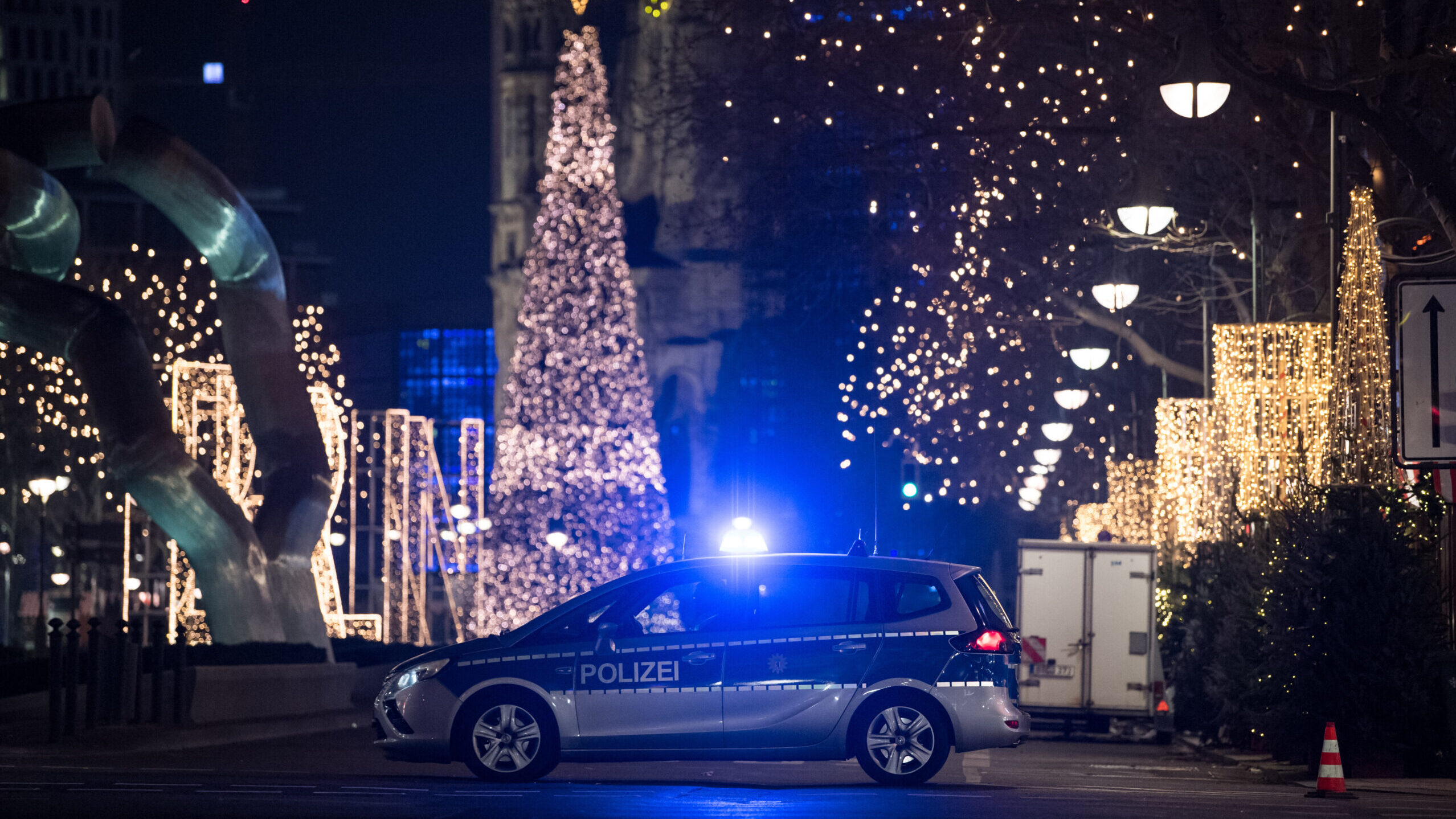
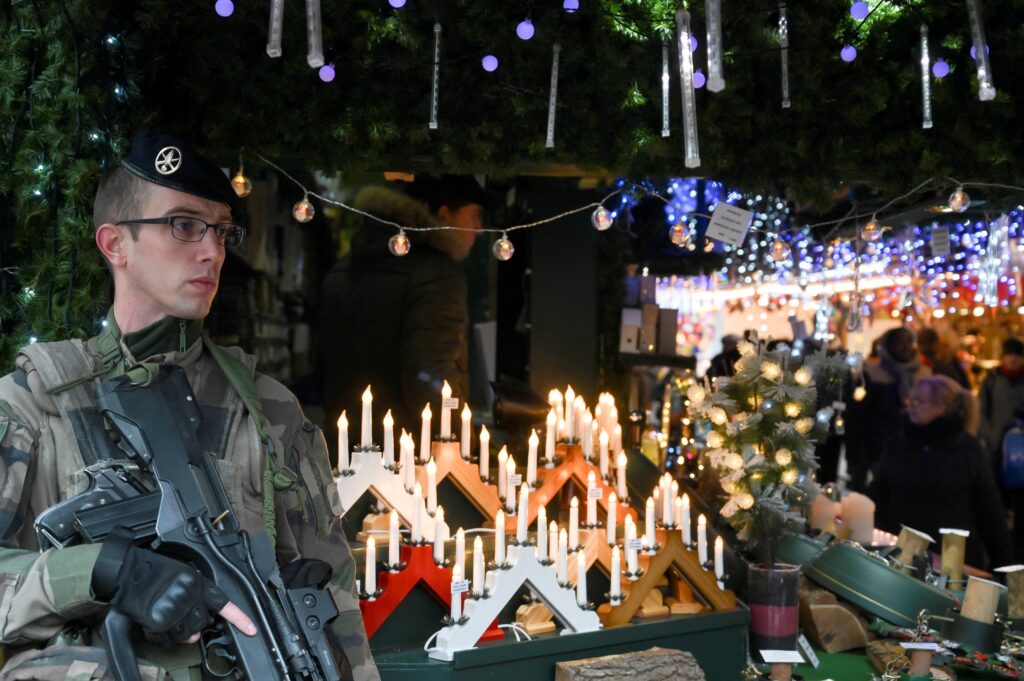
After decades of Christmas-related terror, Western Europe has reached a point where authorities increasingly decide not to organize Christmas markets or New Year’s Eve celebrations to avoid potentially deadly attacks. Just days ago, Paris authorities cancelled the traditional open-air New Year’s Eve concert on the Champs-Élysées, citing escalating security concerns and a ‘very high’ terror threat level. Across Germany, France, Austria and other EU countries, Christmas markets now operate behind heavy security—concrete barriers, armed police, expanded surveillance and strict access controls.
Despite Merkel’s words, Western Europeans live precisely ‘paralyzed by the fear of evil’, forced to relinquish one of the most important symbols of their Christian and European cultural heritage. Yet their leaders remain unwilling to address the root of the problem, persisting with flawed policies—even as clear alternatives exist close by.
Most of Eastern Europe has remained unaffected by such terrorist attacks targeting Christmas markets. This is largely due to the tougher stance these countries have taken on migration. Closed borders, strict immigration rules and restrictive asylum systems have kept the Christmas atmosphere intact—and, crucially, safe—in cities such as Budapest, Warsaw, Kraków, Prague and Riga. Unsurprisingly, these cities are increasingly featured in Western European winter tourism itineraries, attracting both independent travellers and organized tour groups. In Budapest alone, foreign visitors accounted for around 715,000 arrivals and approximately 1.7 million overnight stays in December 2024—up 20 and 15 per cent year on year, respectively.
While mass migration and radical Islam have transformed Western European Christmas markets from spaces of celebration into scenes of deadly violence, Eastern Europe has remained faithful to its Christian roots. It has remained what Europe once was—and what it could still be.
Related articles: