You can read the first and the second parts of the essay here.
While the Bibóan democratic historical perspective judged the Hungarian past to be a ‘dead end’ when measured against an abstract Western, mass-democratic development, Hungarian intellectual life between the two world wars—under the shock of Trianon—sought the place and mission of Hungarians in Europe within an entirely different coordinate system.
‘The Idea of the State of St Stephen’ and Turanism
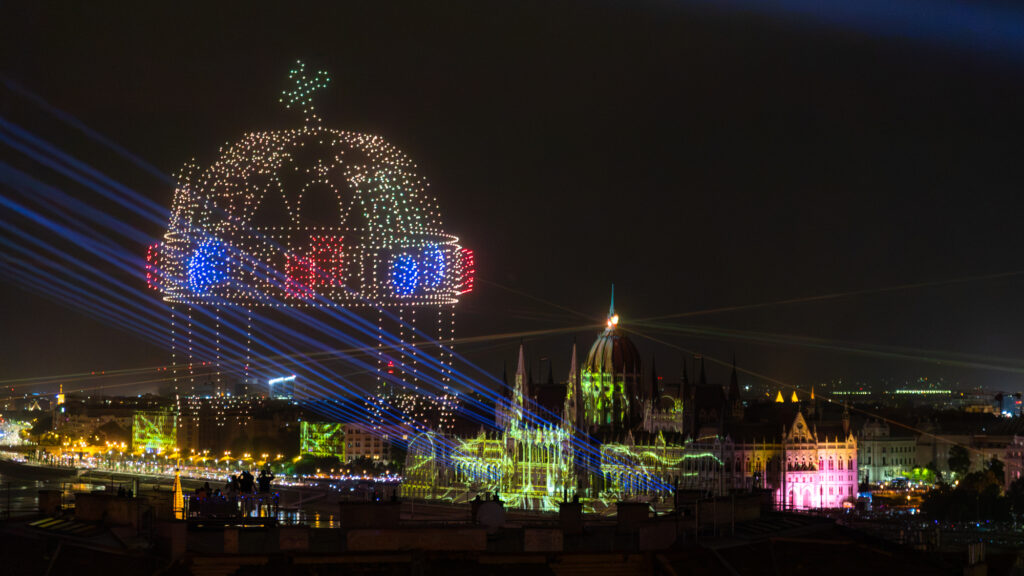
During the period of the Bethlen consolidation, the cultural policy of the official state administration brought ‘the idea of the state of St Stephen’ (Szent István-i állameszme) to the forefront (Gyula Szekfű, Bálint Hóman). According to this, the Hungarian nation is not merely a biological-ethnic category, identical neither exclusively with the conquering Hungarians nor with the ‘Hungarian race’ of ethnic nationalism, but refers rather to a ‘state-building capacity’ and a ‘historical mission’. Its members include every ethnicity and nationality that accepts the idea of the ‘Hungarian Holy Crown’, considers itself a part and ‘member’ thereof, and possesses historical roots in the 1000-year-old Hungary. Hungarians, defined in this way, were considered the culturally dominant nation based on their ‘aptitude’ to organize the Carpathian Basin region. The Christian orientation and belonging to the West emerged as a defining force: St Stephen’s symbolic decision made the Hungarians a part of the ‘Christian ecumene’ once and for all.
Contemporary geography (especially Pál Teleki) conceived of the Carpathian Basin as a ‘perfect’, that is, indivisible historical and geographical unit, whose ‘natural’ leader was the Hungarian nation. This leadership, however, according to the theory, did not mean oppression; rather, in the spirit of St Stephen’s Admonitions (‘A country of one language and one custom is weak and fragile’), it promised acceptance—alongside Hungarian leadership—and legal certainty for ethnic groups whose mother tongue was not Hungarian. ‘The idea of the state of St Stephen’ provided, above all, the moral breeding ground for revisionist demands: it conveyed the message to Western powers that the stability of the Carpathian Basin could only be guaranteed by Hungarian leadership, as opposed to the ‘Balkanized’ successor states. Inwardly, it functioned as an integrationist ideology that, in principle, allowed the nationalities remaining in post-Trianon Hungary (as well as Hungarian Jewry) to maintain loyalty to the state, standing in contrast to the increasingly dominant currents of racial nationalism.
It is striking that ‘the idea of the state of St Stephen’ originally defined the Hungarian nation not on ethnic (racial) grounds, but based on its state-building capacity and historical mission—although it is also true that toward the end of the era, under German pressure, this emphasis shifted.[1]
Parallel to ‘the idea of the state of St Stephen’, ethnic and ‘peasant’-based characterological images of Hungarian identity from the populist (népi) movement, as well as from the ‘philosophical wing’ (Lajos Prohászka, Béla Hamvas), appeared and strengthened in the deep layers of intellectual life. The intellectual map of the era was drawn most sharply by the tension between the ‘official’ academic line and the resurgent Eastern (Turanian) versus Western (Christian-public law) orientations.
The Turanism of the interwar period was a direct continuation of the feeling of Easternness that had always been present as a subterranean stream within Hungarians, which the hostile politics of the Entente—representing the ‘West’ in a symbolic sense—significantly amplified during the era. In opposition to St Stephen, Turanism was the symbolic voice of the ‘rebellious Koppány’ within the Hungarian spirit.
‘Die in me now, you bickering Hungarian, restless Koppány, son of Hunnic devils’
While for medieval chroniclers the figure of Koppány still clearly embodied evil, chaos, rebellion against the higher order, and ‘nation-destroying’ anarchy, a more positive image of Koppány began to appear in the interbellum. Endre Ady had already identified with Koppány as a positive, defiant, and tragic symbol. In his poem ‘Bickering Hungarian’ (‘Cívódó magyar’), he wrote:
‘Die in me now, you bickering Hungarian,
Restless Koppány, son of Hunnic devils:
It’s all a comedy, a comedy,
Let me now look to greater things.
What once was forest is today Budapest,
And what once was sorrow is today a comedy,
And the rebel today is no longer protected by
Shaman-fury and the Hungarian “must”.’
In his poem, ‘I am the Son of Gog and Magog…’ (‘Góg és Magóg fia vagyok én…’, 1906, New Poems), he evokes not Koppány, but another fallen Árpád-era rebel, Vazul; the role remains the same. The image of ‘tossing’ between East and West finally found its most expressive literary form in Ady’s metaphor of the ‘Ferry Country’ (Kompország—the image of a nation with a tragic fate perpetually commuting between the shores of East and West).
Ármin Vámbéry’s work Origin of the Hungarians (A magyarok eredete), published in 1882, ignited the debate in which he argued for the Turkic Tatar origin of the Hungarians. In his earlier work, Hungarian and Turkic-Tatar Word Correspondences (Magyar és török-tatár szóegyezések), published in 1870, he firmly asserted that the Hungarian language was fundamentally of Turkic origin. Later, he described the Hungarians as a mixed people whose language is Ugric, but whose culture and temperament are Turkic. He was the first to outline the possibility of a Pan-Turkic empire from the Adriatic to China. Believing there was a deep, blood, and cultural bond between Hungarians and Turks, he became one of the spiritual fathers of the Pan-Turkic idea in Hungary. He saw that an alliance between the Ottoman Empire and the Turkic peoples of Central Asia could form a counterweight to Russian expansion, and in this alliance, he envisioned a key role for a Hungary with ‘Turkic roots’. Although Vámbéry distanced himself from political Pan-Turanism at the end of his life, the movement’s activists in the 20th century still considered him their spiritual forefather.
The concept of ‘Turan’, which originally derived from the Persian Shahnameh epic and denoted the steppe region north of Iran inhabited by nomadic peoples, became an umbrella term for peoples speaking non-Indo-European and non-Semitic languages through 19th-century European scholarship (especially Max Müller’s linguistic classification). Hungarian Turanism in the 20th century was not an unprecedented phenomenon, but rather the organic, albeit politically ideologized, continuation of 19th-century Orientalism and origin research. Turanism did not solely appear in Hungary: in Türkiye, it served as a tool for Atatürk’s nation-state homogenization; in Central Asia, as an anti-colonial liberation ideology; and in Finland, precisely as the legitimization for eastward expansion and anti-Soviet defence.
The Hungarian Turanian Society (Magyar Turáni Társaság), led by Gyula Pekár, carried forward the moderate, political-cultural line with semi-official ties to the government. The Kőrösi Csoma Society was established upon the initiative of Pál Teleki to separate serious scientific Orientalism (linguistics, ethnography) from geopolitical and ‘mirage-chasing’ dilettantism;[2] this operated under the aegis of the Hungarian Academy of Sciences (MTA). The Turanian Alliance of Hungary (Magyarországi Turán Szövetség), under the leadership of renowned geographer Jenő Cholnoky, represented the revisionist-political wing building on a mass base.[3]
In this intellectually highly charged atmosphere, oscillating between the pull of East and West, national characterological debates also gained a new edge. Lajos Prohászka’s work The Wanderer and the Hider (A vándor és a bujdosó, 1936) was built exactly upon this ‘Eastern inertia’, the tragic metaphor of the ‘Hider’ (Bujdosó), which Gyula Szekfű sharply rejected as a ‘defeatist’ image of Hungarianness.[4] Tibor Joó (from a Protestant background) with The Hungarian National Idea (A magyar nemzeteszme) and Mihály Ferdinandy (standing on Spenglerian foundations) with We Hungarians (Mi magyarok), transcending positivism, conceived of the nation as an ‘individuality’. While Béla Hamvas in The Five Geniuses (Az öt géniusz) described Hungarianness not as a biological fact, but as a spiritual task and the synthesis of the forces (geniuses) inherent in the landscape, László Németh, on the pages of In Minority (Kisebbségben, 1939), formulated the demand for the ‘pure source’ with his dichotomy of ‘Deep Hungarian’ (Mélymagyar) and ‘Diluted Hungarian’ (Hígmagyar), precisely in opposition to the assimilated bourgeois stratum represented by Szekfű. These polemics indicate that ‘national self-knowledge’ was not a static scientific discipline, but the dynamic terrain of crisis management.
The Synthesis of ‘Official’ Geistesgeschichte: Bálint Hóman and Gyula Szekfű
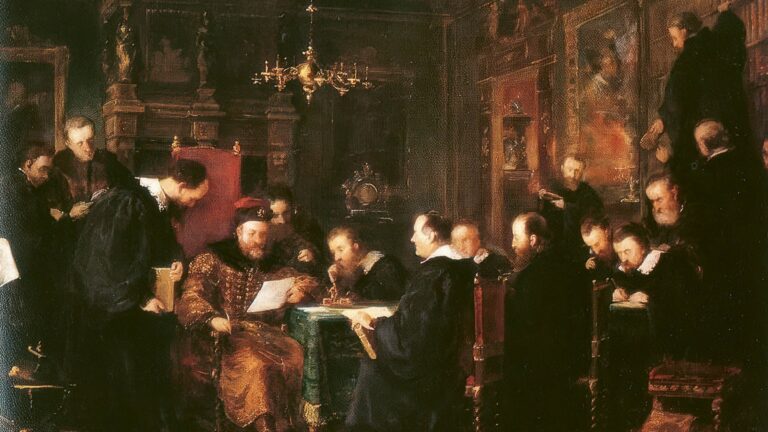
One of the most important intellectual and cultural-political foundations for the political consolidation of the Bethlen era following the Trianon catastrophe was provided by the Hungarian adaptation of the methodology of German intellectual history (Geistesgeschichte). Intellectual history, following Wilhelm Dilthey’s Geistesgeschichte, examined history not through the cause-and-effect method of the natural sciences (erklären – to explain), but through empathy and intuitive understanding (verstehen). This approach, complemented by Spengler’s organic cultural morphology, found fertile ground in interwar Hungary. Its primary mediator was the circle of the Minerva journal led by Tivadar Thienemann.
The leading, ‘official’ historians of the era, Bálint Hóman and Gyula Szekfű, also practised a kind of intellectual history, but with a completely different approach than the philosophical essayists. Hóman and Szekfű accepted the premise that history should not be interpreted as a mere accumulation of data, but as a struggle of spiritual contexts, forces, epochal styles, and psychological characters. Both professed that the historian’s task is not mere description, but experiencing the spirit of the age. They interpreted history not as the ‘superstructure’ of the economy, but as the developmental history of ideas and the national character; their goal was not merely a spiritual explanation of the crisis of the present (that is: Trianon), but also to show a way out. Their joint magnum opus, Hungarian History (Magyar történet, 1928–1934), is not positivist documentarism, but a synthesis of Hungarian national ‘genealogy’: they depicted Hungarian history as an organic process of unfolding, starting from the Burkean conservative idea that a ‘Hungarian spirit’ unfolding from a germ-like seed struggles for survival and European integration.
Szekfű and his colleagues proclaimed the organic unity of historical processes in contrast to earlier descriptive trends:
‘While the old history books,’ they write, ‘discussed political, economic, social, cultural, and literary development in isolation from each other…modern historiography…does not divide national history into such fields, does not set up barriers between the individual processes of partial development, but conceives of the entire history as a single organic process…Human history is nothing but the history of the human soul, thus teaches modern historical science. And Hungarian history is nothing but the history of the Hungarian soul, the description of those forms in which the Hungarian soul has manifested itself for millennia, the description of those effects brought about by the activity of the Hungarians…In every era, we must strive to sketch the soul of the entire Hungarian people, the entire Hungarian soul.’[5]
‘In every era, we must strive to sketch the soul of the entire Hungarian people, the entire Hungarian soul’
In the pages of Three Generations (Három nemzedék, 1920), and later its expanded edition, Three Generations and What Follows (Három nemzedék és ami utána következik, 1934), Gyula Szekfű provided a ruthless critique of the 19th-century arc of Hungarian history. In his conception, the Reform Era (the generation of István Széchenyi) represented the zenith, where national and Christian-moral ideals were in harmonious unity. This was followed by a decline. Szekfű, like Bibó, also blamed 19th-century development for the Hungarian ‘dead end’, but from exactly the opposite direction. While Bibó saw the tragedy in the lag of Western, egalitarian mass democracy and the survival of feudal-noble privileges, Szekfű’s diagnosis stood in stark contrast to this. For him, the cause of the decline was precisely the unassimilated, doctrinaire adoption of Western liberalism, the illusion-chasing of the gentry, and the ambiguous nature of Jewish assimilation, which interrupted the Széchenyi-style organic, Christian development. Szekfű’s method elevated the concept of the ‘Baroque’ to a central category, which for him was not merely a style, but the unio mystica of royalism, Catholicism, and national character. In contrast, he viewed the ‘Kuruc’ tradition, particularly the line hallmarked by Imre Thököly, as a destructive dead end that disrupted national unity.
In Bálint Hóman’s historiography, the great power status of the medieval Kingdom of Hungary (the eras of St Stephen, St Ladislaus, and Louis the Great) became the spiritual blueprint for building the future. According to him, the fragmented Hungarians could only rise if they returned to the virtues and the ‘imperial’ vision that characterized the Árpád era.[6] Proceeding along the cultural-political line set by Kunó Klebelsberg, Hóman also supported the doctrine of Hungarian ‘cultural supremacy’ (kultúrfölény), according to which survival depends not on weapons, but on intellectual achievement.
The Debate Between Lajos Prohászka and Tibor Joó
Alongside the ‘official’ line of Geistesgeschichte, national self-examination and ‘fate science’ touched upon psychological, and even ontological, deep layers among the radical, philosophically oriented intellectual historians. Here—in accordance with philosophical inquiry—instead of ‘what happened’, the question of ‘who are we’ came even more to the forefront. During the search for answers, the most impactful works of the era were born on the borderline between depth psychology, the cultural morphology hallmarked by Spranger and Keyserling, and literature, attempting to define the Hungarian ‘folk soul’ (Volksgeist).
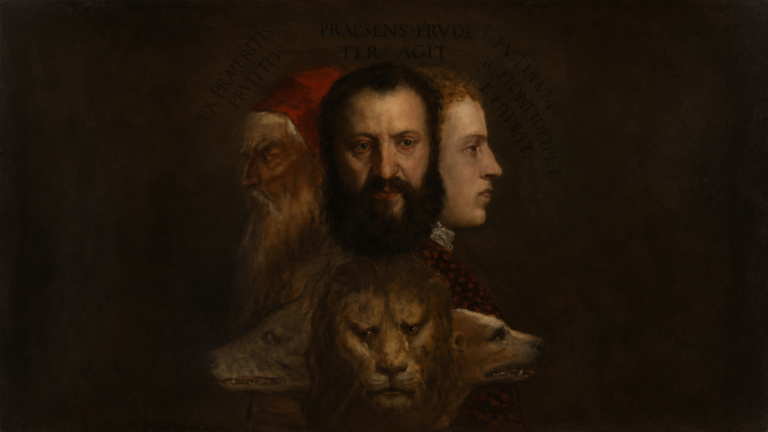
Prohászka’s book unfolds the national ‘essence’ of Hungarianness, the ‘Hider’ (Bujdosó), primarily by juxtaposing it with the German national character (‘the Wanderer’), in a relationship built on complex attractions and repulsions. According to this, ‘Hungarian fate science’ can only be understood from ‘German fate science’, and for this, the whole of Europe must be considered. Prohászka adopted the methods of ‘national characterology’ mainly from Leopold Ziegler (who called the German a ‘wanderer’) and Keyserling, but behind his image of Germanness also stands Spengler’s ‘Faustian man’, the conqueror of ‘infinite space’. His basic thesis is that no nation exists ‘in itself’: the character, starting from a ‘primordial core’ or Spenglerian ‘prime symbol’, awakens to itself and develops within a complex historical system of ‘attractions and elections’.
At the same time, national characterology stood in sharp opposition to the racial theory of National Socialism, with which both its communist and liberal critics—especially after 1945—attempted to conflate it. While racial theory stood on biological, social-Darwinist grounds (‘struggle of the races’), national characterology did not speak of ‘superior’ and ‘inferior’ races. It argued that the differing characteristics of nations cannot be traced back merely to rational, material-sociological circumstances; nor does the homogenization of these circumstances make them identical, because the true cause of the differences lies deeper and does not stem from the biological realm.
According to Prohászka, the essence of the ‘Western’ (Germanic/Faustian) soul is the striving for infinity, the constant crossing of boundaries, and faith in progress. The Wanderer is always on the road, conquering, building, but is never satisfied. For him, the world is open.[7] In contrast, the essence of the Hider (static/Hungarian) soul is finitism, the love of finitude. The Hungarian does not strive for the infinite, but seeks closed, round, whole forms. If he does not find this closed form, he does not set off on a new path, but retreats into passive resistance, into ‘hiding’ (bujdosás). Hiding is not a physical escape, but a state of mind: turning away from realities, fleeing into a dream world (délibáb).
According to Prohászka’s diagnosis, the Hungarian makeup is essentially incompatible with modernity. The modern world is based on continuous change, the dynamics of capitalism, and rational progress—all this is alien to the Hungarian ‘nature’, which can only enjoy the finished form, not continuous ‘becoming’ (German: Werden). From this stems the tragedy of Hungarian history: the apathy following great flare-ups, the ‘straw fire’ nature. While the Western spirit (the Wanderer) strives to cross borders, conquer transcendent horizons, and continuously renew forms, the Hungarian Hider, squeezed between borders, experiences his fate in the closed circle of ‘finitude’. This confinement creates the phenomenon of Hungaria Abscondita, the hidden Hungary. In Prohászka’s analysis, the Hungarian essence, true value, withdraws from the surface, becoming invisible because the forms of the outside world are alien to it.
[1] From the late 1930s, German völkisch (folkish-racial) thought and, in its wake, the gaining ground of Nazism posed a challenge to the traditional, ‘imperial’ and Catholic concept of St Stephen. The ideologues of far-right movements (eg, the Arrow Cross) and the ‘ethnic Germans’ (Volksdeutsche) emphasized blood ties (Blut und Boden) instead of dynastic-public law loyalty. In this atmosphere, the inclusive state idea (‘the patronage of guests’) appeared ‘harmful’ from the perspective of racial defence, thus official cultural policy was also forced into shifts in emphasis: instead of inclusion, increasingly emphasizing the ‘leading role of the Hungarian race’—and political-ideological pressure led to the distortion of the original sphere of ideas.
[2] Alongside the official and scientific line, ‘populist’ or ‘fantastical’ Turanism appeared. Its representatives, such as Benedek Baráthosi Balogh, often fabricated pseudoscientific theories. The view became popular that Christianity was in fact not Jewish, but ‘Parthian’ (thus Turanian/Scythian) in origin, and Jesus was a ‘Parthian prince’.
[3] For a detailed analysis of the ideological values of Turanism and the contemporary debates, see: László Szendrei, A turanizmus. Eleink – Magyar Őstörténet, Budapest, 2010.
[4] See: Gyula Szekfű, ‘Nem vagyunk bujdosók’ (‘We Are Not Hiders’), Magyar Szemle, 1938/XXXII, pp. 391–396. Although Szekfű acknowledges the ‘deep Hungarian intent’ of Prohászka’s diagnosis, he rejects the philosopher’s essentialist method. The historian refutes the ‘incapable of building’ nomadic character of the Hungarians by referring to the county system, and judges the pessimistic final overtone of the work as politically harmful, contrasting it with the state-building tradition of St Stephen.
[5] Hóman–Szekfű, Magyar történet (Preface).
[6] The idea of the so-called ‘Hungarian Empire’ also appears in Tibor Joó and Mihály Ferdinandy. The theory suggests that the Kingdom of Hungary was a state formation with an ethnically extremely diverse, mixed population in the Middle Ages, which was organized on the model of the steppe empires preceding the Hungarian Conquest (the Hunnic, Avar, and Khazar Empires), but with Christian content.
[7] In Spenglerian cultural morphology, the prime symbol of Western (Faustian) culture is ‘infinite space’ and dynamics. The Wanderer is not satisfied with finite form; crossing boundaries and conquest (both in space and in spirit) are his element. This dynamic creates the Gothic cathedral, differential calculus, and global colonialism, but it also carries the tragedy of rootlessness and dissatisfaction. Unlike the Hungarian ‘Hider’, the Wanderer is not unhappy because he cannot find his place, but because the place, the ‘arrival’, is restricting him.
Related articles:
At a time when public debate is increasingly polarized and superficial, Hungarian Conservative remains committed to depth, intellectual honesty, and independent conservative thought.
Producing high-quality journalism requires resources. Your contribution helps us expand our coverage, reach new audiences, and keep our content accessible.

Please consider supporting our mission.