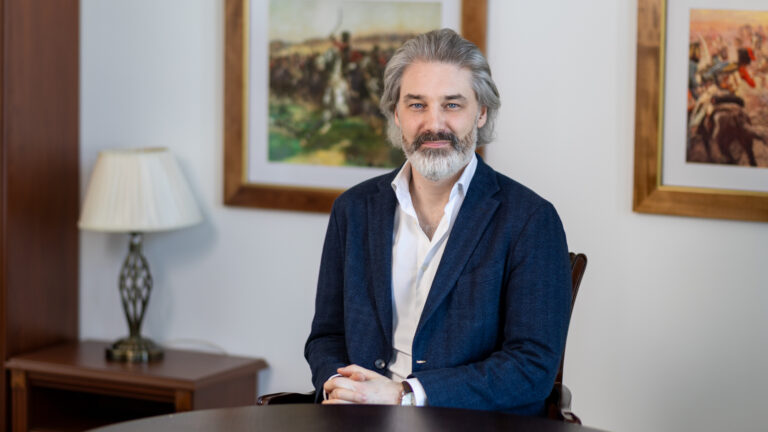
Pierre-Hugues Barré is a French lawyer and academic, a Non-Resident Fellow at the Danube Institute in Budapest. He graduated from the Sorbonne in Law, Philosophy, and History, and from the University of Versailles in Political Science. He holds a PhD in Law from the University of Toulouse. He has clerked for the Cour administrative d’appel de Versailles, the Tribunal administratif de Paris, and the Florida Second District Court of Appeal. He was a senior lecturer in constitutional law and political thought for several years at Sciences Po Paris and an academic visitor at the Faculty of Law at the University of Oxford. He is a visiting professor at Masaryk University (Czech Republic) and Oriel College, University of Oxford. His main research topics are secularism, jurisprudence, and the role of judges in modern democracies.
***
My first question is actually a borrowing from a conference title: Is French secularism (laïcité in French) a ‘sword’ or a ‘shield’?
This topic, laïcité as a sword or shield, was a topic I used for a conference at the Oxford Law School a few years ago. If you’re looking for the translation for laïcité in the dictionary, you will find the word secularism. However, I don’t believe that this is the same phenomenon. I would say secularism is linked to atheism. Secularism is the removal of religion from society. At the same time, laïcité applied in the institutional field is like a break between religion and the state. Laïcité is applied in the UK, in Norway, and in Sweden. In Sweden, the separation between the church and the state only came into effect in 2000. At the same time, almost no one is a believer in Sweden, you know.
The ‘sword’ means that there is a sharp separation between the two, and ‘shield’ means that I can defend my religious beliefs, I guess. Is that right?
It’s supposed to be that. Theoretically speaking, laïcité was born in the Enlightenment; in some way, this was a separation between the temporal and spiritual power, and nowadays, the state is supposed to be neutral, but at the same time, laïcité became a weapon for the state to remove religious influence in society. There is a competition between the state and the church, and the state wants to have a monopoly in education, and in many domains, which I believe is against the separation of powers, against even liberalism, because the Catholic Church in France has to have its place to be able to spread its words.
‘The state is supposed to be neutral, but at the same time, laïcité became a weapon for the state to remove religious influence in society’
Some weeks ago, the secrecy of confession was challenged by the French parliament. There was a proposal that said that priests have to break the secret of confession in case of rape of children, and so on. And that week, the Pope was in Spain, and he spoke in front of the Parliament that we have to maintain the secrecy of the confession. In 2024 France wrote abortion into the constitution, so abortion is a constitutional right in France, and the current French government wants to legalize euthanasia. So, this is a fight between the church and the state, and it is totally current in the political system in France.
Let’s talk a little bit about the past, the roots of secularism. It’s rooted in the Enlightenment and in the French Revolution. Then came the Napoleonic rule, and he made the Catholic Church the state church again. Then came the Third Republic, which enacted some educational reforms, and in 1905, a new law finally separated the church and the state. What is the significance of this process?
Of course, the beginning is the French Revolution. The Revolution at the beginning wasn’t against religious freedom or the church itself. The Revolution wanted to apply a sentence from Hobbes and then from Rousseau, which is that we need a ‘public religion’; the state and the religion have to be united. And when the Catholic Church said no, the Revolution turned against the Catholic Church. The state wasn’t able to absorb the Catholic Church, so it decided to destroy the Church, and many priests and many bishops were killed. It was a hopeless moment for the Catholic Church. And still today, some bishops are really reluctant to speak about morality, because they are afraid of the state. So it was the first break.
‘Abortion is a constitutional right in France, and the current French government wants to legalize euthanasia’
Then Napoleon made peace with the church, not because Napoleon was a good Catholic, but because of the public order, in order to reunify the French population to avoid divisions in society. Napoleon accepted a contract with the Holy See, which is called the Concordat. And then, as you said, during the Third Republic, parts of the parliament and the government were Freemasons, free thinkers, and they were against the Catholic Church, while most of the population was royalist. The Third Republic came by accident: Napoleon III went to war against Bismarck’s Prussia and lost, so France had no government, and Bismarck wanted to discuss it with someone. Henry V was supposed to be the king, but he refused the throne. So we had a Republic as a transitional regime, and step by step, republican leaders decided to fight the Catholic Church, because there was a strong link between the Church and the royalists. Anticlericalization in the Third Republic was a tool to reinforce the republican rule through the educational system. The Third Republic was totally against the Catholic Church, and everything was done to keep the Catholic Church out of society.

Is it a good balance now between the two entities?
Yes, because there are almost no Catholics in France. If you want a crazy statistic, only 8 per cent of baptized French people go to the mass every Sunday, which is mandatory for every baptized person. So Catholics are not Catholics anymore, so there is no challenge against the Republic. Catholic persons are allowed to teach; there are Catholic schools, but they are ruled by the state. The Fifth Republic today is open to Catholicism, but this is because there is no challenge against the Republic from the Catholic Church.
France has a growing Muslim population. Can religions (including Islam) be practised as long as they do not violate state laws?
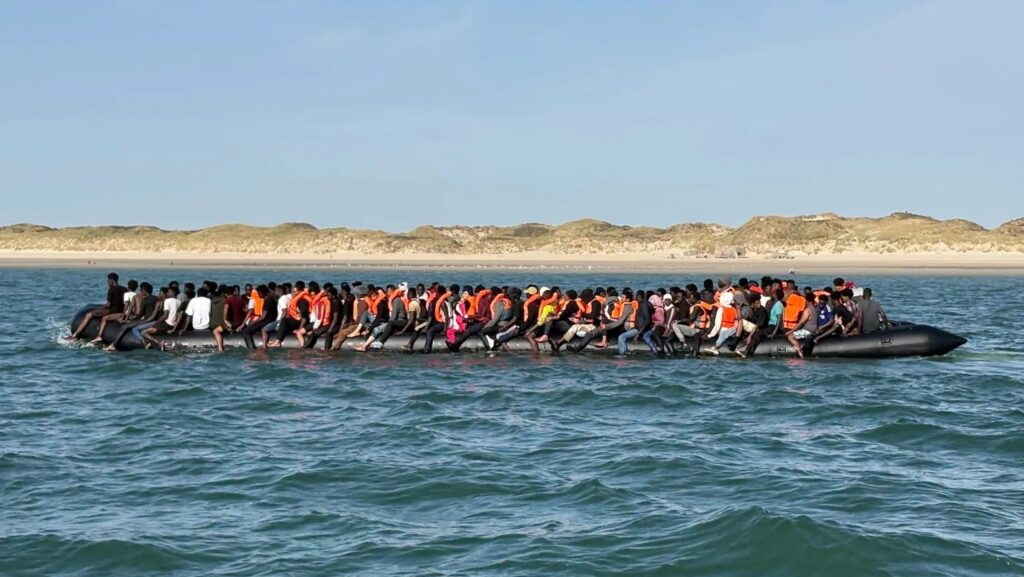
We have a Muslim population in France, and it’s because of migration. It’s taboo, but we have to say that Muslim people are not coming from Brittany, you know; Muslim people are coming from Africa, mostly from North Africa, from former French colonies, especially Algeria, which wasn’t a strict colony; it was a part of the country, it was a department. So today we have a big Muslim population, and migration continues, and with the current government, it won’t stop. In 1905 we decided to say that the public space is neutral. Neutral means no religion, no visible signs. Very recently, like two or three years ago, a statue of Saint Michael was installed in a city, and it had to be removed because it was a religious sign in the public space. The point about the Muslims is that they have visible religious signs, but they are mobile, not fixed. It’s not like a statue or a cross, but it’s something that can be removed, like the veil.
The law of 1905 about the neutrality of public space can’t really apply to the Muslim population, so we have had many laws since. Since 2010, it has been forbidden to wear a total veil in the public space. Since 2004, you can’t wear a veil in public school.
How can a Muslim who obeys the provisions of the Quran also obey the secular state laws?
I think the neutrality of the state doesn’t work. The state doesn’t have to explain if one faith is true and another one is wrong. The state only has to see the positive or negative effect of a faith. For example, the Catholic Church built many schools and many hospitals, so it has a positive effect on society. I think the state can support the Catholic Church, not because of Christianity, but because of the positive effect of the Church. If a faith is against the public order because it incites violent actions, or it creates a parallel society, the state has to fight it, not because of the faith itself, but because of the negative effect of this faith on public order.

If a cartoonist draws a cartoon of Muhammad, it’s free speech, but there is another right, the freedom of religion, by which Muslims feel their faith has been insulted. Which is a stronger right?
I could disagree a bit because we had the Bataclan attack; there was a terrorist attack during the concert. We had a priest who was killed during the Holy Mass in Brittany. Or in Nice, a Muslim killed like 100 people, so it’s not something extraordinary, or a once-every-decade thing; I think it is every week. So the state has to react. But in the name of the principle of equality, and because it’s prohibited to discriminate against anyone, the state can’t act. Even though only Muslims have issues with public order, the state says no to punishment because it would be discriminatory to focus only on Islam.
If a cartoonist draws a humiliating cartoon of Jesus, which is free speech, why can’t a Christian call homosexuality a sin as free speech?
I totally agree, and this is why we might go back to your first question about the sword or the shield. It could be paradoxical, but a shield is for religious beliefs. Religious persons can say, in the name of secularism, that you can’t have an opinion on my religious opinion.
‘In the name of the principle of equality, and because it’s prohibited to discriminate against anyone, the state can’t act’
If you want to kill a homosexual, of course, the state has to react, but if you just say that, in my religious opinion, homosexuality is incompatible with human nature, it should be protected in the name of religious freedom, because it’s only an opinion.
One quote from the French constitution: ‘It (the Republic) shall respect all beliefs.’ Some say that with this neutrality, France has lost some aspects of its identity, such as its Christian past and roots.
The article you just mentioned was written in 1958 when the constitution was adopted, and at that time Algeria was still a part of the country, and this article was used specifically for persons in Algeria who followed Muslim rules. I think Christianity can’t be equal to Islam in Europe because of its history, because it’s part of our history, a legacy. I think this argument could be a good way to avoid the principle of equality and reverse the principle of non-discrimination, to say, okay, no discrimination between religions; however, Christianity plays a specific part in our history, so it has to be more protected or more funded by the state.
Is this thought a part of the curriculum in the elementary and secondary schools?
Of course, not.
Can you still keep this mentality, or is there a new generation that will not care about this?
If you are looking at the names of the new French children, many names are not from the Christian calendar. And atheism is really high in our country. People know what Christmas and Easter are about, but no one knows what the link between some holidays and Christianity is; sometimes, Christians themselves don’t even know their own faith. So, I think there is a big gap, and we can’t count on public schools to teach us what Christianity is, precisely because public schools were created in the 19th century against the Catholic Church.
Many critics of the secular system of France say that the new state religion is atheism itself.
It could be. There is a credo, there are some rules, there is the principle of the Republic, and there is the evil which is religious freedom that some people want to put religion again in the public space, so yes, this could be a new religion, which is, again, very paradoxical.
Is this secular system sustainable?
It’s really complicated because Islam is not only a religion; it’s also a civil code, it’s also a criminal code, it’s also a civilization, so in some parts of the country, Islam is applied, not the laws of the Republic. Secularism is not sustainable at all. I think we can’t offer that to Islam.
‘We can’t count on public schools to teach us what Christianity is’
The only way to be against a religion is to promote another religion, which could be Christianity or Catholicism in France. But we don’t believe that Emmanuel Macron will use the Catholic Church as a way to rechristianize the country; it is not the case.
Will the EU be a ‘big France’, a large neutral state, in ten years’ time?
The EU wasn’t supposed to be a federal state; it was supposed to be only a market, so no common values at all. When many countries joined the EU, Pope John Paul the Second asked the EU to think about the Christian roots of the EU, and in 2005 the French voted no, so it didn’t apply. We had this proposal of a constitution for Europe, but Jacques Chirac, the French President, was against it because he was afraid that the new EU law would challenge the French secular system. So, if the EU were to become a big France, it’s because of France; it’s not by chance. Now they say there is nothing common between the countries in Europe, and especially there is no Christian way, etc. We decided not to talk about it. But I’m still optimistic about the EU, because there is the margin of appreciation, which is a way to let every system in Europe work, so in the UK, when it was still part of the EU, the Queen was the head of state and the leader of the Anglican Church, and it was totally allowed in the EU. I think the EU wants to challenge the French system, but it doesn’t want to threaten it, and it definitely won’t apply it to all the countries in Europe.
Watch the full podcast below:
Related articles:
At a time when public debate is increasingly polarized and superficial, Hungarian Conservative remains committed to depth, intellectual honesty, and independent conservative thought.
Producing high-quality journalism requires resources. Your contribution helps us expand our coverage, reach new audiences, and keep our content accessible.

Please consider supporting our mission.