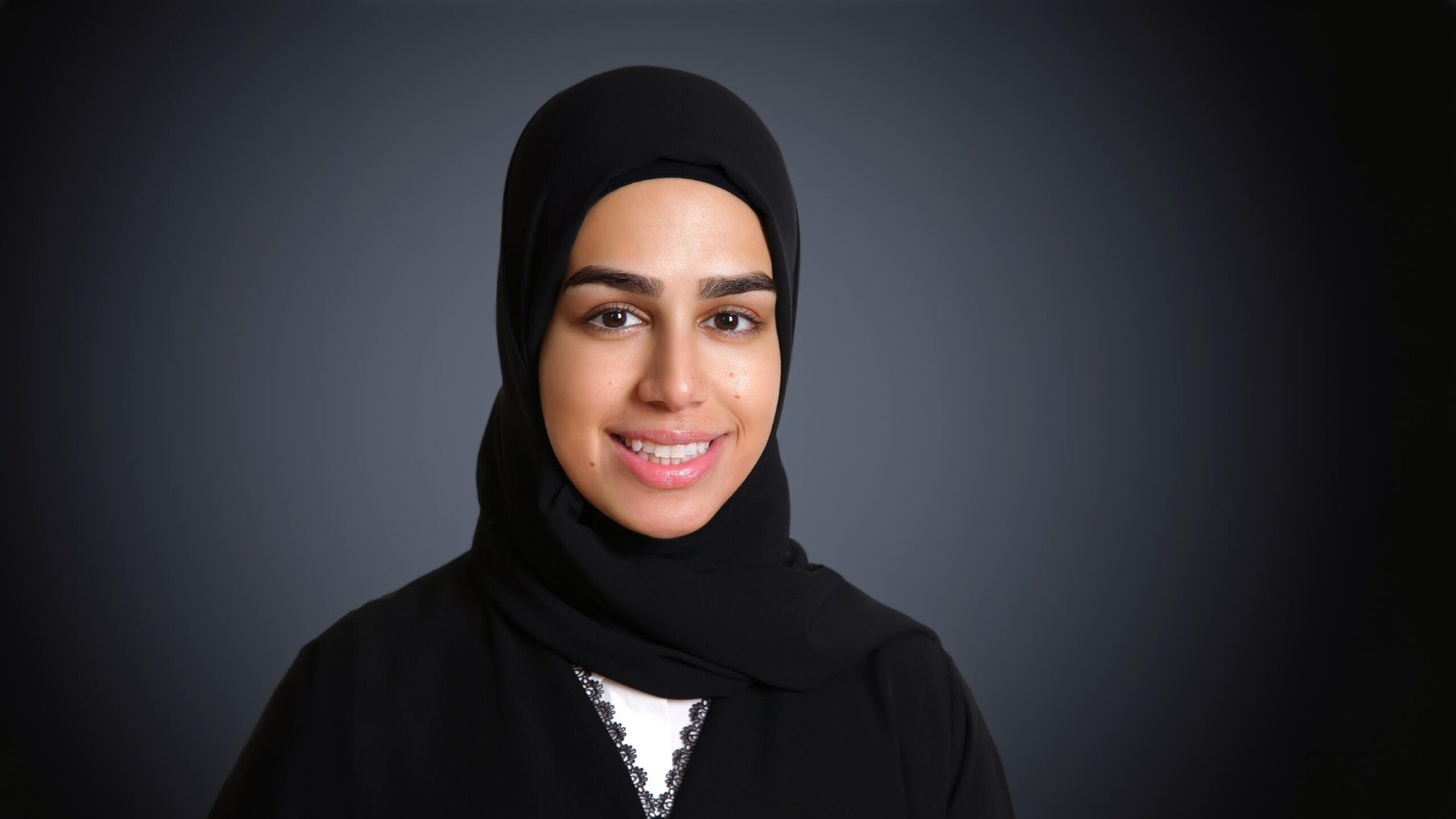
Sara Mohammad Amin Falaknaz is a member of the UAE Federal National Council (FCN) and Chairwoman of the UAE–Hungary Friendship Committee. She graduated from the American University of Sharjah with a degree in management and finance. In 2008, she joined Dubai Holding as Executive Director of Operations, and in 2015 she moved to DP World, where she served as Global Chief Innovation Officer. Between 2018 and 2019, she developed her family business, Falaknaz General Enterprises. Before her election to the FNC, she also pursued studies at universities in Switzerland, the United Kingdom, and the United States.
***
We live in a parliamentary democracy, while your system is different. Can you tell us about the monarchy and how the Federal National Council works in practice?
The Federal National Council in the United Arab Emirates is similar to other parliaments. It is a democratic, legislative body, and it has full oversight over the government. The Federal National Council is made up of 40 members, 20 of whom are elected and 20 appointed. The number of seats in parliament is divided among the seven emirates: Abu Dhabi and Dubai have eight seats each; Sharjah and Ras Al Khaimah have six seats each; and the other three emirates—Ajman, Umm Al Quwain, and Fujairah—have four seats each. We take pride in having 50–50 gender equality in our parliament, and this is because our late President, His Highness Sheikh Khalifa, issued a presidential decree to increase female participation in parliament to 50 per cent.
So you have 20 female representatives in this body, right?
Yes—10 elected and 10 appointed.
Are you nominated or elected?
This is my second term. In my first term, I was elected. Now, for my second term, I’m honoured to have been nominated.
Why did you get politics? Why did you feel the urge to participate in a higher office as a woman?
Let’s take a step back. The United Arab Emirates, ever since it was united 54 years ago, had a visionary leader—our founding father, His Highness Sheikh Zayed bin Sultan Al Nahyan. He had a clear and futuristic vision: he believed that every citizen, male or female, should have access to education. In a conservative society like ours, he encouraged families to send their daughters to school and even supported them financially for doing so. Why? Because he had that strong vision that this is the right thing to do.
‘His Highness Sheikh Khalifa…issued a presidential decree to increase female participation in parliament to 50 per cent’
Fast forward, I also got the privilege of having the best education in the world, and that helped shape who I am today. I was raised with certain values and, with the support of my family, I started my career in a semi-governmental entity, where I spent a little less than a decade. I then moved to a private company, the second-largest port operator in the world, and in 2019, when the late president issued the decree to raise women’s participation, I felt it was the right time to move. With the support of my family and friends, I ran a campaign and got enough votes from my constituents to gain a seat in parliament.
What is your personal vision for the country? How do you want contribute to the policies of your country as a woman?
The leadership of our country gave us the space to make our mark in everything that we do. Whether male or female, we all have equal rights. So, as a female parliamentarian and an Emirati, I would like to set an example for future generations and the people who will come after me. Just as it was made possible for me to pursue what I wanted to be, I would also like to give similar opportunities to those who come after me.
Is it possible that, in the near or distant future, a woman in your country could become president or hold a high office?
To answer your question, just less than eight years ago, we had a female Speaker of the Parliament. Today, Emirati women make up 30 per cent of the staff in our ministerial cabinets. In terms of education, 71 per cent of our Science, Technology, Engineering, and Mathematics graduates are Emirati women. We have Emirati women as ministers, ambassadors, and innovators. We have female engineers working in nuclear plants and for our space programme. This, by itself, shows the endless opportunities that Emirati women have in the UAE.
What is your main purpose for being in politics?
I want to leave a positive mark so that people can see I contributed to the growth of the country and left a legacy for future generations—not necessarily in politics or Parliament—but to show that I achieved the goals I set 20–30 years ago. I want others to have the same opportunity, and I want to help provide it.
Let’s continue with geopolitics. Your country has a special role in the Middle East. Considering the Iranian–Israeli tensions, the Abraham Accords with Israel, and the situation in Gaza, what is the significance of the UAE in the region?
We have our policy, enshrined in our constitution: we are a peaceful country. What we want is to live in peace, security, prosperity, and coexistence—not only for ourselves but for everyone, whether neighboring countries or the wider region. As UAE policy, we are friends to all, and where we can assist positively, we will never think twice. Yes, we took a firm step by signing the Abraham Accord because our leadership believes in security, prosperity, and peace. By now, it has proven to be the right and necessary step in such turbulent times.
‘As UAE policy, we are friends to all, and where we can assist positively, we will never think twice’
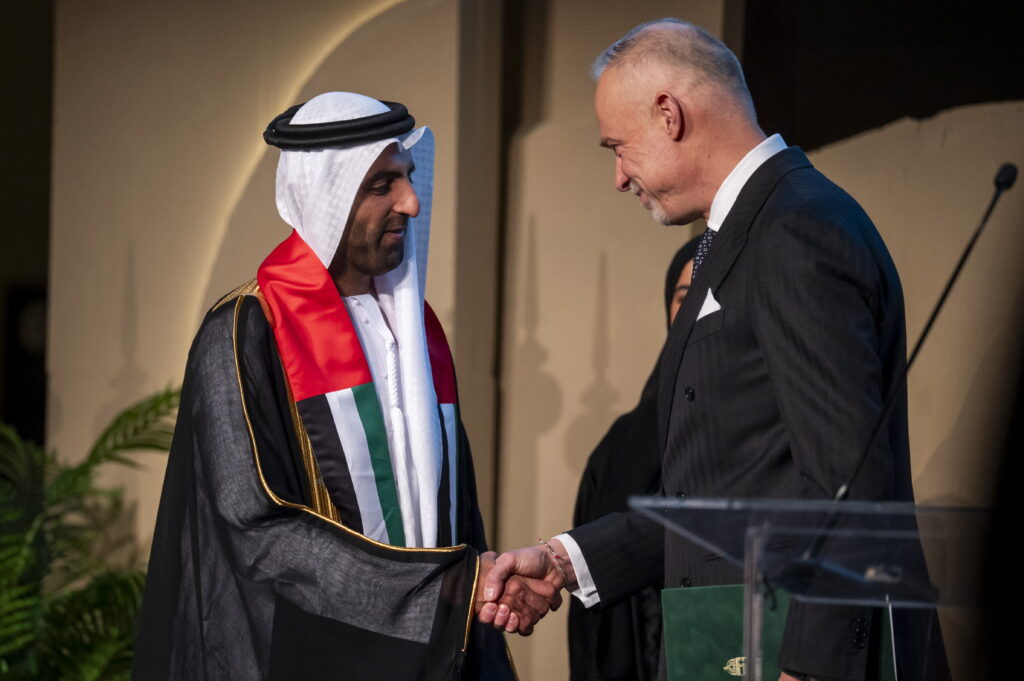
For example, the UAE–Hungary relationship. You can see that just this year, we had the Prime Minister of Hungary visit the United Arab Emirates twice. Our president, His Highness Sheikh Mohamed bin Zayed Al Nahyan, also visited Hungary this year. Today, we had a very fruitful meeting with the President of Hungary, where our delegation was led by the Speaker of the Federal National Council, His Excellency Saqr Ghobash, and they discussed the agreements signed between our president and the Hungarian president, representing the two sovereign states. There were 14 agreements, including strategic partnership agreements in various sectors such as artificial intelligence, agriculture, and education. At the same time, today we witnessed an agreement being signed between our parliament, the Federal National Council, and the Hungarian parliament, which will bring us even closer together, strengthen our relationship, allow us to share best practices, and ensure that we align our values.
Let me tell you one thing: yesterday, while we were walking through the corridors of the parliament, we came across a beautiful art piece, and the Speaker of the Hungarian Parliament explained it to us. We never knew that we were closer than we thought, because that art piece depicted the historical seven tribes of Hungary coming together to pledge allegiance to the head of the tribe, forming Hungary. It is similar to the UAE 54 years ago, when the leaders of the seven emirates united and chose our late founding father, Sheikh Zayed, as the President of the UAE.
What kind of similarities in mentality do you recognize between the two nations?
One of the most important values that we cherish in our community is the value of family. And it’s the same thing we have witnessed in Hungary—we share the same values. Last year, our President announced that 2025 would be the Year of the Community. Just last week, he announced that 2026 will be the Year of the Family, focusing on bringing families together. Less than a year ago, we also established a new ministry in the UAE, the Ministry of Family Affairs. Seeing these shared values in Hungary, we realized that we are closer in values than we thought.
‘One of the most important values that we cherish in our community is the value of family. And it’s the same thing we have witnessed in Hungary’
Hungary wants to diversify its energy supplies. We need more sources. Can we expect new agreements between your and our country in the near future about energy?
Well, as far as I’m concerned, it was signed. One of the 14 agreements is about energy—renewable energy. The United Arab Emirates has a very bold strategy. Yes, we are an oil and gas-producing country, but we were one of the first to announce a plan for carbon neutrality. Since then, we have been partnering with countries to ensure we reach that goal before 2050, and Hungary is one of the most recent countries with which we have signed an agreement in this area.
Finally, about the Middle East. Some criticized your country that it signed the Abraham Accord with Israel without mentioning the final status of an independent Palestinian state. What is your stance on the Palestinian issue?
The United Arab Emirates has been the largest aid provider to Gaza and the Palestinians since 7 October. No country has done what the UAE has done. We operate more than six desalination plants, two bakeries running 24/7, field hospitals, and have transported over 1,200 Palestinians and their families to the UAE to receive all the medical assistance they need. Thanks to the Abraham Accord, we were able to achieve all of this and now have a stronger position to support a horizon for a two-state solution. The UAE also supports the Trump peace plan; we back it to ensure a full ceasefire, deliver humanitarian aid to those in need, and disarm Hamas. Hamas should not have a say or be part of the future of Palestine, and we would like to see a clear path toward a two-state solution.
‘The UAE also supports the Trump peace plan; we back it to ensure a full ceasefire’
Will the UAE participate in financing the reconstruction and the rebuilding of the ruined Gaza Strip?
We have stated that we will not participate in any reconstruction of Gaza unless and until there is a clear horizon toward a two-state solution. Only then will we join other countries in supporting the rebuilding efforts.
Do you believe in a future in the Middle East where Israel, Arab countries, and Iran can live peacefully and cooperate in the economy and trade for the common good of the region?
We have always had this vision, and we hope to see it realized in the region. We have a strong and firm belief that it will happen. We think positively—so yes, we believe in it.
Watch the full podcast below:
Related articles: