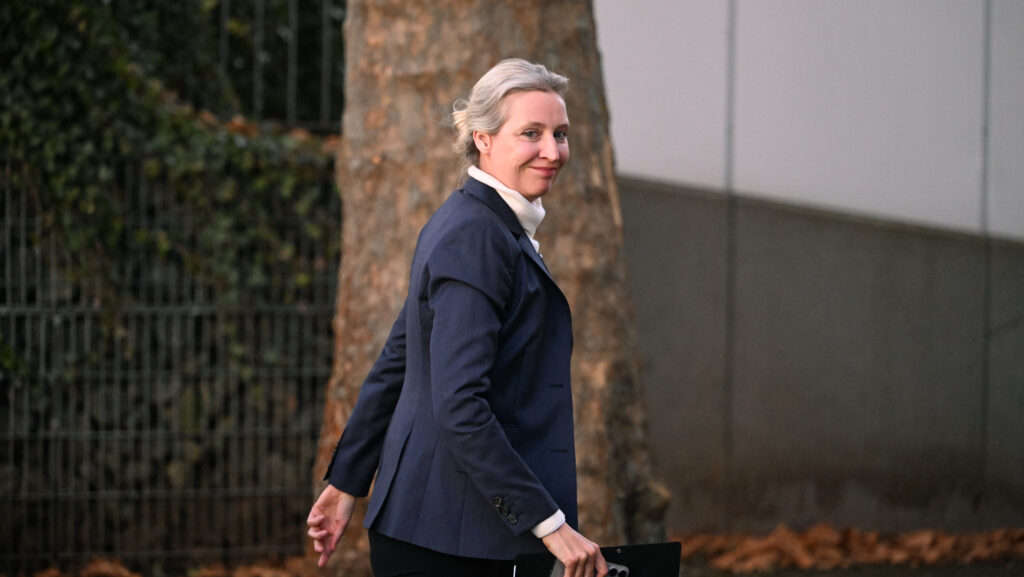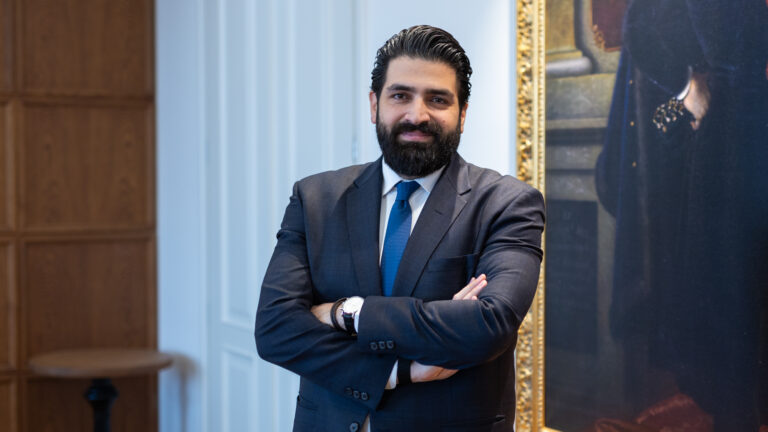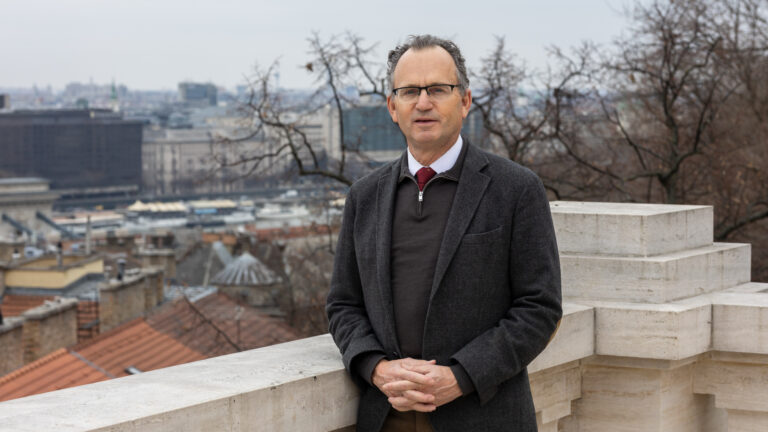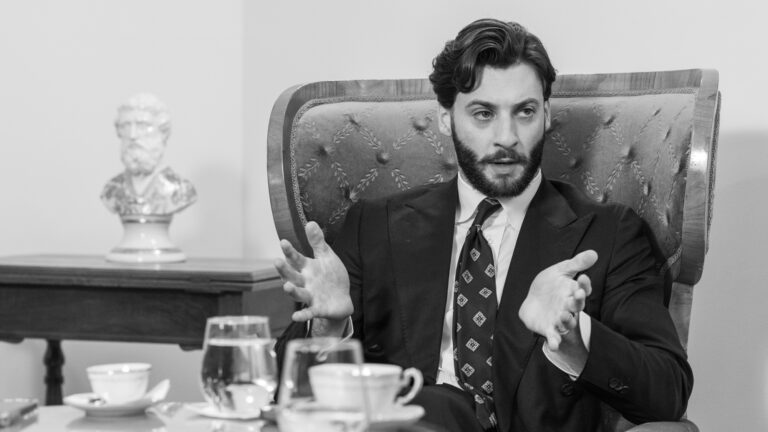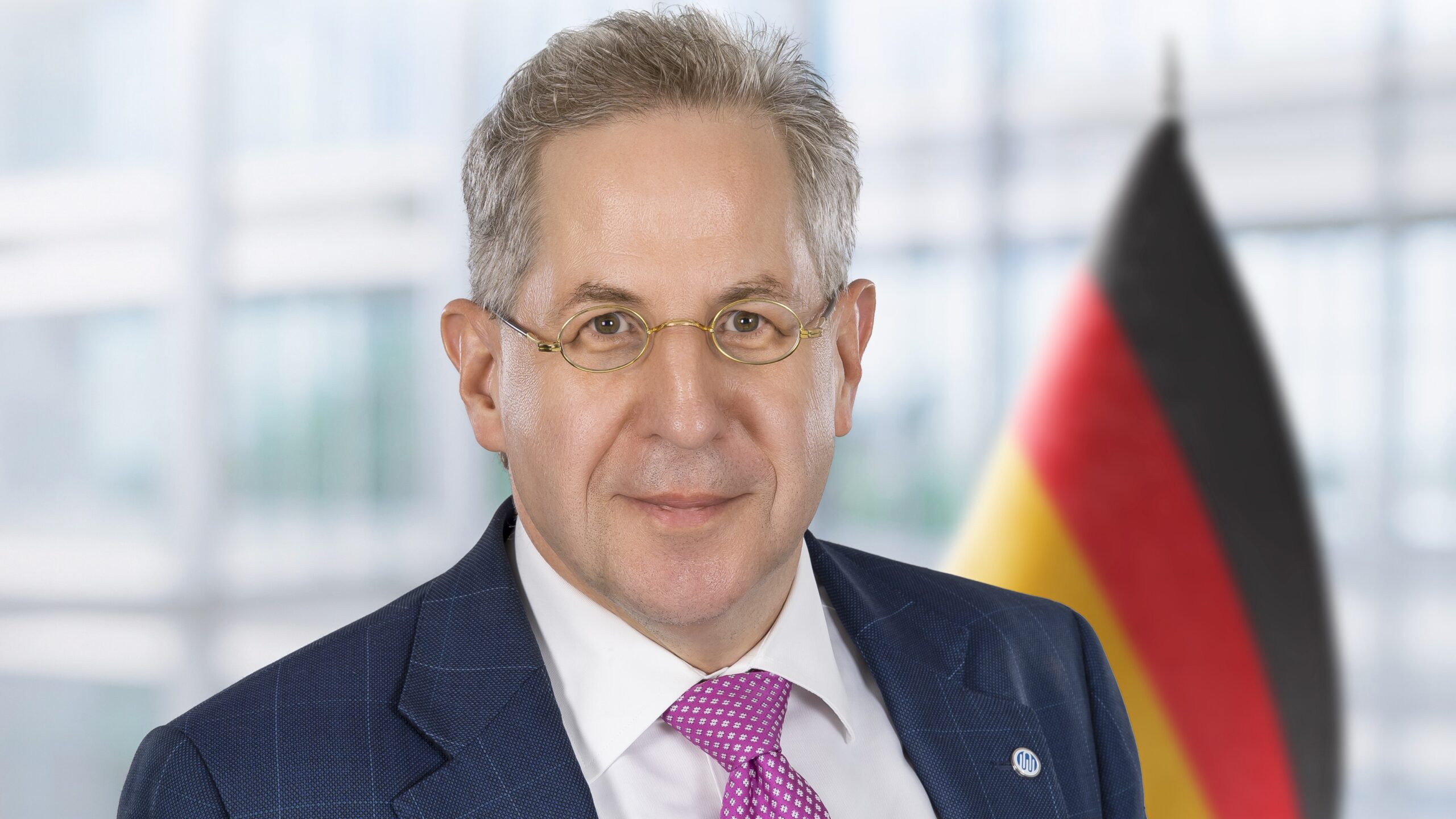
Dr Hans‑Georg Maaßen spent decades at the heart of the German security state. As a senior official in the Federal Ministry of the Interior and later as President of the Federal Office for the Protection of the Constitution, he helped shape Germany’s response to terrorism, migration and internal extremism before finding himself monitored by the very agency he once led. Today, he speaks not to a hostile interrogator but to a long-standing personal acquaintance about what he calls Germany’s slide from a free constitutional democracy towards a ‘totalitarian democracy’—and about why he believes that the country’s much‑praised political ‘firewall’ has become an authoritarian wall against dissent. Speaking as someone who has known Dr Hans-Georg Maaßen personally for many years, I am struck less by the sharpness of his warnings than by the biographical fact that a man who once embodied the German security state now feels compelled to stand, as he puts it, on the free side of a firewall that claims to protect democracy by keeping people like him out.
***
You did not grow up as a dissident, but as someone who chose law and state service. What originally drew you into this world, and did you at that time still believe in the official narrative of Germany as a particularly self-critical liberal constitutional democracy?
My initial motivation was entirely conventional. I come from a generation for whom the Basic Law and the Bonn Republic were not just legal constructs, but a kind of civic promise that Germany had learned from its past and had deliberately chosen a restrained, law-bound state. Studying law seemed to me the most concrete way to participate in that project, to ensure that power remained limited, that procedures mattered, and that citizens could rely on predictable rules rather than political moods.
For a long time, I did believe in the image of Germany as particularly self-critical and liberal. Only gradually did I realize that this self-image was becoming a kind of shield behind which a new intolerance was growing. The rhetoric remained constitutional, but behind the scenes, you could see more and more attempts to steer opinion, to reward conformity and to punish those who took the idea of pluralism too seriously.
When you look back on those early years, what did you learn about the mentality of the German state from the inside, about how decisions are really made, how much room there is for dissent, and how the political leadership views its own citizens?
The official picture is of a neat hierarchy of competence, the ministry as a neutral expert body advising elected politicians who then decide within the framework of the law. In reality, the relationship is far more psychological. Ministers and their entourages bring with them not only policy preferences, but also fears, fear of media campaigns, fear of being labelled, fear of being seen as right-wing.
Inside the administration, you quickly learn which topics can be addressed openly and which require coded language. Dissent is not forbidden, but it is carefully managed. You can raise concerns in a small circle, you can write critical memos, but if your analysis cuts against the great narrative of the day, whether it is European integration, multiculturalism or climate policy, it will almost never shape the final decision. Over time, this produces a culture in which many intelligent people simply stop saying what they really think.
Let us turn to the 2015 migration crisis, which, for many international readers, is the defining moment of Angela Merkel’s chancellorship. You were then responsible for counter terrorism and extremism. How did you experience those months from inside the security apparatus, and what did you think when you heard the famous sentence, we can manage this?
From a security and constitutional perspective, 2015 was a turning point. I saw a political decision to open the borders in practice and to suspend the normal application of law without a serious debate in parliament or in the public sphere. When the head of government declares we can manage this and refuses to define limits, it sounds optimistic, but inside the system you immediately ask yourself, who exactly is we, and what is meant by manage. And why should we have to manage that, that is, why should we take in the thousands of migrants?
It was clear to me already in 2015 that such a large number of people could not simply be integrated into Germany without serious consequences for social cohesion, internal security and the capacity of our institutions. I thought of the risk that fighters of the so-called Islamic State and other jihadist groups could use the situation to enter Europe, I thought of the emergence of parallel societies and of the fact that our deportation policy was already a disaster before 2015. Only a fraction of the people who were obliged to leave the country were actually deported. My concern was not based on ideology; it was based on experience and on a very simple insight: a state that gives up control of its borders gives up control of its future.
In retrospect, do you see the 2015 decision as a kind of original sin of the current Brandmauer politics, the politics of the firewall? Did the open border policy and the slogan we can manage this make it necessary, from the point of view of the political class, to delegitimize any critic as an enemy of humanity or of democracy?
I would not use theological language, but 2015 was certainly a foundational moment. A political leadership that takes a decision of this magnitude without preparing the country for it, without openly discussing the ‘Why?’ and about costs and risks, puts itself in a very vulnerable position. The easiest way to protect itself afterwards is to declare that the decision was not only politically necessary, but morally inevitable, and that anyone who criticizes it is on the wrong side of history.
‘Inside the administration, you quickly learn which topics can be addressed openly and which require coded language’
From that moment on, migration was no longer treated as a legitimate subject of democratic conflict, but as a moral boundary marker. Those who accepted the narrative of welcome culture were the good democrats; those who questioned it were relegated to the camp of haters and agitators. The Brandmauer, the firewall, which today is officially directed against one opposition party, has its roots in this logic. It is the attempt to protect a controversial course by criminalizing or pathologizing criticism instead of answering it.
German politicians now speak almost obsessively about a firewall against the Alternative für Deutschland (AfD). You have called this firewall undemocratic and even unconstitutional in spirit, arguing that it functions as a protective wall against freedom of opinion rather than against extremism. For an international reader who only knows the term as a metaphor for excluding the far right, can you explain concretely why, in your view, this firewall is itself an attack on the constitution?
From the outside, the firewall is sold as a moral necessity, a barrier against extremism, a bulwark to protect democracy. In reality, it is a political instrument to fix the spectrum of what is allowed in advance. A democracy in which established parties publicly swear never to talk or to work with a legal opposition party, regardless of its programme or its voters, is no longer a system of open competition; it is a cartel.
The firewall is undemocratic because it denies millions of citizens the possibility that their preferences could ever be part of a government majority. It is unconstitutional in spirit because it turns the logic of the Basic Law upside down; the constitution is supposed to protect pluralism, not protect incumbents from competition. When you build such walls, you are not defending the constitution; you are defending power against the people.
According to my understanding of democracy, in a liberal democracy, everyone must be willing to talk to each other in the interest of the community. You do not have to cooperate with everyone, but you have to listen to others with their arguments and talk and discuss with them. It may be that the other person is right at times. If you refuse any discussion, if you explain that I do not talk about certain topics because they are represented by people I reject, then democracy is at an end. And as a democrat, you even have to talk to extremists to convince them of liberal democracy.
In one of our personal conversations, you drew a sharp distinction between a free democracy, in which the rules are fixed but the goals are open, and what you call a totalitarian democracy, in which the goals are fixed, and debate is only allowed within those boundaries. Where does the German firewall fit into this scheme? Is it the instrument that enforces the officially approved goals by excluding those who question them?
In a free democracy, the rules are fixed, but the goals are open. You can argue for a social market economy, for more state intervention, for less; the system does not prescribe the outcome, it only prescribes the procedure. In what thinkers like Jacob Talmon called a totalitarian democracy, the opposite is true; the goals are fixed, socialism, climate neutrality, diversity, whatever the slogan of the day, and democratic debate is only tolerated within the corridor of how to reach these predefined ends.
The German firewall fits very neatly into this second model. It is the concrete instrument by which the corridor is enforced. Parties and personalities who question the sacred goals are placed on the wrong side of the wall and declared illegitimate, while those who accept the goals, even if they differ on details, are allowed to play the game. It still looks democratic from a distance, but substantively it is already a different regime.
You spoke of a free side of the firewall and suggested that more and more citizens are moving there, often at a high personal cost. Can you describe what happens to an ordinary teacher, a civil servant, a judge or a small entrepreneur who suddenly finds himself on that side, in terms of social isolation, economic pressure and legal risks?
For a schoolteacher, a judge, or a small business owner, being placed on the wrong side of the firewall is not an abstract constitutional issue. It means that a careless remark, a social media post, or even the wrong audience at a public event can destroy a career. It means disciplinary procedures, loss of clients, broken friendships, children being ostracized at school, and, in some cases, physical attacks by groups that feel morally authorized to silence the fascists.
What I find particularly disturbing is how normalized this has become. People whisper to you that they agree that they see the same things, but they will not say so publicly because they fear for their livelihood. That is not the behaviour of free citizens; that is the behaviour of subjects who have learned to adapt to an atmosphere of intimidation. And once fear becomes the organizing principle of public life, democracy has already lost much of its substance.
Many international observers still see Germany as a model liberal democracy, with a strong rule of law and a culture of self-criticism. Quoting Hannah Arendt or Jacob Talmon, you described totalitarian systems as striving for unrestricted power over how people think, feel and decide. To what extent do you see elements of this emerging in contemporary Germany, behind the language of climate emergency, diversity, or ‘our’ democracy?
When Hannah Arendt described totalitarian systems, she did not primarily speak about camps and secret police; she spoke about the ambition to control how people think and decide. In today’s Germany, nobody is forced to join a party or to carry a membership card, but there is enormous pressure to internalize certain dogmas, on migration, on climate, on Europe, on identity.
This pressure is not enforced by one central authority, but by a network of institutions, public broadcasters, nongovernmental organizations, academic bodies, and parts of the judiciary, that all send the same message: there is only one morally acceptable position, and those who deviate from it are not simply mistaken, they are dangerous. That is why I say we are sliding towards a totalitarian democracy; the instruments are softer, the rhetoric is more polished, but the underlying aspiration to total control over the public mind is unmistakable.
‘I say we are sliding towards a totalitarian democracy’
You have gone so far as to call the Christian Democratic Union (CDU) the most dangerous party, accusing it of selling its voters a conservative facade while delivering Green policy. I must confess, on this point, I find it very hard to disagree with you. For readers abroad, this may sound paradoxical. Why, in your view, is a nominally centre-right party more dangerous to democratic pluralism than openly left-wing parties?
For many people abroad, it may sound paradoxical when I say that the CDU is, in some ways, the most dangerous party in Germany. I do not mean that it is the most radical in its ideology. I mean that it is the party that still presents itself as conservative and bourgeois while having, in substance, accepted almost the entire agenda of the left green milieu. This makes it dangerous because it disarms the very electorate that could form the backbone of a democratic counter-movement. People vote for this party believing they are voting for a correction, for moderation, for a return to common sense. In reality, they receive more of the same, more climate utopianism, more migration without control, more moralizing Europeanism. It is a party that manages to neutralize dissent by absorbing it rhetorically and then betraying it in practice.
If you project current trends forward, do you see Germany in the year 2030 as a country that managed to restore the spirit of the Bonn Basic Law, a limited state serving free citizens, or as a country where a totalitarian democracy has stabilized itself behind a facade of elections and rights?
If current trends continue unchecked, Germany in 2030 will be a country in which elections still take place and in which parliaments still sit, but in which the range of acceptable opinion has narrowed dramatically. The constitutional vocabulary will still be used, but its content will have been hollowed out, rights will be conditional on democratic reliability, and whole social groups will live under a permanent cloud of suspicion.
However, I do not believe that this trajectory is inevitable. Reality is conservative, and reality is already rebelling, in energy prices, in social tensions, in the visible decline of infrastructure and education. The question is whether the political and social forces that still believe in the spirit of the Bonn Basic Law, in a limited state serving free citizens, will organize themselves in time. The year 2030 could still mark the beginning of a restoration, but only if those who see what is happening overcome their fear and act.
Related articles: