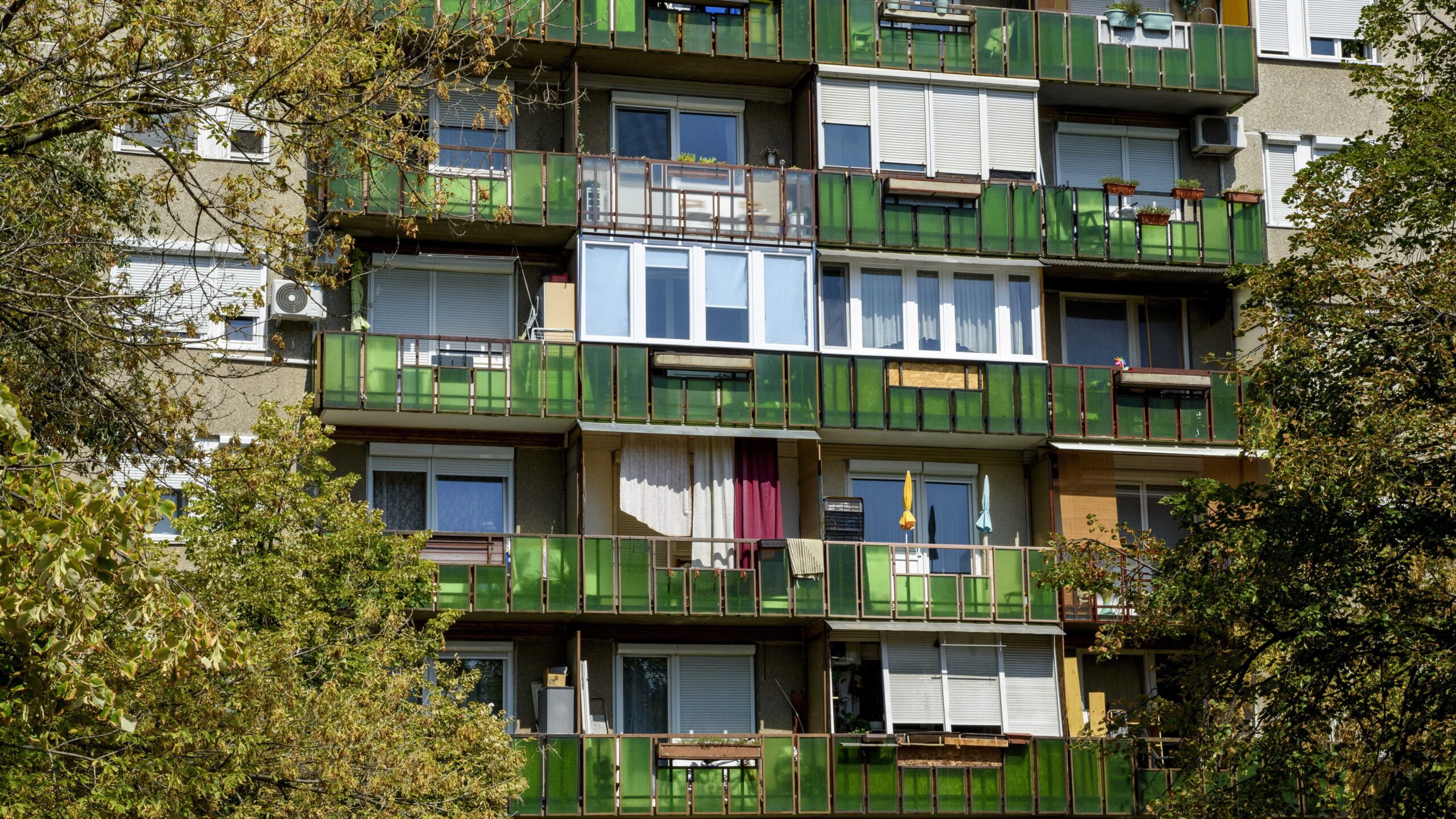
Budapest has made the participation criteria of its Green Panel Programme available for apartment buildings in the Kőbánya district, with other districts expected to follow soon, the Mayor’s Office said on Thursday.
The programme’s conditions can now be accessed on the website of Budapest Public Utilities after agreements were signed with district municipalities. City officials noted that a large share of Budapest’s residential building stock is outdated and highly energy-inefficient.
Energy-efficiency upgrades not only reduce household utility bills but also increase property values, improve residents’ comfort and make buildings more resilient to increasingly extreme weather conditions. The city also highlighted the programme’s climate impact, pointing out that residential buildings currently account for around 36 per cent of Budapest’s carbon dioxide emissions.
Mayor Gergely Karácsony said that one in four Budapest residents—more than half a million people—live in prefabricated panel buildings. These estates are home to a diverse mix of older residents, young people starting independent lives, families and single households, making them ‘a true melting pot of the city’.
When these housing estates were built, he said, planners focused on residents’ everyday needs, ensuring access to schools, shops, public transport and green spaces. ‘But time has passed over the buildings themselves. It is time to bring them from the 20th century into the 21st and restore dignity to our housing estates by supporting those who live there,’ Karácsony added.
According to the Mayor’s Office, the Green Panel Programme marks the repayment of a 15-year backlog in addressing the condition of Budapest’s ageing, industrially built residential blocks. Implemented by Budapest Public Utilities together with participating districts, the initiative aims to achieve substantial energy savings while improving quality of life and contributing to climate protection.
Eligible condominium associations and housing cooperatives can receive at least 30 per cent in non-refundable grants for energy-efficiency upgrades. The supported investments are expected to deliver a minimum of 30 per cent energy savings.
In the first phase, successful applicant communities will receive a comprehensive, free-of-charge preparatory package, including an energy assessment, renovation options, cost estimates and financing calculations. In the second phase, 10 to 15 pilot projects will be carried out, with their experience used to support the rollout of larger-scale renovations in the future.
Related articles: