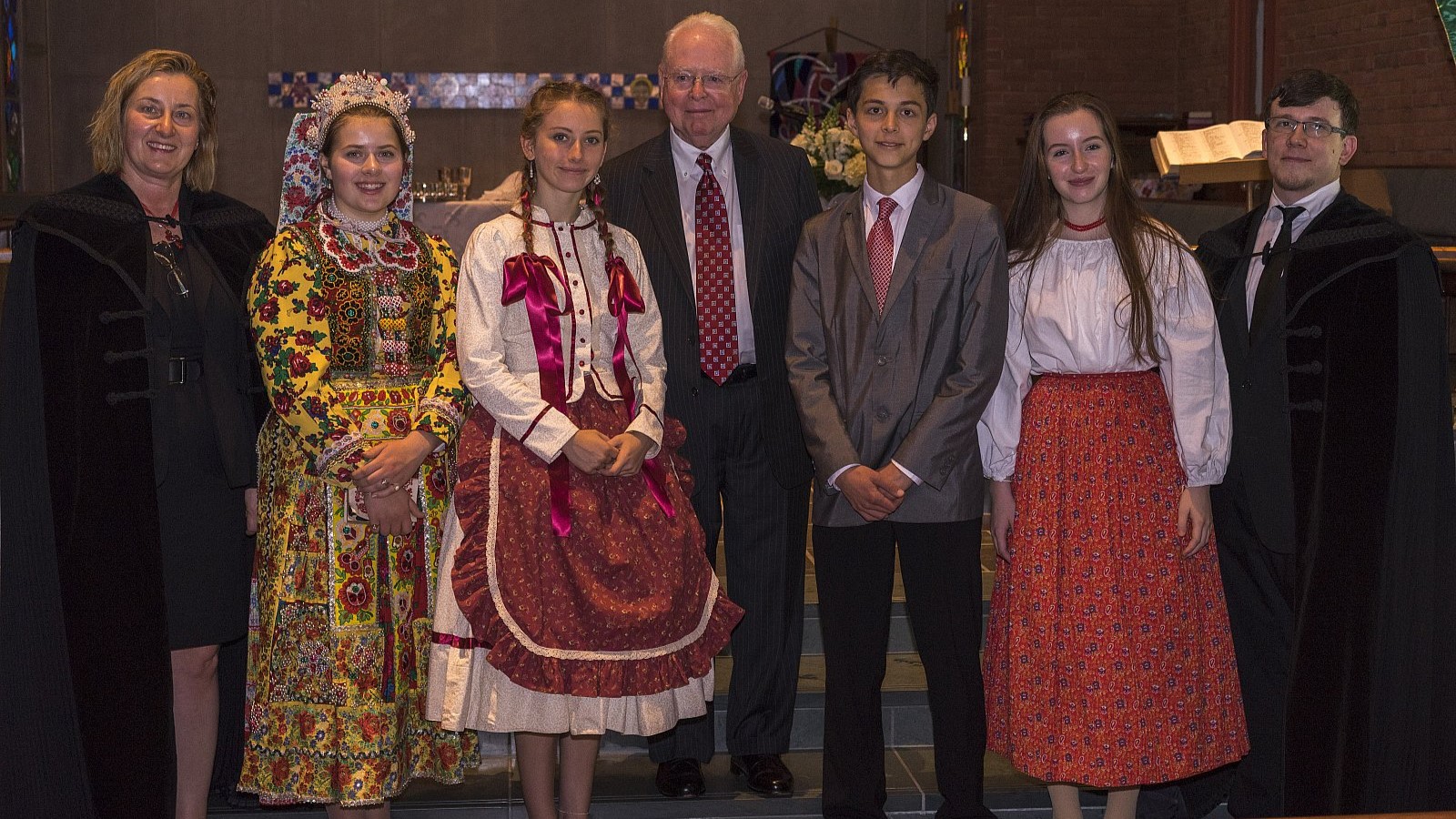
This is the translation of the original interview, published in Reformátusok Lapja on 11 January 2026.
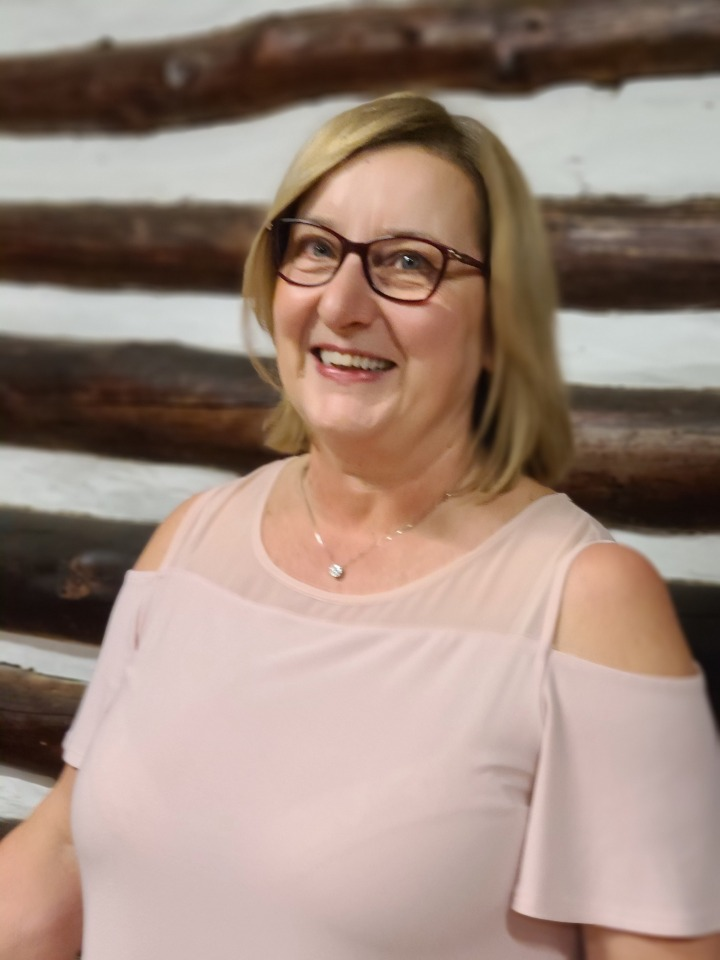
It was a youth camp that led Judit Mayer towards a life of faith and later to theology. Through her grandmother, who fled Hungary after the revolution and freedom fight was crushed in 1956, she visited the United States several times, yet she only moved overseas at the age of 31. She first served as a pastor in a congregation in the state of Connecticut, then moved to the federal capital, where she became the successor of the late Dr. Imre Bertalan (d. 2008) as head of the Hungarian Reformed Church of Washington, D.C. She has been serving this local Reformed congregation, and the Hungarian community as a devoted community member and a three-time scout mother.
***
Why did you become a Reformed pastor?
In the mid-1960s, it was not really fashionable to go to church in Communist Hungary, but out of respect for my deeply believing Catholic great-grandmother, my Catholic father asked my Reformed mother whether it would be a problem if I were Catholic. When, for various reasons, the local priest ultimately refused to baptize me, my father got angry and said: Then my daughter will be Reformed! That is how I became Reformed, practically by accident.
When the time for confirmation arrived, I was under the guidance of the Rev. Mihály Szabó. He and his wife, Aunt Klárika, were serving in Mohács at the time and brought about a wonderful revival in the congregation and the youth movement. I don’t know how Uncle Miska managed to arrange this with the Communist state authorities in the mid-1970s, but they turned the unused parsonage in Kölked—a tiny village near Mohács—into a conference center, and organized camps for various youth groups and adults in weekly rotations. It was at one such camp that I met young people from church-going backgrounds and pastor families, whose influence on me was so strong that I decided to study at the Reformed Secondary School in Debrecen.
Three defining years of my life were spent there. After that, I started to study theology, but I honestly admit with no intention of becoming a congregational pastor. Even after finishing university, I didn’t feel such a calling, so I worked in various—including secular—jobs, and taught languages at the Faculty of Theology.
The idea of becoming a congregational pastor matured in me in America. We managed to visit my grandmother several times, who fled Hungary in 1956 and lived in New Jersey. Moreover, my grandmother’s cousin, Rev. Dezső Ábrahám, was an American bishop, so there was also an American church connection in my life. In 1996, however, I felt that I’d like to come to America properly, look around, and talk to fellow pastors. That was when I first felt that perhaps I should try my hand at congregational ministry. I began my pastoral ministry in South Norwalk (Connecticut) in January 1997.
How did you come to Washington?
I met my husband, Sándor Szobácsi, in 2000, who had fled Hungary in 1989. An organization helping with the resettlement of refugees brought him to Washington, D.C., where he settled. Since his house-painting business couldn’t be relocated, I had to move to Virginia to live with him.
At the time, the Washington, D.C. congregation was served by Dr. Imre Bertalan. When he passed away in 2008, the congregation asked me to take on the ministry. This would otherwise have appealed to me greatly, but at the time I had three small children aged one, three, and five, alongside the family business…I ultimately accepted, because I knew that if I didn’t, the congregation would have had no pastor.
I only committed myself for two years, however, with the understanding that we would see how things worked. At that time, thank God, we still had scholarship students. From 1997 onwards, students from the Debrecen Faculty of Theology regularly came to the Wesley Theological Seminary, where, thanks to the support of the Csikesz family, they spent two years on a funded master’s program while serving as associate pastors. They handled day-to-day matters and many other tasks, and we were able to work together very well, which made it relatively easy for me to manage everything. Unfortunately, since the Covid pandemic, we haven’t been able to find new scholars, and I serve our Lord alone in this congregation.
Before going into more detail, let us take a short detour into the history of the Hungarian Reformed Church in Washington, D.C.
The beginnings of Hungarian-language preaching here date back to 1936, when the central office of the American Hungarian Reformed Association moved to the Kossuth House, and a Hungarian-language service was held in the Grace Reformed Church in its honor.
Our congregation didn’t develop organically like other diaspora congregations, where Hungarians typically settled during the great waves of immigration at the end of the 19th and beginning of the 20th centuries—first brought a pastor into the community, and then built a church. Here, the process was reversed: many pastors arrived together with the Association, and they organized the congregation around themselves by seeking out Hungarians living in the area.
The fact that the Association was founded as an insurance company is explained by the events of 1907, when Hungarian immigrants working in big numbers in the Pennsylvania mines suffered the Darr mine disaster, in which 239 men lost their lives, leaving behind countless widows and orphans. Pastors established an orphanage in Ligonier, PA—the predecessor of the Bethlen Home—and later a relief organization, as Americans were unwilling to deal with non-English-speaking manual laborers, who were easily deceived.
In the Association, pastors acted as insurance agents. This may sound strange, but it was understandable: they were the people whom Hungarians trusted and from whom they could obtain the best insurance policies to ensure their families’ security in case of tragedy. By the late 1990s, however, the policies were becoming less competitive; later-generation Hungarians spoke English well and did not necessarily take out insurance within the Association, so contributions decreased while payouts increased as older members passed away. When the organization became financially unviable, GBU—a not-for-profit insurer founded by German immigrants in 1892—took over the policies, and since then, the Kossuth Foundation has carried forward the Association’s ideals.
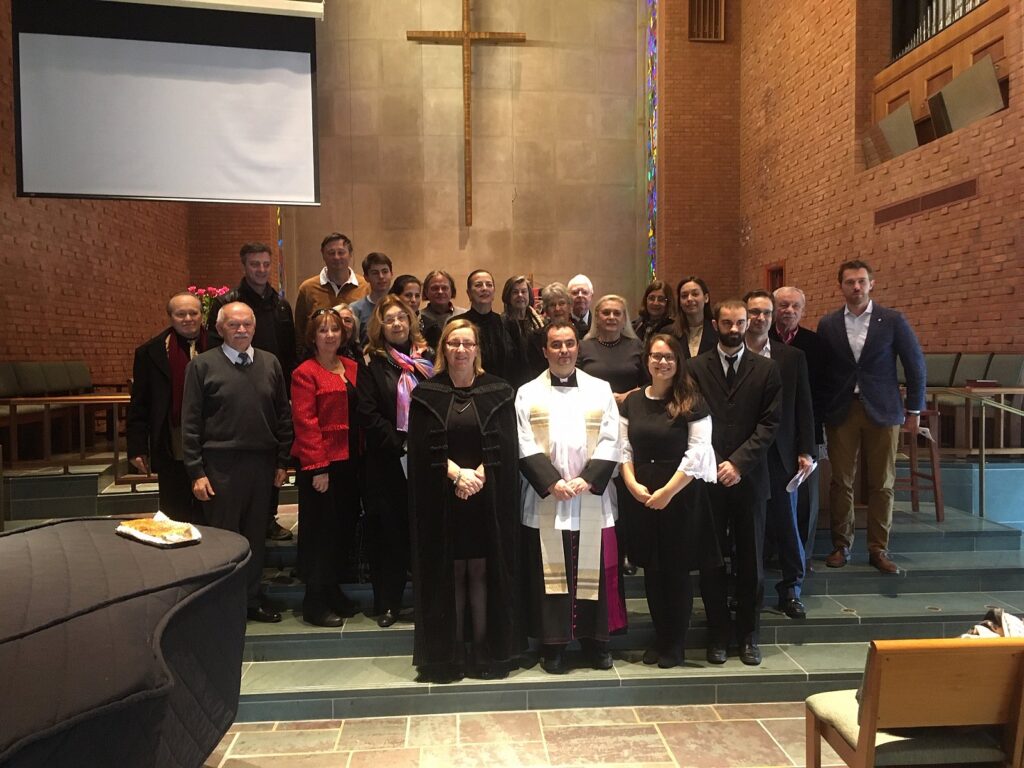
In 1982, we became a mission church, with pastoral ministry carried out by Dr. László Harsányi and Dr. Imre Bertalan. Through Professor Tibor Csikesz, who taught at the Seminary between 1960 and 1983, the chapel of the Wesley Theological Seminary became the permanent venue for services. We have remained there ever since, as it is an excellent location: centrally situated next to the American University on Massachusetts Avenue, a beautiful building with parking facilities, and an excellent relationship with Wesley. There has been no reason to move. Since the early 1980s, services have been held monthly, and in 1993, the Hungarian Reformed Church of Washington became a fully recognized church. When Dr. András Harsányi retired from the ministry in 1994, the congregation elected Dr. Imre Bertalan as its pastor.
Please tell us a few words about this outstanding Hungarian American pastor.
Uncle Imre truly was an outstanding figure. He arrived in the U.S. in 1946 and served the Hungarian American community actively for 60 years. As president of the Hungarian Reformed Federation of America (HRFA), he carried out extremely serious work over many years and led the Hungarian Reformed Church of Washington for more than 25 years. Before that, he served in several Hungarian Reformed congregations on the East Coast, including Manville, Passaic, and New Brunswick (New Jersey), and Staten Island (New York).
In addition to his service in the HRFA, he held leadership positions in the American Hungarian Federation, the Hungarian American Coalition, the Hungarian Scout Association in Exteris, and the World Federation of Hungarians. He also played a major role, together with Mrs. Tibor Csikesz, in the establishment of the Csikesz Foundation, which launched the associate-pastor scholarship program mentioned earlier. This congregation couldn’t support a pastor who doesn’t live here and has no other income. Rev. Imre moved here in 1980 and had a pension, so he served joyfully and at a high standard, not for the few hundred dollars he received as an honorarium. My situation is the same.
Returning to pastoral duties, how do they differ from elsewhere?
Our primary task is to proclaim God’s Word in Hungarian. Because of our non-organic development, services have traditionally been held monthly for 40 years. At one point, we raised the idea of holding at least two services a month, but interestingly, it was our warden who pointed out that this would not work, as people would then not be present either here or in their American congregations. We therefore remained with one service a month, in the hope that members belong to a local church, but once a month wish to hear God in their mother tongue. The fellowship meal after the service is also a very important element of congregational life, as we only meet once a month, and people like to stay together and talk. My husband took it upon himself to feed the congregation; we always arrive with huge platters of sandwiches.
Our monthly Bible studies have been held online since the Covid pandemic. We miss the joy of meeting in person, but as people age, many move to other states. This way, they can remain members, and the community can be preserved. Rev. András Paczári and Melinda Paczári Pongor have remained part of our lives even after their scholarships ended, and they hold Bible studies from Hungary across continents, for which we are very grateful.
Children’s services take place simultaneously with the main service when there are children present, so this always has to be handled flexibly. The same applies to confirmation: if there are children of the appropriate age in the congregation, we hold preparatory classes. Our last occasion was two years ago. At present, there is one boy of that age, whom we hope will be willing to take part in the preparation on his own.
You have emphasized that community togetherness is paramount. Could you elaborate?
This is the most important aspect of our cultural programs and even of our church events. For many years, we organized Christmas concerts with great success. Whenever visiting musicians or folk musicians are able to come to us as well—for example, the Flaska Band, who performed at the Scout Bazaar at the end of last year—we are happy to welcome them to the church. We try to extend our activities and make ourselves visible. Music is the simplest way to do this, so we support it as much as we can.
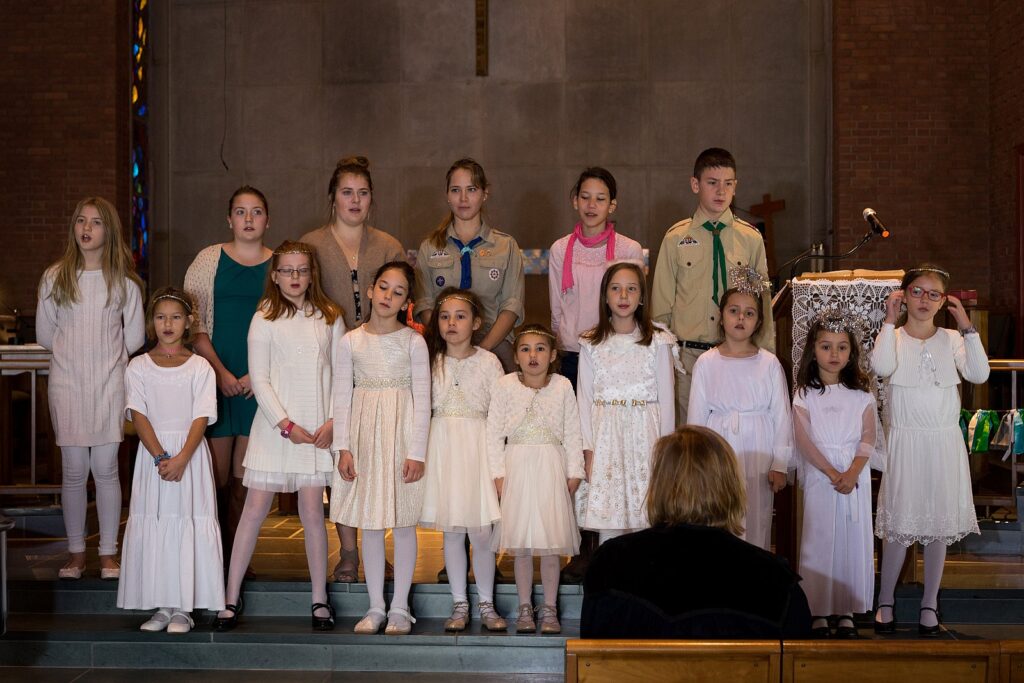
Our congregation is also the sponsoring body of the local scout troop, which is somewhat amusing since the troop is named after József Bátori, a Catholic bishop. The scouts perform the Nativity play both with us and in the Catholic community. Ecumenism works wonderfully in this area in general. There are many mixed marriages, so many people attend both Mass and Reformed services, and we have excellent cooperation with almost all Catholic priests. Every January, there is an ecumenical service: one year we host them, the next year they host us, and we preach from one another’s pulpits. I believe it is very important to seek what connects us rather than what divides us—especially in small communities. For this reason, a key pillar of community life is also the ability of local organizations to work well together.
How does this work in the Washington, D.C. area?
It works well here, and thank God, there are many Hungarian organizations with which we can cooperate. Washington, D.C., is special because the Hungarian Embassy is located here, so it is important for representatives of church organizations to attend events organized or supported by them as well. I like us to be seen. If I am occasionally the instrument of this visibility, I want it to be seen not as the presence of the Rev. Judit Mayer, but as the representation of the Reformed congregation. I’m a member of the board of trustees of the Kossuth Foundation and of the former Bethlen Home, which was a home for elderly Hungarians, but unfortunately, in the previous decade, it came under the umbrella of a Lutheran organization due to financial difficulties.
‘I want it to be seen not as the presence of the Rev. Judit Mayer, but as the representation of the Reformed congregation’
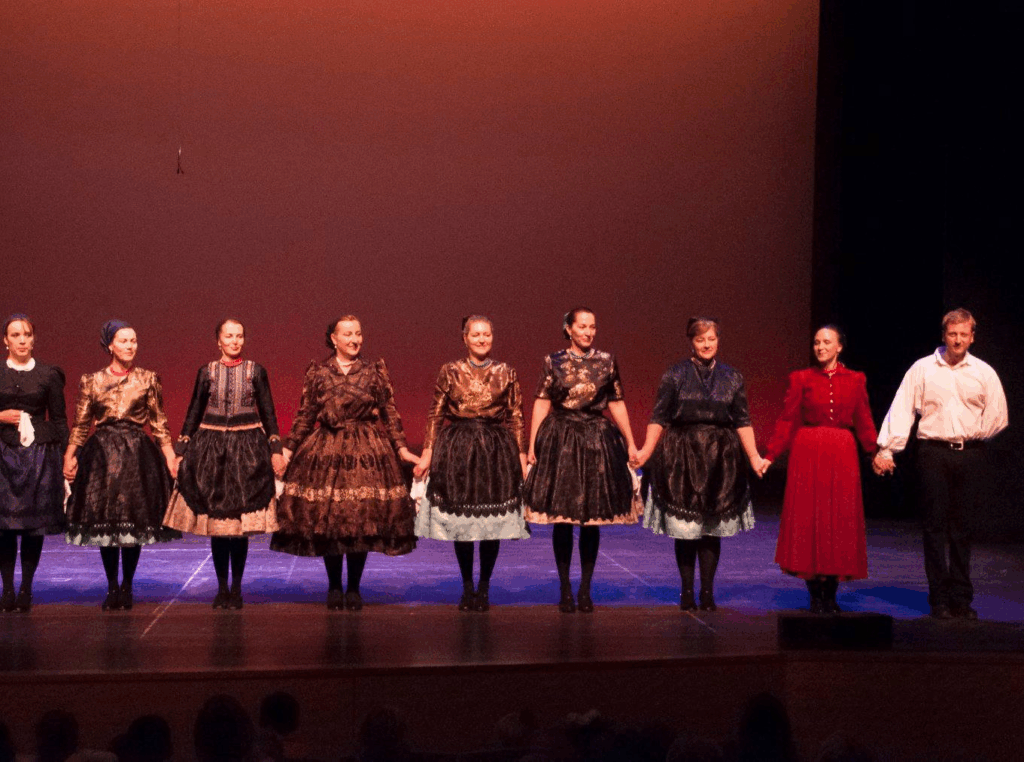
These are my only official positions; cooperation with other organizations happens informally: when something needs to be done, we do our part. We are present at every national commemoration on 15 March, 20 August, and 23 October. All three of my children were scouts; they have since grown out of it, but I remained involved because wonderful friendships developed with the mothers. Most recently, we even danced the bődi karikázó together at the Hungarian Heritage Festival. I’m grateful that I’m regarded not only as an official representative but also as a friend who is an active member of the community.
How large is the community, by the way?
This is a sad point, as we are steadily shrinking, like almost every Hungarian (church) community in America. It is extremely difficult even to maintain stability, let alone growth. We are affected by the aging of our members and by relocation, as there is a great deal of coming and going in this area. In addition, we are strongly affected by the trend that today fewer than half of Hungary’s population identifies as religious. Those who move here—members of diplomatic missions, scholars, employees, and researchers of financial or healthcare institutions—do not necessarily come from a religious background, and if they do, the majority of them are Catholic. Compared to others, therefore, we are drawing from a very small pool. At major festivals, thank God, we still gather in relatively large numbers, but regular attendance has declined significantly.
I very much hope that perhaps we can once again help a young person come here to study. Youthful momentum, new ideas, and new energy would be welcome. There are non-Hungarian spouses who attend our services. For example, my youngest daughter’s boyfriend, an American young man, is always faithfully present. Our pianist doesn’t speak a word of Hungarian either. I usually bring them an English translation of my sermons so that they feel they are part of the community. For two years now, we have held the September service in English, in order to gather and reach those children and grandchildren who may no longer speak Hungarian, but still have a connection to the congregation through their ancestors. The monthly Church Visitor is primarily in Hungarian, but at festivals it appears bilingual and in double length.
Please tell us about the national Hungarian Reformed summer camp.
Despite its name, the annual Pennsylvania youth camp is neither Hungarian nor Reformed in the sense that it isn’t a requirement for children to speak Hungarian or to be Reformed. As most of the children are from later generations, few of them speak Hungarian, so the language of the camp is English. Nor is it necessary for someone to be Reformed, or even to attend church regularly, because we trust that the Holy Spirit can reach someone regardless, and this camp provides a wonderful environment for that. The camp has been running for 40–50 years. Originally, it was intended for young people aged 13–18, but younger children always joined in as well. I suggested organizing a parallel children’s camp. I organize and lead these camps, though I’d like to hand them over to a younger generation in due course. We hold it in Mount Pleasant, near Ligonier, PA, usually in the second half of July. It’s a great deal of work, but also a tremendous source of renewal, both for the children and for us.
Each day begins with Bible reading, followed by a discussion, then group activities, games, and Hungarian-themed workshops such as sewing, whip-braiding, or pancake-making. Older children also have Bible study in the afternoon, while the younger ones have crafts, during which we also talk about the day’s theme. We try to maintain a healthy balance between teaching about God and Jesus and the children’s patience. For some children, this week is the only religious experience or opportunity for God to speak to them. Of course, God can reach someone anytime and anywhere, but for those who do not attend church and whose parents aren’t religious, this is often the only opportunity of the year.
How do children with no religious background end up at the camp? And how many participants are there usually?
Most often, they are invited by friends. I’ve never encountered a child who did not rave about these camps afterwards. They then tell their friends about it, whose parents send them along, because at least one week of the summer is taken care of, and because it is incredibly affordable. In the good old days, there were sometimes as many as 100 children. The Covid pandemic made this much more difficult, but now I see growing numbers again: this year, we are hoping for around 40 participants.
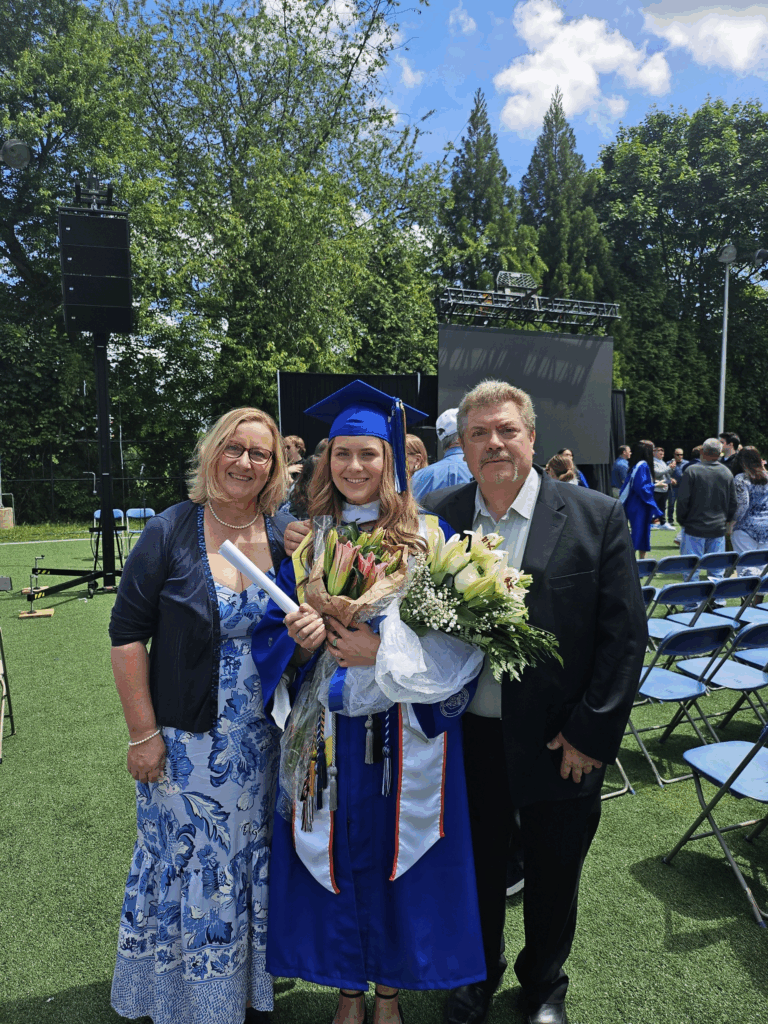
Camp supervisors are returning former campers—young people over 18 who have finished secondary school, or even older adults. Practical supervisor training also takes place at the camp. We do not allow just anyone to work with children: those who help must complete a two-year course. After several lean years, last year we managed to involve several pastors. This camp represents the future of the Reformed Church. My children always came to the camp. Lili graduated last year in political science at Marymount University and is preparing to move to Hungary. Zsófi is in her third year at an American university in Prague, studying psychology, and always schedules her holidays so that she can be there at the camp; last year, she began the supervisor training. Krisztina studies accounting and financial advising at George Mason University; she brings one of her friends every time.
What are your plans for the future?
We imagine our retirement years in Hungary; we’ve already begun renovating my childhood home in Mohács. At the same time, if one of our daughters remains in the U.S., we’ll probably share our time between the two continents. That will be decided by a higher power. I hope and pray that if the Lord wishes to preserve this Washington, D.C. congregation, He will appoint someone whose life brings them here just as I’m ready to return home, and who will be available to take the baton from me.
Read more Diaspora interviews: