Dr. István Gergely, an orthopedic surgeon from Székelyudvarhely (Odorheiu Secuiesc, Transylvania), moved to the U.S. six years ago, while his wife, Anna, arrived there 30 years ago as a student. István established the Transylvanian chapter of the American Hungarian Medical Association, which has taken over the new organization of the Gimi2US, a program offering a two-week visit to America for Transylvanian students. They have further ambitious plans: building twin-town partnerships and creating a long-term, sustainable medical, scientific, and economic cooperation network between Transylvania and the U.S.
***
You left behind a successful medical and civic career in Transylvania…
István: As a medical student at the University of Medicine in Marosvásárhely (Târgu Mureș, Transylvania), I led the local Hungarian students’ association for two years, and then the national student association for one year. Afterward, I remained at the orthopedics department as a faculty member, progressing through the academic ranks to senior lecturer. At some point, we established the Studium Foundation, where I served as financial director for ten years. We launched many projects that are still operating today; for example, we helped provide staff housing to a great number of lecturers. In the 2000s, the majority of Hungarian doctors migrated to Hungary for financial reasons. Because of the Romanian–Hungarian conflict around Hungarian-language higher education, it was difficult to employ Hungarian lecturers, but due to the housing situation, it became even harder to keep them on the job. The foundation succeeded in increasing not only the number of Hungarian students, but also of lecturers. We had five video projectors—novelty at the time—which any university lecturer, including ethnic Romanians, could borrow. We’ve established staff and family doctor housing projects across Transylvania, and we even built a medical library. This is the sphere of civic life where I found my place.
Why did you come to America then?
István: For personal reasons: I followed Anna—my teenage sweetheart and schoolmate at Tamási Áron High School, Székelyudvarhely, now my wife—who’s been living here for 30 years. Life separated us; we both started families, and each had two children, but then we found each other again, and I ended up here. The beginning was professionally very difficult for me. I’m extremely proud that, overcoming countless professional and bureaucratic obstacles, I succeeded—in a rather unique way—in obtaining the right to practice independently as an orthopedic surgeon here and thus was able to return to my profession. We live in Evansville, where I started to work as a hip and knee surgeon in 2026. For the past three years, I’ve also been teaching at the Indiana University (IU) medical school.

You also tried to focus on how you could help Hungarians in Transylvania…
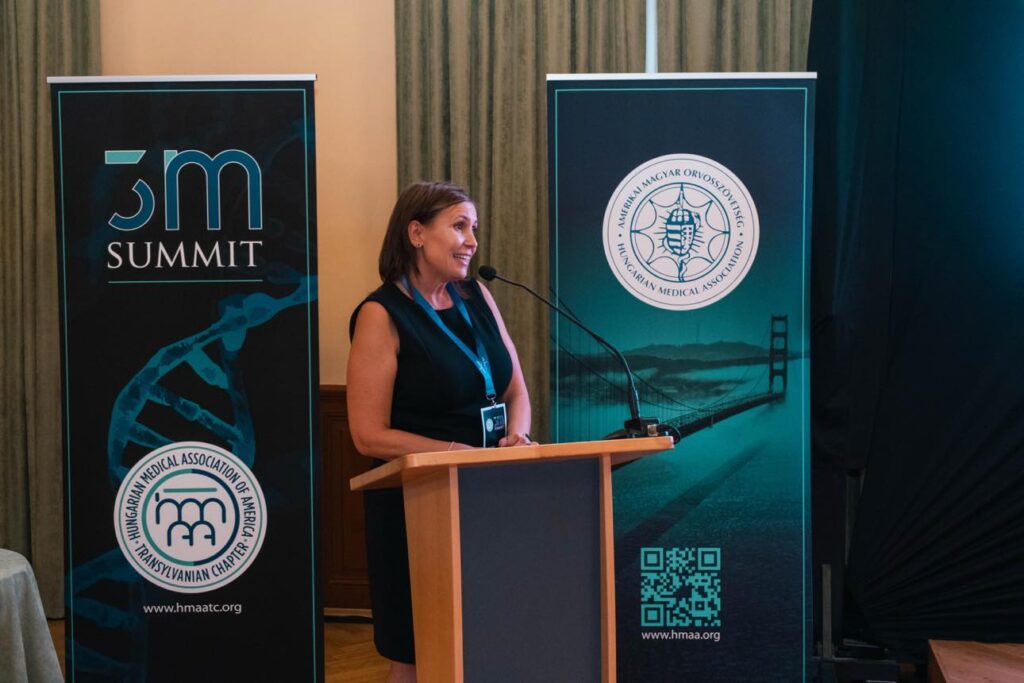
István: We live in the U.S., but our hearts are in Transylvania. I’m an experienced professional with 25 years in scientific and civic life, but in Transylvania I feel that—probably because of our minority status and Eastern European background—we don’t really dare to think big. Here, I realized that we are in no way inferior to American researchers, nor do we operate any less skillfully than American doctors. In fact, with fewer resources and weaker infrastructure, yet with practical knowledge rooted in personal experience and an ability to survive, we often solve more difficult cases than experts do here. The same goal motivated me when, three years ago, I became involved in the work of the Hungarian Medical Association of America and proposed to establish a Transylvanian chapter (HMAATC). We set up a foundation through which we aim to connect highly capable and experienced professionals. Our main goal is to create opportunities for talented young doctors and medical residents in Transylvania. They can learn new techniques abroad that may then reach Transylvania more quickly. We also maintain close relationships with all Transylvanian hospital directors to help with exactly what they need.
Isn’t there a serious risk that doctors might be tempted to remain abroad?
István: We bring over professionals who already have secure jobs and families back home, and know specifically what they want to learn abroad. We also have an initiative of organizing rotational summer practical training for them: this summer, 20–30 medical students will choose towns in Transylvania—instead of Hungary—where they are gladly welcomed. We’ve even developed a mobile app for this process. We’ve also involved mayors and county councils, because we’d like to create healthy competition between them—a factor influencing a young doctor’s decision is which town can offer more in terms of infrastructure or cultural life.
Let us turn to Anna and your high school project.
Anna: I came to the U.S. in 1995 as an exchange student. I spent a year in Chicago, completed secondary school here, and lived with a host family. The representatives of the University of Evansville, whom I met at a college fair, convinced me to study here. My degree is in global business and Spanish. I also studied in Spain and the U.K., and then completed my master’s degree here. I worked in corporate America, and after my children were born, I switched to academics, teaching, and working in university administration. We came up with the idea of the Gimi2US program together, after seeing in István’s children so many positive changes: how much more open and self-confident they became here.
István: The main aim of both our medical and high school projects is to strengthen self-confidence. My children and I have experienced how much the American world can open a person’s mind, how differently and more boldly we dare to think, and we realized we are capable of making our dreams come true. Above all, this is the feeling we want to take home; this is the reason we began working with students.
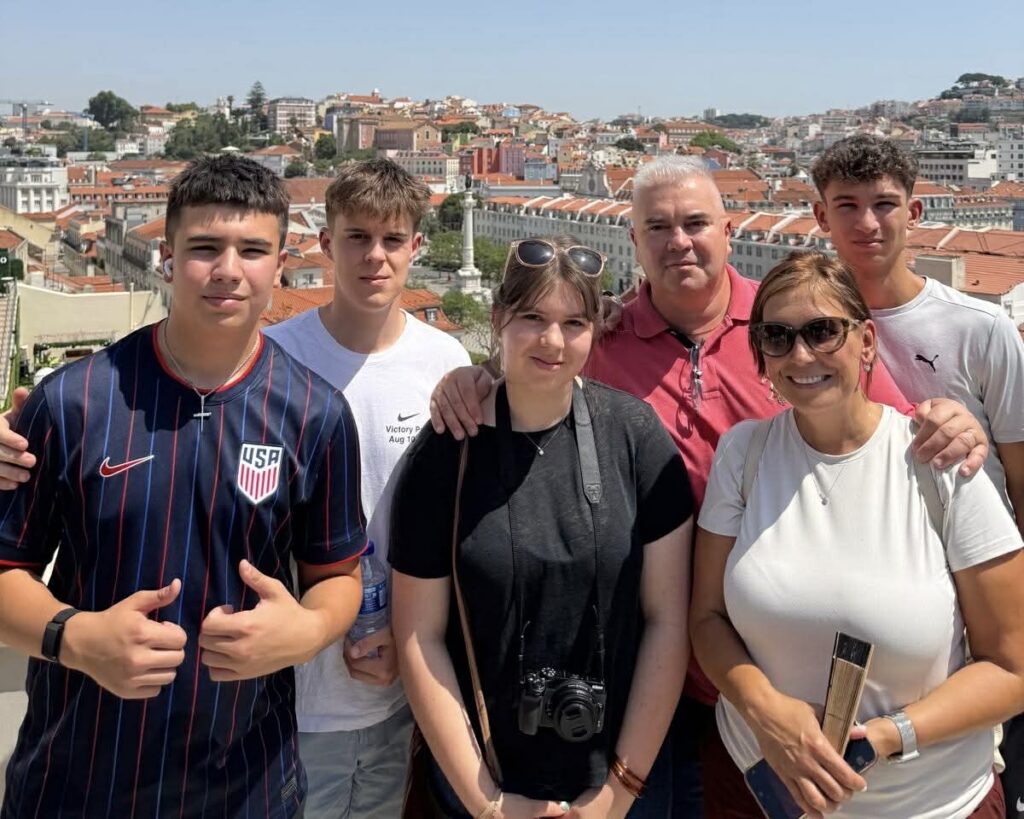
Anna: ‘Gimi’ comes from the name of the high schools in Transylvania; students are not only coming to the U.S., but also to us. We began it as a pilot program in 2025 with 26 students and two teachers from our own former high school. They visited three private, Catholic, and public schools, experiencing high school life. Staying with host families, they also gained an insight into American family life. They were able to get to know university life a little as well: they attended various courses, from healthcare to engineering. There were factory visits—Toyota’s largest factory is here—and we took them to clinics to meet doctors. In Indianapolis, they met Hungarian Honorary Consul Sidonia Nicolae Morales and Secretary of State of Indiana Diego Morales. We even took them to the IndyCar motor race. Afterward, they spent four days in Chicago. This year, 50 students and four teachers from the Bolyai Farkas High School in Marosvásárhely came to visit. We organized a similar program for them, but instead of Chicago, we took them to Washington, D.C., where they visited the Hungarian Embassy, gaining insight into the world of diplomacy, and to the Capitol and the Library of Congress, where they learned more about American history.
So will Gimi2US continue?
Anna: We didn’t begin with the intention of making this an ongoing commitment, but when we surveyed the students before they came and after they returned home, the program turned out to be so successful that we had to continue, so that more could experience it. Nobody expected that they’d gain so much experience in such a short time, or that their outlook would change so significantly. One of the most memorable experiences was the change-making workshop we organized, where they were encouraged to reflect on what they’d like to change during their lives within their environments—in their school, town, or region, etc.
István: We began as private individuals, but we handed it over to the HMAATC Foundation, because the project grew extremely quickly. An enormous amount of energy goes into organizing—this is how we are able to build trust between the parents, students, and ourselves. My motto has always been: we don’t build programs, but relationships of trust, because behind every genuine achievement stand human beings. This trust continues to grow through how a high school student experiences America and forms lifelong connections. The students may remain in contact with us through an alumni organization: once gaining admission to universities, we provide them with further academic opportunities and contacts—doctoral studies, master’s programs, exchange schemes. All the knowledge gathered here returns home. We are creating a living, breathing connection between Transylvania and the world—an extremely important opportunity.
American students and professionals are no more valuable than those back home; they simply dare to dream big. It’s this courage, determination, and self-awareness that we’d like to give to Transylvanians. For me, the medical sphere is the most important, but the same would be valuable in science or in any other field. We are planning a mentoring program. By connecting students with professionals living in the U.S. or Western Europe—doctors, lecturers, researchers—they can support students through their own networks. The experience gained in the wider world can flow directly back to Transylvania through these personal relationships.
Again, how do you manage to avoid this potential risk of remaining abroad?
Anna: When students return home, they experience a ‘reverse culture shock’, but the main question is what happens to and within them once the experiences settle. One year after they returned home, we surveyed them again, and it turned out that they had become much more self-confident and purposeful. They realized that Americans don’t necessarily know more than they do. They began to believe that they are capable of achieving what Americans can; to value their own culture more highly—including, for example, home-made food and family life—and to look towards the future with greater purposefulness as they gained a glimpse into it.
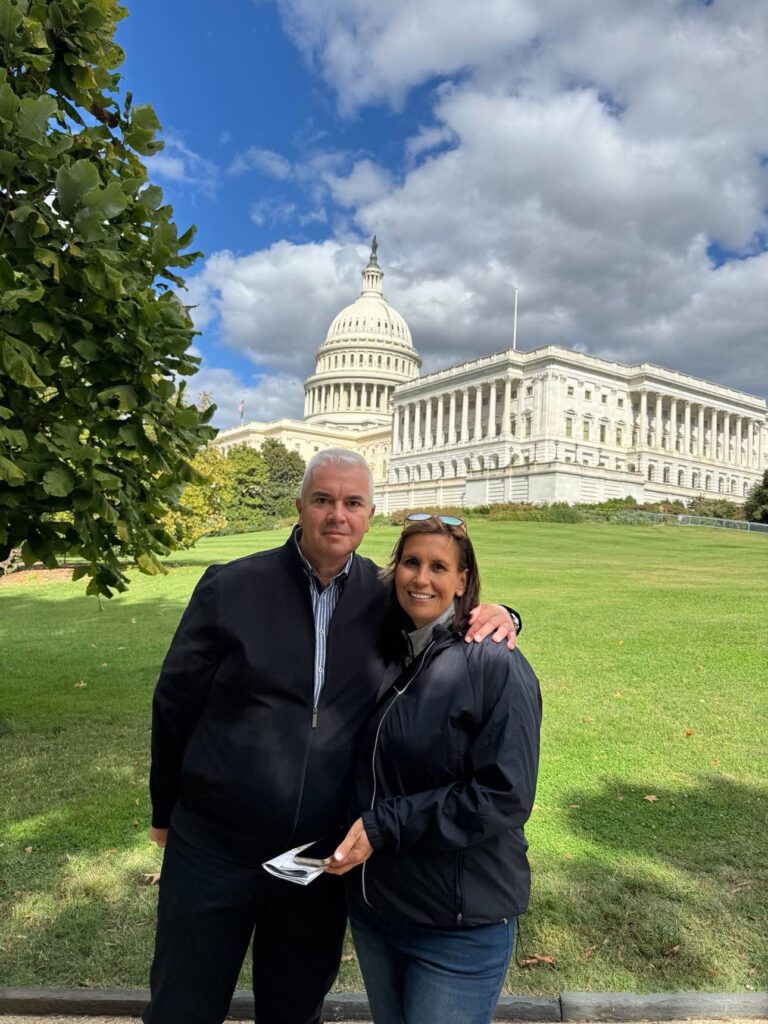
István: When we launched this project, there were people who were afraid that if we showed children what America is like, sooner or later, they’d leave their homes. For 25 years, I fought for people to remain at home, and this remains one of the foundation’s main goals. We never tell students not to leave; we tell them to go abroad, but then to return home, because it’s worth doing so. I feel that among the 340 million in the U.S., we matter nowhere near as much as we do in a smaller community. That sense of belonging—people know you and are waiting for you, you matter and can have an impact—is, in my opinion, far stronger there than it is here. If they experience this, the attraction of opportunities abroad becomes less powerful. Nowadays nobody can be stopped if they want to leave, but whoever learns how the world works, will also realize that back home they have far greater opportunities to shape it than they would in the U.S. We take them to universities so that they can see what kinds of opportunities exist, what new professions are emerging, how medicine connects with other fields: engineering, law, information technology, etc. When they learn about this, it doesn’t mean they’d return to the U.S., because higher education is extremely expensive here. However, they may come here, for example, on one-year scholarships or exchange programs.
What feedback did you receive from the host families and institutions?
Anna: In the Midwest, people aren’t accustomed to foreigners—it was a life-changing experience for them. Most of them said it was a pity we hadn’t done this earlier. Recently, a mother told me it opened her children’s eyes: since hosting a foreign student, they appreciate their own lives much more. They’d also like to travel to Transylvania, gain insight into the local education, and maintain contact with the local students. Many also reported that they realized that as a family, they needed to stay more closely connected. We didn’t expect to change their lives to such an extent… We received similar feedback from the organizations. This was also an entirely new experience for the school, for which they are extremely grateful. The principal didn’t believe that it would have such a profound effect on his students—it opened their eyes to another world beyond America. They greatly enjoyed learning Hungarian folk dance or working jointly on various projects.
István: Transylvanian students received applause for their folk dance performance, which they had never experienced in 15 years. Since living here, I’ve never been as proud as I was then. They also experienced how welcoming the American students were—we are far more reserved and often don’t even wish to show if we appreciate something. On the other hand, universities are completely astonished by how intelligent the Transylvanian students are. Some of them were even approached with invitations to study here—we, however, don’t release any personal data.
Other ‘fruits’ of the program? Which schools will be next?
Anna: The Ferenc Kölcsey High School in Szatmár (Satu Mare), the Székely Mikó College in Sepsiszentgyörgy (Sfântu Gheorghe), and the Apáczai Csere János High School in Kolozsvár (Cluj-Napoca). The principals of the previous two schools have also indicated that they’d like to return with another group.
István: We’ve started thinking about organizing thematic trips. For example, we’d like to take students interested in physics and mathematical informatics to Houston for a NASA visit; another group interested in geology, animal husbandry, etc., could travel to Costa Rica to study the local flora and fauna. We established sister-school relationships to enable them to connect directly. A group of 48—last year’s host families—will travel to Europe in June. Afterward came the idea of establishing twin towns and regional partnerships. Evansville is a ‘small town’ of 300,000, but it lies in the middle of nowhere, doesn’t attract any tourists, so the fact that 50 foreign students came here was enough to catch the attention of the mayor’s office.
‘The students will soon reach a point where scientific cooperation and the medical environment will begin to interest them’
How do you plan to fund them?
Anna: Supporting students fits perfectly into the HMAATC Foundation’s portfolio, and we can secure the financial background more easily. Flights and transportation have significant expenses, and we had to offer financial incentives to some of the host families in the Midwest. We are able to apply for funding; the local Business Association and the Rotary Club are also helping to reduce the costs for families, as are various local companies that can deduct their support from their taxes.
István: The students will soon reach a point where scientific cooperation and the medical environment will begin to interest them. Thus, our two simultaneous projects will mature and intertwine. Our aim is to organize various fundraising events through which the foundation’s different programs can be realized. As a new initiative, we’ve recently sat down with the ten largest local donors, with whom we established the MedAlliance for Transylvania—a non-profit foundation linked with a professional team of businesspeople to think together about the future.
Read more Diaspora interviews:
At a time when public debate is increasingly polarized and superficial, Hungarian Conservative remains committed to depth, intellectual honesty, and independent conservative thought.
Producing high-quality journalism requires resources. Your contribution helps us expand our coverage, reach new audiences, and keep our content accessible.

Please consider supporting our mission.