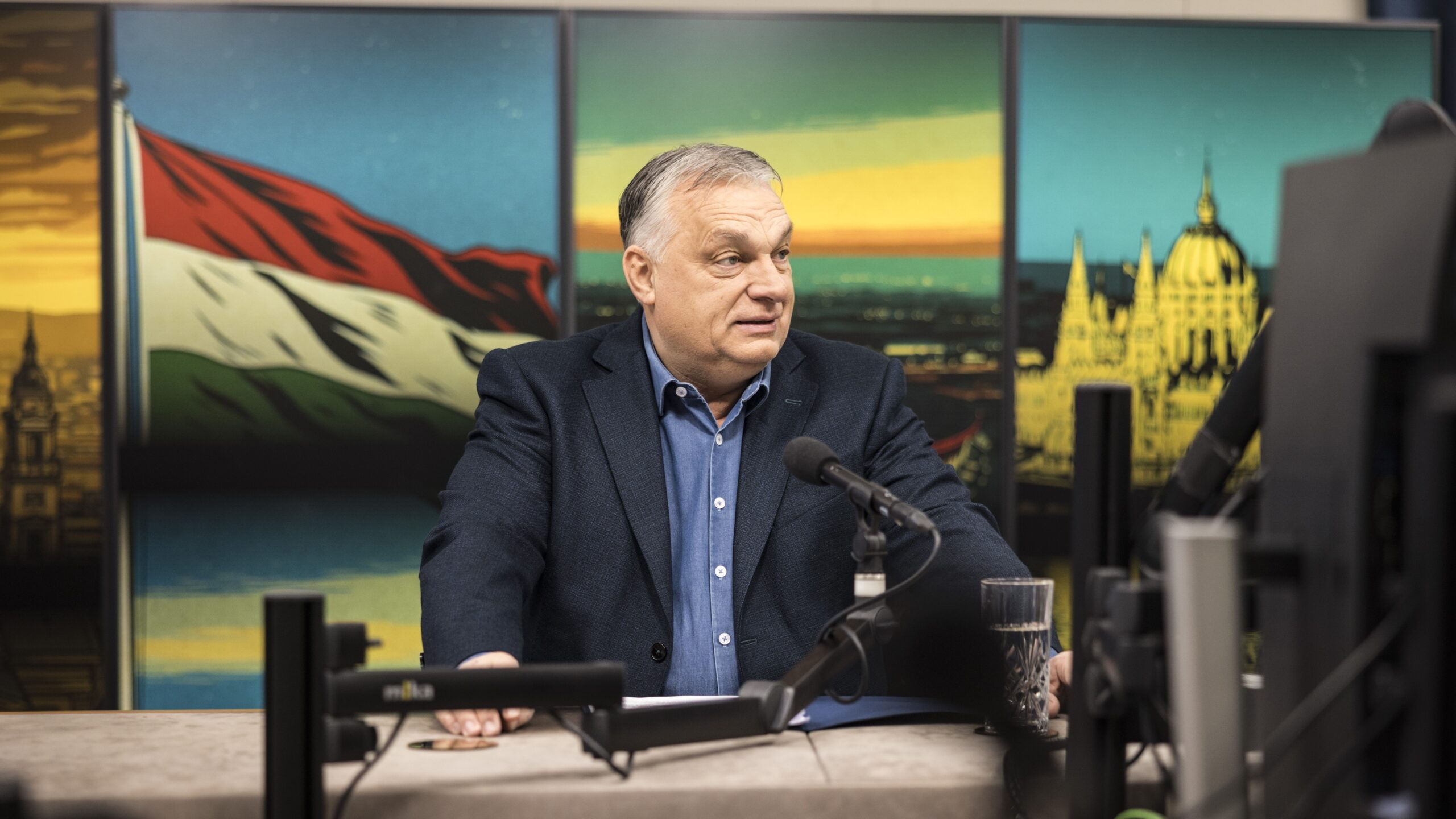
Prime Minister Viktor Orbán gave his first interview of the year on Friday morning on public Kossuth Radio, addressing EU plans to provide massive financial support to Ukraine, the government’s national petition on the issue, Hungary’s position in a changing world order, and the stakes of the 12 April parliamentary election. He also spoke about the recent heavy snowfall and the work of emergency services.
Orbán said the country had passed the ‘snow test’, noting that while extreme weather poses challenges for everyone, Hungary proved capable of operating smoothly even under extraordinary conditions. He thanked all those who contributed to relief efforts and praised the public for remaining patient and disciplined.
He confirmed that a red alert remains in effect due to severe cold, meaning all social institutions are required to admit people without shelter. According to the prime minister, the system has sufficient capacity to care for those in need throughout the winter. He added that gas and energy reserves were well above 40 per cent of annual consumption at the start of the season, ensuring secure supply. The firewood support programme has been expanded, with doubled funding and a more efficient distribution system, backed by government resources.
Turning to Ukraine, Orbán said the scale of EU funding has become increasingly difficult to track, estimating that Brussels has already spent around 193 billion euros on support. He contrasted this with the United States, which he said had begun recovering funds earlier, while EU leaders continue to provide largely unconditional financial assistance. According to Orbán, Ukraine has little incentive to refuse such support and has moved from requesting aid to demanding it.
He argued that the EU lacks the financial capacity to cover the proposed 90 billion euros and would instead seek contributions from member states. Hungary, along with the Czech Republic and Slovakia, has refused to participate and has made clear it will not do so in the future. Orbán said Ukraine has already presented a ten-year funding demand totalling 800 billion euros, an amount he claimed could finance Hungarian pensions or family support for decades.
The prime minister criticized EU leadership for betting on a Ukrainian military victory and expecting repayment from future Russian war reparations, at a time when Europeans themselves are facing economic strain. He warned that Brussels expects serious austerity measures from Hungary, including cuts to family tax benefits, personal income tax exemptions, utility price caps, pensions, and housing support programmes. Orbán said he has consistently resisted such demands and accused Brussels of trying to ‘pump’ money out of Hungary. He added that the relevant documents have been made public.
Orbán said the government will ask citizens for their opinion through a national petition, arguing that the issue is one of the central stakes of the upcoming election. He claimed that opposition parties support Brussels and Ukraine unconditionally, while the governing parties prioritize Hungarian interests. He warned that Europe is increasingly being drawn toward deeper involvement in the war, including discussions about sending troops and reintroducing conscription, raising concerns about the safety of future generations.
According to Orbán, the most critical question for Hungary’s future is whether the country can stay out of the war and avoid financing it. He argued that continued funding prolongs the conflict and human suffering, while peace negotiations remain a viable alternative.
The prime minister also spoke about the emergence of a new world order, saying that signs since 2012 have pointed to the decline of the liberal global system and the return of a nation-based era. Hungary, he said, has responded by strengthening bilateral ties with major powers such as Türkiye, China, and Russia.
Looking ahead, Orbán described 2026 as both a year of risks and opportunities. He said choosing the ‘Brussels path’ would lead to a war economy, while the ‘Hungarian path’ would allow for higher minimum wages, tax exemptions, a 14th-month pension, support for small businesses, and continued wage increases for teachers. He concluded that a favourable election result would allow Hungary to seize these opportunities.
Related articles: