Hungarian Prime Minister Viktor Orbán called on the European Union to review and suspend sanctions on Russian energy amid skyrocketing energy prices caused by the escalating conflict in the Middle East and disruptions to global supplies.
In a video posted on his X page, Orbán said that due to the Ukrainian blockade of oil transit through the Druzhba pipeline and the war involving Iran, the price of crude oil has begun to rise sharply in Hungary as well. ‘In this situation, the Ukrainian oil blockade introduced by President Volodymyr Zelenskyy represents the most serious threat not only to Hungary and Slovakia, but to the entire European Union,’ Orbán pointed out.
The prime minister continued by stating that Europe must make a key decision to tackle the crisis, namely the review and suspension of all sanctions imposed on Russian energy. ‘I initiated this today in a letter to European Commission President Ursula von der Leyen,’ he added.
Orbán Viktor on X (formerly Twitter): “🛢️ The Ukrainian oil blockade and the war in the Middle East are sending oil prices soaring. Europe must act. Today, I wrote to President Costa and Von der Leyen calling for the review and suspension of sanctions on Russian energy. pic.twitter.com/L80TxS5iUC / X”
🛢️ The Ukrainian oil blockade and the war in the Middle East are sending oil prices soaring. Europe must act. Today, I wrote to President Costa and Von der Leyen calling for the review and suspension of sanctions on Russian energy. pic.twitter.com/L80TxS5iUC
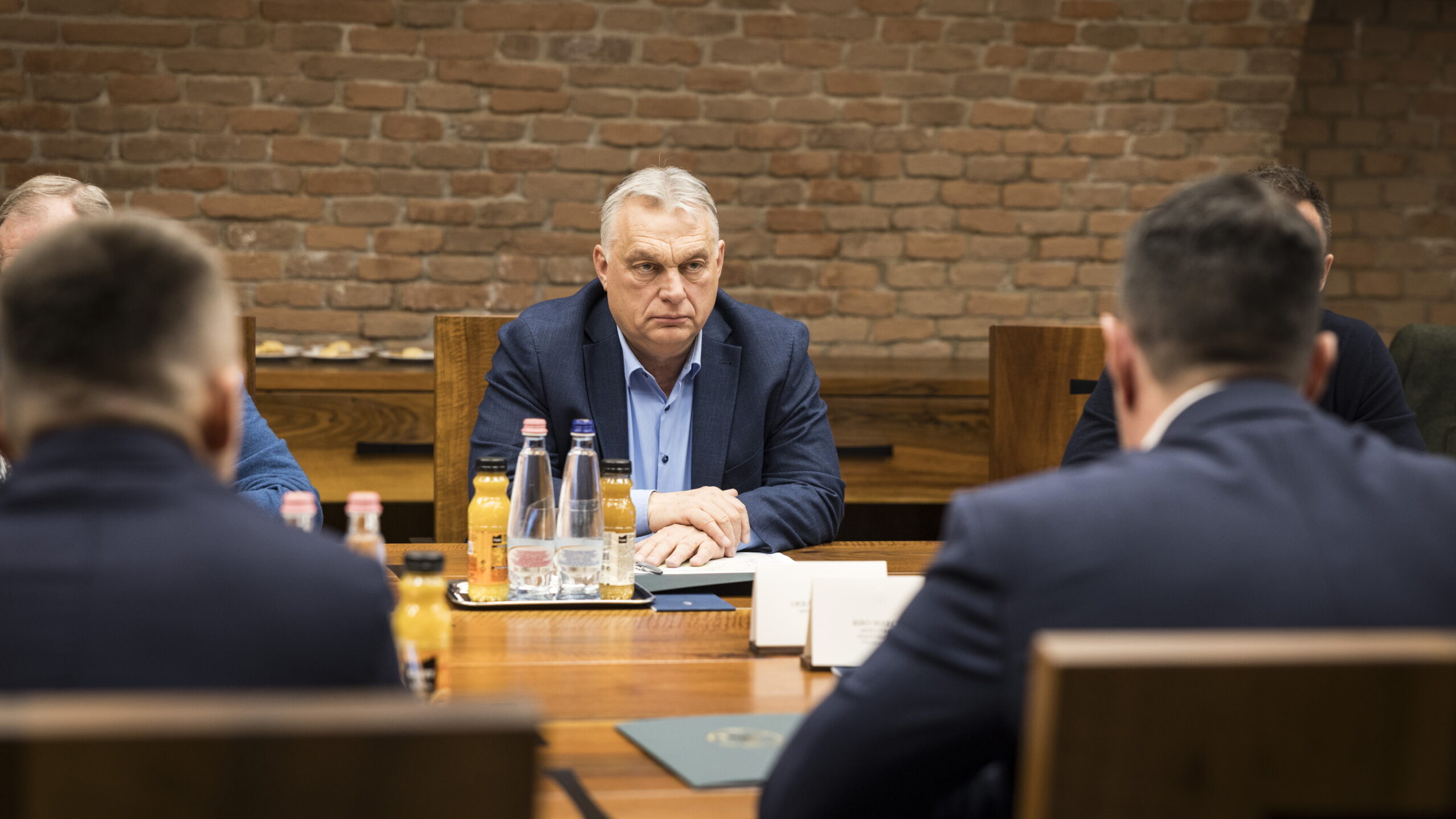
Orbán also said that Hungary must act to prevent diesel and petrol prices from rising to an ‘unbearable level’, adding that he convened an extraordinary meeting of the government later on Monday to address the issue. The most likely decision, he indicated, would be the reintroduction of a fuel price cap, which the government previously implemented during a similar crisis at the time of the COVID-19 disruptions to energy supplies.
Hungarian Minister of Foreign Affairs and Trade Péter Szijjártó also called on the EU to ‘immediately lift’ its ban on Russian oil and gas imports earlier on Monday. ‘Europe is especially exposed because the EU had already banned Russian energy imports. Now the conflict in the Middle East is cutting global supply as well. When supply shrinks, prices rise. Europe is therefore facing the risk of dramatic price increases,’ Szijjártó wrote in a post on X. He added that if the sanctions remain in place, they will cause ‘serious harm’ to European people and economies. ‘The focus should be on protecting the interests of Europeans, not ideology,’ he concluded.
Péter Szijjártó on X (formerly Twitter): “The EU should immediately lift its ban on Russian oil and gas imports. With the war in the Middle East escalating and the Strait of Hormuz closed, a major share of global energy supply is now at risk.Europe is especially exposed because the EU had already banned Russian energy… / X”
The EU should immediately lift its ban on Russian oil and gas imports. With the war in the Middle East escalating and the Strait of Hormuz closed, a major share of global energy supply is now at risk.Europe is especially exposed because the EU had already banned Russian energy…
Europe has already been hit by the negative consequences of the Middle Eastern crisis since the United States and Israel launched a joint military operation against Iran on 28 February. As Hungarian Conservative reported, European gas prices rose by 28 per cent just two days after the strikes, while electricity prices also increased.
During subsequent retaliatory strikes against Gulf states allied with the United States, Tehran managed to hit critical energy infrastructure, including Qatar’s main LNG hub, Ras Laffan Industrial City. Following the attack, Qatar halted gas production and suspended LNG exports, declaring force majeure. Qatar accounts for around 20 per cent of global LNG supply, triggering panic on global markets and pushing prices even higher.
EU Vulnerability Exposed
After phasing out Russian pipeline gas imports, Europe became heavily dependent on LNG, making the continent extremely vulnerable to such crises. That is precisely one of the main reasons why Hungary has opposed such sanctions. Orbán has repeatedly warned in recent years that replacing one dependency with another—particularly one reliant on supplies from a volatile region—does not represent diversification but rather a dangerous strategic mistake. Now, as the first major crisis since the phase-out of Russian energy hits Europe, ordinary citizens are beginning to bear the consequences of ideology-driven policies pursued by EU leadership.
On Monday, 9 March, the European benchmark TTF gas price rose above €60/MWh, nearly doubling from around €32 earlier in the crisis. Weekly increases of 40–50 per cent have been recorded since the start of the conflict. The Baltic LNG index registered a 543 per cent weekly increase, the largest ever recorded. Oil prices have also surged, with Brent crude climbing toward $100–120 per barrel amid the disruption.
Energy analysts currently outline three possible scenarios, two of which could prove catastrophic for Europe, which is already struggling with a significant loss of competitiveness and economic output—partly linked to the phase-out of cheap Russian energy, which had been one of the fundamental pillars of European industrial growth for decades.
‘After phasing out Russian pipeline gas imports, Europe became heavily dependent on LNG’
The first scenario assumes a short disruption, with Qatar resuming production within weeks. In that case, LNG prices could fall quickly, easing pressure on European energy markets. The second scenario involves a prolonged disruption, particularly if the Strait of Hormuz remains blocked for an extended period. Under such circumstances, Europe would face persistent LNG shortages, with gas prices potentially rising to €80–100/MWh. At present, European gas storage levels are around 30 per cent full—significantly below normal levels for this time of year—further complicating the situation.
However, that is nothing compared to what awaits Europe if the crisis does not resolve soon and other Gulf exporters halt exports. In that scenario, global LNG markets could face the worst energy shock since the 1970s oil crisis. Gas prices would triple compared to pre-crisis levels, disruptions to oil and LNG shipments would cause heavy industry to halt production, inflation would skyrocket, and Europe could face recession across a continent already caught in polycrisis.
While the war in the Middle East itself is not the responsibility of European leaders, the continent’s current vulnerability is in large part the result of strategic short-sightedness and ideology-driven energy policy. As a result, the severe economic consequences now facing Europe reflect decisions made by the EU leadership, which must ultimately take responsibility.
Related articles: