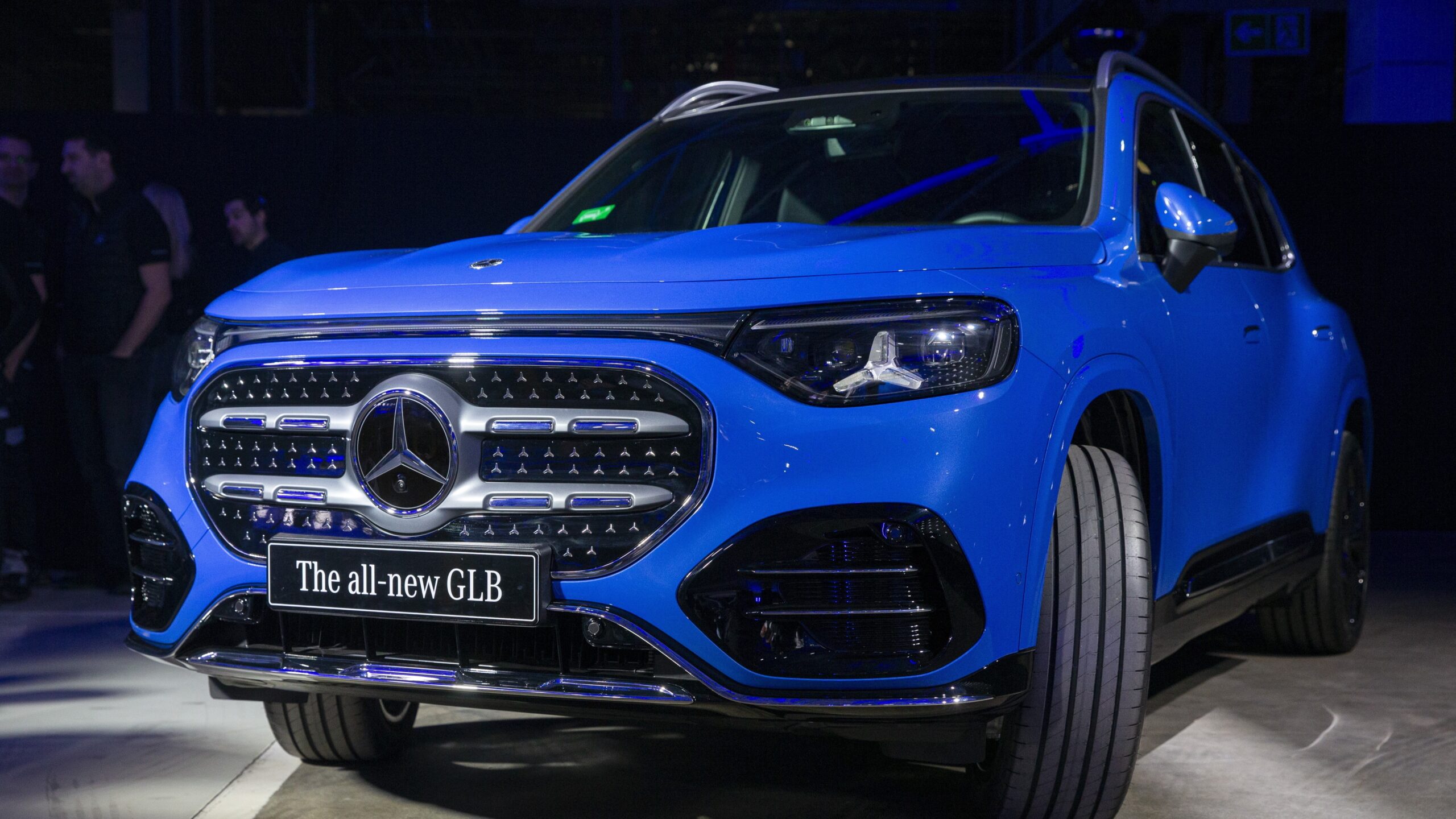
Germany’s luxury carmaker Mercedes-Benz reported a sharp decline in profits last year, as a combination of weaker Chinese sales, tariffs and currency headwinds weighed on performance, according to an article from German daily Der Standard.
The company’s net profit dropped by 49 per cent year-on-year, from 10.4 billion to 5.3 billion euros, marking the third consecutive annual decline. Operating profit (EBIT) fell by 57 per cent, while revenue decreased by 9 per cent to 132.2 billion euros.
The disappointing results came as Mercedes also faced a recall in the United States involving nearly 12,000 EQB electric vehicles. According to the US National Highway Traffic Safety Administration (NHTSA), a potential internal battery fault could lead to a fire risk both while driving and when parked. Owners have been advised to park their vehicles outdoors, limit charging and arrange a free battery replacement. Although the company’s share price recovered somewhat on Friday, it had fallen sharply the previous day following the earnings announcement.
Analysts at Raiffeisen Research described the past financial year as marked by a ‘toxic mix’ of tariffs, a weak dollar and difficulties in China. Mercedes estimates that tariffs alone cost the group around 1 billion euros. Total global sales reached just over 1.8 million passenger cars, down 9 per cent compared with 2024.
The downturn was particularly pronounced in China, where Mercedes recorded a 19 per cent drop in sales, according to German automotive expert Stefan Bratzel. By comparison, Volkswagen Group saw a 7.7 per cent decline in China, while BMW’s sales fell by 12.5 per cent.
‘A potential internal battery fault could lead to a fire risk both while driving and when parked’
Like its rivals, Mercedes has launched an extensive cost-cutting programme. The company said savings of more than 3.5 billion euros in its passenger car division helped offset part of the headwinds. Presenting the figures in Sindelfingen, where the luxury S-Class is produced, chief executive Ola Källenius sought to project confidence, emphasizing the company’s intention to return to growth. Over the medium term, Mercedes aims to raise annual passenger car sales back to around two million units, with a particular focus on high-end S-Class and G-Class models.
At the same time, the company signalled that future growth is likely to occur increasingly outside Germany. Mercedes plans to expand production in Eastern Europe, doubling capacity at its plant in Kecskemét, Hungary, from 200,000 to 400,000 units. This would make it the brand’s largest factory in Europe. Production at German sites in Sindelfingen, Rastatt and Bremen is expected to stand at around 300,000 vehicles each.
Raiffeisen analysts cautioned that pressure on profit margins is likely to persist, although they suggested the company may be approaching the bottom of the downturn. They also highlighted the relatively high dividend payout as a positive element for investors.
Related articles: