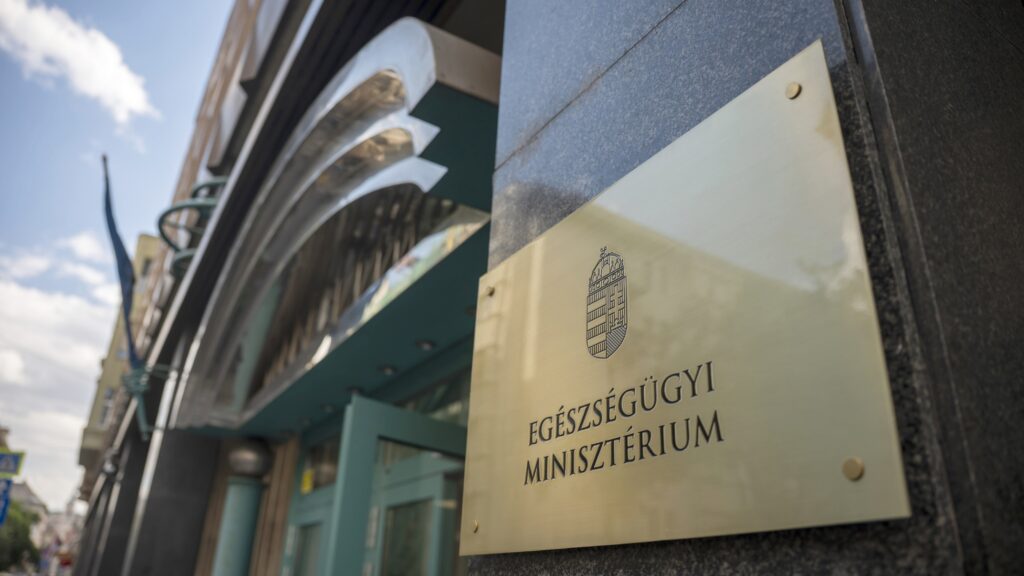
European Union finance ministers approved Hungary’s revised Recovery and Resilience Plan on Friday, 10 July, clearing the final Council-level hurdle for Prime Minister Péter Magyar’s government to seek €10 billion from the bloc’s post-pandemic recovery facility.
Under the Council Implementing Decision, Hungary will be eligible for €6,511,661,435 in non-repayable grants and a maximum of €3,488,338,565 in preferential loans. The revised programme reduces the loan component by almost €430 million from the amount previously available, bringing the plan’s total estimated cost to exactly €10 billion.
The Council said the new programme would finance reforms and investments concerning sustainable transport, energy, healthcare, digitalization, and economic resilience. It also incorporates measures intended to strengthen judicial independence, Hungary’s anti-corruption framework, public-procurement transparency, and safeguards protecting the EU’s financial interests.
However, the approval does not mean the funds will be transferred automatically. Recovery-fund payments remain performance-based, requiring the European Commission to verify that Hungary has completed the agreed milestones and targets. All reforms and investments must be implemented by 31 August, leaving the government less than two months to fulfil the remaining conditions.
Finance Minister András Kármán acknowledged in Brussels that the August deadline was ‘very tight’, but said it should not prevent Hungary from accessing the funds. Before the decision, he described the approval as an important achievement and said the programme would support railway development, housing, small and medium-sized enterprises, and Hungary’s green and digital transitions.
The decision implements a central element of the political agreement announced by Prime Minister Péter Magyar and European Commission President Ursula von der Leyen on 29 May. That wider package potentially gave Hungary access to €16.4 billion in previously blocked funding: €10 billion under the recovery facility, €4.2 billion in cohesion funding linked to the EU conditionality procedure, and a further €2.2 billion connected to university governance and academic-freedom safeguards.
Von der Leyen described the May accord as a ‘historic agreement’, while Magyar presented it as the fulfilment of his election pledge to recover EU money withheld during Viktor Orbán’s government over corruption and rule-of-law concerns, as well as wider disagreements between Brussels and Budapest. The Tisza Party’s main campaign promise was to bring this funding home by implementing anti-corruption measures, joining the European Public Prosecutor’s Office (EPPO), and completing the 27 super milestones set by the Commission.
Magyar announced in May that Hungary had submitted its application to join the EPPO, while the legislative groundwork was laid on 9 June, when the government submitted proposal T/174, formally titled ‘On the amendment of certain laws necessary for access to European Union funds’. The package is intended to fulfil EU anti-corruption, transparency, and university-governance milestones by expanding the Integrity Authority’s investigative powers, overhauling public officials’ asset declarations, increasing scrutiny of public procurement and private-equity ownership, and returning assets held by public-interest foundations to state control.
‘Actual disbursement will depend on Hungary completing the reforms and submitting successful payment requests before the facility expires at the end of 2026’
The measures were followed by Magyar’s broader ‘Operation Purgatory’ constitutional proposal, which extends beyond the specific conditions attached to EU funding, including the removal of President Tamás Sulyok and other public officials appointed under the previous administration. Fidesz accused Tisza of moving towards authoritarianism under the guise of restoring the rule of law and complying with the Commission.
Friday’s ECOFIN decision formally approves the recovery-plan component of that broader agreement, but actual disbursement will depend on Hungary completing the reforms and submitting successful payment requests before the facility expires at the end of 2026.
Related articles:
At a time when public debate is increasingly polarized and superficial, Hungarian Conservative remains committed to depth, intellectual honesty, and independent conservative thought.
Producing high-quality journalism requires resources. Your contribution helps us expand our coverage, reach new audiences, and keep our content accessible.

Please consider supporting our mission.