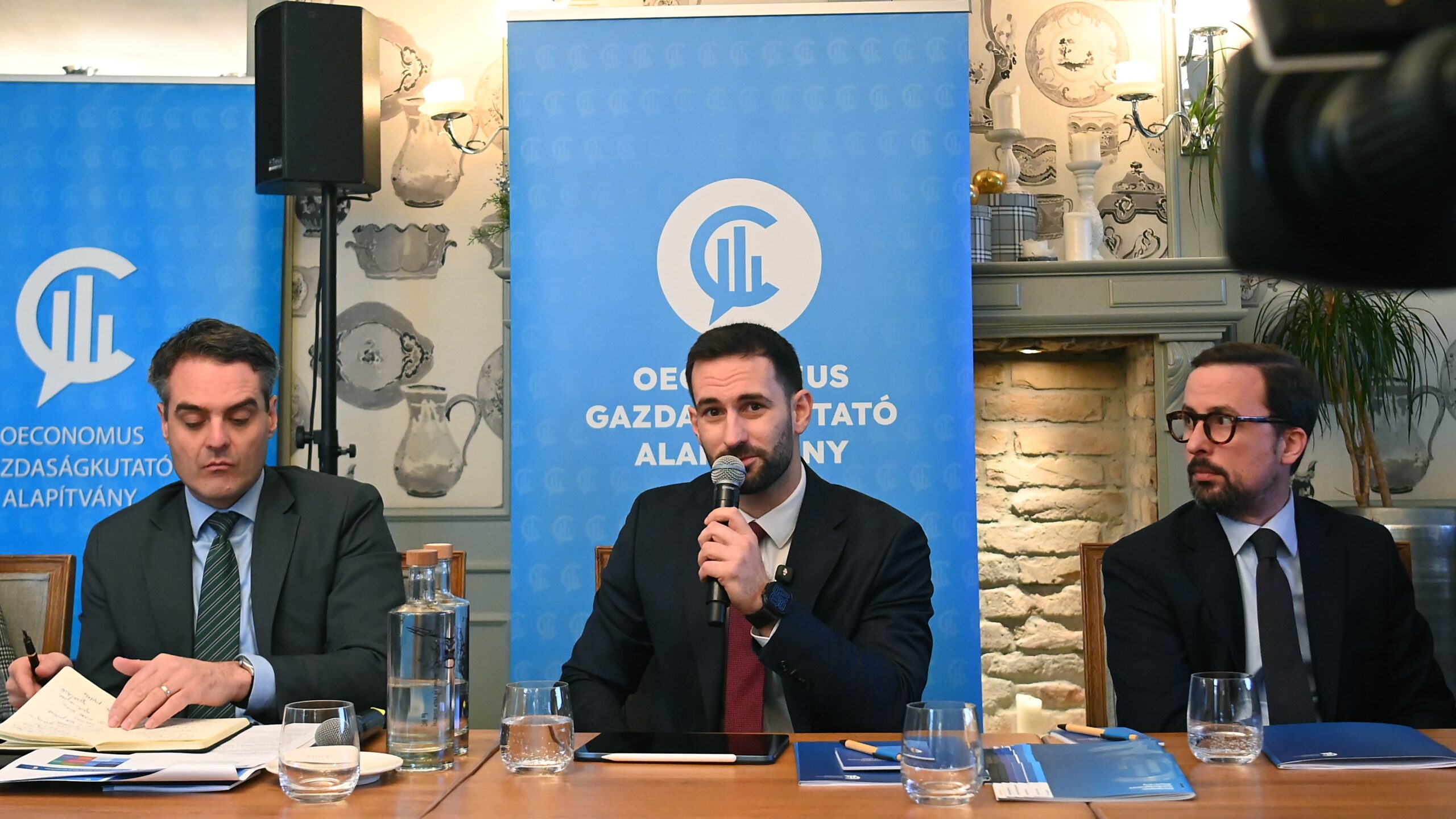
Hungary’s economy is set for a two-phase boost in 2026, with household spending driving growth in the first half and investment expected to take the lead later on, spokesperson of the Ministry of National Economy André Palóc said on Thursday at a press event organized by Oeconomus Economic Research Foundation in Budapest.
Palóc said government measures have brought inflation under control. Cutting retail mark-ups led to food prices falling by around 22 per cent, while drugstore goods dropped by nearly 28 per cent, providing what he described as tangible relief for consumers.
The spokesperson continued by pointing out that the consumer confidence index has improved, with people feeling more optimistic about their financial situation. Even GKI, a research group that often criticizes government policy, has reported progress, he said. Business sentiment has also strengthened, partly due to newly introduced tax cut programmes.
Several government policies are at the centre of this push. Palóc highlighted the family tax reduction programme, which he said leaves nearly HUF 1,000 billion with families, as well as the Otthon Start housing scheme, which not only makes it easier for families to buy homes through low-interest loans, but also encourages new home construction.
Palóc said the government also launched a HUF 100 billion action plan for restaurants: expenses related to restaurant consumption will be tax-free up to a certain value limit, and industry actors will have access to preferential loans.
The spokesperson also noted that January this year has been significantly colder than the seasonal average, prompting the government to intervene to ensure families were not hit with higher utility bills.
Szabolcs Pásztor, Research Director at Oeconomus, said he expects Hungary’s economy to expand by 2 to 3 per cent in 2026, citing measures such as increased family tax allowances, the Demján Sándor programme, and a credit scheme for entrepreneurs.
Dóra Erdélyi, Deputy Research Director at the foundation, said nominal wages are expected to rise by 8 to 10 per cent in 2026, with real wage growth projected at 4 to 6 per cent. She added that the resulting increase in purchasing power is likely to lift consumption and support higher GDP growth.
Related articles: