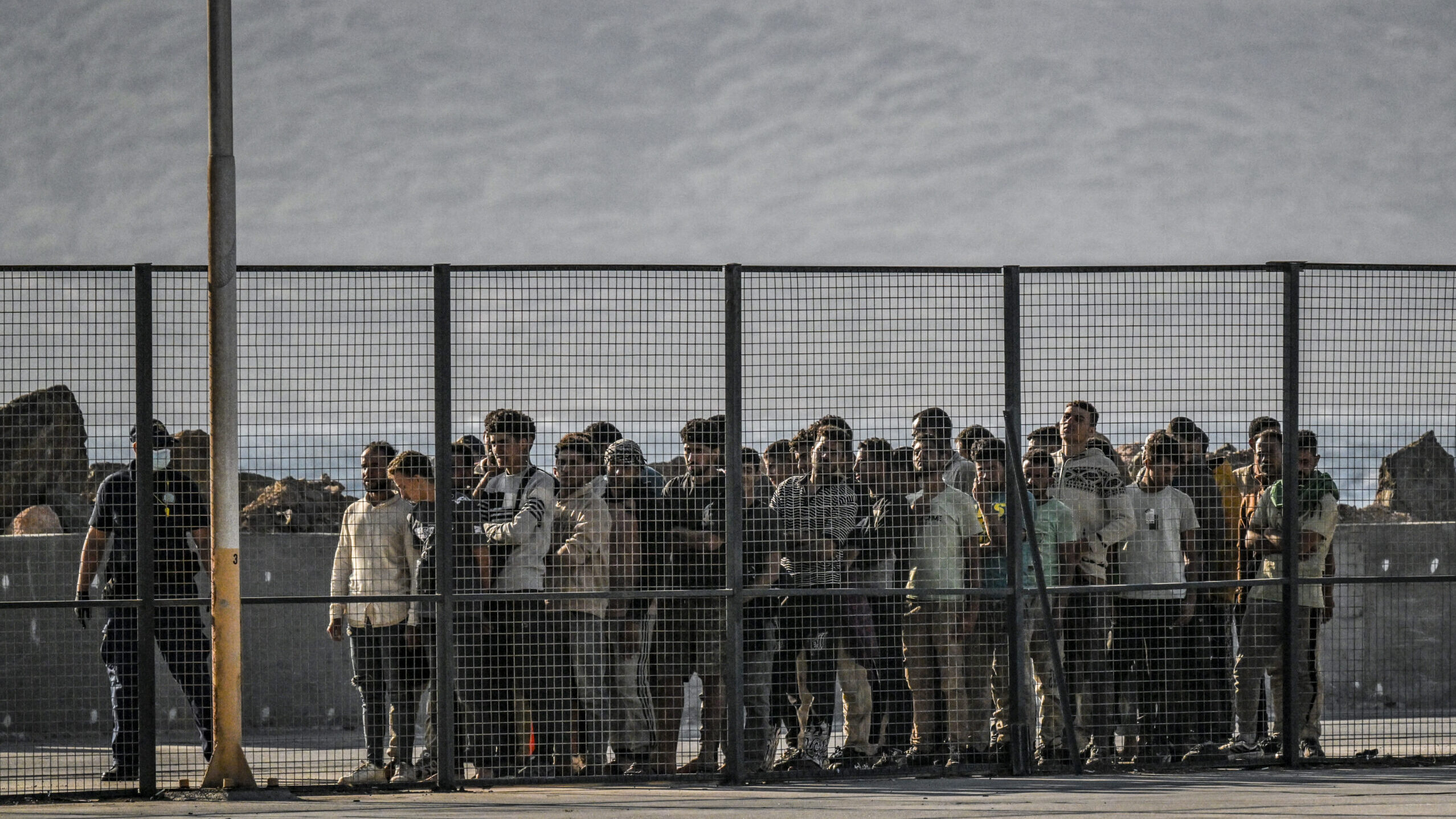
Greece’s hard-line ‘prison or return’ migration policy has produced its first measurable results, with 599 migrants opting for voluntary return from February to early July rather than face imprisonment under the country’s new illegal-stay regime, according to government data reported by Proto Thema.
The wider data is also remarkably positive: total returns in the first half of 2026 reached 2,638, up 20 per cent year on year, while forced returns rose 41 per cent to 1,292. The 599 illegal migrants returned under the new scheme nevertheless represent the number from which Athens could draw further conclusions: it gives an early indication that criminal penalties can change behaviour at the final stage of the return process.
Under legislation passed in September 2025, illegal stay after a person has no right to remain can carry two to five years in prison and a minimum €5,000 fine. The law also extended administrative detention to as much as 24 months, cut the voluntary-departure period to 14 days, introduced electronic monitoring, and abolished a route to regularization based on seven years of illegal residence. ‘If your asylum is rejected, you have two choices: either prison or return to your homeland,’ Migration Minister Thanos Plevris said when the law passed.
‘If your asylum is rejected, you have two choices: either prison or return to your homeland’
The Greek policy becomes even more interesting from another angle, as it provides an early test ground for the new Return Regulation, agreed politically in June, yet still waiting for broader implementation to begin. In October 2025, while the Regulation was still being negotiated, Plevris said Athens had ‘already incorporated relevant provisions into national law’, adding that Greek policy was now clearly expressed through the doctrine of ‘prison or return’.
The EU deal reached on 1 June requires people with no legal right to stay to cooperate with return authorities, permits criminal sanctions including imprisonment where national law allows, provides for detention of up to 24 months, and creates a legal framework for return hubs in third countries. The new regulation has been dubbed the ‘toughest deportation framework in EU history’.
The European Parliament approved the compromise on 17 June. Greece therefore did not formally implement an EU regulation that was already in force; rather, it frontloaded its direction and selected some of the hardest options the common framework would later permit.
The external side of Athens’ policy is increasingly visible in its cooperation with Egypt. During talks in Cairo in July, Greek and Egyptian officials discussed both controlled legal migration and stronger action against illegal migration. The two sides reviewed their existing seasonal-worker agreement and possible expansion into sectors including construction, while also agreeing to strengthen cooperation against smuggling networks, border protection, and the return of third-country nationals who are not entitled to international protection.
Athens has deliberately linked the two tracks. In July 2025, the Migration Ministry described better Egyptian cooperation on returns as a prerequisite for expanding legal migration. The first-half figures now provide a notable case study: arrivals of Egyptian nationals fell by 72 per cent, from around 2,800 to 800, while returns increased from 59 to 227. While the fall in arrivals also stems from other factors, the success of the cooperation between Athens and Cairo so far signals that mutually beneficial return frameworks can exist for both EU members and third countries.
The same approach is beginning to spread beyond Greece. Athens is working with Germany, the Netherlands, Austria, and Denmark on joint return and transit hubs in third countries, with the governments seeking agreements that could make the first facilities operational in 2027.
‘Arrivals of Egyptian nationals fell by 72 per cent, from around 2,800 to 800, while returns increased from 59 to 227’
Greece also passed legislation in June to fast-track the removal of rejected asylum seekers and enable transfers to such hubs once bilateral agreements are concluded. The Netherlands has said it wants concrete progress by the end of this year, while 19 EU states have urged Brussels to support third-country return arrangements.
The main obstacle remains execution. Rights organizations and the Council of Europe have warned that external hubs could create risks of arbitrary detention or ill-treatment without enforceable safeguards. Regarding possible litigation and judicial overreach, return hubs remain the riskiest part of the new Regulation.
For governments seeking a harder migration system, however, Greece is becoming the clearest test of whether return policy can be turned from paper into an actual working system, and the early signs are very positive.
Related articles:
At a time when public debate is increasingly polarized and superficial, Hungarian Conservative remains committed to depth, intellectual honesty, and independent conservative thought.
Producing high-quality journalism requires resources. Your contribution helps us expand our coverage, reach new audiences, and keep our content accessible.

Please consider supporting our mission.