In 2009 the European Court of Human Rights (ECHR) issued a landmark judgment ordering Italy to remove crucifixes from its schools. 21 European governments opposed it, refusing to allow European case-law to dictate the removal of religious symbols from public buildings. Faced with this unprecedented mobilization, the ECHR reexamined the case and, in 2011, reached the opposite conclusion: it was legitimate for Italy to ‘perpetuate a tradition’. This was the Lautsi v Italy case.
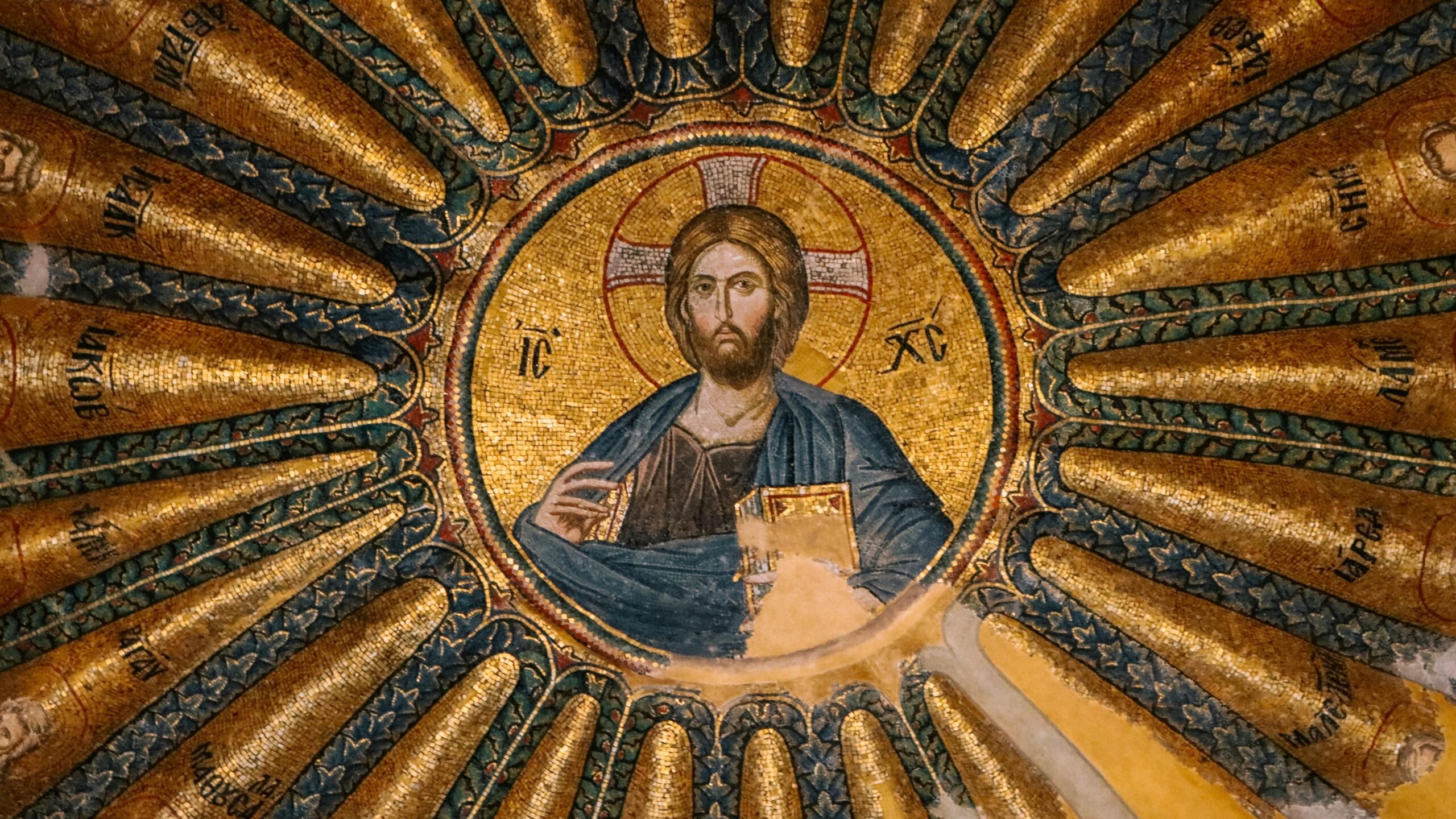
15 years later, the ECHR has asked Greece to justify the presence of Orthodox icons on the walls of its courts. The Greek government’s brief is expected by 19 February 2026, before the Court issues its judgment. Following the crucifix case, this new ‘icons case’ reopens a debate that seemed closed. Should Christian symbols still visible in public buildings be removed in the name of ‘religious neutrality’? Do these symbols infringe on citizens’ freedom ‘not to belong to a religion’?
European judges review only about 5 per cent of the cases submitted to them, exercising strong selectivity, and none of the many complaints about Christian symbols in public buildings have been accepted since Lautsi v Italy. The ECHR deliberately took up this case by reviving an application filed in 2020, satisfying judges who had publicly called for a review of the principles set out in Lautsi. These elements suggest that the ECHR could compel Greece to remove the icons from its public buildings.
Passive Religious Symbols or State Proselytism?
The ECHR describes its case-law as ‘living, dynamic, and evolutive’. However, it would be misleading to consider the 2011 Lautsi judgment obsolete. That ruling had the merit of respecting national cultural traditions, including their religious dimension. The ECHR had determined that a crucifix in an Italian classroom constituted an ‘essentially passive’ religious symbol, insofar as ‘it cannot be deemed to have an influence on pupils comparable to that of didactic speech or participation in religious activities.’ Crucifixes were thus distinguished from other religious symbols, such as the Islamic veil, described as a ‘powerful external symbol’ with a ‘proselytizing effect’.
‘In fact, Greece is officially an Orthodox state and sought to maintain this state confessionality in its last constitutional amendment in 2019’
The ECHR had also accepted that Italy could ‘confer on the country’s majority religion preponderant visibility’. This cultural issue fell within the ‘margin of appreciation of the State’, meaning its sovereignty. To date, the ECHR has always maintained that it imposes no obligation on states that would ‘diminish the role of a faith or a Church with which the population of a specific country has historically and culturally been associated.’ It has also never condemned the existence of an official religion in certain European states.
The Constitutional and Cultural Identity of Greece
In fact, Greece is officially an Orthodox state and sought to maintain this state confessionality in its last constitutional amendment in 2019. The presence of Orthodox icons in public buildings is a Greek custom, directly stemming from this Constitution. It states that ‘the prevailing religion in Greece is that of the Eastern Orthodox Church of Christ’ and acknowledges ‘our Lord Jesus Christ as its head’. These provisions are part of Greece’s constitutional identity. Other European states also have a religious constitutional identity, such as Denmark (Evangelical Lutheran) or Monaco (Catholic).
Constitutional identity corresponds to the ‘being’ of the state, not its ‘acting’, according to a distinction developed in legal doctrine. The ECHR’s role should be limited to judging the actions of the state, as the protection of individual freedoms concerns state action, not identity. In practice, the governments most condemned by the ECHR, even regarding freedom of religion, are secular states. European judges must refrain from ruling on a state’s constitutional identity, also because it is often inseparable from national and cultural identity.
Admittedly, the separation between the being and the acting of the state may seem artificial. But it serves to properly limit the ECHR’s role, respecting the sovereignty of European states. Forcing Greece to remove icons from its courts would add nothing to individual freedoms but would be a civilizational loss. It would be a sad symbol at a time when Europe faces an increase in anti-Christian acts. One can only hope that the ECHR will not participate in this iconoclasm.
Related articles: