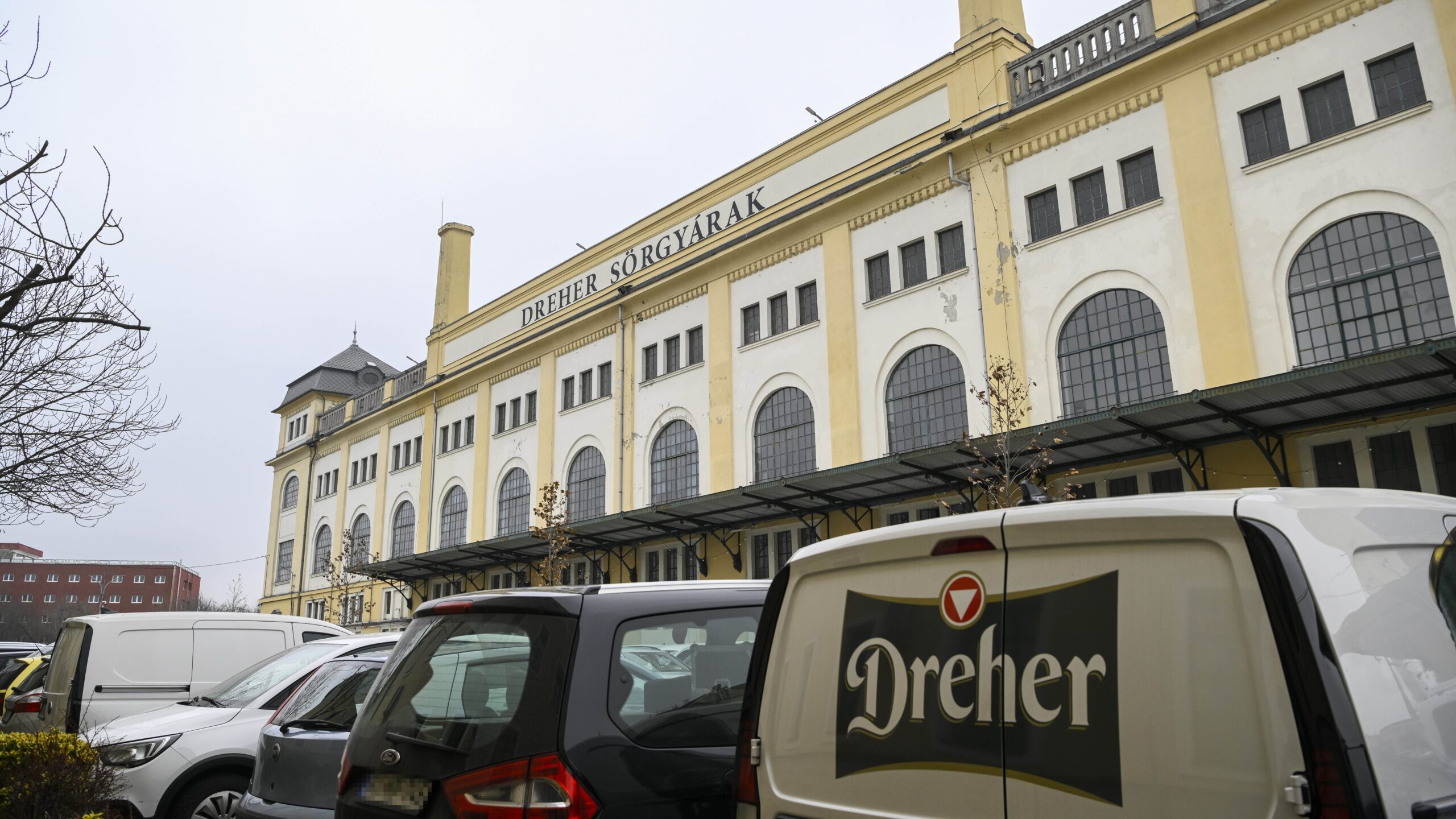
The Hungarian government has signed its 103rd strategic cooperation agreement, this time with Dreher Sörgyárak Ltd, Foreign Minister Péter Szijjártó announced in Budapest on Friday. The agreement accompanies a 100 billion forint investment programme that is set to take beer production in Budapest’s Kőbánya district to a new level.
Speaking after the signing, Szijjártó said that although the 170-year-old brewery is now under Japanese ownership, Dreher has become deeply embedded in Hungarian culture and traditions and is therefore regarded as a domestic company. He added that the firm’s operations extend well beyond brewing, as the livelihoods of around 8,500 Hungarian families depend on it.
According to the minister, 86 per cent of Dreher’s suppliers are Hungarian small and medium-sized enterprises, meaning that the investment programme also represents a major development opportunity for domestic businesses. He described the project as the largest investment ever undertaken in Hungarian beer production, with the entire manufacturing process in Kőbánya being upgraded through new technologies that could make Dreher distinctive even at a global level.
Szijjártó said the decision to formalize the partnership reflected an already well-established and highly valued relationship between the government and the company. He stressed that strategic partners form the backbone of the Hungarian economy, employing more than 200,000 people, generating over 25,000 billion forints in annual net revenue, producing around 70 per cent for export and relying largely on Hungarian SMEs as suppliers.
The minister also referred to the series of crises Hungary has faced over the past 15 years, noting that despite these challenges the economy has delivered strong results. He pointed out that Hungary now has one million more people in work than a decade ago, maintains some of the lowest labour taxes in Europe, and has managed to curb household energy prices despite sharp increases on international markets.
At the same time, Szijjártó warned that these achievements remain vulnerable in an uncertain global environment, underlining the importance of stability and predictability for economic planning. He added that even with the war in neighbouring Ukraine, the past four years have been the most successful period in Hungary’s economic history in terms of investments, with more agreements signed than ever before.
Related articles: