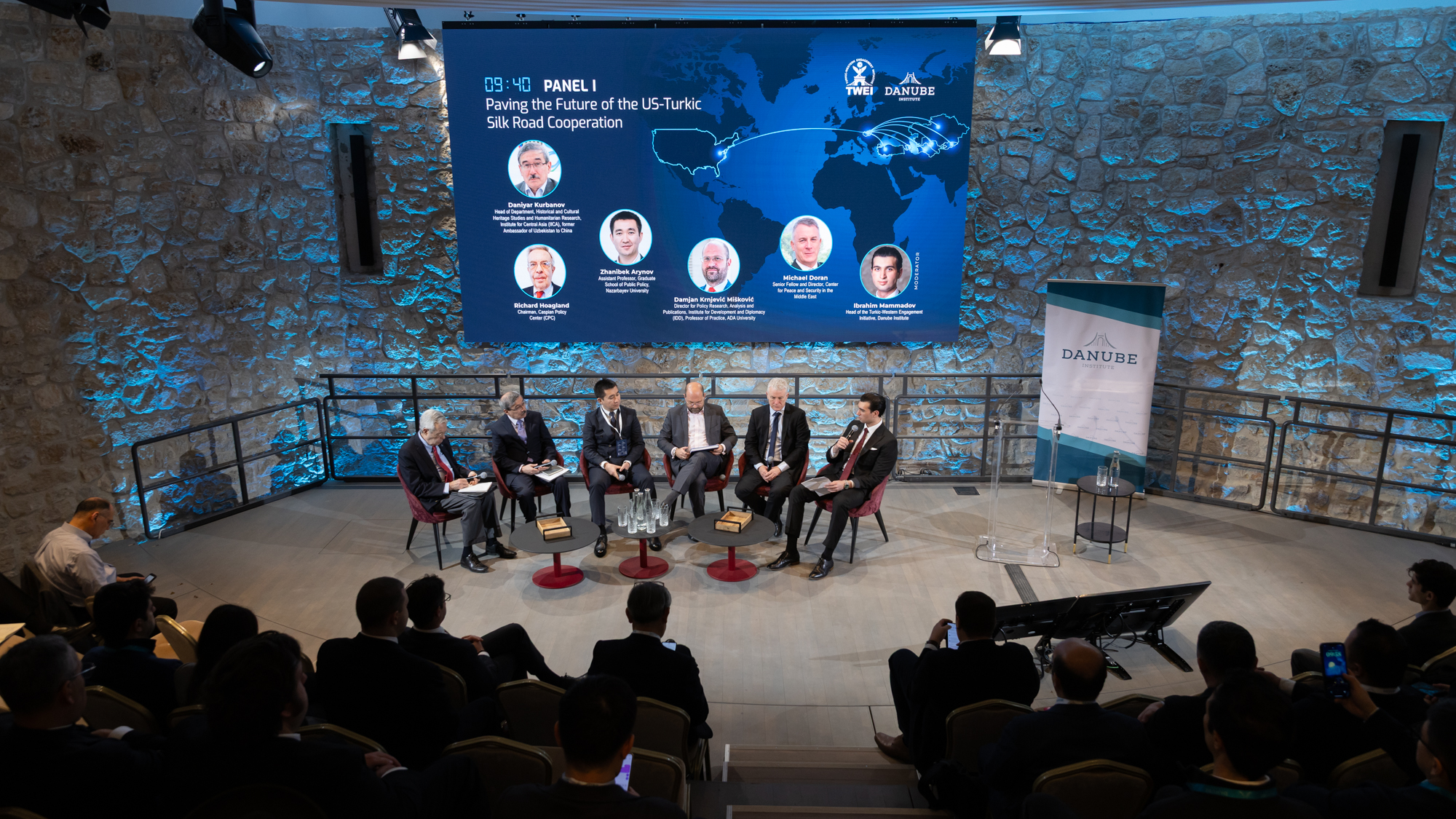
Budapest-based think tank Danube Institute has launched its new Turkic–Western Engagement Initiative (TWEI) with a distinguished conference titled Natural Economic Allies: Forging Turkic–Western Economic Cooperation on Tuesday, 9 December. The day-long summit featured high-level keynote speakers and panel discussions on how to enhance partnership between the West and the Turkic world in an increasingly volatile international landscape, with an explicit focus on Hungary’s role in it.
The event was opened by Executive Director of the Danube Institute István Kiss, who highlighted Hungary’s often-mentioned bridging role between East and West, between the Turkic world, Europe and the United States. He also recalled how the country, under the leadership of Prime Minister Viktor Orbán, was the frontrunner in the European Union in recognizing the importance of Central Asia and the Turkic states, engaging with them on the basis of mutual trust and respect. He stressed the potential future role of the Middle Corridor, a transportation route crossing the region, stating that it could be a ‘lifeline’ for the EU.
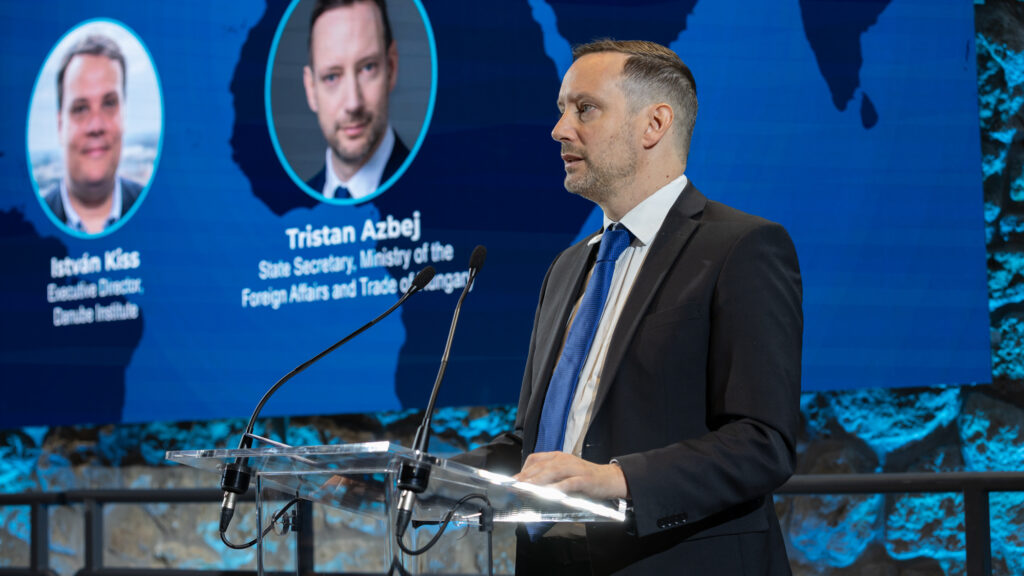
Hungarian State Secretary Tristan Azbej opened his keynote speech by delivering the congratulations of Minister of Foreign Affairs and Trade Péter Szijjártó to the Danube Institute for launching TWEI. He stressed that due to the shared historical, linguistic and cultural heritage, Hungary and the Turkic states are like brothers and sisters, and cooperation between them is of strategic importance. Mr Azbej recalled Hungary’s growing role in the Organization of Turkic States (OTS), highlighting that Budapest became the first EU capital to host the informal meeting of the Turkic Council in 2025. ‘Hungary seeks forward-looking joint responses for challenges,’ he stated, adding that the country has a proactive role in finding solutions in water management, security, energy and digital transformation.
The state secretary emphasized the importance of action-oriented, people-to-people cooperation, the development of tourism, student programmes and sport and cultural events. He highlighted the double-digit expansion in trade between Hungary and the Turkic world as an indicator of deepening partnership. He concluded by stating that Hungary will continue to push Western countries to increase cooperation with the region.
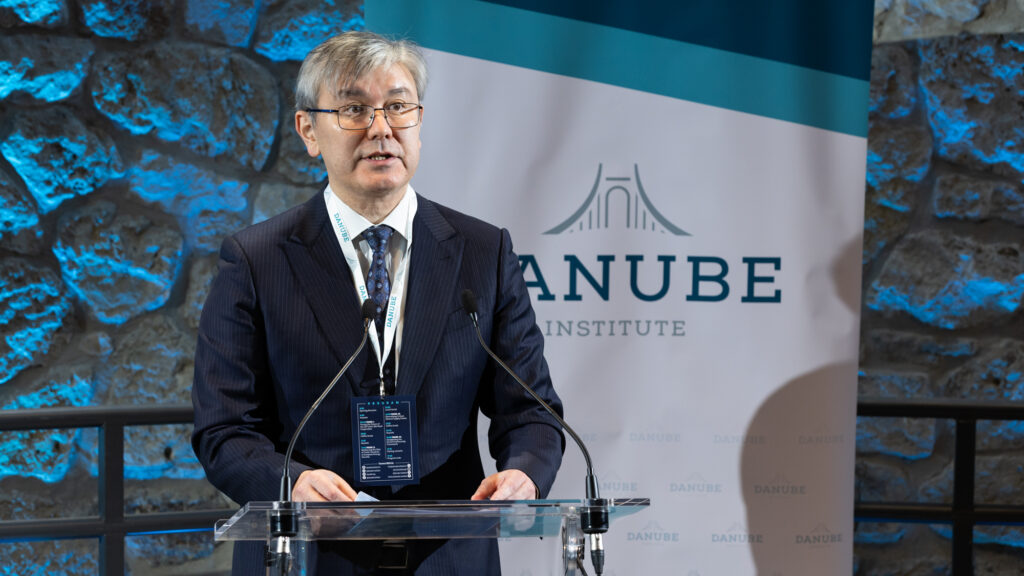
In his opening remarks, Kazakh Ambassador to Budapest Abzal Saparbekuly highlighted the city’s role as a genuine intellectual and diplomatic meeting point between the Turkic world and the West. ‘Hungary is not just a partner: Hungary is Kazakhstan’s constant advocate in the EU,’ he pointed out.
Regarding Kazakhstan’s relations within the Turkic world, Ambassador Saparbekuly listed four dimensions: connectivity; digital transformation; green transition and energy security; and human capital and cultural diplomacy. He also highlighted the expanding cooperation between the EU and Kazakhstan, noting that the EU is the largest investor and trading partner of the Central Asian country. He mentioned American investment, particularly in uranium and rare earth elements, and emphasized the growing operations of major Hungarian companies in Kazakhstan. ‘Connectivity is the antidote for fragmentation,’ he concluded.
‘Connectivity is the antidote for fragmentation’
After the opening remarks and keynote speeches, the first panel discussion began under the title Paving the Future of the US–Turkic Silk Road Cooperation, featuring distinguished experts including former Ambassador of Uzbekistan to China Daniyar Kurbanov; Director for Policy Research, Analysis and Publications at the Institute for Development and Diplomacy (IDD) and Professor of Practice at ADA University Damjan Krnjević Mišković; Senior Fellow and Director of the Center for Peace and Security in the Middle East Michael Doran; and Chairman of the Caspian Policy Center (CPC) Richard Hoaglan.
During the panel discussion, experts examined whether the current C5+1 framework for US–Central Asia cooperation should evolve into a C6+1 format, reflecting Azerbaijan’s growing role and the region’s increasing cohesion. Speakers agreed that while Washington is showing renewed interest under the Trump administration, expectations must remain realistic: formal institutionalization in Central Asia will come gradually, driven by practical cooperation rather than Western-style bureaucratic models. Several panellists stressed that informal ties and sectoral agreements—from customs coordination to digitalization—already underpin meaningful regional integration.
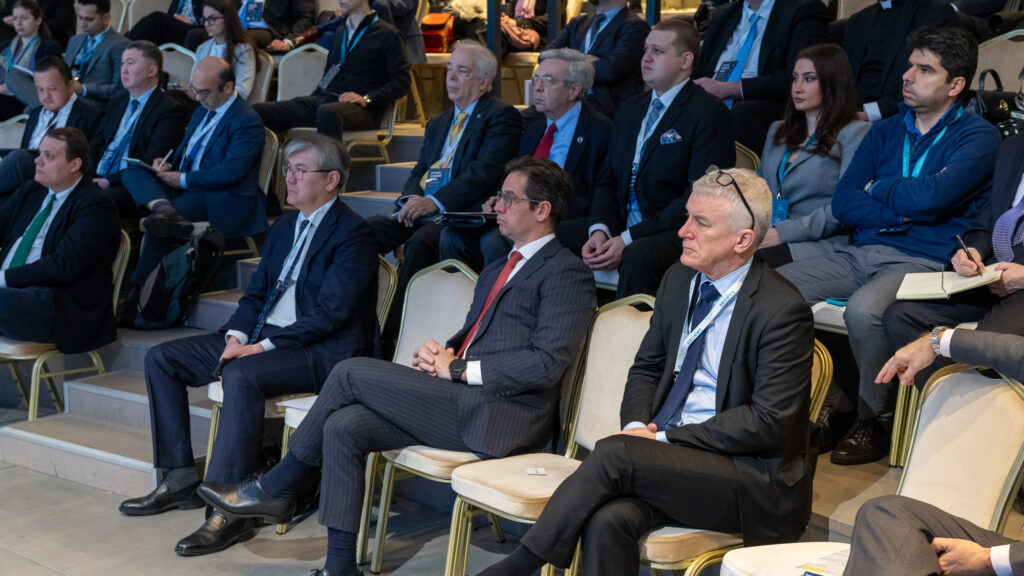
The discussion highlighted Hungary’s potential role as a strategic bridge between the Turkic world and the United States, helping articulate the region’s collective interests in Washington. On energy security, participants underlined that a US-backed Trans-Caspian gas pipeline could be a geopolitical game changer, though major obstacles remain, including Russian and Iranian opposition and investor hesitancy driven by EU regulatory uncertainty. While China and the EU remain the dominant economic actors in Central Asia, panellists argued that increased American engagement could unlock new opportunities—provided Central Asian governments continue reforms and the US uses its limited but unique leverage effectively within the next three years, before Washington’s attention inevitably shifts elsewhere.
Related articles: