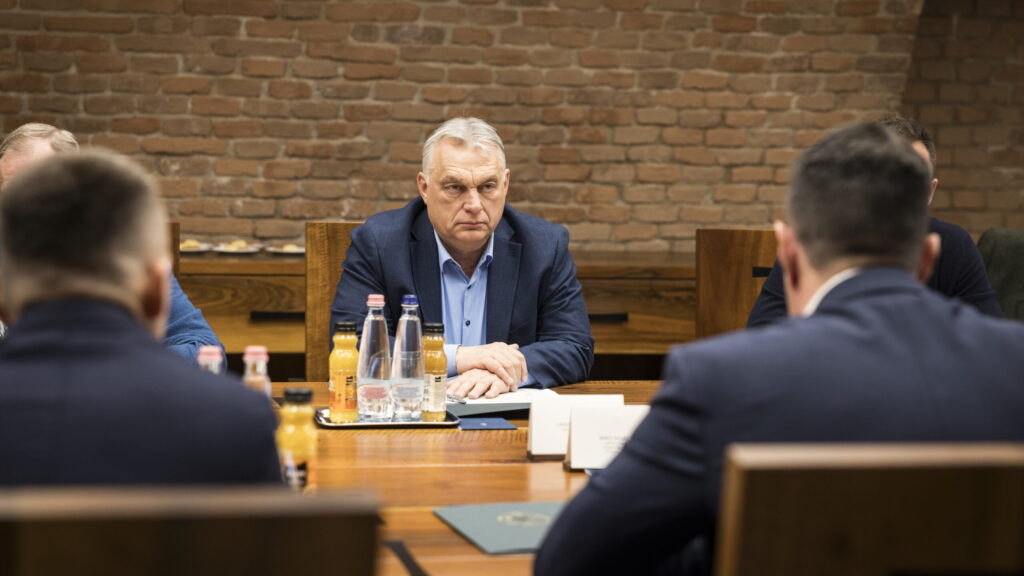
The Danube Institute, Ludovika University of Public Service, and the Israel-based David Institute for Security Policy’s latest event, titled A Pivotal Year: Israel, the Middle East, the US, and Europe Come 2026, took place on 21 January. Several experts and politicians discussed topics such as Hungary and Central Europe’s unique role as Israel’s natural allies and their potential leadership in the EU, the role of international institutions, and Hungary’s position in the Abraham Accords.
Declaring Antisemitism as a National Security Issue
The first panel of the event discussed Hungary and Central Europe’s unique role as Israel’s natural allies and their potential leadership in the EU. The panel featured Radek Vondráček, Chairman of the Foreign Affairs Committee and Vice-Chair of the Constitutional and Legal Committee in the Chamber of Deputies of the Parliament of the Czech Republic; Igor Šlosar, President of the Centre for Public Policy and Economic Analysis (CEA); and former Ambassador of the Republic of Poland to Israel Marek Magierowski, and was moderated by International Director of the Danube Institute Kristóf Veres. This part of the conference highlighted the transformation of the world order and the opportunities to create new alliances, particularly in Central Europe.
Chairman of the Foreign Affairs Committee Radek Vondráček emphasized that there is a special bond between Central Europe and Israel, and that in the newly emerging world order, it is important not to remain silent when it comes to supporting Israel and to form alliances with the only democracy in the Middle East.
The participants of the panel were united in one thing: all of their countries, Croatia, Poland, and the Czech Republic, should strengthen ties with Israel. These cooperations have already been working in the fields of healthcare, education, security, and defence. Igor Šlosar emphasized that Central European countries thus have the potential to become a new axis of values in Europe, protecting conservative values based on a Christian–Judeo foundation, and declaring antisemitism a national security issue.
States Should Be Ethics-Shapers, Not International Organizations
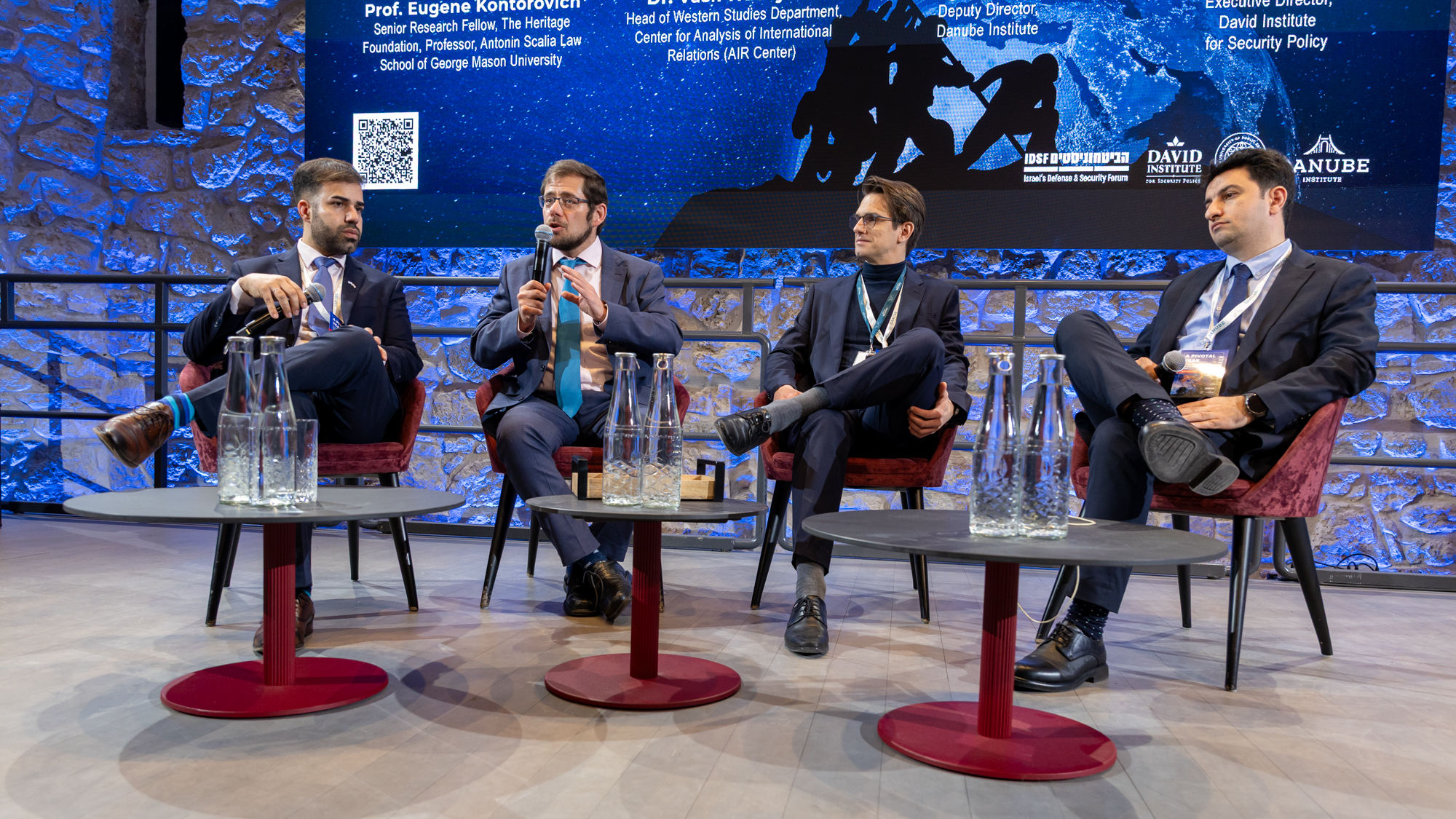
The second panel of the conference discussed the bias of international institutions. The panel had Eugene Kontorovich, Senior Research Fellow at The Heritage Foundation and Professor at the Antonin Scalia Law School of George Mason University; Vasif Huseynov, Head of the Western Studies Department at the Center for Analysis of International Relations (AIR Center); and Deputy Director of the Danube Institute Gergely Dobozi, and was moderated by Executive Director of the David Institute for Security Policy Or Yissachar. Israel was presented as an example, as in 2024, the UN adopted 25 resolutions against Israel compared to one against North Korea. The panellists discussed the UN’s ineffectiveness, bringing up examples such as the international organization’s failure in the Armenia–Azerbaijan conflict.
‘There is a special bond between Central Europe and Israel’
Recently, the United Nations failed to highlight Iran’s role in sponsoring terrorism. Eugene Kontorovich explained that there is a well-documented bias within the organization against Israel and its connection to broader anti-Western agendas. The senior research fellow of the Heritage Foundation elaborated that the UN failed to address the actions of its own employees who participated in the murder of Israeli hostages on and after 7 October 2023.
The United Nations has failed to reduce interstate conflicts and has expanded its mission beyond its original vision. Thus, the importance of sovereignty and the role of states as ethics-shapers in international processes are crucial. A pragmatic approach to international institutions and the protection of national sovereignty today are fundamental.
European Union Faces Triple Isolation
Minister for European Union Affairs of Hungary János Bóka emphasized in his speech the emergence of great power politics and the decline of existing global institutions. He added that Hungary’s strategy involves active engagement and risk mitigation. According to the minister, the European Union faces a triple isolation: global, institutional, and identity-based.
He highlighted the conflict between national and European identities, the rise of antisemitism as a symptom of deeper issues, and the need for strategic cooperation, particularly with Israel, to combat these challenges.
Central Europe and the Abraham Accords
Her Excellency Maya Kadosh, Ambassador of Israel to Hungary; Ronen Itsik, Senior Researcher and Head of the Military-Society Desk at the David Institute for Security Policy; former Hungarian Ambassador to Israel Levente Benkő; and Visiting Fellow at the Danube Institute Adam LeBor spoke about the Abraham Accords, Hungary’s role in them, in the final panel, moderated by Liliana Śmiech, Director General for International Affairs at Ludovika University of Public Service. The events of 7 October led to a decline in public support for the agreements, with a widening gap between governments and the public. The participants emphasized the need to deepen and reinforce existing relations in order to reshape Israel’s image as a regional partner.
Despite the decline in public support, the necessity of the agreements is crucial. According to the panellists, shared economic interests should be prioritized, with a focus on security, defence, water and energy aspects. The panel also criticized the European Union’s foreign policy against Israel.
Related articles: