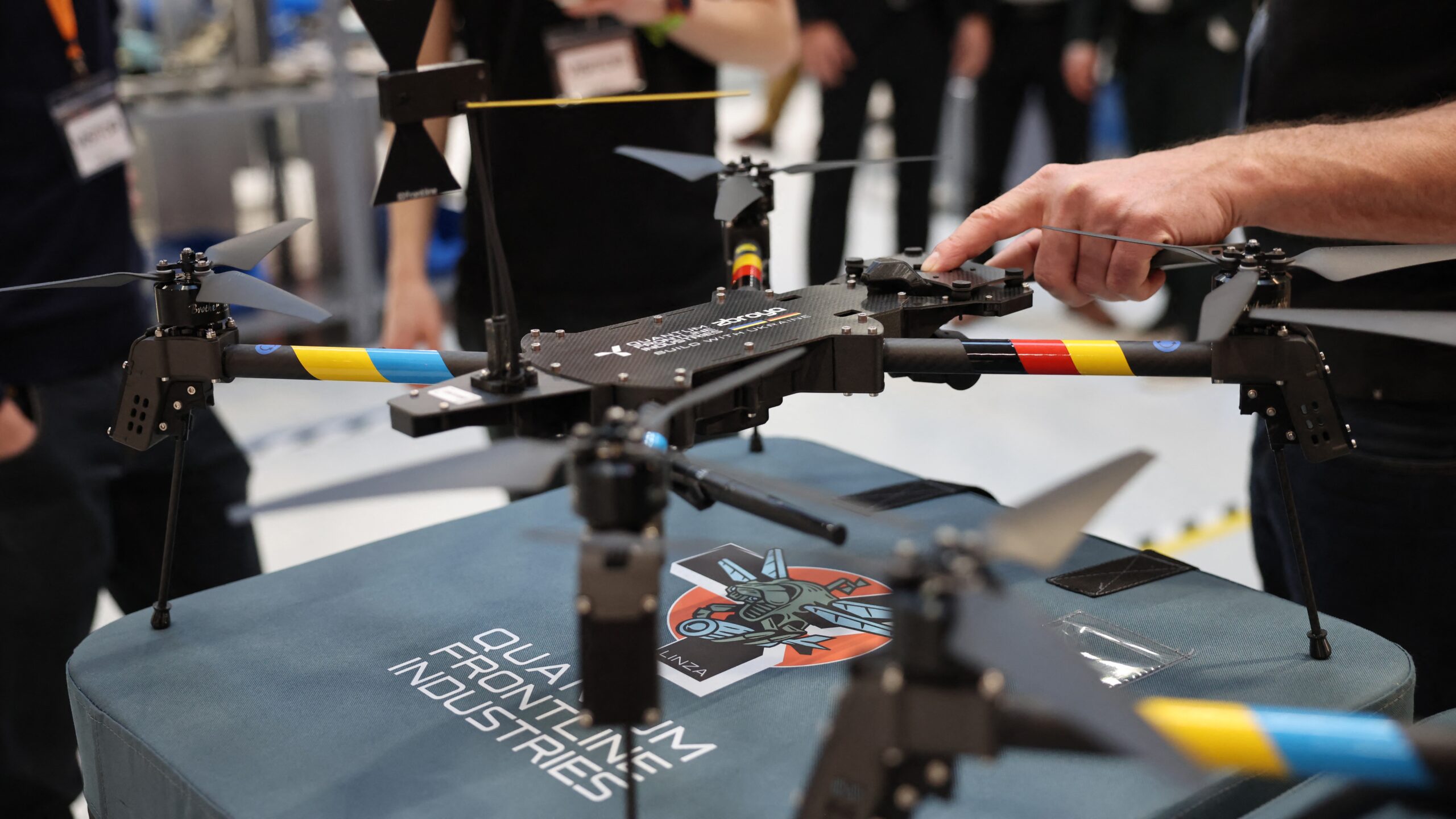
The ongoing Russo–Ukrainian War, now in its fifth year, has transformed not only the physical battlefield but also the digital domain, where video games and gaming culture have become integral to military operations. Both sides have leveraged gamers’ skills, gamification mechanics, and related technologies to enhance reconnaissance, strikes, and propaganda efforts. This integration blurs the lines between entertainment and warfare, offering tactical advantages while introducing ethical, operational, and strategic challenges. Drawing on a range of sources, this article examines these developments objectively, highlighting strengths and weaknesses for Ukraine and Russia alike.
Ukrainian Approaches: From Gaming Skills to Battlefield Innovation
Ukraine has actively recruited individuals with gaming backgrounds for drone operations, capitalizing on their familiarity with controllers, screens, and rapid decision-making. Schools like Dronarium identify young, tech-savvy gamers aged 18–27 as top performers in pilot training, citing advantages such as refined motor skills and endurance for prolonged screen time. These recruits adapt quickly to operating first-person-view (FPV) drones for scouting and attacks, with curricula evolving based on frontline feedback to address real-world complexities beyond gaming simulations.
A key innovation is Ukraine’s gamified systems, such as the Army of Drones Bonus programme, which awards points for verified strikes redeemable for equipment on the Brave1 marketplace. Points prioritize life-saving actions—evacuating wounded earns more than destroying tanks—fostering a ‘moral economy’ that aligns with international humanitarian law by valuing capture over kills. Platforms like DELTA and Play for Ukraine turn civilians into participants, with the latter repurposing puzzles for DDoS attacks on Russian sites, framing resistance as play.
Advantages include accelerated kill chains, data generation for tactical refinement, and boosted morale through leaderboards and rewards reducing bureaucratic delays. Gamers-turned-pilots have achieved high kill counts, with some units like Achilles in Kharkiv competing healthily while adapting to priorities. For instance, units such as Lasar’s Group operate 24/7 from secret bases, deploying dozens of pilots to target Russian positions relentlessly. These ‘nerdy gamers’ with no prior military experience have become elite operators, creating a ‘neutral zone’ ahead of front lines that halts Russian advances by inflicting heavy losses on tanks and infantry.
One pilot, 29-year-old Oleksandr Dakhno from the 47th Separate Mechanized Brigade—a former avid gamer—claims to have eliminated around 300 Russian soldiers in 18 months, using FPV drones to deliver explosives with sniper-like precision over artillery distances. Another, known as ‘Darwin’, a 20-year-old with hundreds of missions, reflects on personal evolution in this ‘survival of the fittest’, adapting to constant technological races against Russian countermeasures.
‘Ethical concerns arise from blurring combatant–civilian lines, potentially violating laws by involving non-combatants in targeting’
However, drawbacks are evident: over-reliance on drones exposes vulnerabilities to Russian countermeasures, and gamification risks ‘Goodhart’s law’, where units chase points over mission needs, leading to inefficiencies like duplicate strikes. Ethical concerns arise from blurring combatant–civilian lines, potentially violating laws by involving non-combatants in targeting. Moreover, the ‘emotionless’ valuation of lives after prolonged war may desensitize operators, as seen in pilots’ reflections on the psychological toll of remote killing. In high-intensity areas like Avdiivka, drone-on-drone battles highlight the futuristic escalation, where pilots must innovate amid shortages of artillery ammunition.
Russian Approaches: Scaling Technology Amid Institutional Challenges
Russia, too, has integrated gaming elements, though with a focus on state-driven initiatives and scaling. The Industry Ministry proposed a drone warfare video game in 2025, estimated at 1–5 billion rubles, to promote patriotic themes and potentially train youth, drawing on demand from military institutions. Programmes recruit minors as young as 13 into tech contests and platforms for drone design and coding, engaging over 600,000 users and offering incentives like exam points. This builds a pipeline for defence jobs, boosting UAV production to 2,000 daily strikes.
Advancements in AI-enabled drones, like the V2U with autonomous navigation and swarm capabilities, borrow from Ukrainian tech but scale for 62-mile ranges and jamming resistance. Tactical software like Svod and Glaz/Groza integrate reconnaissance-strike workflows, compressing detection-to-impact times. Unmanned systems handle up to 80 percent of fire missions, with data collection feeding AI models for target recognition at technology readiness levels 6–9. This pragmatic pivot from comprehensive automated C2 systems to task-specific tools reflects battlefield necessities, including standardization via Astra Linux for sovereignty.
Strengths lie in rapid scaling. Once proven, tools are standardized via Astra Linux and propagated through academies, ensuring sovereignty and interoperability. Volunteer developers adapt open-weight models like Mistral and YOLO for military use, mitigating sanctions. However, flaws include institutional lags—Soviet-era R&D struggles with agile software, leading to 1.5–2 year delays behind Ukraine in UAS management. Vulnerabilities from repurposed civilian apps like AlpineQuest and Discord have enabled spyware and disruptions. Ethical issues persist with minors’ involvement, violating conventions and risking targeting. Propaganda-heavy games may backfire by eroding credibility if low-quality. Methodological barriers, such as outdated data collection via paper questionnaires, cause information gaps and delay integration.
| Aspect | Ukraine | Russia |
| Recruitment/Training | Gamers (18–27) excel in drone schools; quick adaptation but age limits skills. | Minors (13+) in contests; patriotic appeal but ethical risks. |
| Gamification | Points for strikes/evacuations; boosts morale but risks inefficiency. | Proposed games for training/propaganda; scalable but potential credibility issues. |
| Tech Integration | DELTA, Play for Ukraine; innovative but vulnerable to counters. | Glaz/Groza, AI drones; standardized but lags in agility. |
| Pros | Asymmetric innovation, data-driven tactics, high individual impact. | Scaling via state control, sovereignty focus. |
| Cons | Ethical blurring, over-reliance, psychological toll. | Institutional delays, vulnerabilities from civilian tools. |
Shared Trends and Divergent Paths
Both sides exhibit pragmatic adaptation: Ukraine’s bottom-up, volunteer-driven innovations contrast Russia’s top-down scaling, yet both repurpose gaming for hybrid warfare. Shared pros include enhanced kill chains and morale; cons involve ethical dilemmas and tech dependencies. Ukraine leads in agility but risks desensitization, as pilots like Darwin grapple with the moral weight of remote warfare; Russia excels in standardization but trails in software maturity.
Intelligence suggests Russia may emulate Ukraine’s gamified systems, indicating convergence. AI serves primarily as support rather than replacement for human decisions, prioritizing sensor data processing while natural-language AI lags at lower readiness levels.
Implications for National Sovereignty and Modern Warfare
In the Age of Nations, as envisioned by conservative thinkers who champion the primacy of sovereign states over globalist abstractions, the Russo–Ukrainian War reveals a profound philosophical dilemma: the insidious blurring of virtuality and reality in human conflict. What begins as playful simulation—joystick manoeuvres in a digital realm—morphs into lethal precision on the battlefield, where lives are reduced to pixels and points, commodifying the sacred act of defence into a gamified spectacle. This erosion of boundaries risks not only desensitizing warriors to the moral gravity of killing but also undermining the ethical foundations that anchor national identity and resilience.
‘The Russo–Ukrainian War reveals a profound philosophical dilemma: the insidious blurring of virtuality and reality in human conflict’
The lesson is clear: technology must be harnessed with vigilant oversight, ensuring it amplifies rather than dilutes traditional values like honour, family, and communal solidarity. Ukraine’s agile innovations and Russia’s scaled standardization both demonstrate how gaming culture can bolster sovereignty against aggression, yet unchecked, it threatens to dissolve the human element in warfare, turning soldiers into avatars in a perpetual virtual arena. True victory lies in aligning these tools with doctrinal integrity, preserving the nation’s soul amid the digital storm—lest we forfeit the very reality we fight to protect.
Related articles: