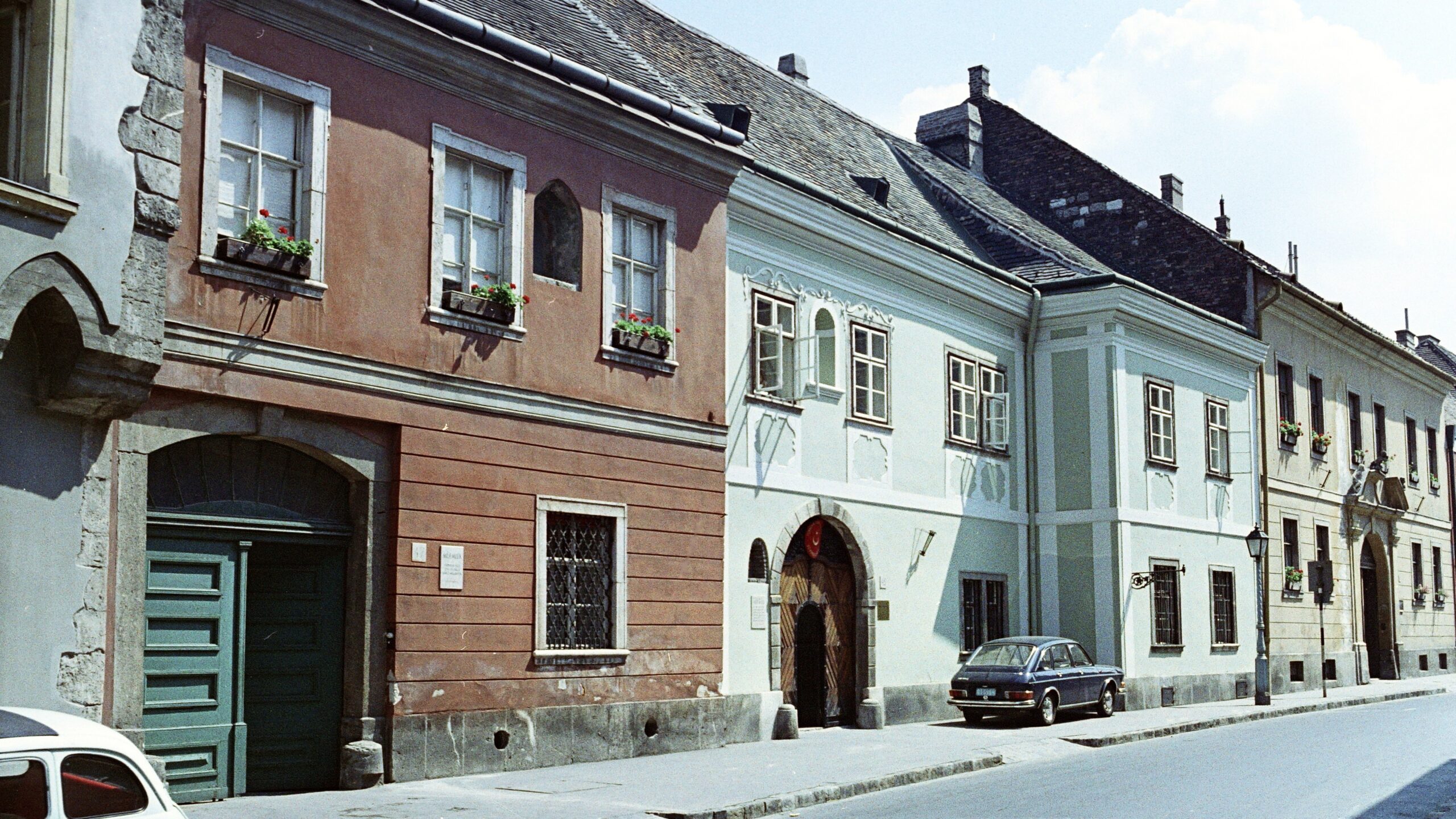
From 1974 to the late 1980s, Hungary’s state security closely monitored the Turkish embassy at 45 Úri Street in the Buda Castle, keeping tabs on diplomats, their residences, and even personal correspondence. Newly examined documents reveal how counterintelligence observed NATO diplomats, highlighting both the meticulous methods of the secret services and the routine nature of embassy life.
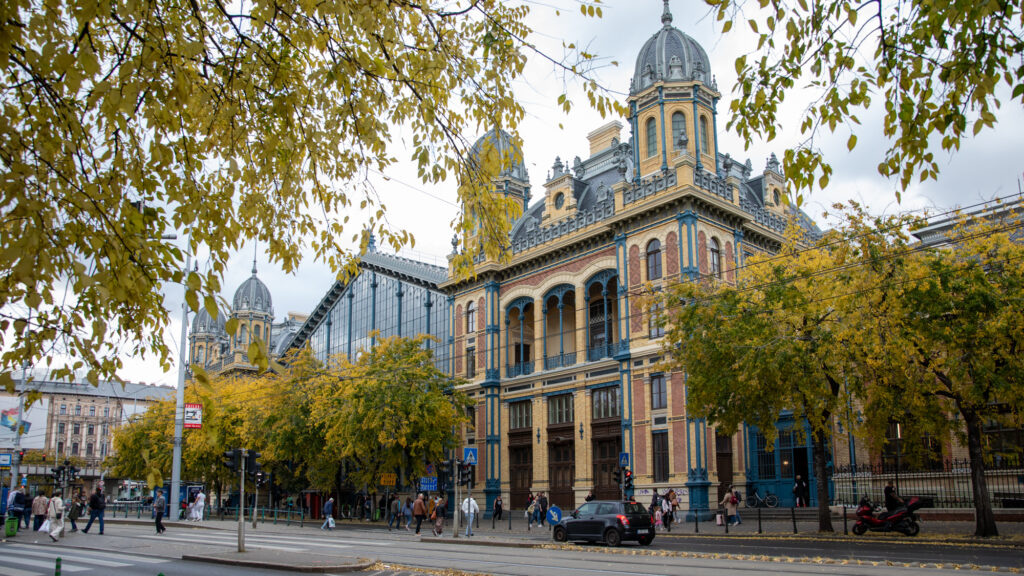
The Turkish embassy did change its location several times; in any case, before 1974 it was located at 43–45 Mártírok útja (today Margit körút). In 1974, the embassy moved to 45 Úri Street, into the so-called Zwack Villa, in the prestigious Buda Castle.
Under the Kádár regime, even diplomats from friendly countries were often kept under surveillance, but after Turkey joined NATO in 1952, its diplomats attracted special attention. The Turkish embassy on Úri Street was monitored for nearly 15 years by the 3-c Sub-Department of the Ministry of the Interior’s III/II Main Directorate (counterintelligence) under the codename ‘Object No. 71.’[1]
The diplomats did not need to engage in any particular activity to come under scrutiny. As it was made clear at the beginning of the file on Ambassador Osman Başman, who arrived in the summer of 1981 (his operational codename was ‘Bárdos’), ‘as the ambassador of a NATO state, hostile activity must be regarded as a potential factor.’
The very first diplomat whose file relates to the Úri Street period was Ali Bayaz. He arrived in April 1972, holding the rank of attaché. Bayaz was designated a target under the codename ‘Keszeg’; his photograph and family photo were obtained, and his apartment on Naphegy Street was placed under surveillance. It was established that ‘Keszeg’ carried out currency exchanges in a clandestine manner, usually in Vienna—this was reported by his driver, an agent with the codename ‘Lőrinc’. At a certain point, however, even this practice was abandoned: ‘After a change in the object’s financial provisioning we no longer observed, as in the earlier period, that the diplomat engaged in illegal currency exchanges.’
In May 1976 he vacationed in Siófok with his wife, where their movements were monitored by a local agent, ‘Ildikó’, presumably a hotel employee, but the holiday was cut short due to bad weather. Upon the target’s departure, the authorities were forced to conclude that he had not engaged in hostile activity.
Far more information was recorded about Ambassador Mehmet Fuat Kepenek (codename ‘Futó’), who represented his country in Hungary between December 1972 and April 1975. One of Kepenek’s first actions was to inquire with the government whether the embassy building on Úri Street was for sale, since at that time it was not owned by the Turkish state. ‘The ambassador remarked that they might not even insist on remaining in the Castle district, as with the construction of the Hilton Hotel the peace and quiet there would also come to an end, but in any case they needed a plot of land or a building.’
The ambassador issued instructions regarding which newspapers his Hungarian interpreter—an agent of the state security service under the codename ‘Viktor’—was to review: Népszabadság, Magyar Nemzet, Népszava, among others, as well as any relevant foreign-language press. The main focus was: ‘Among domestic events, special attention is paid to those with military relevance, as well as to issues related to the development of the national economy and its achieved results.’
The agent reported that ‘while browsing the newspapers, the word “Vértes” caught his eye. He immediately began to inquire whether this referred to the military exercise called “Vértes 73”. The article was not about that, but he nevertheless said that I should translate it. After that, he asked what kind of military school was located in Szentendre.’
On 20 July 1974, Turkey, reacting to the Greek military junta’s attempted coup five days earlier, invaded Cyprus. During the four-week conflict, several thousand people were killed and tens of thousands of civilians fled. At the beginning of the conflict, the Greek paramilitary organization EOKA-B committed several mass killings (which were later ‘reciprocated’ by the Turkish army).
‘In the days preceding the events in Cyprus, the atmosphere at the embassy was extremely tense’
Related to these events is a report dated 24 July by an agent codenamed ‘Mini’, who worked as a secretary at the embassy: ‘In the days preceding the events in Cyprus, the atmosphere at the embassy was extremely tense. This nervousness was caused primarily by their inability to understand why the Hungarian government issued an official statement on the Greek aggression in Cyprus only at the last minute…After the Hungarian government’s statement…there was enormous joy at the embassy. The ambassador and the counsellor expressed the view that the Hungarians were essentially supporting the Turkish position. That very evening they sent information to Ankara to that effect.’
A few days later, however, the same agent reported that ‘a rather dejected mood prevails at the embassy. This is primarily due to the fact that the Greek atrocities committed against Turkish citizens in Cyprus are not adequately reflected in the Hungarian press.’ Shortly thereafter, Kepenek visited American diplomats in Budapest ‘to inquire regarding the American position on the changes in Greece…The Americans would rather befriend the Greeks than the Turks.’ The ambassador felt that the reason for this was a kind of anti-Muslim preconception on the part of ‘Westerners’.
Kepenek’s file under the codename ‘Futó’ contains several documents concerning the operational situation of the embassy on Úri Street. State security was particularly interested in the fact that the target attempted to obtain a firearm. ‘The ambassador received a hunting weapon from abroad, which is still being held at customs. He was very angry when he learned that he too requires a firearms permit…What is peculiar in this matter is that he never goes hunting; on the contrary, he is an extremely fearful man, so the hunting weapon is presumably intended to be kept at the residence in order to increase his sense of security.’
It was also noted in the same file that the security guard, a certain Hüseyin, let something slip in front of one of the agents, thereby revealing that he too carried a weapon. Counterintelligence recorded this as important new information. One particularly observant agent also noticed that the cipher machine used to decode encrypted diplomatic messages was kept in a separate filing cabinet secured with a four-digit code; the agent was able, with a high degree of probability, to determine the first two digits.
The target departed in the spring of 1975. At that point it was established that ‘he frequently hosted receptions at the residence, which we monitored using operational techniques…On several occasions he served as host to meetings of the ambassadors of NATO countries; at these he functioned primarily as host and did not contribute substantively to the issues on the agenda.’ From this it is clear that the residence had been bugged, placed under surveillance, and that the authorities therefore knew what was said at the meetings of NATO ambassadors.
Talât Benler (codename ‘Pasa’) likewise had a similarly detailed file. He served as ambassador in Hungary from May 1976 to April 1980. Benler was basically characterized as a relatively friendly and well-disposed individual, since he had met his wife in Hungary and thus had pleasant personal memories connected to the country. Nevertheless, counterintelligence naturally entered him into its basic registry.
Benler was an older diplomat; everyone knew this would be his final posting, one that the Turkish government had, so to speak, ‘reserved’ for him, especially as he had good connections there. According to ‘Mini’, it soon became clear that ‘he does not like to work; on average he spends about an hour and a half per day at the embassy, and even then he mainly confers with the counsellor.’
One of his very first actions was to have the Úri Street embassy renovated. Here, a case officer’s note alludes to what we also inferred from the closing of Kepenek’s file—namely, that the residence had been equipped with surveillance devices: ‘The fact that they want to have the rooms in question painted by painters brought in from Turkey seriously endangers the operational technology we have in relation to the building. The situation is further aggravated by the circumstance that the guarding of the residence has been tightened, which greatly endangers the success of any operational actions that might possibly be carried out within the residence building.’
For this reason, it became ‘Mini’s’ task to find cheaper Hungarian contractors. It is noteworthy that state security did not want to bring in Hungarian painters already recruited by themselves; instead, they entrusted the agent with scouting around the house-painting market.
Surveillance of Benler was soon stepped up after it emerged that he played tennis in the Tabán area, where ‘among his partners and opponents there are primarily Hungarian citizens, including some who occupy very high positions in our party and state life.’ The agent codenamed ‘Takács’, who handled the ambassador’s mail, soon reported that Benler had rented a post office box at the post office in the Castle district and was conducting his private correspondence through it.
‘State security…planned to “compromise” the ambassador through his private life’
State security therefore planned to ‘compromise’ the ambassador through his private life, clearly with the intent to later us it as blackmail. To this end, they began close surveillance of the ambassador and placed him under ‘measure 3/a’ (a codename for telephone tapping). Benler also soon asked ‘Takács’ to find him an apartment that he could rent at his own expense. State security requested a suitable apartment from partner agencies, but the offered ‘object’—which could have been equipped with room listening devices and concealed photography facilities—was rejected by the target, as he did not particularly like it and in any case considered it too expensive. As a result, no opportunity to compromise him arose.
As with the question of repainting the residence, it is striking here as well that state security penny-pinched over a relatively minor expense and thus forfeited an operational situation that would have been ideal from its own perspective. ‘Pasa’ left the country in April 1980, and counterintelligence was forced to conclude that the target, by all indications, had not been an intelligence operative.
The last substantial file that has survived concerns Attaché Mustafa Teczan (codename ‘Teve’, meaning ‘Camel’ in Hungarian—consequently, his wife was codenamed ‘Tevené’, that is, ‘Mrs Camel’), who joined the diplomatic staff in November 1984. His correspondence was monitored, and among it they found letters from a Canadian relative, but they were unable to fully interpret the English portion of the letter because the correspondent was recorded as follows: ‘Place of work: HARRIS To Whom It May Concern’. This alone was enough for a decision to be made to introduce ‘measure 3/e’ (room bugging) and to carry out a covert search of his apartment in Budapest’s 2nd District: ‘The successful execution of our operational measures planned with regard to the Turkish Embassy in Budapest necessitates the covert search of the apartment’—so the justification ran.
The apartment was first only watched by secret police officers, but later they attempted to gain entry; however, in the period since the key test, a chain security lock had been installed, which they were unable to open. Counterintelligence also identified the doctor who was treating ‘Mrs Camel’ and that she customarily left her handbag in the waiting room while she was being examined. ‘The possibilities for a conspiratorial acquisition of a key copy are given.’
They also attempted to compromise Attaché Teczan through his supposed affairs with other women, but this, too, ultimately failed. When he departed in February 1989, they concluded that ‘we monitored him by technical measures and through networks, and established that he was family-oriented…his family life was orderly…During his monitoring, no information indicating hostile activity came to our attention.’
‘Overall, counterintelligence did not find spies among the staff of the Turkish embassy’
The operational surveillance of the Turkish embassy and its staff at 45 Úri Street offers insight not only into a little-known chapter of the intelligence history of the Castle District, but also into how counterintelligence officers of the period handled diplomats from NATO countries. The documents are particularly valuable because research into state security has tended to focus primarily on ‘counter-subversion against domestic reactionaries’ (Ministry of the Interior Directorate III/III), while sources from Directorate III/II (counterintelligence) surface far less often and, in any case, were transferred only sparingly to the Historical Archives of the State Security Services.
An additional value of these records lies in the fact that their time span extends right up to the year of the regime change, which is likewise rare in this type of archival material. This shows that state security did not reckon at all with the collapse of the system; even at the end of the winter of 1989, they were still working at full steam to preserve the Communist dictatorship. Overall, counterintelligence did not find spies among the staff of the Turkish embassy; the vast majority of their activities corresponded to the everyday functioning of an embassy.
[1] For all the sources cited here see the following files at the State Security Archives (Állambiztonsági Szolgálatok Történeti Levéltára): 3.1.5. O-19174., O-16194., O-15803., O-17634., O-18437., O-18008., O-19750.
Related articles: