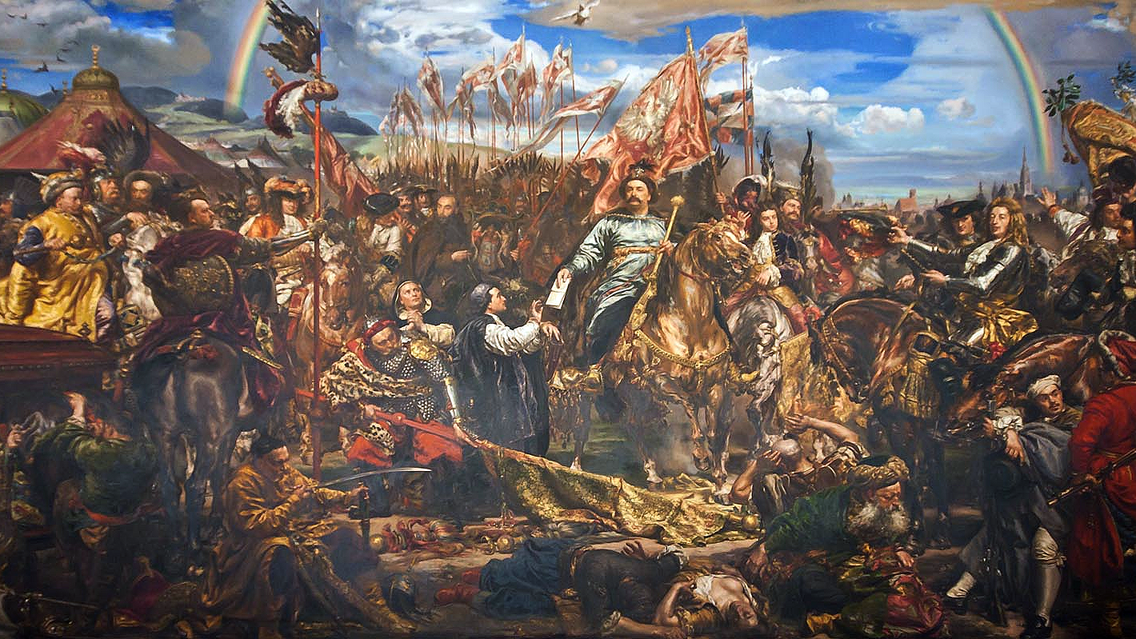
Nearly 350 years after he saved Vienna from Islamic conquest, Polish King John III Sobieski still has no monument in the Austrian capital. This is not because one does not exist. A 26-foot-high statue was commissioned years ago and has long been sitting in storage in Poland. It is not because Sobieski is historically irrelevant: without him, Vienna would almost certainly have fallen to the Ottoman Empire in 1683, leaving the way open to the rest of Western Europe.
No, the reason is far more revealing: Viennese politicians fear that honouring the man who prevented the Muslim conquest of their city might come off as ‘Islamophobic’.
The Austrian news site Heute explains:
‘For years, a planned monument to Polish King Jan III Sobieski on the Kahlenberg has been a source of political controversy. Now the debate has flared up again—this time coming directly from the diplomatic sphere. Initial plans for a statue were drawn up as early as 2013; the project was approved in 2018, but later halted. At the end of 2024, just a few months before the Vienna elections in April 2025, City Councillor for Cultural Affairs Veronica Kaup-Hasler (SPÖ) finally gave the monument a definitive rejection…[saying] that Vienna would “not erect a stage that could be instrumentalized for xenophobic incitement as well as Islamophobic or anti-Turkish sentiments.”’
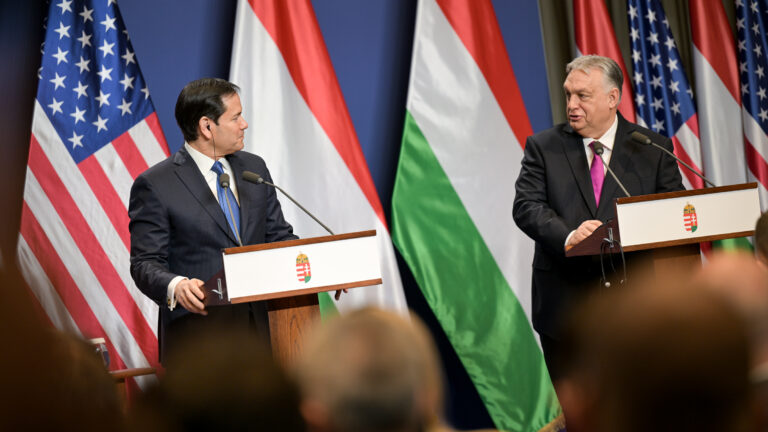
Matters have since escalated; the Polish embassy has now entered the fray. In an interview published on 25 January 2026, Polish Ambassador Zenon Kosiniak-Kamysz criticized ‘the city of Vienna’ for reneging after it had ‘promised us the monument’, adding:
‘Sobieski deserves to be commemorated in Vienna. Without Sobieski, Vienna’s history would have been different. You can’t simply erase his influence…The city of Vienna owes Sobieski something.’
This is putting it mildly; Vienna owes Sobieski everything. To grasp the magnitude of this ongoing controversy, we must briefly revisit what happened in 1683.
In the summer of that year, some 200,000 Ottoman Muslims invaded Austria—slaughtering over 30,000 Christian captives in the process—and laid siege to Vienna. For more than two months, the trapped and vastly outnumbered defenders endured plague, dysentery, starvation, and relentless bombardment. Women and children were among the casualties. The city was on the brink of annihilation.
Then, on 12 September, when Vienna had reached its final extremity and the Ottomans were preparing to break through, an anonymous English eyewitness recorded the moment of deliverance:
‘After a siege of 60 days, accompanied with a thousand difficulties, sicknesses, want of provisions, and great effusion of blood, after a million of cannon and musquet shot, bombs, and all sorts of fireworks, which has changed the face of the fairest and most flourishing city in the world, disfigured and ruined [it]…heaven favourably heard the prayers and tears of a cast down and mournful people.’
That deliverance came in the form of Sobieski. When the rest of Europe had forsaken Vienna, he came at the head of some 65,000 horsemen, all burning to deliver the city. From atop the Kahlenberg hill overlooking Vienna, he addressed his men: ‘It is not a city alone that we have to save, but the whole of Christianity, of which the city of Vienna is the bulwark.’ He then led a thunderous downhill cavalry charge—the largest in history—against the Ottoman lines. The Muslim army was shattered; the siege was lifted; the advance of Islamic imperial expansion into central Europe was decisively halted.
That hill—the Kahlenberg—is precisely where many Poles and Austrians, including members of the Austrian People’s Party (ÖVP), have long wanted to erect a monument to Sobieski. Vienna initially agreed—‘promised’, in the ambassador’s words. Now it refuses.
‘It is not a city alone that we have to save, but the whole of Christianity’
Why? Because, as Councilwoman Veronica Kaup-Hasler declared: ‘Vienna will not erect a stage which can be abused for xenophobic agitation and for fomenting Islamophobia and anti-Turkic sentiment.’
Interestingly, and despite her name, this Veronica looks much more Turkic than Austrian. This would make sense because, after the Poles saved the Viennese from Islam in 1683, the Viennese went on to welcome Islam in the name of tolerance, multiculturalism, diversity, and all that.
As a result, Vienna, once the great Catholic capital of the Holy Roman Empire—hence why the Ottomans targeted it in 1683—is, demographically speaking, a shadow of its former self. Thus, according to 2025 city data, 41.2 per cent of primary and secondary school students in Vienna are Muslim, whereas only 17.5 per cent are Catholic. All Christians (Catholics, Protestants, etc) are 34.5 per cent—still significantly less than Muslims.
Moreover, the mosques that many of these students attend have, in numerous documented cases, been associated with ‘radicalization’. When two young Muslim boys were arrested in 2023 before launching a terror attack on their school, they openly confessed: ‘We wanted to shoot all the Christians in the class!’ Why? Because ‘killing Christians takes us to paradise.’
Crime has followed on the heels of demographic change. A report titled ‘Austrians living in fear as violent migrant gangs carry out DAILY attacks in Vienna’ describes the situation in blunt terms:
‘Muggings and beatings are becoming commonplace in the historic capital city, with passersby being attacked on almost a daily basis…The Praterstern area, just outside central Vienna, is now controlled by North Africans and is considered the worst area in the city for crime. Despite police increasing their presence in the area, it has become riddled with crime. On the other side of the city, the area surrounding the West Railway Station has been taken over by Afghans who have been making headlines for all the wrong reasons…Crimes carried out by migrants in Austria have risen rapidly over the past year as more arrive in the country…Sex attacks carried out by asylum seekers have become a serious problem in Austria, with a 133 per cent increase in migrant sex attacks in just the past year since the migrant crisis erupted.’
Indeed, as in other European nations, sex crimes have skyrocketed in Austria. According to one report: ‘Hardly a day goes by without reports of sex attacks’ at the hands of migrants. After Afghan migrants assaulted and tried to rape a blonde woman, police responded by advising her to dye her hair black.
Incidentally, these reports date from 2016 and 2017. The Muslim population of Vienna has only grown since.
And what has the Austrian establishment done? It has engaged in collective denial. School textbooks whitewash Islamic history—including the siege of 1683 itself—while depicting Austria’s own Christian past as uniquely intolerant. Christmas festivities are curtailed in Muslim-heavy districts. Catholic children are compelled to learn and recite Islamic verses during Ramadan. One mother recounted picking up her young son from school and hearing him repeatedly chant: ‘Allah, Allah!’ For two months, she learned, the entire class had been forced, on pain of punishment, to memorize and chant Islamic incantations. ‘It felt like a slap in my face!’ she said.
Given all this, perhaps it is no surprise that a monument to Sobieski—the man who once saved Vienna from Islam—is deemed too provocative.
On the one hand, Vienna’s officials do not wish to offend the descendants of those Turks and Muslims who once terrorized, slaughtered, and enslaved its people—and who now, in significant numbers, are reshaping the city in ways that make honest remembrance of history inconvenient. On the other hand, they show no hesitation in slighting the descendants of those Poles who shed blood to preserve Vienna in the first place.
The irony is staggering. Vienna survived 1683 because men like Sobieski refused to surrender. It now dishonours him because its leaders have already surrendered—morally, culturally, and historically. The Turks failed to take Vienna by force. The modern Viennese elite are handing it over by shame.
For more on the siege of Vienna and Sobieski’s role, see the author’s book, Sword and Scimitar, which devotes an entire chapter (8) to both.
Related articles: