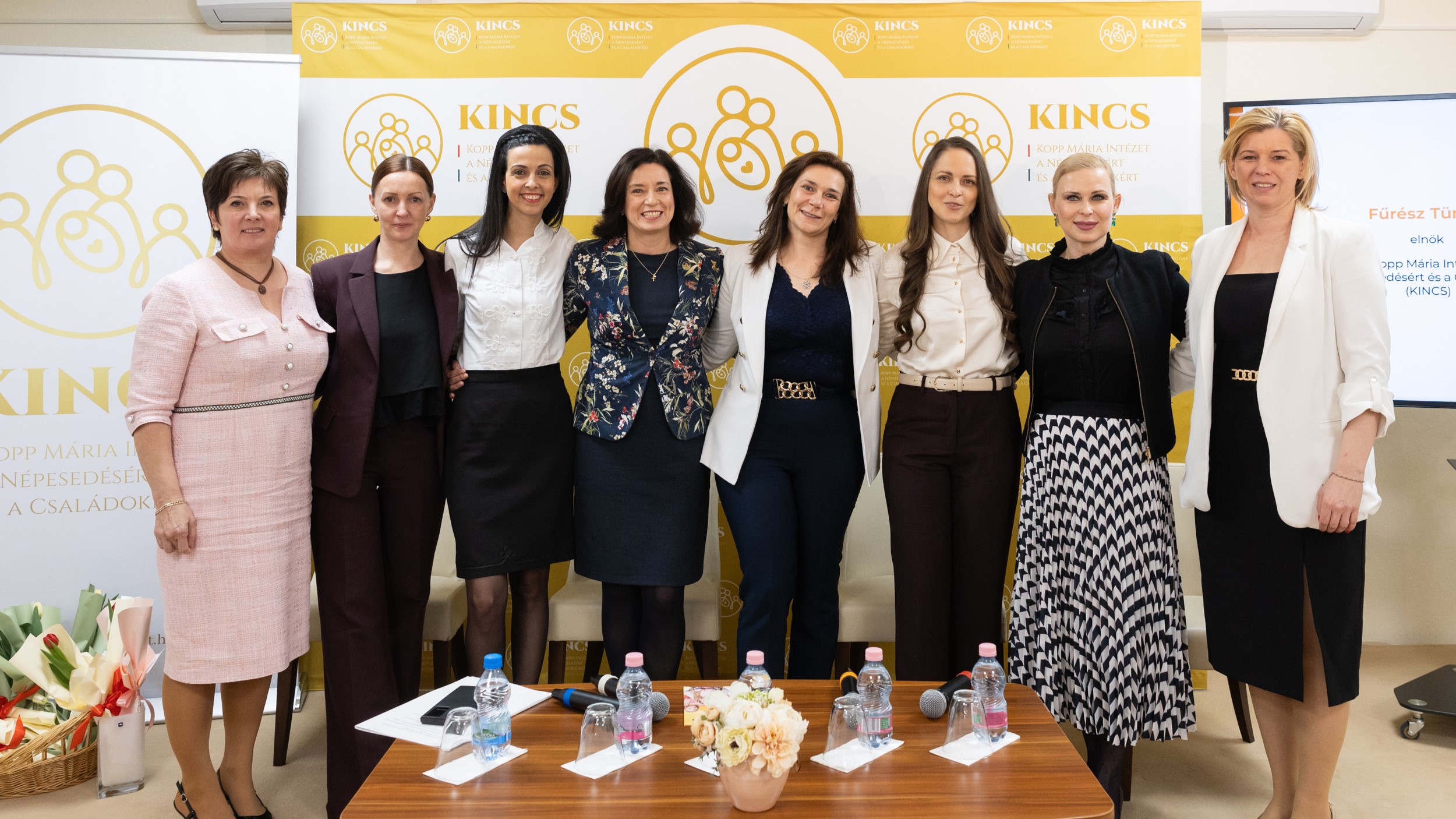
Hungary offers a supportive environment for women balancing family life, careers and public service, speakers said at an event organized by the Maria Kopp Institute for Demography and Families (KINCS) titled It Is Good to Be a Woman in Hungary.
The conference brought together several female leaders from government, politics and public life to discuss their professional experiences, the role of women in society, and the importance of family-focused policies.
The first panel discussion was moderated by Minister for Culture and Innovation Balázs Hankó, who noted that women play a central role in the ministry’s work. ‘It is not only good to be a woman, but because of women it is also good to be a man,’ he said, emphasizing that four of the ministry’s six state secretaries are women. The panel explored how being a woman influences leadership and daily work in public service.
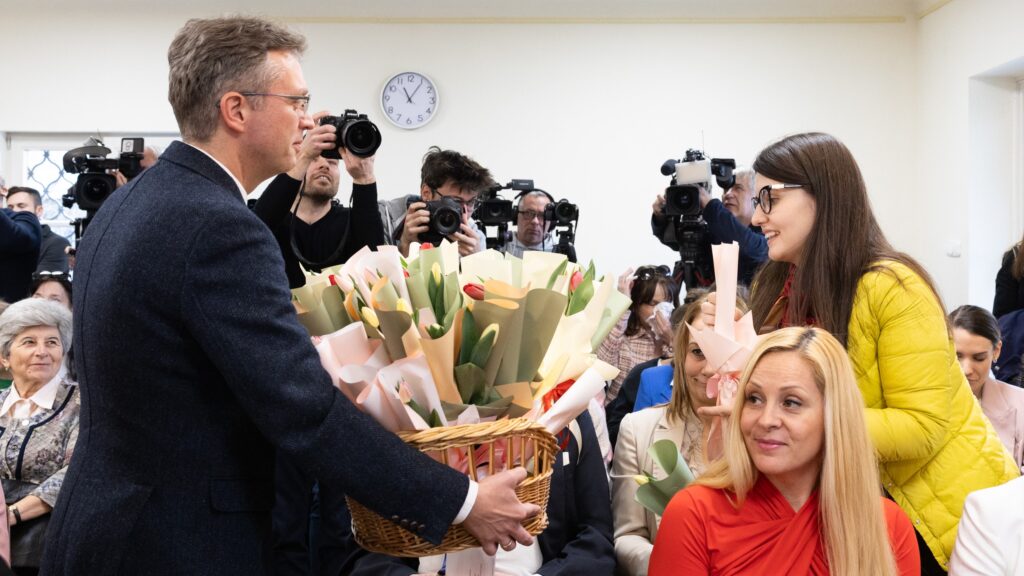
State Secretary for Families Zsófia Koncz said that being both a woman and a mother provides valuable perspective in policymaking. She highlighted Hungary’s extensive family support system, including personal income tax exemptions for mothers, the infant care allowance (CSED) and the Women40 retirement programme.
‘Families in Hungary can live in a secure and predictable environment,’ she said, adding that similar support systems are rare internationally. Koncz stressed that her own experience as a mother helps her better understand the challenges faced by families. ‘Because I have children myself, I can empathize with parents and understand what they need and why certain measures are important,’ she said.
Veronika Varga-Bajusz, State Secretary for Higher Education, Vocational Training and Youth, emphasized that government policies make it possible for women to pursue demanding careers while raising families. ‘There must be a safety net from the government so that women do not have to choose between career and family,’ she said. She added that motherhood also shapes her leadership style, particularly in advocating for young people. ‘I often feel like I must fight for students the way a mother fights for her children,’ she said, noting that women tend to approach problems in a solution-oriented way and work collaboratively to find answers.
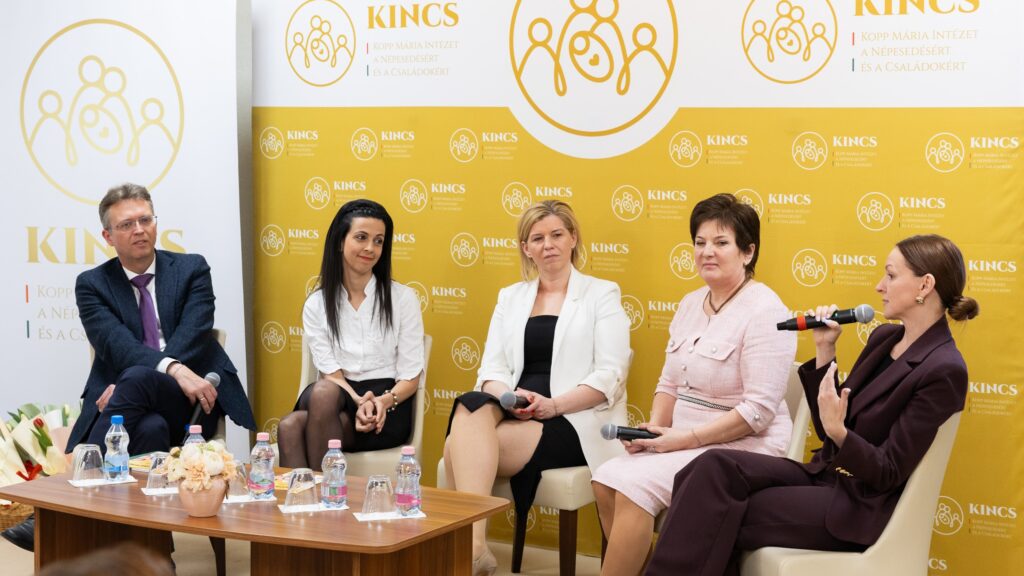
State Secretary for Culture Magdolna Závogyán said that women often play a balancing role in cultural life, helping to ease tensions that can arise in artistic communities. ‘In more difficult moments we can soften conflicts and bring people together,’ she said.
She also emphasized the importance of traditional culture and community-building, noting that family life itself provides a strong foundation for organizing communities. According to Závogyán, more than 15,000 people across 1,600 settlements participate regularly in cultural workshops and activities that connect families with Hungarian folk traditions.
State Secretary for Cultural Relations Anita Kiss-Hegyi highlighted the importance of dialogue and interpersonal skills in international cultural diplomacy. ‘Everything is shaped by human relationships,’ she said, recalling how growing up in a large family taught her the importance of mediation and fairness. ‘In international relations, listening to different viewpoints and facilitating dialogue is essential.’
She added that Hungary’s network of 27 Hungarian cultural institutes in 25 countries provides opportunities to showcase the achievements of Hungarian women in fields ranging from sports and science to culture. ‘Internationally there is a positive perception of Hungarian women, and we have many outstanding female figures whose stories deserve to be shared,’ she said.
The panel also addressed the challenges women face in public life, including political attacks and harsh public criticism. Koncz encouraged young women to pursue careers in public service despite these difficulties. ‘It is not always easy, but it is a very meaningful profession where we can help many people,’ she said. Varga-Bajusz agreed, while Závogyán emphasized the importance of experience and self-confidence in handling criticism. ‘It is important to distinguish between slander and criticism that deserves reflection,’ she said. Kiss-Hegyi added that her commitment to public service helps her overcome negative comments. ‘Serving the public good is much stronger motivation than online criticism,’ she said.
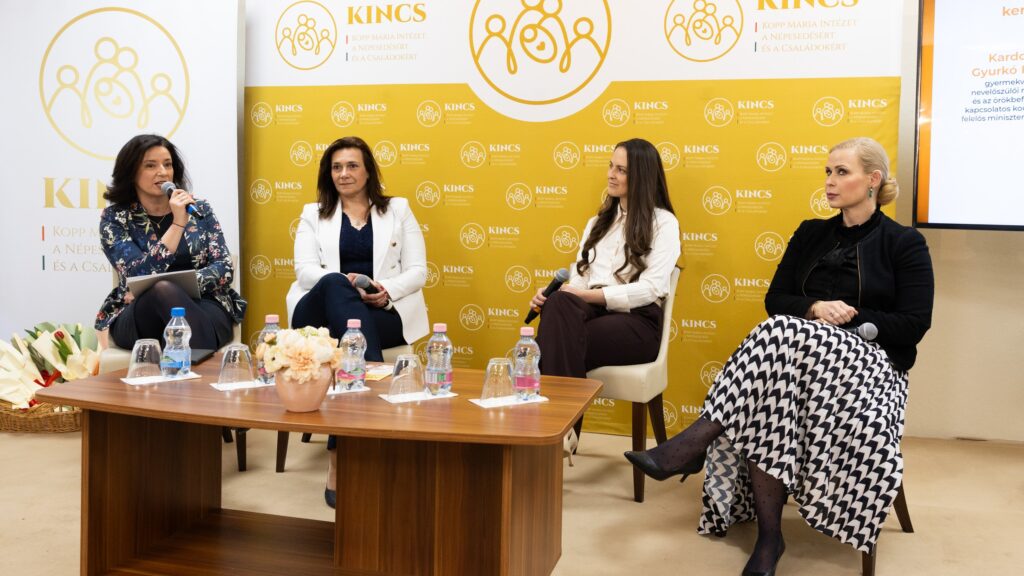
The second panel discussion, moderated by KINCS President Tünde Fűrész, focused on women’s roles in community leadership and politics.
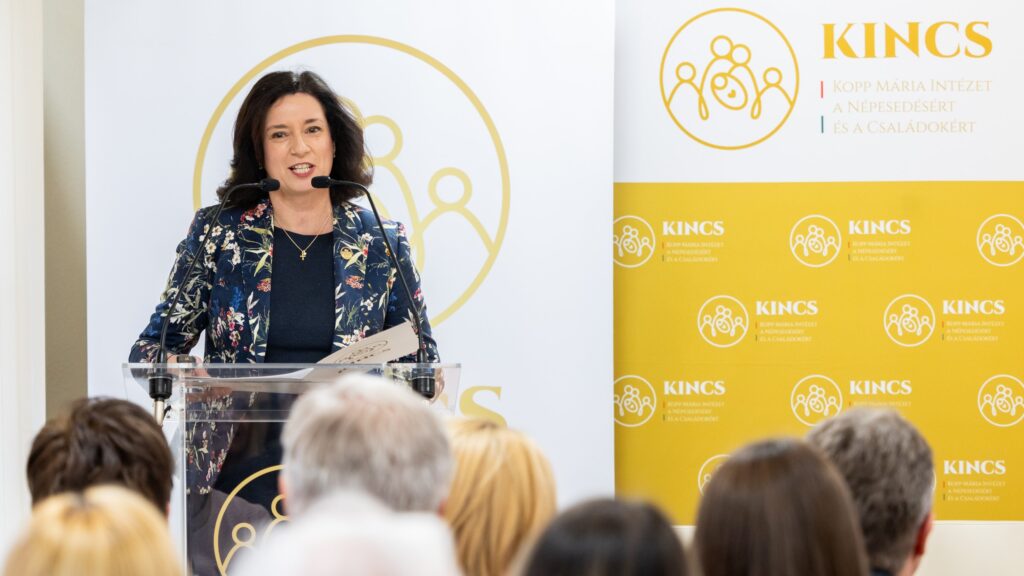
Hajnalka Juhász, Vice President of the Christian Democratic People’s Party (KDNP), spoke about the challenges of being a female politician. She said women in politics often face conflicting expectations, being criticized either for being too soft or too tough. ‘In parliament you must be strong, but when I go home I am a mother and a wife,’ she said, describing the challenge of maintaining balance between professional and family roles.
Deputy Mayor of Budapest’s 1st district Csilla Fazekas highlighted women’s dual role in family life and economic activity. ‘If women stop, everything stops,’ she said, emphasizing women’s importance in community building and their ability to approach problems with empathy.
Katalin Kardosné Gyurkó, Prime Ministerial Commissioner resposnsible for coordinating the foster care system and adoption, said authentic presence within communities is essential for effective policymaking. ‘One of the most important things is to truly be present in people’s lives and understand what they are experiencing,’ she said, noting that many policy ideas emerge from everyday conversations with families. She cited the personal income tax exemption for mothers and the car purchase subsidy for large families as examples of measures developed in response to real-life challenges.
Speakers also discussed the importance of communicating the benefits of Hungary’s family policies, particularly to younger generations who may not remember the situation before 2010.
Juhász stressed that many people take current stability for granted. ‘We must clearly explain how Hungary compares to other European countries and what opportunities exist here for mothers and families,’ she said.
The event concluded with a message encouraging women to take pride in their role in society and to actively participate in shaping their communities.
‘Being a woman is both a challenge and a privilege,’ Fazekas said. ‘A strong nation can only be built by including women’s perspectives.’
Related articles: