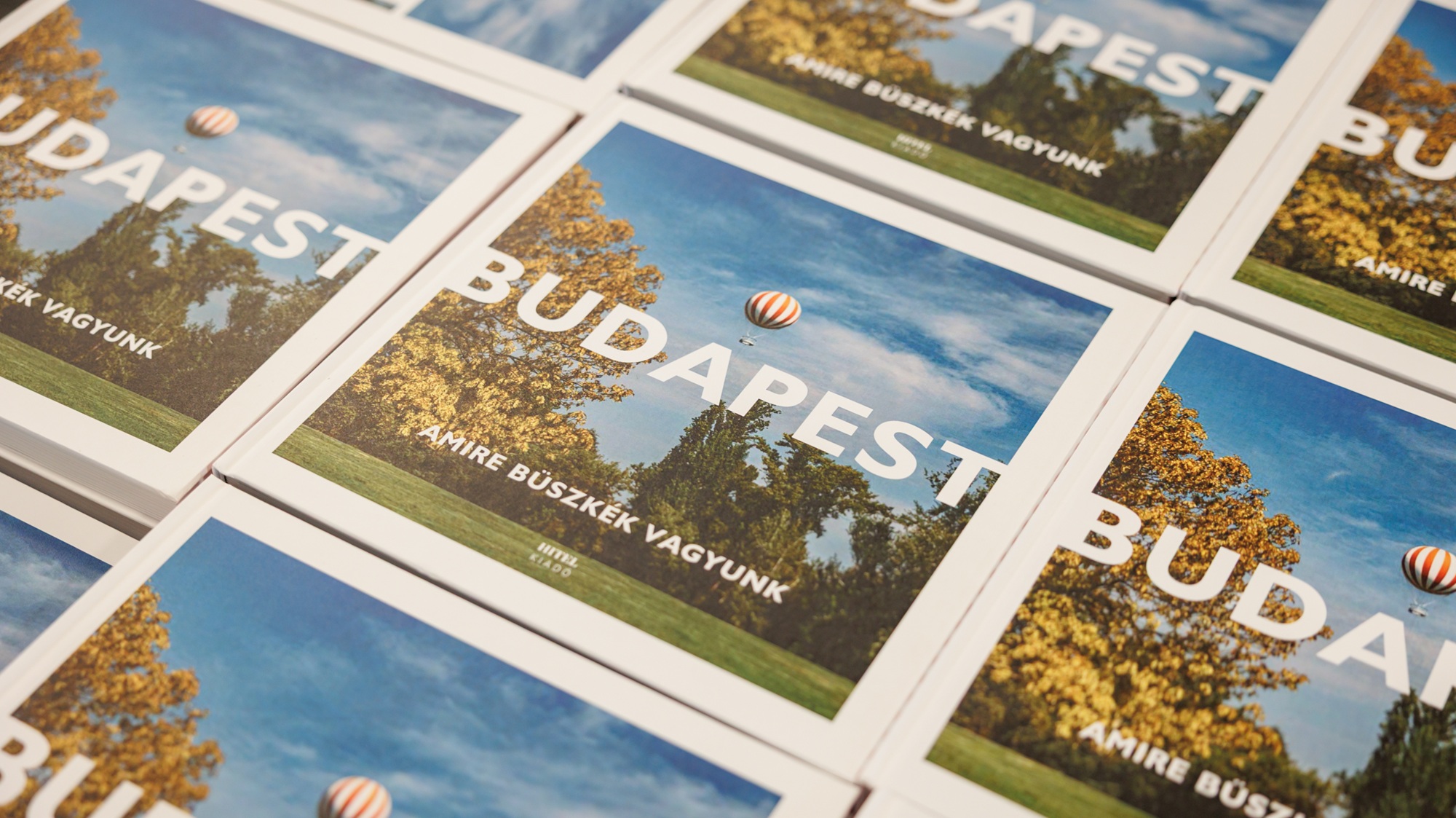
A brand new, illustrious photo album titled Budapest — What We Are Proud Of has recently been published by the Hitel Publishing House. To celebrate the album hitting the shelves soon, a book launch event was held at the Museum of Ethnography in Budapest. Hungary on Thursday, 4 December.
‘Thanks to the development projects of Hungary’s national government, Budapest has been growing at a similar pace to that of the turn of the 20th century. Two essential elements of these construction efforts are reconstruction and renovation. The buildings of the capital are now representing what it means to be Hungarian—knowledge, talent, and pride—in either their old, original form, or in their new, reimagined form. This is what the Budapest — What We Are Proud Of photo album is all about,’ the book launch event’s official leaflet told the many excited visitors.
The festivities kicked off with a Hungarian folk dance presentation, with the talent brought to us by the Talentum Hungaricum programme. Famous Hungarian TV host Nóra Ördög served as the MC for the day. She first called urban development policy expert Koppány Kőrösi of BP Műhely on stage.
Mr Kőrösi reminisced about his time living in Budapest right after the regime change in the early 1990s. As he described it, it was a city with ‘heads hanging low every day,’ and with eager anticipation for better times. Those better times with significant urban development eventually came for nine years. Although he did not specify it, he was likely referring to the tenure of Former Budapest Mayor István Tarlós between 2010 and 2019. Mr Kőrösi also pointed out that, thanks to those developments, now 6 million tourists visit the capital city of Budapest every year.
He also stressed that the city now finds inspiration from its past, and uses the present to build its future. Then, the speaker lauded the fact that while the City Park—a famous part of Budapest heavily featured in the new album, and where the venue of this very event is located—had sunk to the ‘level of warm beer and cold hot dogs’, that deterietion has now been reversed, and it is now a popular pastime location for foreign and local visitors alike.
Thereafter, Ministerial Commissioner for the Liget Project László Baán, architect Sándor Finta, Kossuth Award-winning pianist János Balázs, and journalist Endre Sal, the co-author of the Budapest — What We Are Proud Of publication, gathered on stage for a panel discussion.
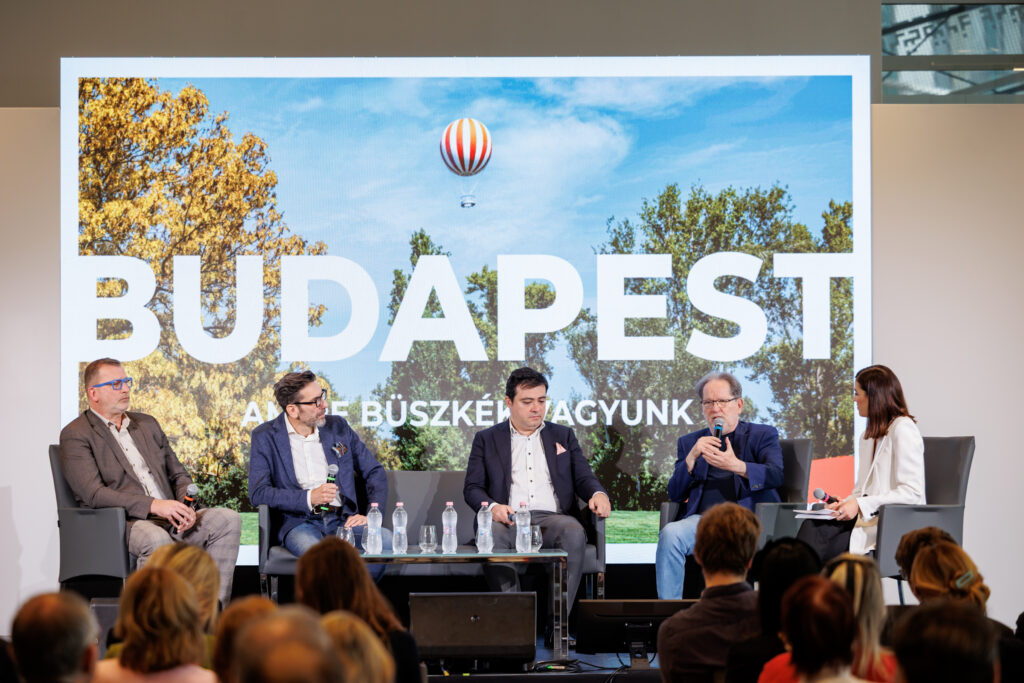
To the suggestion of Ms Ördög that the Liget Project was one of the most controversial development schemes of the Hungarian government, Mr Baán, who headed the operation, answered that there was a lot of lies being spread about it in the media for political reasons. He recalled that he had even warned the opposition that their lies would eventually be exposed once the project was finished, and that there would be no long-term political gain in perpetuating them, but they continued nonetheless. Now that the City Park’s renovation is complete, people across all political viewpoints are happy with it; therefore, he feels vindicated, Mr Baán shared.
He also thanked the many talented contributors to the project, local and international alike; as well as the Hungarian government, who stood by the initiative for its over-decade-long duration despite the constant unwarranted attacks.
Mr Finta explained that urban development is usually a hard pitch to sell to the public, as it is not easy for the average person to visualize what a given part of a city under construction would look like when finished based on the plans. As he put it, people have a hard time imagining what their own apartments would look like after interior renovations, let alone a major urban project. However, he also stated that once the renovation is about two-thirds of the way done, public opinion tends to rapidly shift in its favour. As for the specific, recent renovation projects for the Buda Castle and the City Park, Mr Finta told the audience that the organizers had to take on a lot of ‘faux professional’ debates about architecture, which were just veiled political attacks.
On that note, he recalled UNESCO threatening to revoke the World Heritage Site statuses of certain Budapest locations while the Hungarian government’s renovation projects were ongoing. However, once the projects were finished, they could not find anything objectionable with the renovated sites after a week-long thorough investigation.
Mr Balázs spoke about the transformation of the Liszt Ferenc Academy of Music building, which he has been regularly visiting since age eight, for 28 years now. He described it as something resembling a church, and opined that the acoustics of its Grand Hall are one of the best in the world for instrumental music. He also noted that the Academy founded by famous 19th-century composer Ferenc Liszt turns 150 years old this year, and that ‘the legacy of Liszt lives on in the souls of musicians,’ not just the building. Mr Balázs also shared that it is fascinating to realize that Béla Bartók and Zoltán Kodály walked the same stairs in the Academy building as he does today.
Mr Sal addressed fellow panellist László Baán, and told him that the Liget Project, his signature, will leave its mark on the city for the next 100 years. He also gloated that the harshest critics of the project, the self-proclaimed ‘Saviours of the City Park’ group, the last time he checked on them, were complaining about the lights of a late-night film shoot in the Park potentially disturbing the sleep of squirrels, to only receive three likes on Facebook…
The album Budapest — What We Are Proud Of features pictures by photographer Árpád Földházi.
Related articles: