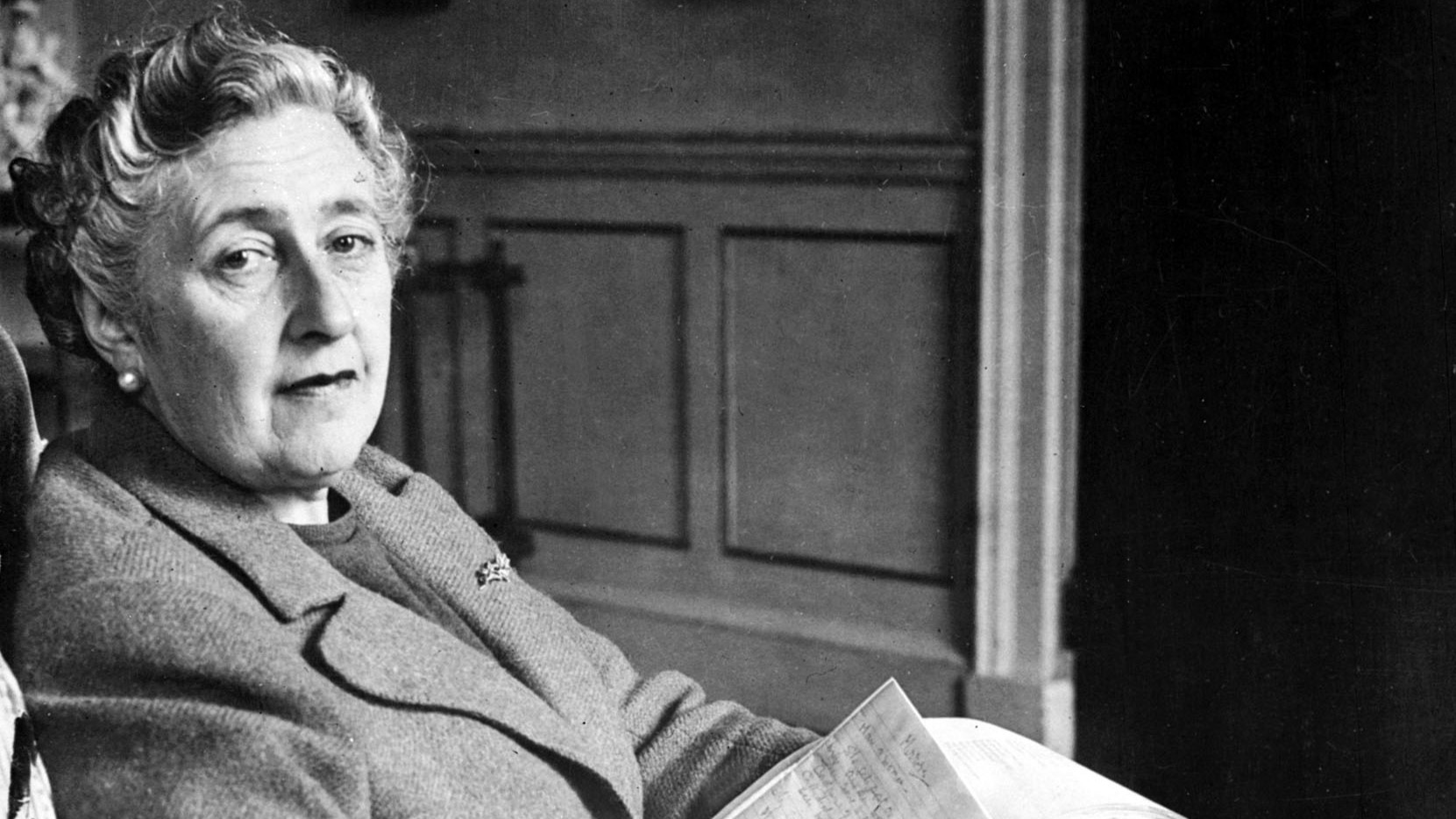
BBC News has published a rare Agatha Christie interview to mark the 50th anniversary of the death of the author often hailed as the queen of crime fiction. Recorded in 1955 for a BBC radio portrait programme at her London home, the interview offers an unusually personal glimpse into the life and working methods of the famously reserved writer.
Despite her global fame, Christie rarely spoke publicly about herself. In the broadcast, she described her childhood as ‘gloriously idle’, recalling that she was largely educated at home and spent much of her time reading. Born Agatha Miller in 1890 into a well-off family, she said boredom played a decisive role in pushing her toward storytelling.
She explained that until the age of 16, when she was sent to school in Paris, she received little formal education and began inventing stories to amuse herself. ‘There’s nothing like boredom to make you write’, she said, adding that by her late teens she had already written several short stories and one long, ‘rather dreary’ novel. Her first published novel was completed when she was 21.
Christie went on to create two of the most famous detectives in literary history, Miss Marple and Hercule Poirot. The Belgian sleuth first appeared in her 1920 novel The Mysterious Affair at Styles, which also introduced the use of poison as a murder weapon, a recurring element in her work. Her familiarity with poisons stemmed from her time as a volunteer nurse during the First World War, when she worked in a hospital dispensary while her first husband, Archie Christie, served in France.
Her breakthrough came with The Murder of Roger Ackroyd in 1926, but the same year brought personal tragedy. Her mother died, and her husband left her for another woman. Shortly afterwards, Christie vanished without explanation. Her abandoned car was found in Surrey, along with her fur coat and driving licence, sparking a nationwide search that even involved Sir Arthur Conan Doyle. 11 days later, she was discovered in a hotel in North Yorkshire. She never publicly explained what happened, later writing only that grief and despair followed her illness and that ‘there is no need to dwell on it’.
In the 1955 interview, Christie spoke candidly about her writing process. She said she relied on an old, trusted typewriter and dismissed the idea of elaborate methods. While dictation could help with short stories or plays, she found it unsuitable for complex novels. The most demanding part of her work, she explained, was constructing the plot. Once everything fell into place, writing itself was simply a matter of time. For her, three months was a reasonable period to complete a book.
She also admitted that she found writing plays more enjoyable than writing novels, as there was no need for lengthy descriptions of settings and characters. Speed, however, was essential to preserve atmosphere and natural dialogue. By 1955, three of her plays were running simultaneously in London’s West End, including The Mousetrap, which began as a BBC radio play in 1947 and has since become the longest-running play in theatre history.
Christie married archaeologist Max Mallowan in 1930, a partnership she described as happy and creatively fruitful. Over the next nine years, she wrote 17 novels. In 1973 she attended a celebration marking the 21st year of The Mousetrap at London’s Savoy Hotel, alongside original cast member Richard Attenborough.
In the BBC portrait, Attenborough remarked that Christie seemed the last person one would associate with violence or crime. Yet, he said, it was precisely this quiet, dignified woman who managed to unsettle audiences worldwide with her mastery of suspense and her ability to create chilling atmospheres on stage and screen.
Related articles: