

Will Iran sign a new deal on its nuclear and ballistic missile programme? How strong are Russian, Chinese, and American influences in the Middle East? What will happen to Gaza and Hamas? We asked the former CEO and President of the Middle East Institute about the rapidly changing geopolitical landscape of the Middle East.
Is the Ayatollah regime willing to change under societal pressure? Will Iran strike a deal on its nuclear programme with the US? Does it have the capacity for a blitzkrieg? We interviewed the Executive Vice President of the Quincy Institute for Responsible Statecraft at the Hungarian Institute of International Affairs’ Budapest Global Dialogue on the ongoing turbulences in Iran.
Why are the Czechs wary of Ukraine’s rapid EU membership? What is the secret behind the ANO party’s success? We asked the Chair of the Foreign Affairs Committee of the Chamber of Deputies of the Parliament of the Czech Republic about the future of the V4, the Patriots’ programme, and the ideological state of Europe.
Is it possible to demilitarise the Gaza Strip? How strong is the Iranian regime? Will there ever be a Palestinian state? Do Israeli policies contribute to rising antisemitism? We spoke with the Head of the Military–Social Relations Department at the David Institute for Security Policy about the challenges and prospects facing the Middle East.
What did the United States achieve in the Afghan war? Why do China and Russia maintain a strategic partnership with Pakistan? And is there a rational solution to the Jammu and Kashmir territorial dispute? We spoke with the former Pakistani Ambassador to Afghanistan following his lecture at Ludovika University of Public Service in Budapest on Pakistan’s geopolitical significance.
How is the current series of anti-government demonstrations different from previous protests in Iran? What are the most likely scenarios for system change? How strong is the Ayatollah regime? We asked the Executive Vice President of the Quincy Institute to explain what is actually happening in Iran.
What is the significance of the American military intervention aiming to capture President Maduro? What went wrong during the Chávez era? What will be the fate of the Maduro—and the Cuban—regime? The Hungarian Conservative asked the prominent Venezuelan opposition figure in Budapest about America’s capture of President Maduro and its political consequences for Venezuela.
What does it mean to be human? What are the limits of the transhumanist idea that humans can overcome their biological constraints? What are the ethical issues with abortion and assisted reproduction? We asked O Carter Snead, a professor of law and an expert on bioethics, at the Axioma Center’s conference in Budapest about the concept of the human being from the perspectives of transhumanism and Christianity.
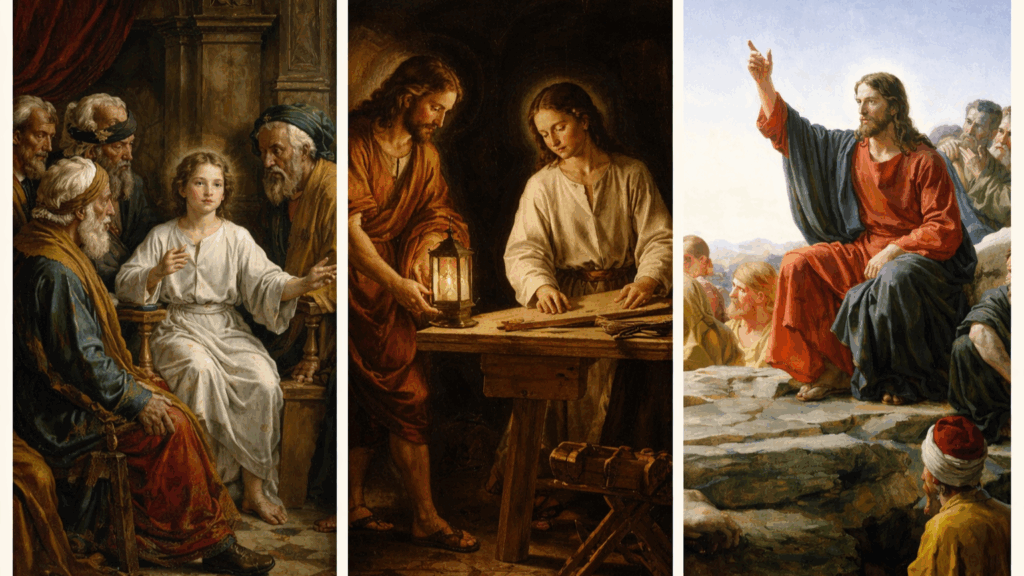
Jesus is the Christ in the flesh, the Son of God who became the saviour of mankind. This is what the Holy Scriptures say about him, and they also affirm that through Mary he became a blood descendant of Abraham, from the tribe of Judah and the line of King David. Thus, as an ethnically Jewish man, he fulfilled the Law and died for our sins.
What are Russia’s minimum objectives for demonstrating victory? What will happen to Gaza? How can the West persuade Central Asia to cooperate with the US and Europe? We asked a former senior director at the National Security Council in George W Bush’s White House for a year-end analysis of the world’s three major geopolitical conflicts.

At a time when public debate is increasingly polarized and superficial, Hungarian Conservative remains committed to depth and independent thought.
Donate Now
Please consider supporting our mission.