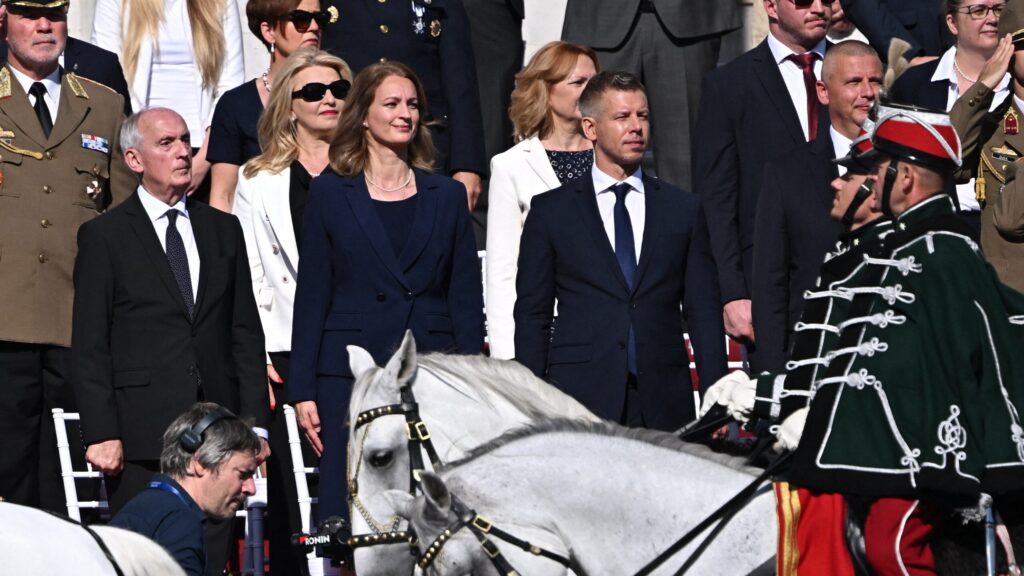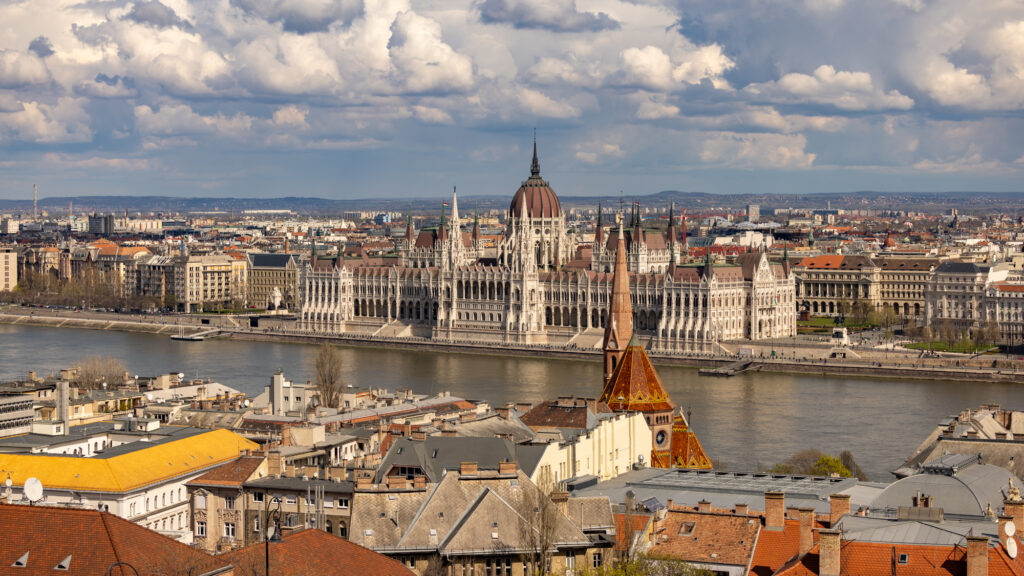
Hungary received greetings from many of its allies on St Stephen’s Day, 20 August, the day on which the Christian Hungarian state was founded 1,026 years ago, offering observers a picture of how the new government led by the Tisza Party and Prime Minister Péter Magyar manages its foreign relations.
Compared with 2025, the last St Stephen’s Day under former prime minister Viktor Orbán, there was substantial continuity in these messages, as well as notable absences and both surprising and expected newcomers added to the list.
Most importantly, US Secretary of State Marco Rubio again marked 20 August with a formal National Day statement, making Washington one of the clearest examples of continuity across the change of government. In his remarks, Rubio stressed sovereignty, heritage, economic partnership, shared security interests and an alliance built on Western values, echoing many of the themes of Washington’s message from last year, although in a less ideologically rooted framing.
Similarly to 2025, European Council President António Costa also greeted Hungary, writing on X: ‘My best wishes on Hungary’s National Day. Boldog Nemzeti Ünnepet, Magyarország!’ repeating his message both in English and Hungarian. Besides Costa, several EU institutions also congratulated Hungary; however, Commission President Ursula von der Leyen remained silent, as she did last year.
A broader group of states joined the United States and the EU in sticking to their established protocol: King Charles III, Kazakhstan and several Gulf monarchies—including the UAE, Saudi Arabia, Qatar, Kuwait, Oman and Bahrain—again sent formal congratulations. In many cases, the only difference between these messages was the names of the Hungarian leaders mentioned. From Central Asia, however, Kazakhstan remained the only country to congratulate Hungary, while Turkmenistan, in contrast to 2025, disappeared.
The most politically significant new message, however, came from Ukrainian President Volodymyr Zelenskyy. He thanked Hungary for supporting Ukraine’s sovereignty and territorial integrity and for humanitarian assistance, called for ‘open and constructive’ engagement, and, most importantly, invited Magyar to Kyiv.
That made the message more than ceremonial. After years of tense Budapest–Kyiv relations under Viktor Orbán, Zelenskyy used Hungary’s national holiday to signal an opening for a reset with the new government. His message fits well with the already launched realignment between the two neighbouring countries, which yielded a political agreement in June concerning the rights of the Hungarian ethnic minority living in Ukraine and Kyiv’s EU bid. Besides the presidential greeting, Ukraine also sent congratulations at foreign-ministerial level.
Magyar has not yet publicly responded to Zelenskyy’s latest invitation. However, the two leaders had already agreed in July to hold a bilateral meeting either in Kyiv or Budapest, followed by a joint visit to Transcarpathia.
A more surprising group of newcomers came from South Asia. Pakistani President Asif Ali Zardari combined congratulations with a broad bilateral agenda covering political and parliamentary exchanges, trade, investment, education, culture, climate cooperation and, notably, ‘migration and mobility’. The wording explicitly placed mobility and education among areas for future cooperation.
‘A more surprising group of newcomers came from South Asia’
Indian Foreign Minister S Jaishankar sent a shorter message: ‘Warm greetings to the Government and people of Hungary on their National Day. Look forward to further strengthening our ties.’ Neither New Delhi nor Islamabad sent greetings in 2025, although India was present during earlier years.
At the same time, Israel provided the clearest politically meaningful disappearance. In 2025, Foreign Minister Gideon Sa’ar personally congratulated Orbán and then-foreign minister Péter Szijjártó, praised Hungary’s ‘steadfast support’ for Israel and celebrated the ‘deep friendship’ between the two countries. This year, however, no similar messages were sent, signalling at least a minimal cooling of relations compared with the years under Orbán. The new government had already reversed Hungary’s withdrawal from the International Criminal Court (ICC), a procedure started in 2025 at the same time as Israeli Prime Minister Benjamin Netanyahu visited Budapest.
Most neighbouring states and major EU capitals refrained from sending direct messages, which at first glance could look surprising, given the intense realignment efforts in the first months of the new government. However, this is their usual conduct: Austria, Slovakia, Romania, Croatia, Slovenia, France, Germany, Italy and Poland largely lacked greetings in earlier years as well.
Polish Prime Minister Donald Tusk, however, remains a narrower exception. He had warmly welcomed Magyar’s April victory, describing it as Hungary’s ‘return to Europe’, and hosted Magyar’s first foreign trip as prime minister. Poland, under the former PiS government, had at least one precedent of greeting Viktor Orbán on 20 August 2021, signalling the strong political alignment between the two conservative leaderships. In that regard, Warsaw’s absence from the list is worth attention, although it can be explained more by tensions between President Nawrocki and Tusk than by deteriorating Polish–Hungarian relations.
Related articles:
At a time when public debate is increasingly polarized and superficial, Hungarian Conservative remains committed to depth, intellectual honesty, and independent conservative thought.
Producing high-quality journalism requires resources. Your contribution helps us expand our coverage, reach new audiences, and keep our content accessible.

Please consider supporting our mission.