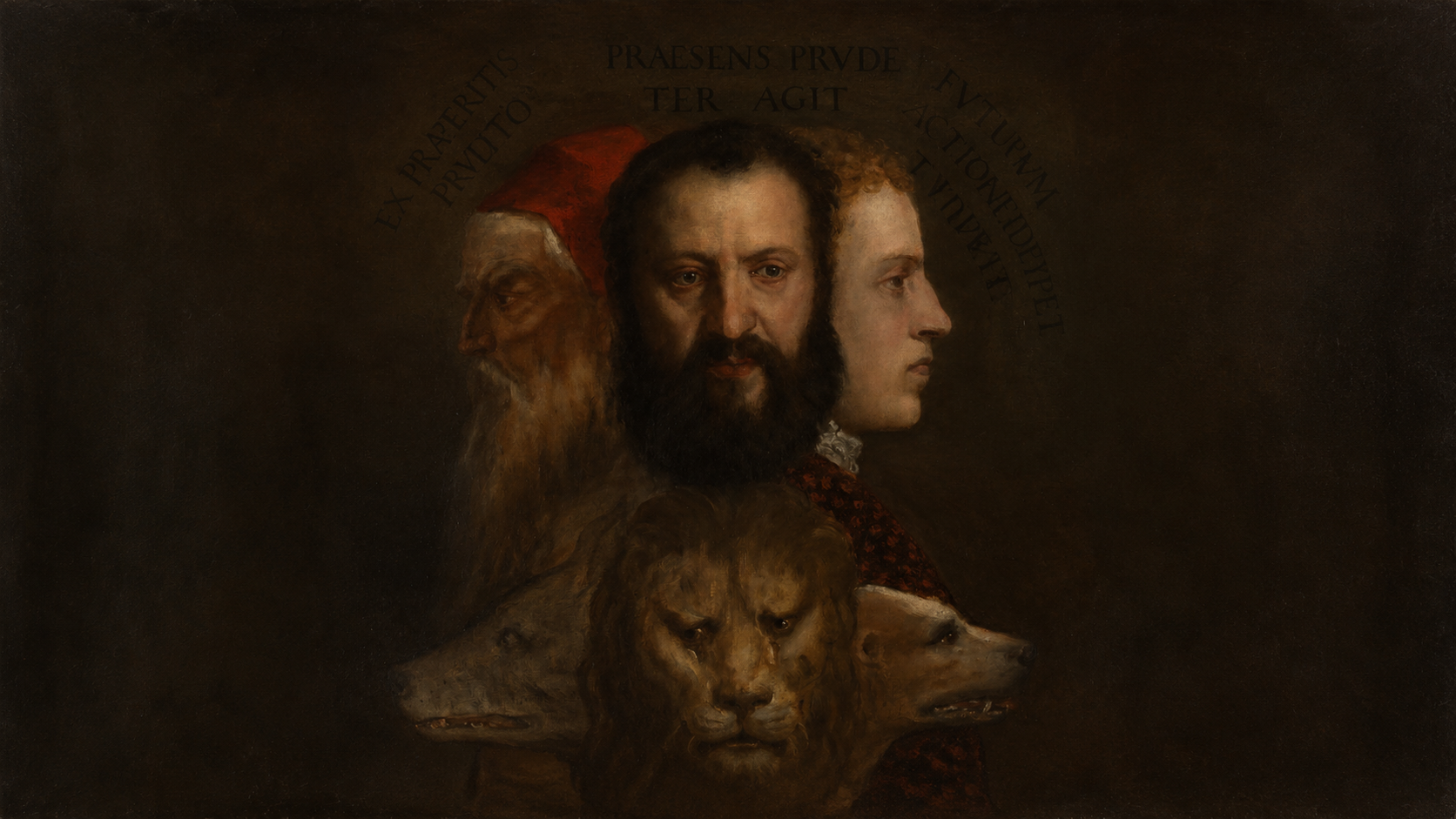
‘From the past, the present acts prudently, lest it spoil future action.’
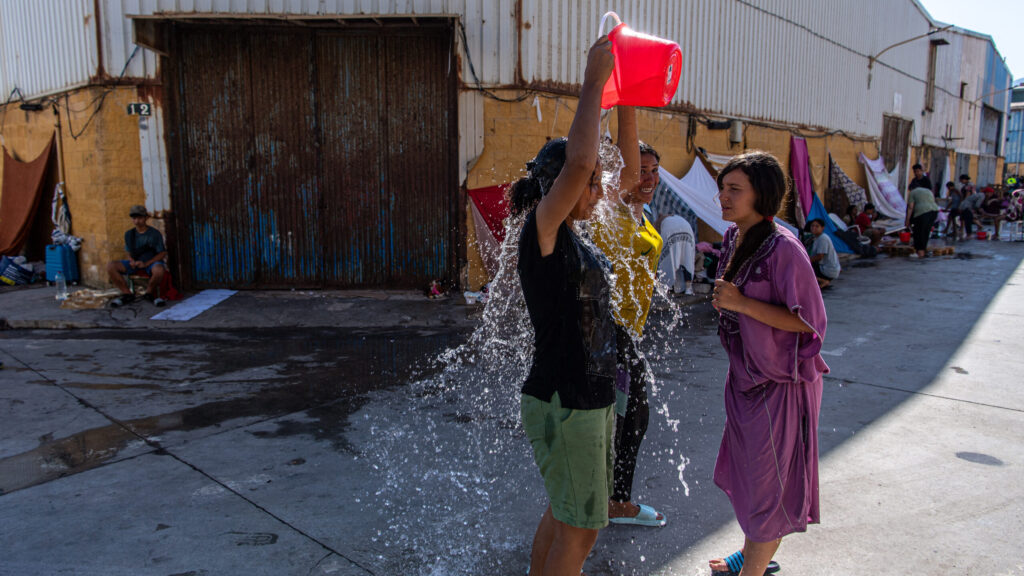
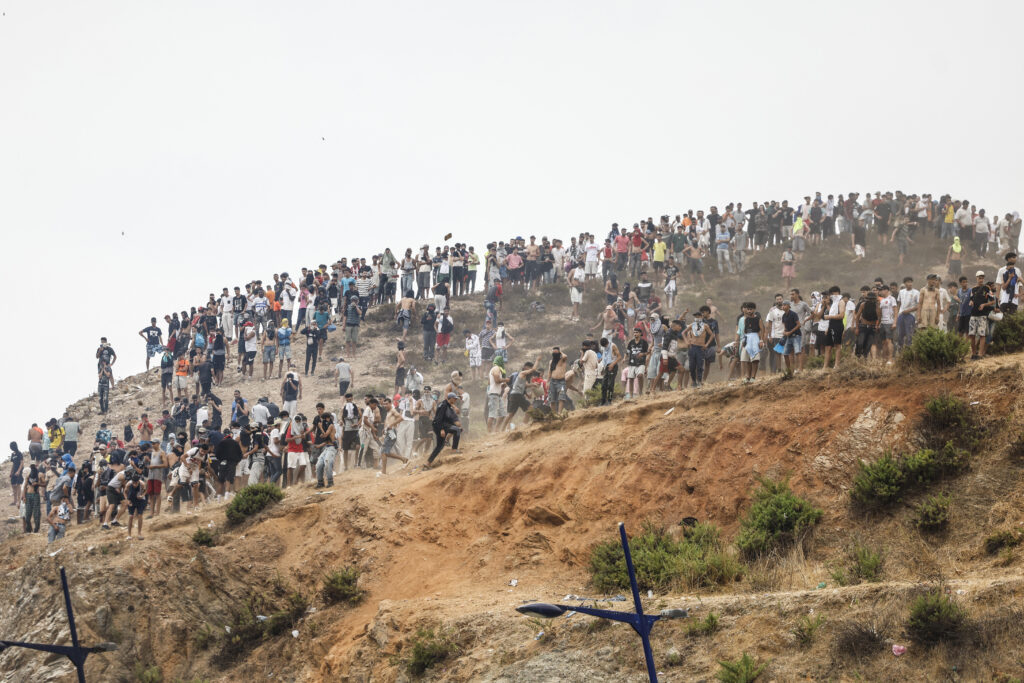
In the past two weeks, countless interpretations of the underlying causes of the Ceuta crisis have appeared across newspapers, online outlets and social media. As with almost every major migration crisis in Europe, those interpretations have diverged sharply along political and ideological lines.
Yet one article in particular caught my attention. Not because its interpretation was especially unusual—it largely reflects the liberal-progressive understanding of migration and its underlying causes—but because following its argument to its logical conclusions led me somewhere considerably beyond Ceuta itself.
The article was written by J Kevin Appleby, senior fellow for policy and communications at the Center for Migration Studies of New York, and published in America, the prominent Jesuit Catholic review founded in 1909. Appleby’s argument ultimately raised for me a broader question: if nations can inherit responsibility for the past, what responsibility do they bear for the future? What is the correct thing to do in the present to avoid making our descendants look back on their past with collective guilt and shame?
Appleby acknowledges that Spain’s migration policies ‘might have played some factor’ in the events, but argues that the ‘fuller explanation’ lies in inequality, political, cultural and religious repression, regional conflict and climate change, compounded by reductions in Western aid. His answer is more aid, stronger asylum systems and an end to deterrence-first policies.
The Difference Between Pressure and Trigger
Much of what Appleby identifies is real. Poverty, repression, climate change and economic hardship can all create pressure to leave. The problem is that these structural conditions explain the desire to migrate far better than they explain the timing and extraordinary concentration of the Ceuta crisis.
Reuters found social media at the centre of that immediate chain of events. Migrants described deciding to travel after seeing successful crossings online, while misleading claims spread about a Spanish Supreme Court ruling limiting immediate maritime pushbacks. Spanish estimates later put the total at around 72,000. Climate change cannot tell 72,000 people that this is the time to go to Ceuta. Structural hardship creates pressure, while information, perceived opportunity and enforcement determine when and where much of it is released.
Morocco’s role adds another layer. Deliberate orchestration has not been established, but the precedent of the 2021 Ceuta crisis makes the question legitimate. When new online calls urged another mass illegal crossing on 15 August, Moroccan authorities sharply reinforced the frontier and threatened legal action against organizers. Whatever happened in July, August demonstrated the significance of state agency at the border.
Appleby is on firmer ground when he points to falling Western aid. OECD projections show bilateral aid to sub-Saharan Africa falling another 11.6 per cent in 2026 after a 26.3 per cent decline in 2025, leaving support at its lowest level since the early 2000s. But that does not establish a connection between declining aid and Ceuta. Not to mention that reduced migration is far from an evident result of development assistance.
The Two-Sided Principle of Inheritance
This is where Appleby’s article became more interesting to me than the dispute over Ceuta itself. Underneath his explanation lies a moral proposition: wealthy Western societies have obligations to people beyond their borders. I do not find that proposition objectionable. A prosperous country can have humanitarian duties towards people whom its citizens will never meet. It can also have responsibilities arising from its policies, its economic power and, in particular circumstances, its history.
The question is what follows from that—and where those obligations end.
Much contemporary Western political morality asks us to think across generations when considering historical wrongdoing. Strictly speaking, ‘inherited guilt’ is an imprecise description: a person cannot sensibly be personally guilty of something committed before he was born. The stronger argument concerns inherited responsibility. Institutions persist. Wealth persists. Political communities persist. Consequences persist. Present generations can therefore acquire remedial obligations connected to a past they did not personally create.
Political philosopher David Miller has developed one of the clearest versions of this logic. The present generation, he argues, benefits from inherited territory and capital. Precisely because it accepts the advantages of national continuity, it cannot simply reject responsibility for the national past. I am prepared to follow that argument. But there is no reason to stop where historical responsibility stops.
‘People affected by our longest-lasting decisions include people who cannot vote, protest or lobby us because they do not yet exist’
If national continuity is sufficiently real to transmit liabilities from the past, it must also be sufficiently real to transmit assets and obligations into the future. Today’s Europeans did not build most of the cities they live in, create the legal systems they rely on, establish their borders or accumulate all the institutional and cultural capital they possess. They inherited them. Yet neither are they the final owners. Their children will inherit what remains.
John Rawls approached the problem from another direction with his ‘just savings’ principle: generations have obligations concerning what they leave to those who come afterwards. Intergenerational justice therefore already recognizes a basic fact that contemporary politics easily forgets—the people affected by our longest-lasting decisions include people who cannot vote, protest or lobby us because they do not yet exist.
This produces what I would call a two-sided principle of inheritance. If I can inherit my ancestors’ responsibilities, why can my children not inherit their inheritance? If a nation exists through time strongly enough for today’s generation to answer for yesterday’s actions, why should that continuity suddenly disappear when we ask what today’s generation owes tomorrow’s?
This does not mean freezing civilization at some arbitrary point in history. Every generation naturally changes what it receives. But there is a difference between adapting an inheritance for the common and future good, or out of necessity, and denying any obligation to transmit it at all while naively undermining the foundations on which it rests.
Inheritance Beyond the Nation
Appleby’s own Catholic framework makes this question particularly interesting. The Catechism says prosperous nations are obliged, ‘to the extent they are able’, to welcome foreigners seeking security and livelihood. The same passage allows governments to regulate immigration for the common good and says immigrants should respect the ‘material and spiritual heritage’ of the country receiving them.
If that heritage is real enough that newcomers have an obligation to respect it, surely existing citizens can have an obligation to preserve it.
Catholic teaching also recognizes the right not to have to migrate. Pope Francis framed this in 2023 as being ‘free to choose whether to migrate or to stay’. Helping people build viable lives at home can itself be an expression of solidarity.
Europe’s demographic trajectory gives the inheritance question much greater practical weight. The European Commission’s 2026 Demography Report describes a continent increasingly dependent on migration to compensate for natural decline. More people have died than have been born in the EU every year since 2012, while fertility fell to 1.34 children per woman in 2024. Under Eurostat’s zero-net-migration scenario, the EU population in 2100 would be 32 per cent smaller than under its baseline—around 130 million fewer people.
Europe’s Muslim population has developed against that background from a markedly younger demographic base. Pew estimated Muslims at 4.9 per cent of Europe’s population in 2016. Even with migration stopping completely, it projected the share rising to 7.4 per cent by 2050 because Muslims were around thirteen years younger on average and had higher fertility—roughly 2.6 children per woman compared with 1.6 among non-Muslims at the time. With ordinary economic, family and educational migration continuing, the projected share reached 11.2 per cent.
National averages only show part of that transformation while concealing another one. In Vienna’s state primary and middle schools, Muslim pupils accounted for 42 per cent of students in 2025/2026, while the proportion in public middle schools is now close to half. The British city of Birmingham shows the political dimension: Muslims accounted for 29.9 per cent of the city’s population in the 2021 census, up from 14 per cent in 2001. In the 2026 local elections pro-Gaza and Muslim independents made significant gains adding to the underlying reasons why Labour lost control of the council after fourteen years. Political influence can follow geographic concentration long before it is visible in continent-wide demographic rates.
‘If we inherit responsibilities from that civilization’s past, we also inherit a duty to preserve its defining political and moral inheritance’
Political Islam provides an ideological framework through which those demographic and integration pressures acquire political significance. France’s Interior Ministry published a major report in 2025 to document political Islam and Muslim Brotherhood-linked networks and examine their objectives and methods of influence. Demographic concentration, weak integration and organized ideological movements can interact well before either demographic or political majority is reached.
This is where the two-sided principle of inheritance extends beyond the nation. Western civilization is not a state, but contemporary historical discourse routinely treats ‘Europe’ or ‘the West’ as a continuous civilizational subject when assigning responsibility for colonialism, exploitation and other historical wrongs. If that continuity is meaningful when obligations are imposed, it cannot become meaningless when preservation is discussed.
Europe has never been culturally static. Its inheritance includes classical Greek and Roman thought, Judaism, Christianity, Renaissance humanism, the Enlightenment and constitutional liberalism. Christianity nevertheless remained one of its constitutive foundations for more than a millennium, shaping law, institutions, education and its moral vocabulary even as Europe later became increasingly secular.
If we inherit responsibilities from that civilization’s past, we also inherit a duty to preserve its defining political and moral inheritance for those who come after us. That includes the supremacy of common civil law, freedom of conscience, political pluralism, equality before the law and individual rights. Political Islam matters because movements seeking to subordinate those principles to religious authority are contesting parts of the institutional inheritance itself.
If political and religious oppression abroad helps drive people towards Europe, then preserving Europe’s freedom from those same forms of oppression is itself part of the inheritance we are obliged to protect.
The Material Side of Inheritance: Finite Abundance
Climate change brings the material side of that inheritance into view. Europe remains far more prosperous and secure than many of the regions from which migrants come, but its abundance is not guaranteed indefinitely. Climate shocks are already imposing significant agricultural losses, and the European Environment Agency warns that maize and wheat yields could fall by as much as 49 per cent in parts of southern Europe by 2050.
The question is therefore not simply what Europe can afford today, but what capacity it is obliged to preserve for tomorrow. If we assume that present abundance will continue indefinitely, we risk committing resources and capacity that our descendants may need to preserve—and pass on—the civilizational inheritance we ourselves received, while seeking to discharge obligations inherited from the past.
Western nations have accumulated claims, commitments and obligations that can each be defended separately: development aid, asylum, humanitarian protection, labour migration, family reunification and responsibility for historical injustices. None of them alone empties the plate. The harder question is how much can continually be placed on it before capacity itself becomes part of the moral calculation.
And our plate is not guaranteed to keep growing. In some respects, it is already becoming more constrained. We may eventually discover that while trying to divide an apparently endless abundance among ever more claims, we forgot that future generations were supposed to eat from it too.
‘A civilization is not an apology because it is not merely a record of crimes requiring atonement’
Europe therefore needs to become hungry long before it goes hungry. It needs to regain its long-gone appetite for self-preservation: the confidence to say that borders have meaning, that immigration can have limits, that people without a legal right to remain can be returned, that integration creates duties for newcomers as well as hosts, that political and radical Islam can and must be confronted, and that preserving a civilization for future generations is itself a legitimate moral obligation.
The migrant standing at Ceuta matters. The farmer facing drought in Africa matters too. So does the European child who will live in 2075. He or she will inherit the climate, the debts, the institutions, the demographic realities and the political choices we leave behind.
If that child can be told that Europe’s history creates responsibilities he did not personally incur, then he can reasonably ask what we did with the inheritance he did not personally create either.
A civilization is not an apology because it is not merely a record of crimes requiring atonement. Nor is it merely property for its present inhabitants to consume. It is an inheritance: far from perfect and, yes, in many ways burdened by history, but held temporarily by one generation before passing to another.
If we insist that our descendants must answer for Europe’s past, just as we insist that we do as well, the least we owe them is a Europe in which they remain capable of answering for its future.
Related articles:
At a time when public debate is increasingly polarized and superficial, Hungarian Conservative remains committed to depth, intellectual honesty, and independent conservative thought.
Producing high-quality journalism requires resources. Your contribution helps us expand our coverage, reach new audiences, and keep our content accessible.

Please consider supporting our mission.