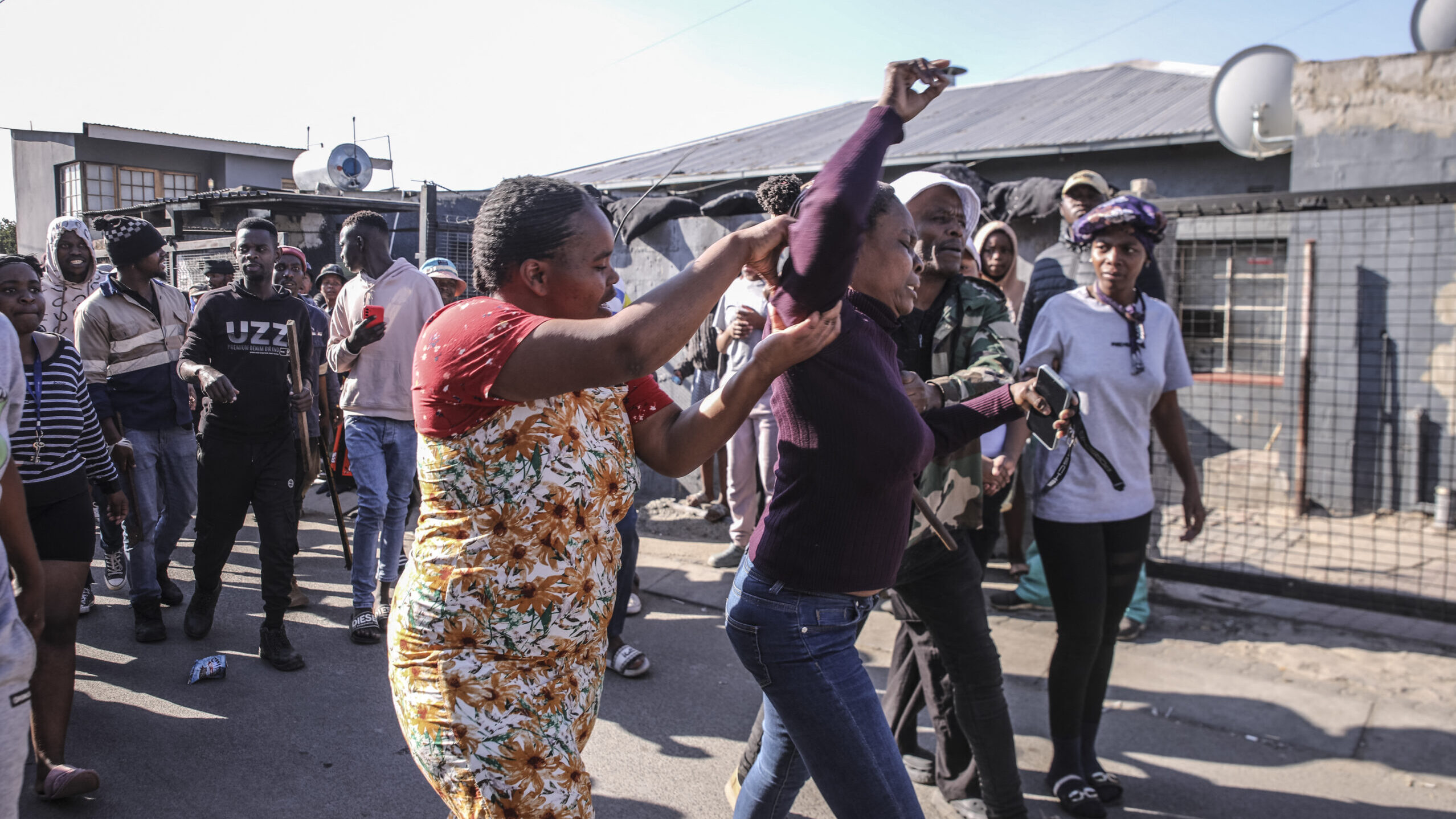
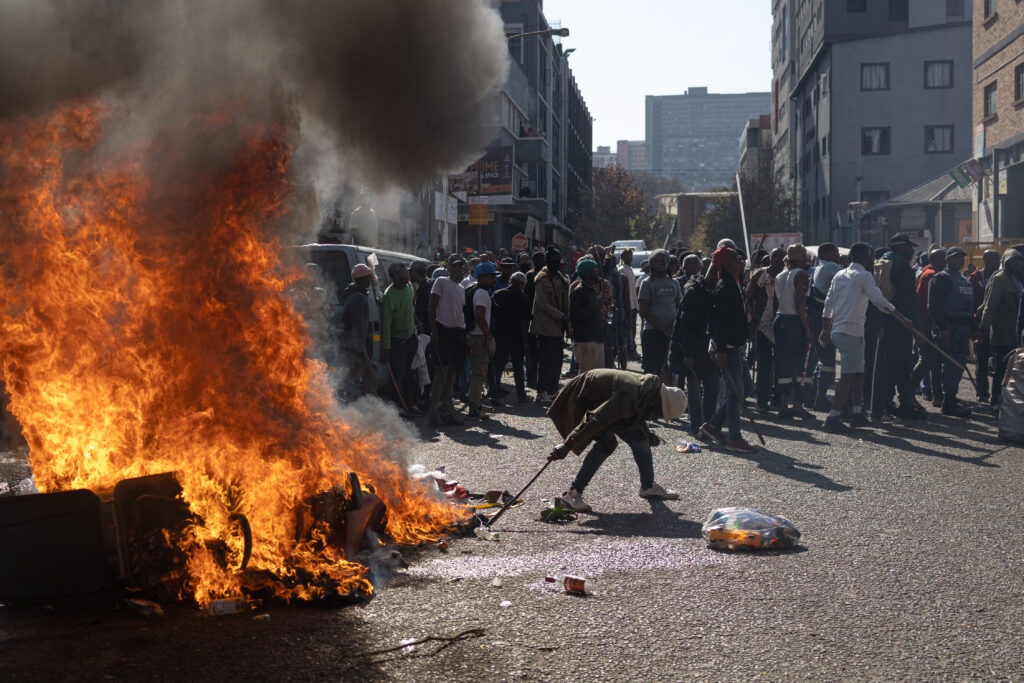
Anti-immigration protesters in South Africa escalated their campaign on Thursday, 9 July, when groups in Johannesburg’s Alexandra township broke down doors, entered homes, and forced suspected undocumented migrants into police vans.
According to Reuters, demonstrators formed patrols and removed several foreigners from their homes. Similar civilian crackdowns were organized in Soweto and Durban.
The protests followed an informal 30 June deadline set by anti-immigration activists for illegal migrants to leave the country. President Cyril Ramaphosa has warned that citizens have no right to demand documents, enter homes, or take immigration enforcement into their own hands, even as police have increased arrests of undocumented migrants in response to the unrest.
Poor Economy Fuels Anti-Immigrant Atmosphere
The anti-immigration atmosphere in the country is fuelled by a combustible mix of unemployment, inequality, weak border control, crime fears, and frustration over failing public services. South Africa is one of the world’s most unequal societies, with large numbers of citizens locked out of work, housing, and reliable healthcare.
Statistics South Africa put the official unemployment rate at 32.7 per cent in the first quarter of 2026, while youth unemployment remains significantly higher, at around 40–50 per cent. The official 2022 migration profile counted 2,418,197 international migrants, or 3.9 per cent of the population. March and March, however, dispute those numbers, claiming that the real figure could reach as high as 30 million—or half of the country’s population.
Groups behind the anti-immigration mobilization argue that South Africans are being forced to compete with undocumented foreigners for jobs, informal trade, hospital access, school places, and low-cost housing, while poorly secured borders and weak deportation systems deepen crime and state failure. Many citizens experience the state as absent, corrupt, or incapable of enforcing its own laws.
The organization behind the current movement is March and March, led by former radio presenter Jacinta Ngobese-Zuma. The group says it opposes illegal immigration, not foreigners as such, and demands tighter border control, mass deportations, and priority for South Africans in schools, clinics, and other public services. After the 30 June ultimatum, Ngobese-Zuma said marches would continue every Thursday until the movement’s demands were met.
Speaking to protesters, she called on the government to use ‘national resources’ over the next six months ‘to take illegal migrants out of the country’. ‘From building to building, they must go,’ Ngobese-Zuma declared.
Historically Rooted Tensions
While the recent door-to-door raids and removal of suspected illegal migrants may seem like a serious and dangerous spillover of anti-immigration tensions, South Africa has historically struggled with the wider issue. After the fall of apartheid in 1994, the country became the main economic magnet in southern Africa, drawing migrants from Zimbabwe, Mozambique, Malawi, Nigeria, Ethiopia, Somalia, and elsewhere.
But liberation and the promise of the ‘Rainbow Nation’ did not deliver jobs, safety, or functioning services for millions of poor South Africans. In townships and informal settlements, foreign Africans became convenient symbols of a state that promised dignity but often failed to deliver it.
In 2008, tensions escalated rapidly, and violence targeting foreigners broke out in Alexandra before spreading to seven of South Africa’s nine provinces. Human Rights Watch recorded 62 deaths, including 21 South Africans, 11 Mozambicans, five Zimbabweans, and three Somalis. Thousands were injured, around 40,000 foreign nationals left the country, and a further 50,000 people were internally displaced.
While the atmosphere later calmed somewhat, the violence did not disappear after the shock of 2008. South Africa saw further major waves in 2015 and 2019, with foreign-owned shops looted and Nigerians, Zimbabweans, Ethiopians, Somalis, and others repeatedly targeted. XenoWatch, run by the African Centre for Migration & Society at Wits University, recorded 529 xenophobic violence incidents between 1994 and 2018.
Then came the beginning of the 2020s and the emergence of organized vigilante movements such as Operation Dudula—meaning ‘force out’ in isiZulu—, followed by the constant patrolling of communities, confrontation with foreign traders, and attempts to block immigrants from public services such as healthcare and education. March and March now appears as the latest, more nationally synchronized version of that model.
‘Malawi said more than 38,000 citizens had returned from South Africa, while Zimbabwe recorded more than 60,000 returnees’
The crisis has also become a regional issue. Malawi said more than 38,000 citizens had returned from South Africa, while Zimbabwe recorded more than 60,000 returnees. Nigeria said two of its nationals had been killed during the surge in violence. Ghana postponed bilateral meetings with South Africa and repatriated citizens after the unrest of previous weeks.
President Ramaphosa, therefore, faces a twofold and increasingly pressing challenge: restoring the state’s monopoly on immigration enforcement while convincing citizens that immigration law is not merely theoretical.
The government has condemned vigilantism, deployed police during protests, made more than 900 arrests, and authorized 3,405 soldiers to support security operations. March and March wants deportations, tighter borders, and South Africans-first access to services. Unless Pretoria can enforce immigration law visibly and lawfully while addressing unemployment, crime, and collapsing local services, the two positions are unlikely to move closer together any time soon.
Related articles:
At a time when public debate is increasingly polarized and superficial, Hungarian Conservative remains committed to depth, intellectual honesty, and independent conservative thought.
Producing high-quality journalism requires resources. Your contribution helps us expand our coverage, reach new audiences, and keep our content accessible.

Please consider supporting our mission.