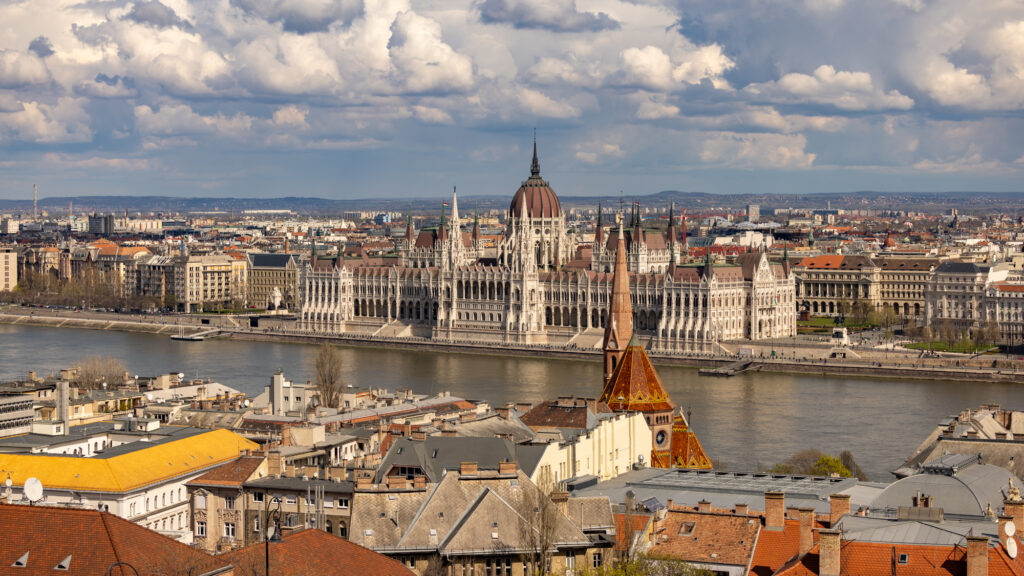
I believe that something must be discussed—something that probably everyone is observing, and that many are greatly bothered by at the time of writing, on 30 June: the soaring temperatures. The heat in the streets of Budapest is simply scorching the pavement, burning plants, and making both animals and humans suffer. Temperatures nearing 40 degrees Celsius, or over 100 degrees Fahrenheit, are practically unbearable in the streets.
There is much to be said about this excessive heat, from which one can barely escape. It is, in a profound sense, new. Hungary did not regularly have this kind of climate. The onset of such intense temperatures seems to have come about only a couple of years ago—or perhaps over the past few decades, as measured in some major cities. From what I remember, even five to ten years ago summers in Budapest were noticeably milder than they are now. Temperatures rarely reached 35 degrees Celsius or above, and even those above 30 were considered extreme heat and often prompted warnings.
This impression is reinforced by older generations, who, on the basis of anecdotal evidence, recall pleasant, breezy summers mostly in the high 20s, accompanied by generous seasonal rainfall. This is not what we have been observing in recent summers. Instead, conditions have become increasingly hot and dry. As a result, many are suffering: crops, animals, and humans alike. Intense and constant heat is dangerous in many ways.
Along those lines, it may be said that extreme heat is one issue, but the growing dryness may be an even greater one. With each summer, the climate seems to become increasingly dry. Summer rainfall across Hungary appears to be less frequent and less substantial than it used to be. The data reinforce this impression.
‘Summer rainfall across Hungary appears to be less frequent and less substantial than it used to be’
All of the following information was gathered from the General Directorate of Water Management of Hungary. At the time of writing, the Danube in Budapest is at a disastrously low water level. The gauge stood at 81 centimetres as of 5pm on 30 June 2026. This is an extremely low figure. Likewise, the Tisza at Szeged measured 83 centimetres at 4pm on the same day, which is also exceptionally low.
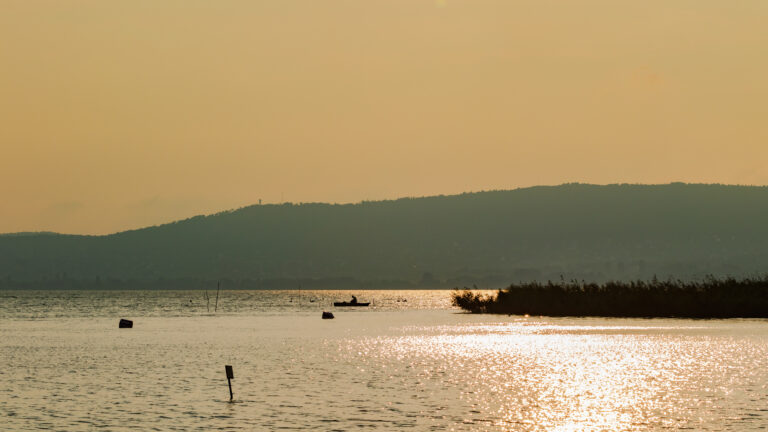
The Agárd gouge likewise recorded a drastically low level for Lake Velence, near Budapest, with the water level standing at 49 centimetres on 30 June 2026. Finally, Lake Balaton recorded an average water level of 74 centimetres at 7am on 30 June, which is also low. Taken together, these figures suggest a broader problem of water scarcity in many parts of Hungary, particularly in the catchment areas of these waterways.
The drought affecting the country is immensely widespread and remarkably severe. The OVF indicates a Level III—the most severe category—across much of the country, alongside very low water levels in nearly all parts of Hungary, with the exception of some south-western and north-eastern areas. This means that groundwater—that is, water that has seeped through the soil into underground reservoirs—is also in very short supply. The country’s water reserves are therefore under strain, not only its visible surface waters. This is having a serious impact on vegetation and agriculture, while also exerting broader pressure on the Hungarian economy and the region as a whole.
The question becomes: what may be done to counter such a state of water shortage and these natural changes in the future? The Hungarian government is, and has been, working on this exact problem. There is a national initiative for water retention called the Vízet a tájba (Water into the Landscape) initiative. It proposes ways in which water may remain in Hungary instead of rushing through the country via its fast-flowing rivers. By collecting water after precipitation and allowing it to remain on arable farmland, while preventing its further flow, the water is given a chance to permeate into groundwater reserves. This effectively keeps water in the soil and the landscape for much longer, providing nourishment for crops and animals. Summers may become much more fertile in their yields and greener in appearance because of such measures.
This programme could have considerable effects in both the short and the long run. It works through cooperation between the Hungarian state water authorities and citizens using their private lands, as permitted by a recent modification of the law. The government is even allowing for a type of compensation if the owner of affected land can prove that it was damaged by force majeure as a result of the programme’s waters. This further incentivises the implementation of such measures.
It could be stated that one way out of this situation lies in the principles of Integrated Water Resources Management, or IWRM. As described by the United Nations, IWRM ‘is a process that promotes the coordinated development and management of water, land and related resources in order to maximize economic and social welfare in an equitable manner without compromising the sustainability of vital ecosystems.’ The idea of storing water in the landscape, while working together across multiple sectors for long-term nourishment, fits well within this policy framework. More generally, this is the type of policy approach that could yield significant long-term results in combating drought.
‘If current trends continue, society and agriculture will have to adapt to the new conditions’
Overall, one way of replenishing Hungary’s water table and restoring moisture to the landscape is by attempting to create a well-engineered network of water retention and storage systems, if it may be so called. This may be achieved in various ways, including the construction of canals, dikes, and other water-retention mechanisms, as described above. Otherwise, if current trends continue, society and agriculture will have to adapt to the new conditions. This could mean shifting to crops better suited to drier and warmer conditions than those traditionally cultivated. Such crops might include olives, lavender, lemons, and almonds. These are more Mediterranean plants and are therefore better able to withstand such conditions. These are, of course, only general speculations about what the future may hold and how Hungary might adapt to changing circumstances. What is clear, however, is that the country must confront increasingly severe heatwaves and prolonged dry periods.
What is clear is that any solutions offering a way out of the current situation must be sustainable in their mechanisms. It seems that certain forms of Integrated Water Resources Management could help create a stable and healthy water environment in the longer term, benefiting people while maintaining the ecosystem. Yet for this to function fully, a legal and societal framework must also be created. This could mean that Hungarian society at large recognizes the mounting danger of climate-induced water scarcity and that legislation is adapted to these new conditions. This would become more possible as public cooperation increases through a growing consensus on the issue. Both of these developments appear to be underway already, as exemplified by the policies mentioned in this article.
Related articles:
At a time when public debate is increasingly polarized and superficial, Hungarian Conservative remains committed to depth, intellectual honesty, and independent conservative thought.
Producing high-quality journalism requires resources. Your contribution helps us expand our coverage, reach new audiences, and keep our content accessible.

Please consider supporting our mission.