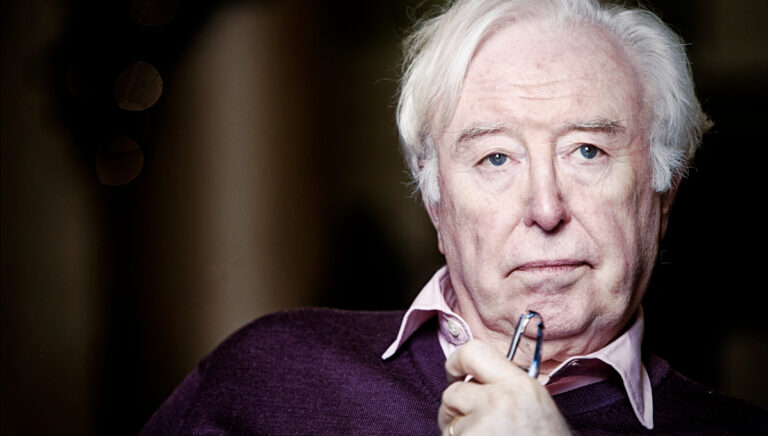
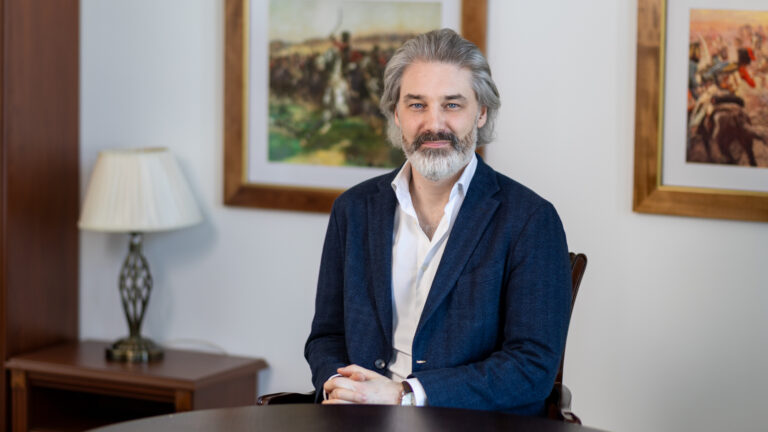
Mohammed Ibrahim Al Dhaheri is a senior Emirati diplomat who serves as Deputy Director-General of the Anwar Gargash Diplomatic Academy. Since February 2026, he has served as an adviser in the Office of the Minister of Foreign Affairs. Previously, he served as Director of the Strategy and Future Department at the Ministry of Foreign Affairs. Al Dhaheri holds a PhD in Management and Strategic Foresight and completed specialized postgraduate studies in strategy, innovation, diplomacy, and human resource development in London. He has also undertaken advanced executive education at Harvard Business School, the University of California, Berkeley, and Duke Corporate Education. Since 2025, Dr Al Dhaheri has served as a member of the Advisory Council of the College of Public Policy at the University of Sharjah.
***
Keystone states are states that serve as bridges between civilizations, different economic and political blocs, and between East and West—and your country is very much a keystone state. How was the UAE able to achieve that?
Yes, the UAE is a hub. We are a nation well known for being a bridge-builder between nations. This is due to many reasons. One of them is geography; the second is our values of openness, tolerance, and engagement with different nations. We speak to almost every single nation. We connect north to south and east to west. This has helped shape our priorities when it comes to foreign policy, because if you speak to every nation, it means you build trust and can maintain good political and economic relations—from leadership to businesses, but also people-to-people relations, which are important for the United Arab Emirates. The UAE was established in 1971, and we have upheld these values of openness since the beginning.
Your country is 50 years old.
We were some small cities on the coast, with houses made of mud and palms, but currently, after 50 years, we are one of the most influential countries in our region, but also internationally. Since the beginning, however, we have had the values of openness, speaking to different nations, and building bridges. We believe that, in order to be prosperous, you need stability, and to achieve stability, you need to speak to different nations—especially since we are situated in a really unstable region, with a lot of conflict surrounding us.
Secondly, the UAE is a trusted partner, so we do not base our relations on a transactional sort of thing; we base them on deep, solid relations, building bridges between people, businesses, and leaderships. So this is part of the ecosystem of the United Arab Emirates. Thirdly, our dealings with other countries are based on a win-win situation. We do not only look after our national interest; people are an important and concrete pillar of our foreign policy. That is why, in 2025, the UN recognized us as the third-largest donor internationally.
‘We do not base our relations on a transactional sort of thing; we base them on deep, solid relations’
And the last point is that we are a land of 200 nationalities living in the United Arab Emirates in peace and harmony.
It sounds like you planned it intentionally to reach the point where you would become a leading force in the region. What were the economic interests behind this strategy?
The UAE is excellent at strategizing; we always have a short-, medium-, and long-term strategy. It started with visionary leadership. Our leadership believed we needed to advance our nation and achieve our national interests, and in order to do that, we needed to prioritize. So from the beginning, it was intentional that the UAE should be a prosperous nation, and to achieve that, we needed different strategies. You can see within the ecosystem a huge harmony between government entities, the different emirates, federal entities, as well as the private sector and the people living in the United Arab Emirates.
I know two pillars of your grand strategy: one of them is the Dubai Future Agenda, which is an action plan for modernizing the strategic sectors of your country; the other is the Dubai 10X program, which is an industrial and technological revolution plan. Will the UAE be able to sustain its high-tech, AI-driven economy?
We have different strategies for the entities, and all of them are connected. Then we have the grand strategy of the Government of the United Arab Emirates, which is also cascaded and linked to different strategies across the UAE.
The UAE is always punching above its weight, which is important for us. We have strategies, but the most important part is that we always have agile and flexible implementation plans. AI is one of the most important areas for the United Arab Emirates. Since 2017, we have appointed a Minister for AI. A year after that, we established the Mohamed bin Zayed University of Artificial Intelligence, so we started a long time ago.
We want to be pioneers in AI, and also in renewable energy and other sectors. We see them as having strong potential for future growth. We know there will always be risks, but we also have plans to mitigate those risks while continuing with our implementation. AI is one of the pillars; we will keep investing in AI. In Abu Dhabi, there is the Make it in the Emirates forum, now in its fifth edition, with more than 1,000 companies participating. So we are moving ahead with our plans.
For reaching your goals, you need stability and peace. But now there is a war in your region. What are the immediate effects of the Iranian war on the UAE’s economy and trade?
There is a huge regional conflict currently. It is unprecedented, complicated, and complex, and we need stability to advance. That is why the UAE is always ready for such challenges, situations, and conflicts. Iran attacked us with more than 2,800 missiles and drones, and our interception rate was above 93 per cent, so we showed efficiency. We were defending ourselves under Article 51 of the UN Charter, in self-defence. We dealt with that complicated situation.
‘AI is one of the most important areas for the United Arab Emirates. Since 2017, we have appointed a Minister for AI’
No war can solve issues; we need diplomatic solutions, which the UAE always insists on. There are issues in the current situation that involve dealing with drones, missiles, capabilities, interference through proxies, and the nuclear programme, and we have the capabilities to deal with the situation.
If there is a war, there will be an impact. The good thing about the United Arab Emirates is that we are always agile and resilient in dealing with that impact. We bounce back strongly when it comes to the economic situation. We have a solid political situation, and the UAE has spent years diversifying its economy. Twenty years ago, 75 per cent of our GDP depended on oil; in 2025, that shifted so that 75 per cent of our GDP comes from the non-oil sector. We use oil income to invest in future areas like AI and renewable energy, so we are moving forward.
Some days ago your country just left OPEC. Was it because of the effects of the Iranian war?
Not at all. Leaving OPEC was a sovereign decision. We were participating effectively in OPEC, but for sovereign decisions we left currently. But, of course, we will keep coordinating with the oil players. The UAE has diversified the economy hugely, so we are not heavily dependent on oil currently, and diversification gives us freedom in the economy. Also, we make sure that we have the freedom to stabilize the market when it is needed.
Six years ago the UAE signed an agreement with Israel, the Abraham Accords, and some criticized it since the deal doesn’t mention the Palestinian issue. There were several wars recently: in Gaza, in Lebanon, in Iran. Has the UAE ever regretted signing a deal with Israel?
Signing the Abraham Accords was a strategic, important decision that we made, and the decision is still valid. Our regional history has been well known for having different kinds of conflicts, and when it comes to the Palestinian issue, it is one of the most important issues for the Muslim world, the Arab world, and also for the United Arab Emirates, and we have been advocating for the two-state solution.
‘The UAE diversified the economy hugely, so we are not heavily dependent on oil currently’
So the Abraham Accords are a sort of strategy to ultimately support the goal of a two-state solution. Let us look back at the 7 October incident in Gaza. Up to 50 per cent of international foreign aid going to Gaza came from the UAE, and we would not have achieved such humanitarian access without having relations with Israel. We are against any annexation in Gaza and in the West Bank.
Can Iran and its proxies be contained by Western powers?
The United Arab Emirates is a strong believer in diplomacy. The Abraham Accords are not against any nation. They are relations between the UAE, Israel, and other countries to advance cooperation, but also to try to reach the main goal of achieving a peaceful two-state solution.
When it comes to Iran, we cannot change geography. Iran is our neighbour, it is a big country with a long history, and we have had communications with Iran, and we have economic relations with Iran. So being part of the Abraham Accords is not against Iran.
‘So the Abraham Accords are a sort of strategy to ultimately support the goal of a two-state solution’
Actually, before the war started, the United Arab Emirates, the Gulf states tried their best sincere effort to prevent the war, to have a de-escalation.
How does the UAE balance its relationships between the different blocs of powers, with the US, China, and Russia?
An important principle of the UAE’s foreign policy is strategic autonomy. For us, strategic autonomy is really important; it is based on our national interests. We make deals, and we have an open policy and negotiations. We have strategic relations with the US, for example, $1.4 trillion of investments in different areas, including AI. With China, they are the UAE’s largest trading partner. With Russia, we also have excellent political and economic relations. We maintain strategic autonomy, speaking to both Russia and Ukraine, while also having strategic relations with China alongside the US. We are able to engage with different nations based on our national interest, and that has helped us mediate and take part in discussions.
You are the former Director of the Strategy and Future Department at the UAE Ministry of Foreign Affairs. How did the UAE reform its diplomatic institutions?
It all started with the leadership. We always think of the future. And to have a stable region and prosperity for us and others, we needed solid foreign affairs. Currently, under the leadership of our Minister of Foreign Affairs His Highness Sheikh Abdullah, we established a diplomatic academy back in 2014. Actually, I am a graduate of that academy, which I am now leading. This tells you a lot about the United Arab Emirates: they will educate you, they will equip you, and if you progress and advance, you could become a young leader of that institution.
So we educate our diplomats, sending them to more than 100 missions that we have abroad to advance the national interests of the United Arab Emirates. At our academy, we teach politics, the theoretical part, but we also have practical exercises, with a strong focus on the economic side, so our diplomats are not only politicians; they also do a great deal of work promoting our companies abroad and attracting business to the UAE.
Watch the full podcast below:
Related articles:
At a time when public debate is increasingly polarized and superficial, Hungarian Conservative remains committed to depth, intellectual honesty, and independent conservative thought.
Producing high-quality journalism requires resources. Your contribution helps us expand our coverage, reach new audiences, and keep our content accessible.

Please consider supporting our mission.