The following is an adapted version of an article written by Ákos Győrffy, originally published in Hungarian in Magyar Krónika.
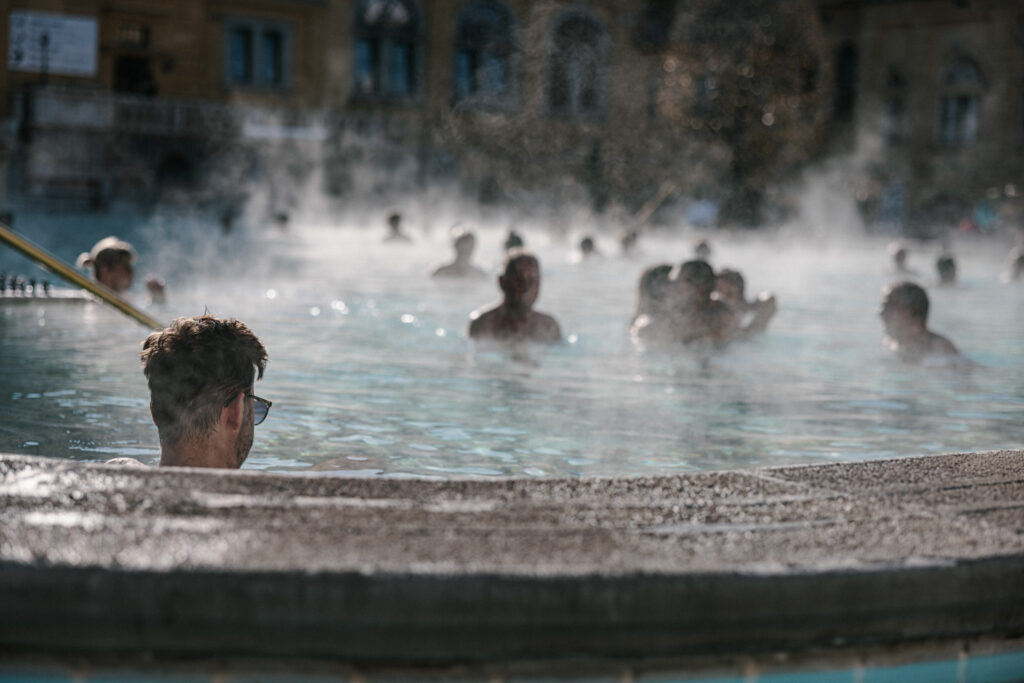
The world of Budapest’s thermal baths is imbued with a unique aura: each has its own distinct atmosphere and regular clientele. Regulars are devoted to their chosen spot and go nowhere else. It is a place where they feel as though they are not in this world, but in some strange, liminal state. The bath is a place of retreat and solitary contemplation, but also of togetherness and carefree or very serious conversations.
The world of Budapest’s thermal baths is enveloped in a unique aura; each has its own atmosphere and clientele. Some swear by Gellért, others by Lukács, and still others by Széchenyi or Rudas. Serious bathers are loyal to their chosen spot; they go only there, and no other bath is even an option.
There are the thermal bathers, the sauna-goers, and the swimmers who go to one bath or another to soak in the warm water, relax in the hot steam, or swim laps in the cold water—and strictly only there. Regulars can be recognized, among other things, by the fact that they are attached even to their changing room cubicle and locker. It is not uncommon for these tight-knit groups, often with a long history together, to celebrate birthdays and name days at the bathhouse’s cafeteria or in its park.
Bathing culture dates back thousands of years, and it is by no means merely about sitting in warm water and feeling good. As for what it essentially entails, writer Sándor Márai—who frequented the Lukács Baths until his emigration in 1948—wrote the following:
‘Whenever you can…go to one of the public thermal baths, two or three times a week. Bathing is a very old human custom, and it not only exercises and refreshes the body but also the soul. Bathe slowly, according to your body’s rhythm, thoughtfully and unhurriedly. The healing waters permeate your body and invigorate your soul, soothing your nerves, worn out by work and the world. The spas are like wet monasteries, where you can undisturbedly surrender your body and soul to sober and proper rest. The sulphurous, iron-rich waters act through the pores of the skin on the internal organs and the nervous system; the atmosphere of the bath, the misty, vaporous environment, frees you from the cheap illusions of the outside world. So bathe regularly and methodically, like the Romans.’
‘Bathing culture dates back thousands of years, and it is by no means merely about sitting in warm water and feeling good’
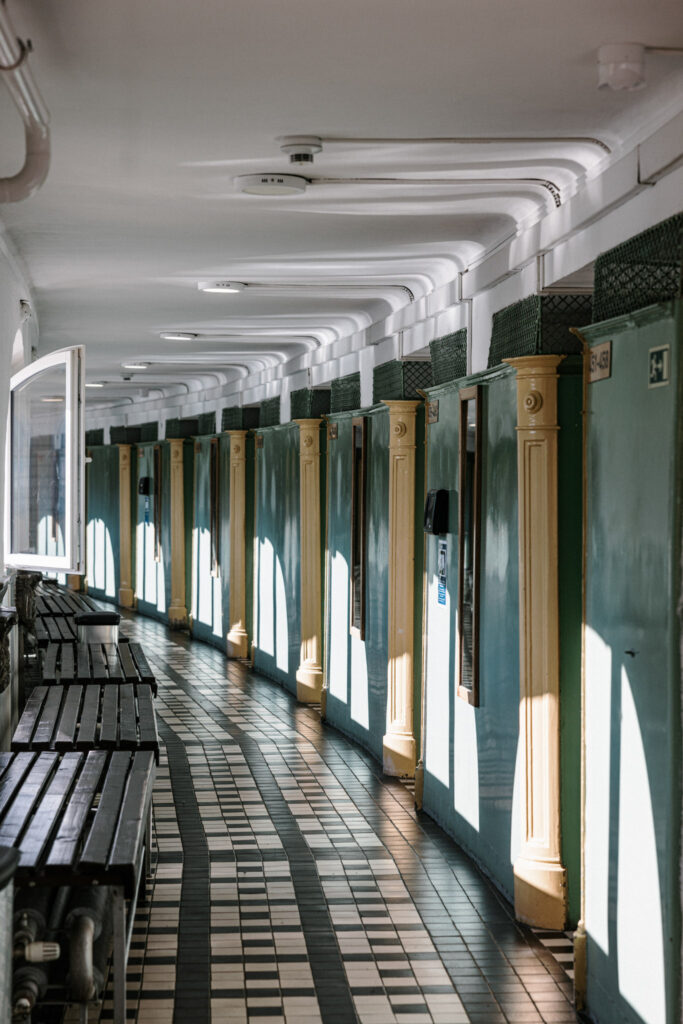
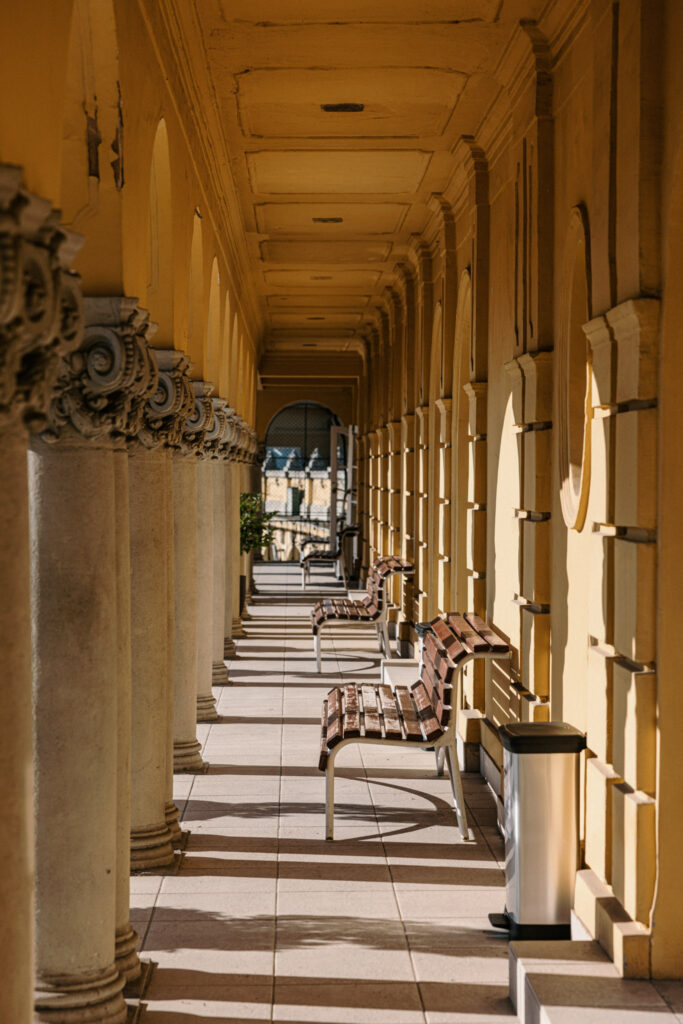
Well, that’s it—that is exactly what it’s about. Bathhouses, these ‘wet monasteries’, free us from the trite notions of the outside world. In a bathhouse, one can feel as though they are not in this world, but in some strange, liminal state. A space where the all-too-familiar rules of everyday life temporarily do not apply.
The bathhouse is a place of retreat, of solitary contemplation, but also a place for togetherness, for carefree or very serious conversations. We can choose among them according to our nature. Márai, quoted earlier, wrote in one of his diaries—decades after his emigration, already in his old age in the United States—that he had dreamed of Lukács, that he had last visited there 40 years ago, and how much he missed it.
The world of Budapest’s bathhouses was a defining element in the lives of numerous writers, from Márai to István Vas, Géza Ottlik, Zoltán Jékely, and Imre Kertész. The Lukács Bathhouse, for example, has gone down in history as one of the settings for one of the greatest Hungarian novels, School at the Frontier. In the opening scene of the novel, we are at the Lukács in 1957:
‘It was indeed hot on that July day in 1957. We watched the people’s beautiful bare bellies, but mostly the girls. Countless fellow countrymen were basking on the swimming pool’s three large sun decks; the benches and lounge chairs were all taken, of course. I didn’t mind this large crowd one bit right now. Old men in swim trunks and young people waited their turn at the showers without any irritation, and indeed with excessive politeness. We felt nothing but goodwill toward one another. It was as if we were trying to shyly disguise our affection with this excessive, sophisticated politeness.’
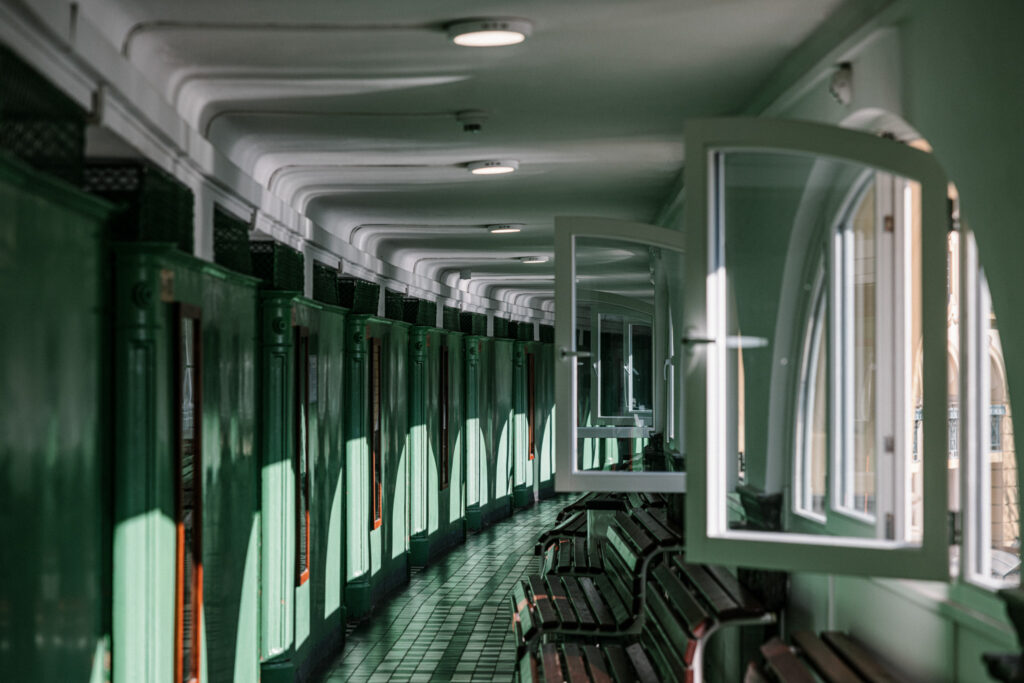
One could list literary examples and quotations all day long, and as the author of this article walks through the winding corridors of this unique sanctuary—the temple of mineral water devotees, namely the Széchenyi Baths, or as the regulars call it, the ‘Szecska’—he, too, finds himself thinking how wonderful it would be to regularly immerse in these blessed and mystical waters, stepping out of the labyrinths of an overly sober and mechanical world. They say that the waters of Széchenyi are considered by many to be an aphrodisiac, having a beneficial effect on male virility, which, of course, has not been proven, but that doesn’t mean it is not true. Just as it has a beneficial effect on the hippos at the nearby zoo, who have had the good fortune for many decades now to be able to swim in the healing waters.
‘They say that the waters of Széchenyi are considered by many to be an aphrodisiac, having a beneficial effect on male virility’
Looking out the window of the lounge, it also occurs to the author just how significant the thermal baths are in his own life. It’s been nearly a quarter of a century since, on a spring evening, a friend suggested going to Rudas, where there was going to be a nighttime bathing session. This bathing session (and nighttime party) wasn’t exactly legal; an employee there let the present author and his friend in through a back door in exchange for a little money. There were no electric lights, just candles everywhere, which made the already quite enchanting venue seem even more mysterious.
The bathhouse, built over a healing spring known since the Árpád era, is one of the most beautiful in an already impressive lineup. Candles burned all along the edges of the pools, soft music played, and the guests chatted quietly. It felt as if one had travelled centuries back in time, into the enchanting setting of the tales of One Thousand and One Nights. While sipping champagne in true high-society style, a girl suddenly emerged from the dusk. She was the friend’s college classmate. They started talking and have been talking ever since. That girl became the author’s wife.
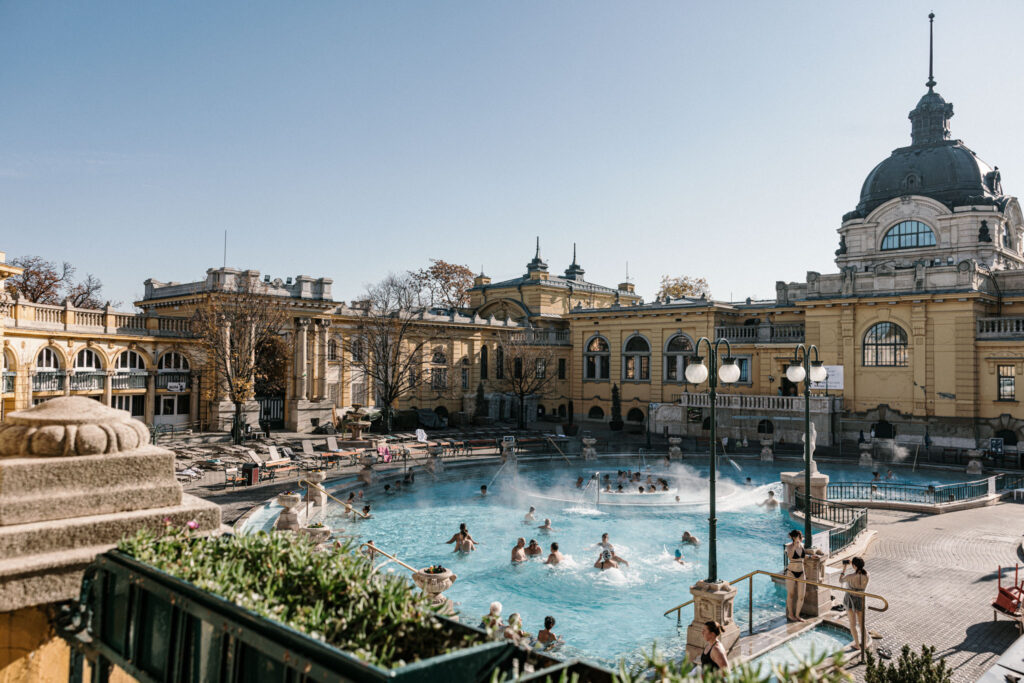
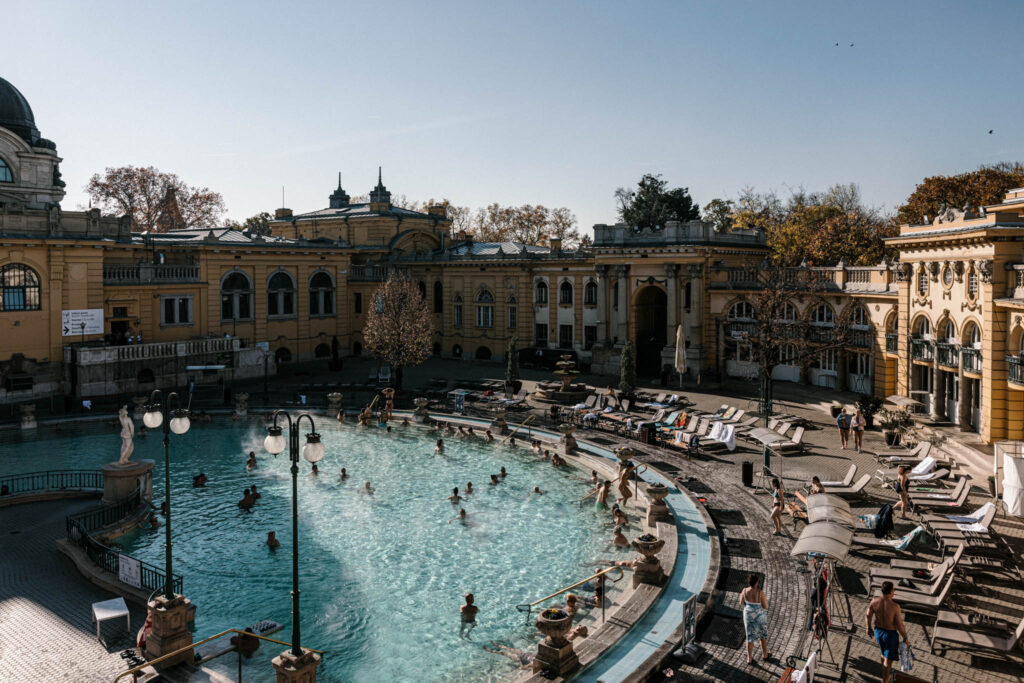
For some, swimming in wild waters, in rivers, in the Danube, represents the ultimate experience of being in the water. Although, come to think of it, thermal waters are wild waters too. The planet’s internal heat has been warming these waters for millions of years deep underground, in a world unimaginable to us. Still, don’t regret only rarely visiting a thermal bath, because this way every single occasion is a celebration, a kind of initiation—with a bit of exaggeration: a sacred act.
Special thanks to Edit Réffy, communications officer at Budapest Gyógyfürdői és Hévízei Zrt, and Bea Szabó, operations team leader at the Széchenyi Thermal Bath, for their assistance in the creation of this article.
Related articles:
Click here to read the original article.
At a time when public debate is increasingly polarized and superficial, Hungarian Conservative remains committed to depth, intellectual honesty, and independent conservative thought.
Producing high-quality journalism requires resources. Your contribution helps us expand our coverage, reach new audiences, and keep our content accessible.

Please consider supporting our mission.