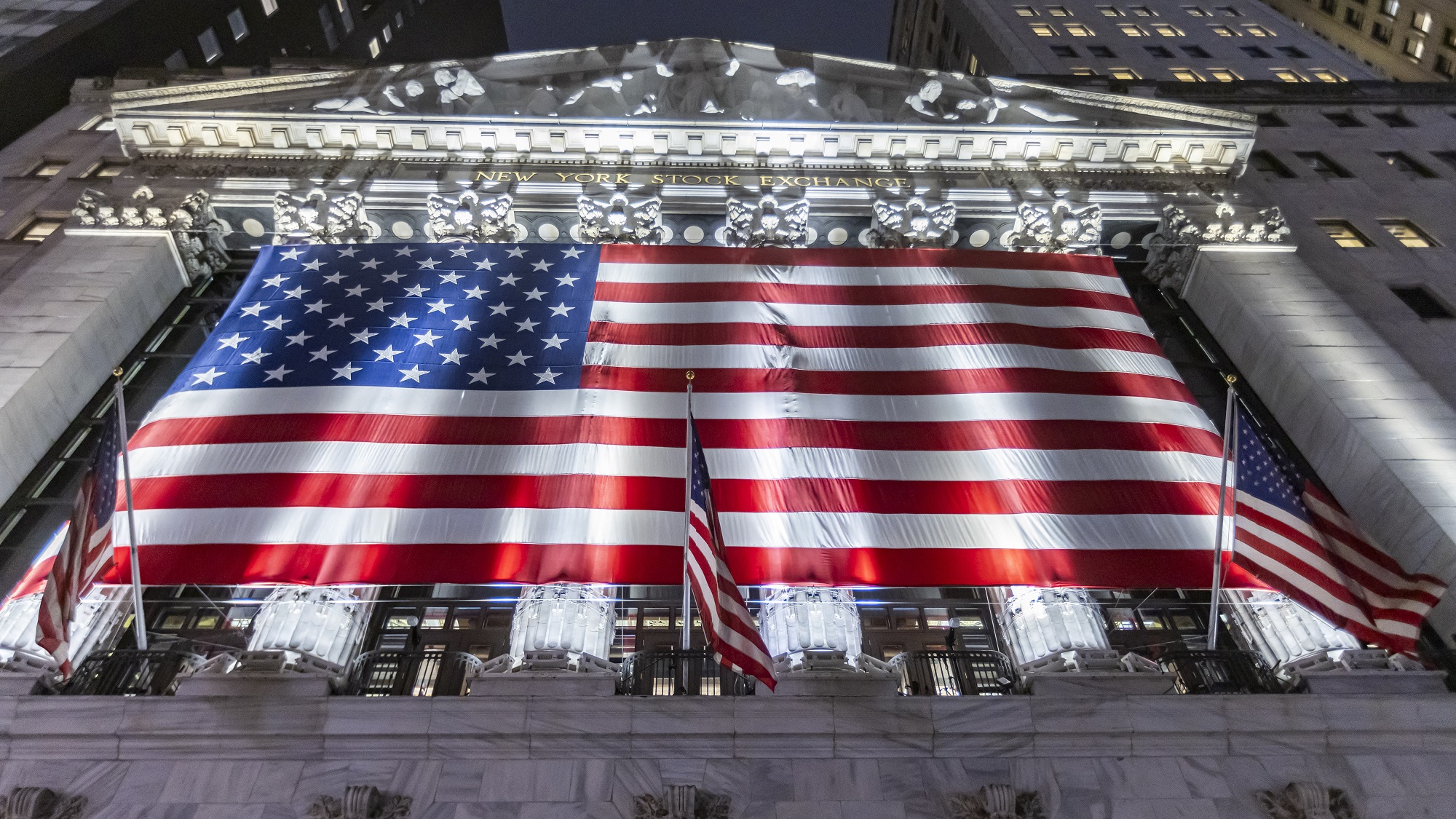
The Dow Jones Industrial Average closed the day with positive year-to-date growth on Tuesday, 14 April. The last time this was the case was on 4 March.
The primary stock index ended 2025, President Trump’s first year back in office, with a 12.97 per cent return. On 11 February 2026, it even closed above 50,000 points for the first time in its history. However, it began to decline right after, due to unfavourable jobs and inflation data coming out of the Bureau of Labor Statistics.
Then, on 28 February, President Trump announced that the US and Israeli militaries had begun ‘major combat operations in Iran’. In response, the Iranian government closed down the Strait of Hormuz, the vital shipping lane where about 20 per cent of the world’s total maritime oil and liquefied natural gas transport goes through. This was something they refrained from doing after the June 2025 strikes by the US on their nuclear facilities, given the negative impact it would have had on their strategic partners, China and India.
This time, however, the Islamic Revolutionary Guard Corps (IRGC) regime did pull the trigger and closed the strait, something many experts doubted they even had the capacity to do.
This prompted crude oil prices to go on a massive spike. Futures for a barrel of West Texas Intermediate (WTI) crude oil traded as high as $112 in the midst of military escalation in the Middle East, which included Iran launching missile strikes on the oil infrastructure of the UAE, a nation that has close relations with the United States but was never directly involved in the armed conflict.
As a result, the national average price of a gallon of gasoline in the US rose all the way up to $4.118 a gallon on 14 April, according to AAA.
However, as of the time of writing this on the morning of 15 April Budapest time, futures contracts for a barrel of WTI crude oil are at around $91. News of renewed US–Iranian peace talks, as well as reduced demand due to the price hike, has pushed oil prices down. This, however, is still well above the $67-per-barrel price from before the breakout of the Iran war.
Meanwhile, the latest Producer Price Index (PPI) report released on 14 April showed much more favourable numbers than the markets had anticipated. Wholesale prices in the US rose by 0.5 per cent month-to-month in March, far below the expected 1.1 per cent. This sparked somewhat of a rally on the American stock markets.
March PPI came in LOWER than expected!@MariaBartiromo: “These are fantastic numbers … much better than expected!”pic.twitter.com/RfZbEjNY3I
— Trump War Room (@TrumpWarRoom) April 14, 2026
The Dow Jones ended the day up 0.66 per cent, and thus up 0.32 per cent year-to-date. The S&P 500 rose over a full point, 1.18 per cent, yesterday; and ended on 1.59 per cent in the green for the year. The tech-specific Nasdaq Composite was the biggest winner of the day, posting a 1.96-per-cent gain, and closing up 1.74 per cent YTD.
In the five years President Trump has spent the majority of time in office—from 2017 to 2020, then 2025—the primary American stock index, the Dow Jones, has only posted an annual loss in 2018, when it was down 5.63 per cent. Even in 2020, when the lockdowns during the COVID-19 pandemic turned the world economy on its head, the Dow was up 7.25 per cent for the year—however, mostly due to multi-trillion dollar stimulus packages.
The one year under President Trump when the Dow Jones ended with a loss, 2018, the Federal Reserve raised federal interest rates from 1.5 to 2.5 per cent, which was the main facilitator of the downturn.
This year, the Fed is forecasted to deliver one rate cut, which makes annual growth for the major American stock indices likely.
Related articles:
At a time when public debate is increasingly polarized and superficial, Hungarian Conservative remains committed to depth, intellectual honesty, and independent conservative thought.
Producing high-quality journalism requires resources. Your contribution helps us expand our coverage, reach new audiences, and keep our content accessible.
Please consider supporting our mission.