The following is an adaptation of an article written by Laura Nyilas, a research fellow at the Europe Strategy Institute of the University of Public Service, originally published on the Five Minutes Europe blog of Ludovika.hu.
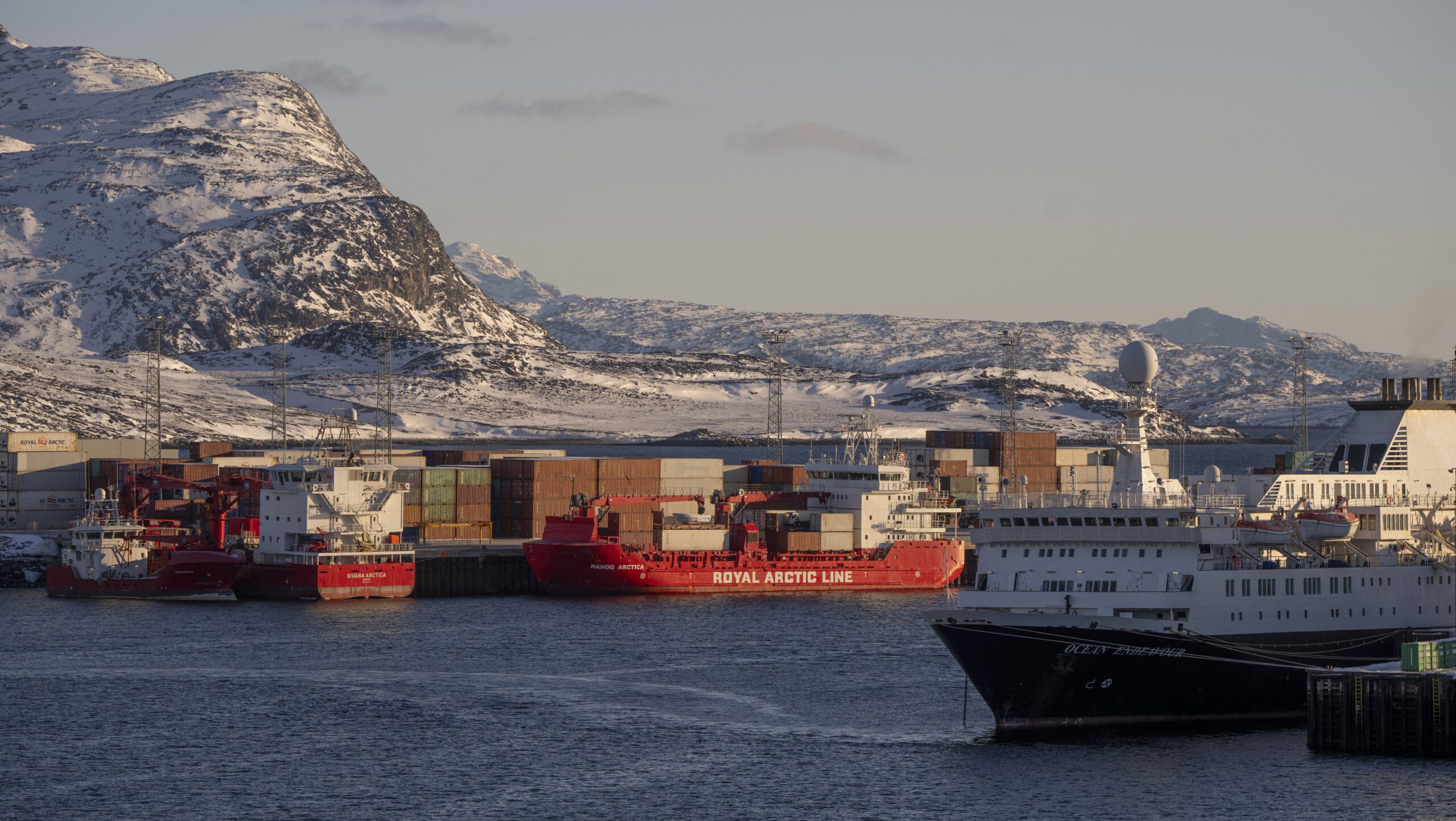
Trump has repeatedly stated that acquiring Greenland is critical to US national security. Greenland’s location between Europe and North America, as well as its proximity to the Arctic and the Atlantic Ocean, makes it strategically important from a military and defence perspective, particularly for monitoring the growing military activity of China and Russia in the region. Although the United States already has a military base in Greenland, full control of the island would allow Washington to extend its influence over Arctic air and sea operations, as well as space operations, among other things.
In 2026 there is increasing talk of changes affecting the world order and their possible effects. Over the past decades and centuries, changes in the world order have occurred at regular intervals; therefore, the fact that change is occurring in the current world order is not in itself novel. However, the nature, manner, and speed of change always remain unpredictable. In the 21st century, international events have accelerated dramatically. One of the biggest and most unprecedented changes would be the acquisition or occupation of Greenland by the United States.
The Arctic region was previously treated as a ‘marginal’ issue, but its role has now become more important. It now represents a route, a base, sovereignty, and a question of federal credibility. The idea of acquiring Greenland also raises questions about NATO’s credibility and becomes a strategic focus for Europe, as Danish sovereignty and the NATO umbrella are closely linked.
‘One of the biggest and most unprecedented changes would be the acquisition or occupation of Greenland by the United States’
Trump’s expansionist ambitions in Greenland echo his previously stated territorial claims, which include reclaiming the Panama Canal (which the US officially handed over to Panama in 1999) and making Canada the 51st state. The United States could legally acquire Greenland with the consent of the Danish government, which also depends on the approval of Greenland’s self-governing parliament. (The United States made a similar ‘purchase’ in 1867 when it bought Alaska from Russia. Some experts believe that Washington could also sign a free association agreement with Greenland, under which the territory would have self-government rights but remain closely linked to the United States in economic assistance and defence matters. The United States has already signed such agreements with Micronesia, the Marshall Islands, and Palau.) However, such an agreement would still require the approval of both the Greenlandic and Danish governments.
Trump’s vocal territorial claims have thus put Greenland and the Arctic back on the agenda of both European and other world powers, such as China and Russia. However, the issue and the Arctic regions have already been present in security policy, albeit not necessarily in such a prominent way. The Arctic is, so to speak, an arena for competition between the major powers. Eight countries have territory in the Arctic, but Russia has the largest territorial presence in the region. In recent years, Russian military activity in the Arctic has also increased, which may be a cause for concern for the Americans, making the issue even more pressing for them.
China has also strengthened its regional presence, characterizing itself as a ‘state close to the Arctic’ and actively seeking to expand its economic and military role in the region. By comparison, China has three icebreakers, whereas Russia has approximately 40 to 50, and the United States has two to three. In a 2014 speech, Chinese President Xi Jinping stated that the country intends to become a so-called polar power.
Considering the events surrounding the Arctic, Greenland’s strategic value is multifaceted—it has a key geographical location. Its strategic importance is further enhanced by the fact that its geopolitical location makes it an excellent observation point for monitoring civil and military developments in the air, at sea, and in space. The region’s importance in terms of scientific and commercial sites and opportunities is also undeniable, as in this case, geographical location can equal power. As the Arctic is warming nearly four times faster than the rest of the world, new shipping routes are gradually opening up, intensifying competition for resources, so Greenland’s role will only grow in the future, which is why global discourse surrounding the island is essential, and Washington’s interest in it is also justified for the reasons mentioned above.
‘Greenland’s strategic value is multifaceted—it has a key geographical location’
However, there is no legitimate path for a Venezuelan-style intervention in the Arctic. But legality alone does not create security. Europe must be careful not to confuse moral clarity with strategic commitment. Trump has demonstrated (and this may be one of the real lessons of the Venezuelan case) that he will act when he believes that control is achievable, resistance is manageable, and there are no alternatives. If Europe wants to ensure that no external power—neither the United States, Russia, nor China—can credibly use coercive measures against Greenland, it must focus squarely on its own strategic moves.
The likelihood of the United States taking military action against Denmark is therefore quite low. The case of Denmark is therefore far removed from that of Venezuela. If the United States were to take military action, NATO as an alliance would only be history, and the transatlantic security guarantee would cease to exist. Contrary to some of his statements, Trump is well aware of this, and such a move would also have to be approved by Congress. What Trump can do, however, is seek some kind of ‘agreement’ (it should not be overlooked that Trump comes from the business world and thinks completely differently, using different strategies than other political leaders) that fulfils his desire to control Greenland. At the end of January 2026 in Davos, after weeks of threats, Donald Trump suddenly backed down from taking Greenland away from Denmark. However, this move did little to improve the deteriorated transatlantic relations. The further rifts caused by the diplomatic clashes of recent months have only reinforced the determination to seriously reconsider Europe’s decades of close cooperation with Washington. However, the case provides important lessons: in order to prevent the loss of sovereignty, the implementation of strategic autonomy must speed up, as the Greenland case has accelerated a process that has been progressing too slowly for a long time. He made it clear that the EU remains structurally vulnerable to pressure from its closest ally—and that the United States can exert pressure in many ways without crossing the threshold into violence.
Related articles:
Click here to read the original article.