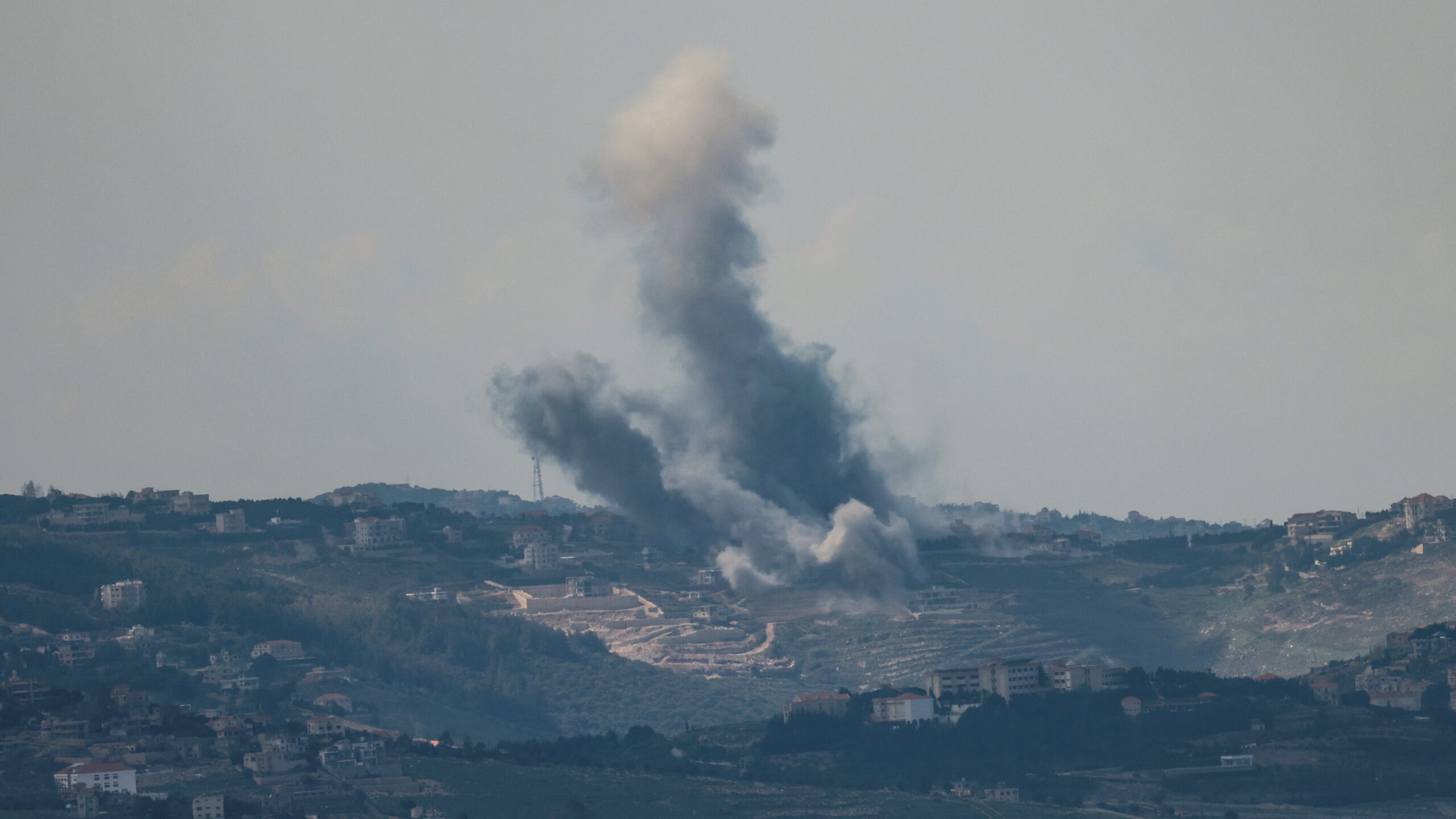
MCC’s Migration Research Institute has published an analysis warning that the war involving Iran could lead to a prolonged migration crisis and heightened security risks for Europe. Even if the armed conflict subsides, deteriorating economic and security conditions may prompt millions of Iranians and Afghans currently living in Iran to leave the country. At the same time, radical groups could become more active in Europe, potentially targeting countries that have previously opened their borders to illegal migration.
According to the analysis, Iran can rely only to a limited extent on its Middle Eastern allies in the current conflict, as many of them have suffered serious military and political losses in recent years. There is a risk that Tehran may activate networks operating in Europe, while groups sympathetic to the Islamist regime could also launch independent actions. In May 2025, British police dismantled a seven-member terror cell with links to Iran. Analysts also note that migrant-background and left-wing groups could initiate aggressive demonstrations or actions, similar to those seen during the Gaza conflict.
The escalation of the Iranian conflict is considered a realistic scenario. Although the opposing sides claim they are trying to avoid targeting civilians, the human, security and economic consequences of the conflict could still trigger a major migration wave toward Europe.
Iran has already been facing severe economic challenges. In 2025, between 28 and 30 million people were classified as economically vulnerable. Even before the outbreak of war, the World Bank projected that an additional two and a half to three million people could fall into poverty between 2025 and 2026. The current conflict is expected to worsen this situation further. A survey conducted in 2023 found that 93 per cent of Iranians had at some point considered emigrating, and in a crisis situation, those intentions may increasingly turn into reality.
Political factors could also complicate Europe’s ability to respond. On 19 February, the Council of Foreign Ministers responsible for EU foreign policy designated the Revolutionary Guard as a terrorist organization. At the same time, the European Parliament and several European political forums have highlighted the authorities’ reprisals following recent protests in Iran, during which an estimated 30,000 people reportedly lost their lives. Given these circumstances, it would be politically difficult for Brussels to classify Iran as a safe country of origin. This could further increase pressure on European asylum systems in the event of a large influx of applicants.
‘If the conflict escalates…Afghan refugees may also increasingly attempt to reach Europe’
The situation is further complicated by the fact that Iran itself hosts large numbers of refugees. According to data from the UNHCR, about 800,000 registered refugees live in the country, the vast majority of them Afghans, while around two million undocumented Afghans are also believed to be in Iran. Other estimates put the total Afghan population in the country at between four and four and a half million people. In recent years, Iran has deported hundreds of thousands of Afghan nationals; in 2024 alone, approximately 750,000 expulsions were recorded. If the conflict escalates or the state’s security capacity becomes focused on maintaining internal order while economic pressure grows, Afghan refugees may also increasingly attempt to reach Europe.
If departures from Iran increase, the first major impact would likely be felt in Türkiye, the first transit country on the route to Europe. In recent years, Ankara has built a roughly 204-kilometre security wall along the border section with Iran in the province of Van, supported by technical surveillance systems. However, this barrier is not designed to completely seal the border, but rather to slow migration flows. As part of the migration cooperation agreement signed in 2016, the European Union has already provided approximately ten billion euros in support to Türkiye. In the event of a new wave from Iran, Ankara is expected to request additional financial resources and political concessions, while Europe’s domestic political room for manoeuvre continues to shrink. If Türkiye allows migrants to pass through, whether intentionally or not, pressure on the Eastern Mediterranean and Balkan routes would increase. If it stops them, the EU’s financial and political dependence on Türkiye could deepen.
Related articles:
At a time when public debate is increasingly polarized and superficial, Hungarian Conservative remains committed to depth, intellectual honesty, and independent conservative thought.
Producing high-quality journalism requires resources. Your contribution helps us expand our coverage, reach new audiences, and keep our content accessible.

Please consider supporting our mission.