We are all familiar with the chronicles of the persecution of Jews under Nazi Germany that was officially spearheaded by the Nuremberg laws of 1935—the racial and discriminatory laws which the National Socialists construed to place restrictions on Jewish people, such as depriving them of the right to German citizenship and right to marry ‘citizens of German or kindred blood’. Then, under the pretense of purifying Germany from the stain of Jewish presence, followed their forced emigrations, and eventually, the extermination of six million Jews, if not more, during the death marches to the holocaust camps and at the camps themselves.
Less well known, however, are the roughly 150,000 men deemed by the Nuremberg Laws to be of partial Jewish ancestry (around 60,000 ‘half-Jews’ and 90,000 ‘quarter-Jews’) who served in the Wehrmacht (German armed forces) between 1935 and 1945, notwithstanding the antisemitic laws of the Third Reich. Perhaps even less known were the Judenräte—Jewish Councils created by the head of the Sicherheitsdienst (Security Service, SD), Reinhard Heydrich, on 21 September 1939. These Jewish municipal administrations were tasked with ensuring that Nazi orders and regulations were implemented across occupied Europe.
In his recent book published by Yad Vashem titled Bereft of Council: The Jewish Leadership in Hungary and the Holocaust, 1944–1945, László Bernát Veszprémy, who earned his PhD at the Doctoral School of Cultural History at Eötvös Loránd University, presents a most compelling and vivid account of such Jewish councils in Hungary.
Aside from a few in the senior leadership, the entire Budapest Néolog—one of the two main Jewish congregations in Hungarian Jewry—congregational administration played some role within the Jewish Council, which still remained in place after the war. In fact, Veszprémy notes that up until 1985, every chief rabbi who served at the Dohány Street Synagogue (also known as the Great Synagogue or Tabakgasse Synagogue) had been recruited by the Jewish Council during the war.
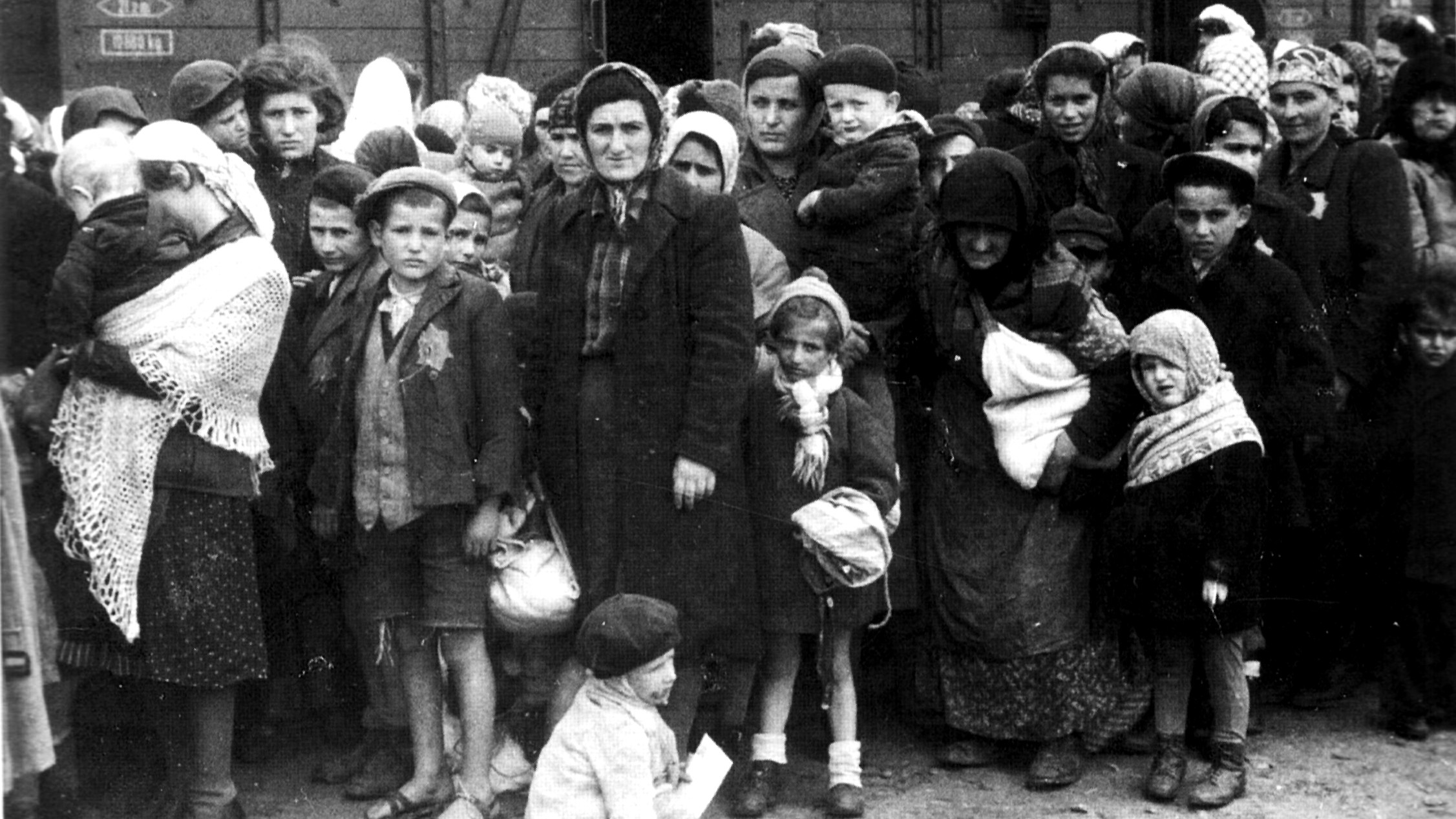
Hungary, under Nazi occupation, deported approximately 435,000 people—mostly Jews—between 15 May and 8 July 1944, with the assistance of Hungarian authorities. This raises difficult questions: how involved was the Jewish leadership in this dark chapter of Hungarian history? What compelled them to participate? How complicit were they in the slaughter of their fellow Jews whom they helped deport from Hungary? And what of the victims’ tragic experiences—how were they addressed in the pursuit of justice after the war?
The Jewish Councils operated not only in Budapest, and in cities such as Kaposvár, Kassa, Pécs, Szeged, and Szombathely, but also in rural areas; there was even a Christian–Jewish Council.
After providing a most vivid context and purpose in the Introduction, the author divides his publication into five main chapters:
- ‘Jewish Leadership during the Final Years of the Horthy Regime’, which presents an outline of the orientation and geographical distribution of Jewry, the main leaders and institutions, their reactions to the anti-Jewish laws and the events of the Holocaust until 1944.
- ‘Rural Jewish Councils from the German Occupation to the End of the Deportations’, which examines the establishment of both the Jewish Councils and the ghettos in the countryside, and also looks at the deportations, including the role of the Jewish police.
- ‘The Budapest Jewish Council during the Deportation of Rural Jewry’, which looks at the attempts of the Jewish Council of the capital to rescue their fellow Jews under the Sztójay and Lakatos governments, as well as the Christian–Jewish Council, whose creation only inflated conflicts between converts and faithful Jews.
- ‘The Budapest Jewish Council during the Arrow Cross Dictatorship’, which looks at the Hungarian fascist organization that held the reins of government from October 1944 to April 1945, after Hungary tried to switch its allegiance to Germany unto the Soviet Union during World War II; and how the persecution of Jews in Budapest gained new momentum.
- ‘Postwar Trials against the Jewish Leadership’, which examines the post-war reckoning in Hungary with the role of the Hungarian Jewish leadership during the Holocaust—a particularly complex phase, as only around 10 per cent of Hungarian Jewry returned to a country under Soviet control, amid demands for internal purges and the vetting of fellow Jews.
As a historian, I appreciate the fact that Veszprémy does not attempt to fill gaps where the evidence is lacking—for example, when discussing post-war investigations into leaders of the Jewish Councils in cases where sexual abuse was rumored to have occurred, or where the sources are unable to provide further facts. In other words, he does not construct a revisionist narrative to satisfy the reader’s curiosity, nor does he present speculative or potentially misleading information.
Perhaps what is more compelling is how his historiography presents such personal and intimate interactions among the Jewish Council leaders, the Jews themselves and their Nazi overseers. Notwithstanding the present-day polemics and deep emotions that surround the Holocaust itself, Veszprémy does not open any tangents that would lose sight of the underlying thesis of his presentation.
This is a must read, especially within the academic world.
Related articles:
At a time when public debate is increasingly polarized and superficial, Hungarian Conservative remains committed to depth, intellectual honesty, and independent conservative thought.
Producing high-quality journalism requires resources. Your contribution helps us expand our coverage, reach new audiences, and keep our content accessible.

Please consider supporting our mission.