More than 80 years after his disappearance, mystery still surrounds the fate of Raoul Wallenberg. The courageous Swedish diplomat was taken away by Soviet forces in mid-January 1945 as they swept into Budapest. Wallenberg had arrived in the Hungarian capital in July 1944. He ran the largest and most complex of the neutral diplomats’ rescue missions that saved tens of thousands of Hungarian Jews by placing them under diplomatic protection. The diplomats included Swedish, Swiss, Spanish and Portuguese officials, as well as Angelo Rotta, the Vatican’s envoy, and Friedrich Born of the Red Cross. Together with his driver Vilmos Langfelder, Wallenberg was taken to Moscow by the Soviets and disappeared into prison or the Gulag. Then the trail goes cold.
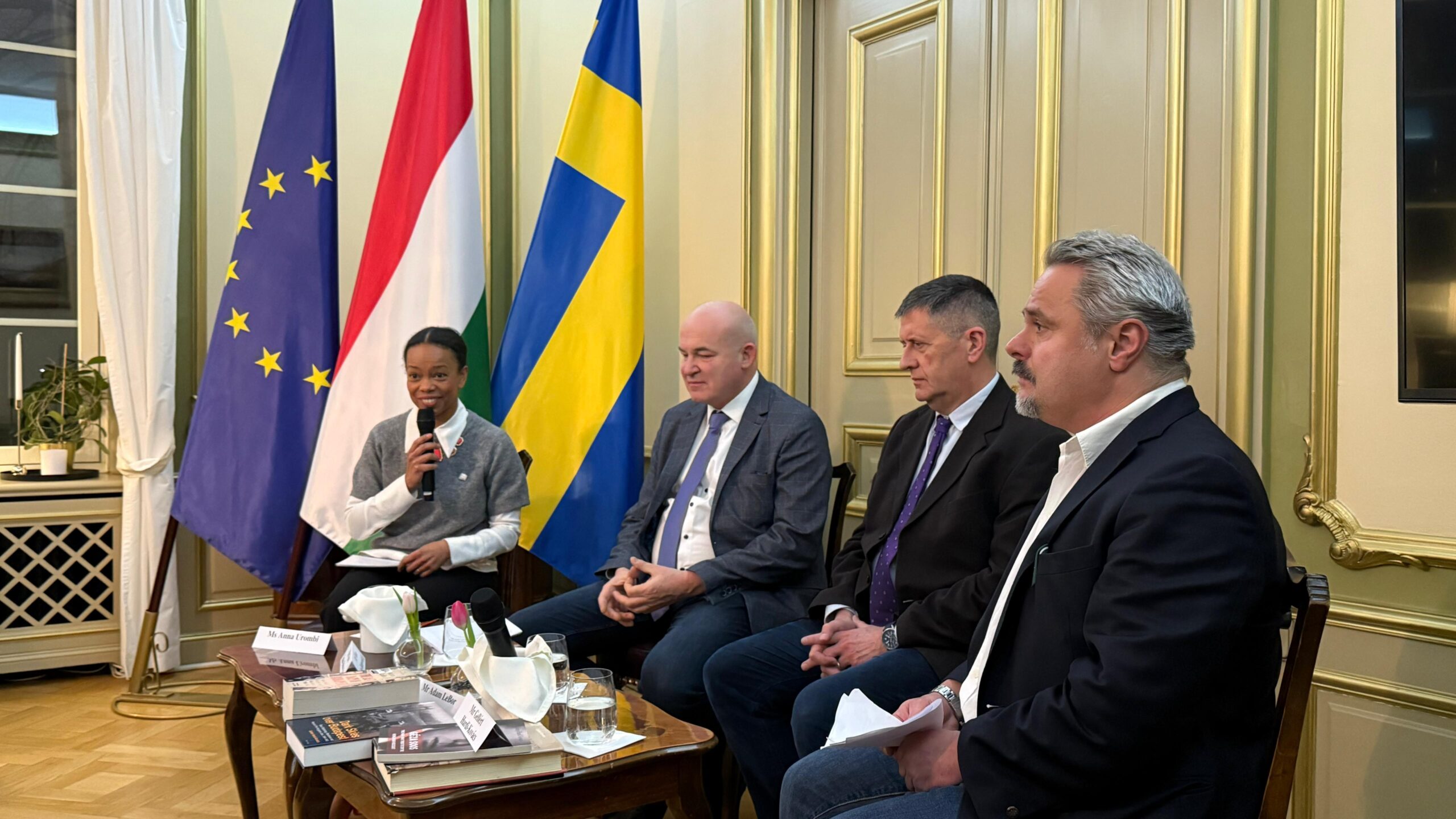
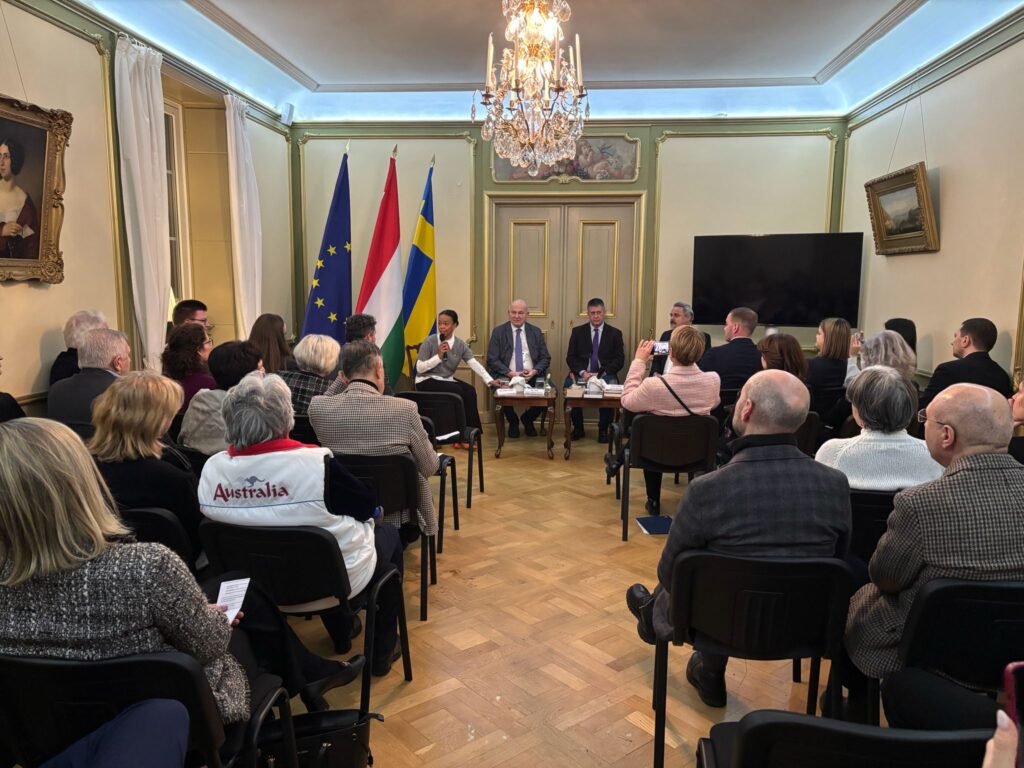
The Hungarian embassy in Stockholm recently commemorated Wallenberg’s memory with a high-profile panel discussion, as part of its ongoing work keeping his legacy of courage alive. The aim of the event, entitled Raoul Wallenberg and the Turbulent Times in Budapest 1944–45, was to deepen public understanding of Wallenberg’s extraordinary rescue mission and the historical forces that shaped one of the most tragic periods of the 20th century. ‘By bringing experts together, the event created space for reflection, dialogue, and a more nuanced appreciation of the moral courage shown in Budapest during the final months of the war,’ said Ambassador Péter Palóczi. ‘It is not always known by the wider public that his mission was not carried out in isolation: numerous diplomats, courageous Hungarians, and members of various rescue networks supported his efforts to save lives despite the overwhelming danger.’
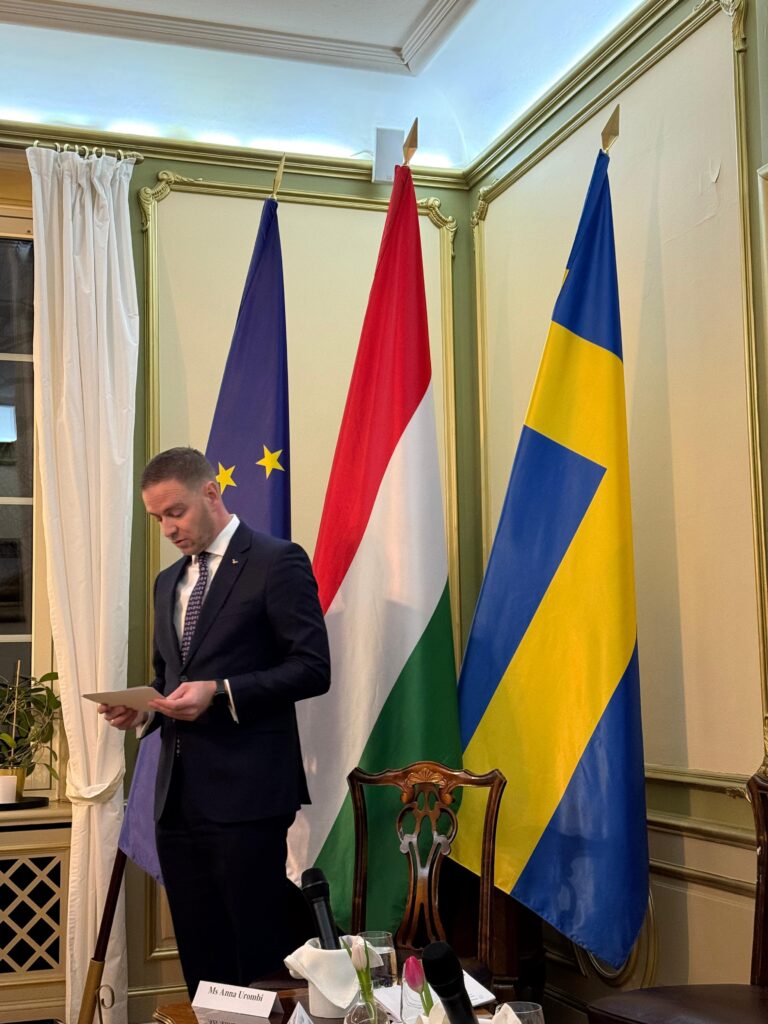
Secretary General of the Raoul Wallenberg Academy Anna Urombi moderated a panel discussion with Deputy State Secretary Vince Szalay-Bobrovniczky, Hungarian Swedish historian Gellért Hardi-Kovács and the author. Each brought their own personal insight and experience. Ms Urombi emphasized the continuing relevance and significance of Raoul Wallenberg’s legacy for today’s younger generation. Mr Szalay-Bobrovniczky outlined the importance for Hungary of commemorating the Holocaust as part of the country’s history, and its central role in the International Holocaust Remembrance Alliance. Mr Hardi-Kovács, author of Dark Skies Over Budapest, described the courageous rescue work carried out by other neutral diplomats at a time of great danger. The author of this article reflected on the granting of neutral citizenship to Hungarian Jews as a giant bluff by the neutral diplomats, one that paid off to save many thousands of lives. ‘Remembering Raoul Wallenberg is essential not only because he saved tens of thousands of lives, but also because he represents a powerful link between Sweden and Hungary,’ said Ambassador Palóczi. ‘Preserving his legacy ensures that future generations continue to learn from his courage, his moral clarity, and the shared history that binds our two countries.’
The passage of time and the work of numerous historians over the years also brought a greater understanding of the complexity of Wallenberg’s rescue operation, which was spread over multiple locations around the city. A cellar at 15 Úri street, in the Castle district, was known as the ‘treasury’, holding all the funds and financial records. The Wallenberg base at the former headquarters of the Hazai Bank at 6 Harmincad street, in the heart of downtown (later the British embassy), was highly secure. Its thick walls were able to withstand numerous hits from artillery and mortars—although in January 1944, Tivadar Jobbágy, Wallenberg’s driver, was hit by shrapnel outside the building and died of his wounds.
After the Arrow Cross coup of 15 October 1944, much of the rescue operation relocated to a building at the start of Üllői Street. From there, Wallenberg and his colleagues ran the operation’s security service, charged with finding Jews who were under Swedish protection who had disappeared. A separate unit waited on the shores of the Danube each night, downriver from the Arrow Cross execution sites, fishing out any survivors from the freezing waters.
‘Preserving his legacy ensures that future generations continue to learn from his courage, his moral clarity, and the shared history that binds our two countries’
The winter of 1944 was the darkest and most dangerous period in Hungary’s wartime history. The deportations to the Nazi concentration camps restarted. Arrow Cross gunmen tore up the neutral diplomats’ Schutz-passes that gave Hungarian Jews protection, forced them to the banks of the Danube and shot them into the freezing waters. As a neutral diplomat, Wallenberg could have fled west. Instead, he remained to carry on his rescue work. But his decision to remain in Budapest to meet the Soviets in January 1944 was a catastrophic error. It seems his name was already on a list in Moscow. Wallenberg had been sent to Budapest by the United States War Refugee Board (WRB), set up in 1944 to provide aid to civilians persecuted by the Nazis.
The Soviets believed, with some justification, that the WRB was also a front for American intelligence gathering, needed for its work saving Jews. In addition, Wallenberg’s relatives, Jacob and Marcus, ran Enskilda Bank—the most powerful financial institution in Sweden. Enskilda was the engine of Sweden’s wartime economy as the country sold vital war materiel such as steel and ball bearings to both the Allies and the Nazis. Jacob Wallenberg looked after the German connection, and Marcus oversaw the trading with the Allies. The WRB’s Iver Olsen, who sent Raoul Wallenberg to Budapest, noted his impressions of Marcus Wallenberg in early 1944:
‘Although he is considered to be strongly pro-Allied in sympathy, the implications of this sentiment are obscured somewhat by the fact that he handles all United Nations business, while his brother, Jacob, is equally entrenched in the Axis end. In other words, the Stockholm Enskilda Bank has its position pretty well hedged.’
All of this, especially on an active front-line where thousands of Soviet soldiers had died, was more than enough for the Soviets to regard Raoul Wallenberg with strong suspicion. In 1957, the Soviet authorities admitted that Wallenberg had been imprisoned but claimed he died of natural causes in 1947. Wallenberg’s presence in Moscow was both an embarrassment and a delicate diplomatic issue for Stalin. The Soviet leader once proclaimed: ‘No person, no problem.’ Many believe that Wallenberg and Tibor Langfelder were both shot in the late 1940s. But mystery still surrounds the failure of the Swedish authorities and his powerful family—in particular Marcus and Jacob Wallenberg—to intervene more actively on his behalf. Raoul’s mother, Maj, and his stepfather, Fredrik von Dardel, spent the rest of their lives searching for him or details of his fate. Both committed suicide in 1979. For now, Wallenberg’s fate still remains uncertain, but the memory of his courage and determination, and those of his allies and colleagues, endures.
Related articles:
At a time when public debate is increasingly polarized and superficial, Hungarian Conservative remains committed to depth, intellectual honesty, and independent conservative thought.
Producing high-quality journalism requires resources. Your contribution helps us expand our coverage, reach new audiences, and keep our content accessible.

Please consider supporting our mission.