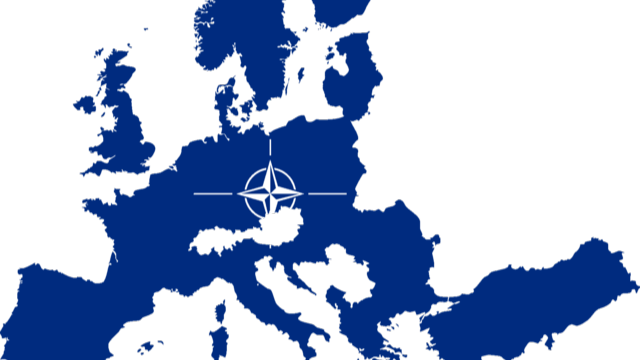
New data from the Kiel Institute for the World Economy confirm a significant shift in Western support for Ukraine in its war of self-defence against Russia. In contrast to the first three years of the war, 2025 saw most military and financial support for Ukraine provided by European countries rather than the United States.
Looking at the data, it is becoming increasingly clear that the war in Ukraine is no longer primarily a proxy of Washington against Russia, but is increasingly Europe’s own. According to the recently published study, although the United States sharply reduced its support in 2025, as promised by US President Donald Trump on the campaign trail, overall aid volumes remained broadly stable—yet declining—only because European countries dramatically increased their contributions.
Making the War Europe’s Own
European military assistance rose by 67 per cent compared to the 2022–2024 average, while financial and humanitarian aid increased by roughly 59 per cent, with most non-military funding now channelled through European Union mechanisms.
This shift is historically significant. Between March and April 2025—when the United States allocated no new aid packages at all—European governments stepped in, allowing Europe to surpass the US in total military aid for the first time since June 2022, reaching €72 billion compared to €65 billion from Washington.
Before Trump, the US had provided around half of all military assistance between 2022 and 2024. While Europe is doing everything it can to replace the US, the scale of military aid flowing into Ukraine decreased by 14 per cent year on year compared to 2024, and remains well below 2022 levels.
‘European military assistance rose by 67 per cent compared to the 2022–2024 average’
It is also telling who is driving the surge in military aid. According to the Kiel Institute, it is a small group of Western and Northern European countries—most notably Sweden, Norway, Denmark, Germany, and the United Kingdom—while Southern and some Eastern European states contribute far less. Disparities widened further in 2025: although France, Germany, and the UK increased allocations, Italy and Spain contributed very little, underscoring the fragmentation of Europe’s response.
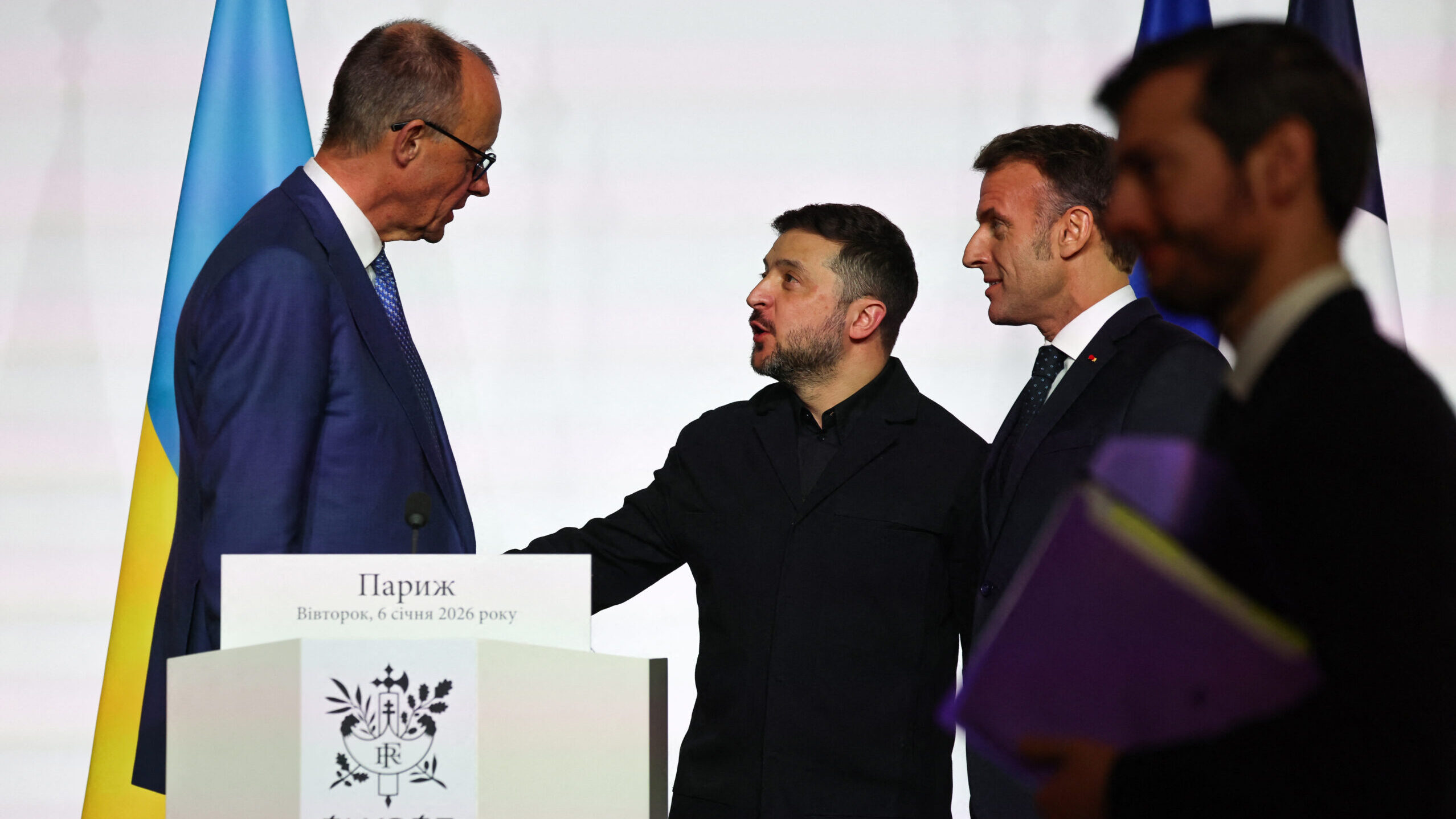
These countries largely overlap with the so-called ‘Coalition of the Willing’, established earlier in 2025 to support Ukraine both militarily and at the negotiating table. Leading the group, French President Emmanuel Macron and British Prime Minister Keir Starmer discussed on several occasions the possible deployment of forces or the establishment of military structures inside Ukraine as part of a potential peace agreement between Ukraine and Russia.
Hungary Pushes Back War Efforts
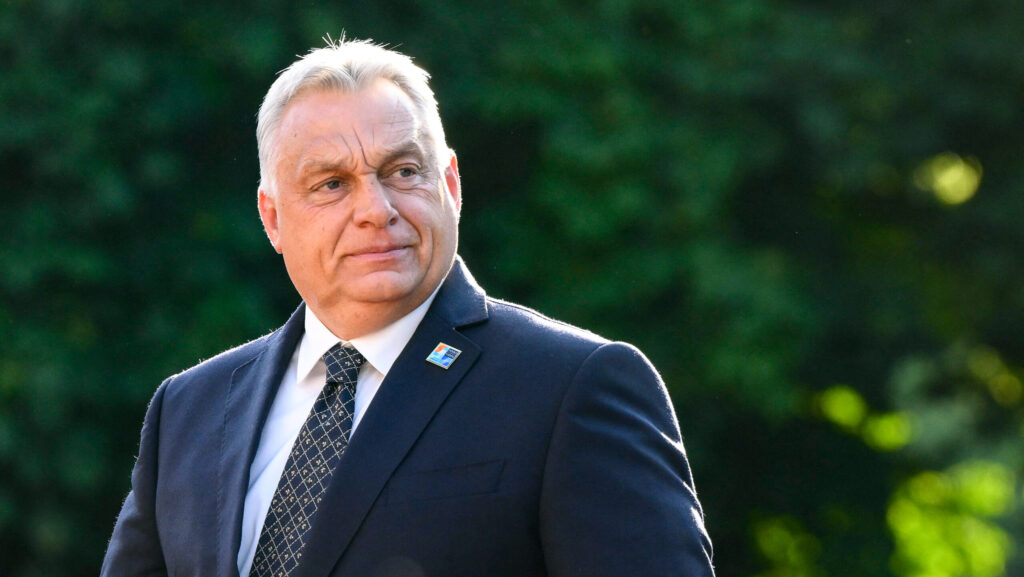
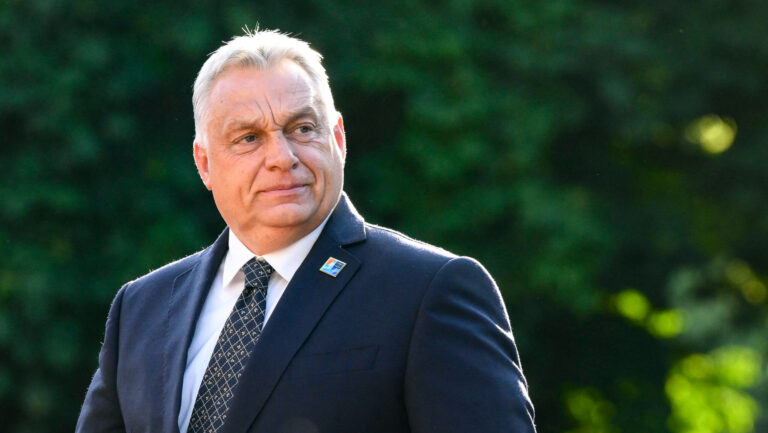
While Europe is increasingly placing the burden of the war on its own shoulders—and those of its citizens—Hungary, together with Slovakia and, more recently, Czechia, continues to represent a restraining force against these efforts. Hungarian Prime Minister Viktor Orbán has advocated peace since the beginning of the war, launched two separate peace missions in 2024, and opposed further military and financial support for Kyiv.
Budapest is also the only EU capital to block Ukraine’s EU accession—a move that would effectively make the war the European Union’s own by integrating an active conflict into the bloc. Recently, the mouthpiece of EU elites, POLITICO Brussels, published a five-point roadmap for admitting Kyiv into the EU by 2027, including three points focused entirely on eliminating Orbán’s veto through political and institutional means, including support for his opposition ahead of the upcoming parliamentary election in April.
The plan, based on discussions with EU, member state, and Ukrainian officials, identifies Prime Minister Viktor Orbán’s position as a central obstacle, raising the prospect of a change in Hungary’s government, US President Donald Trump placing pressure on Orbán to alter his stance, or even the suspension of Hungary’s voting rights under the long-running Article 7 procedure if Budapest continues to block Kyiv’s path.
Orbán described the plan on Wednesday as an ‘open declaration of war against Hungary’, underlining that ‘Fidesz is the only force standing between Hungary and Brusselian rule, and the only guarantee of Hungarian sovereignty’, and the only force capable of preventing the EU leadership from dragging Europe into war.
Related articles: