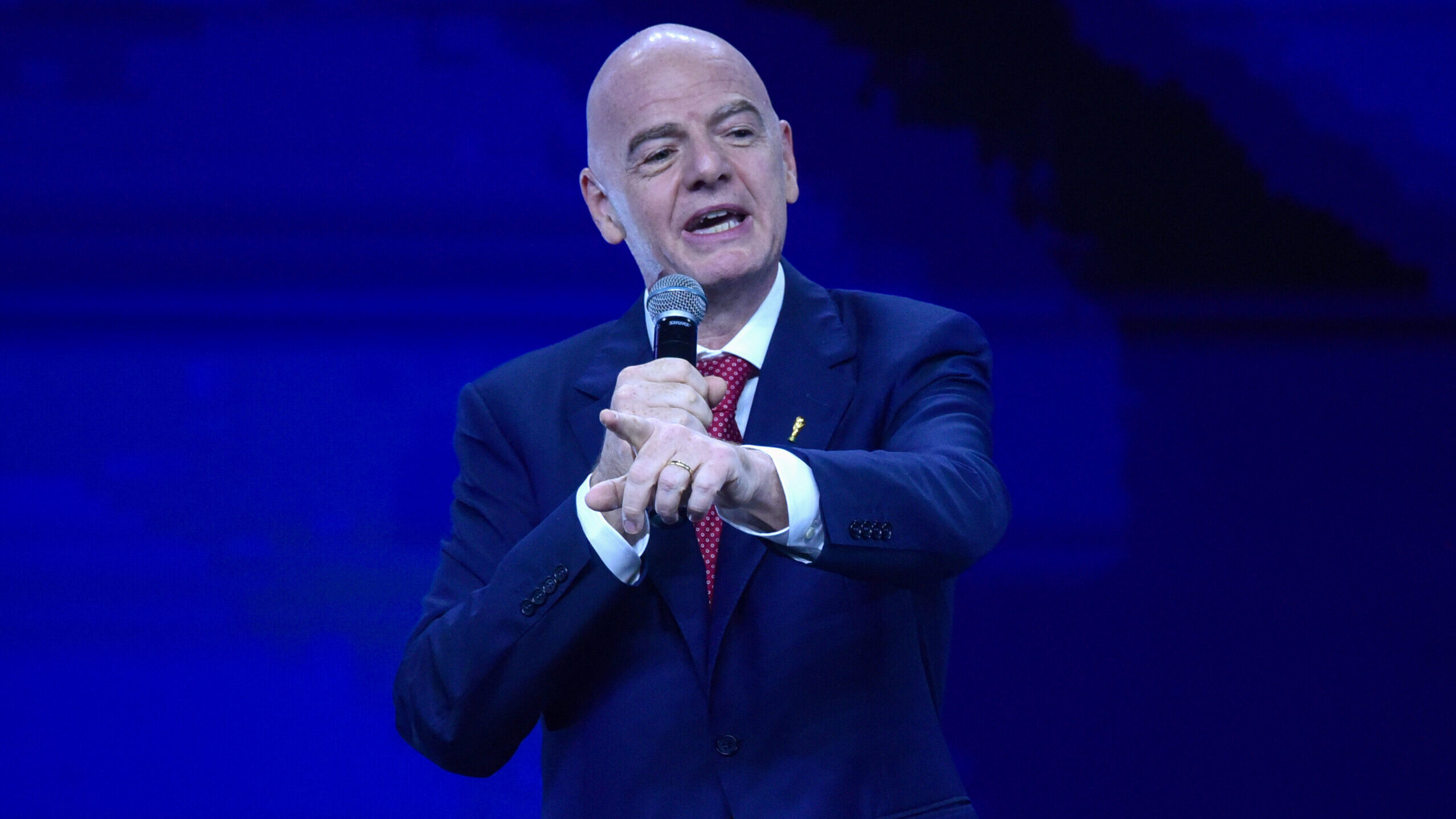
FIFA President Gianni Infantino said that international bans in professional sports do ‘more harm than good’, advocating for the nearly four-year-old ban on Russia to be lifted. Infantino, in a recent interview with Sky News, said the ban ‘has not achieved anything’ other than fuelling ‘more frustration and hatred.’
Russia has not been allowed to participate in FIFA competitions since 2022, after Moscow invaded Ukraine, as part of a wider cancel culture movement directed at—sometimes long-deceased—Russian authors, poets, composers, and sportsmen and sportswomen. FIFA was not the only sports association to take such steps: Russian athletes were banned from most international sporting events, including the Olympics. UEFA has also imposed a ban barring Russian teams from participating in European club competitions.
Now, as the 2026 World Cup—organized by the United States in cooperation with Mexico and Canada—approaches, FIFA appears to be changing its stance. Similarly to how Russia is treated, many argue that Israel should also be banned for its alleged war crimes in Gaza. Infantino said such a move would be a ‘defeat’.
The FIFA president added that he would like to see this principle made permanent through a FIFA rule that would ‘enshrine in our statutes that we should actually never ban any country from playing football because of the acts of their political leaders.’
Hungary opposed banning Russian athletes from international competitions from the outset, with Hungarian Minister for Foreign Affairs and Trade Péter Szijjártó emerging as a leading voice against these efforts. Ahead of the 2024 Paris Olympics, the minister said the Games’ true mission is ‘promoting peace’ and that they should focus on this rather than politics.
Szijjártó recalled that Hungarians are particularly sensitive to such issues, as more than 100 Hungarian athletes lost their chance to participate in the 1984 Los Angeles Olympics due to the boycott imposed on the Communist bloc by the Soviet Union. ‘Many of them never had another opportunity to participate in the Olympic Games,’ he said, highlighting the gravity of such decisions in athletes’ lives.
‘Hungary is ready to host the Russian national team should it require a home venue’
Hungary has also served as a neutral home venue for several teams in recent years, including the Ukrainian women’s handball team, the Belarusian and Israeli national football teams, and Turkish football club Beşiktaş.
Szijjártó has also spoken about blocking EU sanctions against two Russian football clubs, adding that Hungary is ready to host the Russian national team should it require a home venue. He said he believes athletes should be allowed to compete based on results and performance rather than geopolitical considerations, adding that there is an increasingly positive trend toward lifting bans. Russian swimmers competed at the World Championships in 2024, and Russian judokas also took part in the 2025 World Championships held in Budapest. ‘I hope this will also become possible in football,’ he concluded.
Related articles: