This article was originally published in Vol. 5 No. 3 of our print edition.
Introduction
The year 2024 saw unprecedented political opposition to the ‘comprehensive sexuality education’ (CSE) agenda, which suffered the greatest pushback at the United Nations, continuing a trend that has now persisted for several years. CSE, a framework developed in 2009 by UN agencies and a dubiously selected group of non-governmental stakeholders, exposes children to radical teaching about sexual attitudes and behaviour, claiming to empower them and improve their physical, social, and emotional health. The CSE agenda was formulated without the participation or endorsement of UN member states. Despite the absence of a clear foundation in international law, it has since been aggressively promoted in multilateral forums and through development assistance programmes, particularly targeting developing countries in the Global South, including Africa, under the guise of a human right.
As concerns regarding the lack of effectiveness and grossly harmful impacts of CSE curricula on children continue to emerge, a growing coalition of governments across all continents is opposing CSE both domestically and within international organizations. During the 56th Session of the Human Rights Council (HRC), one of the main intergovernmental bodies within the UN responsible for human rights, nearly half of the 47-member body voted against the concept of CSE, marking the highest level of opposition in the UN’s history. In the subsequent HRC session, a diverse coalition of states blocked the adoption of a new plan of action under the World Programme for Human Rights Education—specifically targeting children and youth—due to its promotion of radical gender and sexuality agendas, including CSE.
Consolidated opposition to CSE at the UN was also clear in 2023 during the 56th Session of the UN’s Commission on Population and Development, which failed to conclude with a negotiated outcome between governments due to the attempts by the EU and other Western states to have CSE inserted into the outcome document. During the session, participating delegations, particularly African states, expressed grave concern with the West’s myopic prioritization of partisan agendas over urgent development challenges in critical UN decision-making processes affecting the lives of millions of people around the world.
Hungary has become an outlier in the West’s drive for CSE. Similarly to developing and other countries upholding traditional family values, Hungary finds itself in a never-ending battle against the imposition of radical sexual and gender ideology, as exemplified by the ongoing proceedings before the Court of Justice of the European Union (CJEU) concerning the country’s sex education regulations for public schools. Though this may seem like an isolated case in the EU, Hungary is clearly not the ‘odd one out’ globally.
In June 2021, the National Assembly of Hungary adopted Act 79 ‘on taking more severe action against paedophile offenders and amending certain acts for the protection of children’. One section of Act 79 amended Act 190 of 2011 ‘on national public upbringing’, with the aim of strengthening the right of parents to ensure the religious and moral education of their children in conformity with their own convictions. The amendments addressed the concerns of many parents who did not necessarily oppose sex education in public schools, but rather took issue with what was being taught to their children about sexuality, as well as how. The view of the Hungarian government is that public sex education should no longer be instrumentalized to ‘propagate’ (i.e. endorse) certain views on sexuality and sexual behaviour, turning classrooms into a target of advocacy.1 Rather, such education should be focused on the presentation of physiological facts and realities, leaving the rest in the hands of parental direction and guidance as per international law.
Soon after the adoption of Act 79, the European Commission launched an infringement procedure against Hungary, with the Act now standing before the CJEU over major disagreements regarding human- rights obligations. In response to criticism of Act 79, Prime Minister Victor Orbán has correctly highlighted that it is not just the right of parents to decide how their children become acquainted with issues related to sexuality, but that it is also ‘the duty of the state to create the conditions which enable parents to meaningfully exercise these rights of theirs’.2
Orbán’s remarks echo the position of countries from the African, Asia-Pacific, Latin American, and Caribbean regions that uphold traditional family values and parental rights. Despite opposition from multiple regions, UN and EU bureaucrats have persevered in their attempts to impose ideologically fuelled sex education in all corners of the globe, despite the fact that a majority of countries within these blocs outright reject CSE, as evidenced by the positions expressed by their governments at the UN. Under the pretext of fighting HIV/AIDS, ‘sexual and gender-based violence’, and protecting the rights of the child, including their right to education and health, UN entities and their Western partners, including the EU, NGOs, donors, and other interest groups, are exerting political and economic pressure on developing countries, and particularly in Africa as illustrated below, to introduce CSE. Although in a different geographic context, Hungary has similar grounds to the developing world for rejecting CSE, giving rise to a newfound need for mutual solidarity and partnership in facing related challenges.
From Legitimate Sex Education to the Radical CSE Agenda
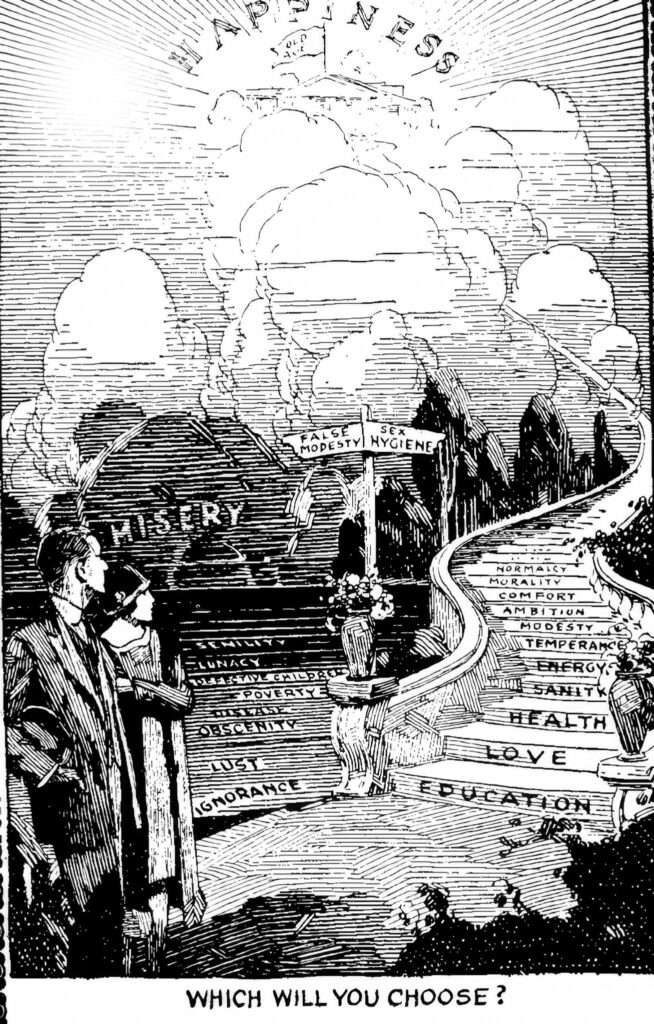
To understand the resistance to CSE, it is imperative to briefly review historical developments in sex education. The sex education movement in both Europe and the United States originated in an attempt to check the spread of venereal or social diseases under the Social Hygiene Movement of 1913.3 The significant increase in premarital sexual activity following the 1920s led to a substantial increase in the incidence of venereal diseases contracted by teenagers and young adults getting involved in sexual practices in the US and Europe.4 This resulted in the institutionalization of sex education in the West, focusing initially on the promotion of abstinence, strict self-discipline, and family-life programmes.5
‘The right to education does not mean that state education and state sex education supersedes parental rights’
The first wave of opposition to such approaches to sex education took shape from the 1960s to the 1980s, challenging their focus on venereal diseases, abstinence, and premarital sex.6 In the United States, organizations such as the Sex Information Educational Council of the United States began to promote a so-called ‘affirmative and empowering’ approach to sexuality, also for children, including LGBT issues, sexual pleasure, and bodily autonomy, outright rejecting teachings on traditional marriage and premarital sex. As a result, sex education turned into a broader and wider social and political movement broaching highly personal matters including attitudes, values, and morals, with the original (politically conservative) supporters of sex education becoming highly critical of it.7
In 1994, UN member states gathered in Cairo for the first International Conference on Population and Development (ICPD). Following intergovernmental negotiations, states adopted a Programme of Action (PoA-ICPD) outlining, inter alia, their commitments in the area of reproductive health. The PoA-ICPD highlighted the need for sexual education for adolescents. It did not, however, specify the contents of such education, and emphasized that such education must respect the rights, duties, and responsibilities of parents, should begin within the family unit, and should respect cultural values and religious beliefs. It also asserted that the implementation of the Cairo agenda was the sovereign right of each country, and that it did not create any new human rights. This was reaffirmed in the 1995 Beijing Declaration and Platform for Action, the outcome of the Fourth World Conference on Women.
Despite the considerate balance established at an inter-governmental level in Cairo and Beijing on sexual education, UN agencies took an unprecedented leap in 2009 by developing an International Technical Guidance on Sexuality Education (ITGSE), the first consolidated international guideline promoting specific CSE learning objectives for children as a global policy ‘within the framework of human rights’.8 However, notably, it did not have a mandate from member states, and was not the outcome of an intergovernmental negotiation or approval process. The UN agency-led work on the ITGSE was neither transparent nor inclusive as it was open to certain selected stakeholders only, such as the International Planned Parenthood Federation and Rutgers. Soon after the publication of ITGSE, the then Special Rapporteur on the Right to Education, Verner Muñoz, unilaterally declared CSE as a human right.
Reviewed in 2018, the ITGSE is premised upon a supposedly ‘rights-based’ approach to sex education, which—instead of protecting children’s physical and mental health by encouraging them to delay engagement in sexual activities—normalizes and even promotes promiscuous sexual behaviour, as well as diverse sexual practices and sexual orientations. It begins by falsely stating that abstinence education is ineffective and harmful, and that each child’s decision to be sexually active must be respected, regardless of their age. For children as young as five, the guidance teaches them that ‘it is natural for humans to enjoy their bodies’, about ‘the difference between biological sex and gender’, that ‘there are different family structures and concepts of marriage’, and that various sources of information exist in understanding their bodies. Children as young as nine are taught about masturbation with a positive framing that ‘human beings are born with the capacity to enjoy their sexuality throughout their life’, and that ‘people have a sexual response cycle, whereby sexual stimulation can produce a physical response’. Moreover, the guidance encourages children to ‘question social and cultural norms that impact sexual behaviour in society’ and to ‘identify a trusted adult with whom they feel comfortable, and demonstrate asking questions about sexuality’ starting at the age of five, instead of promoting parent–child interaction. The ITGSE also challenges children as young as nine to ‘reflect on social, cultural and religious beliefs that impact on how they view gender roles’, and instructs teachers to explain to children of the same age ‘how someone’s gender identity may not match their biological sex (knowledge)’.9
A closer look at CSE curricula reveals that they are not primarily concerned with the health of children, but rather prioritize an ideological approach to gender, sexuality, and family life among children, while artificially attaching a human-rights component to justify its imposition on states.
Case Study: Resistance to CSE in Africa
CSE in Africa is largely a foreign donor-driven agenda10 and may be described as an ideological import promoted under the guise of human rights. In Eastern and Southern Africa and Sub-Saharan Africa, for example, CSE is largely funded by or through UN agencies and their Western donors, including government organizations such as the German Ministry for Economic Cooperation (BMZ), the US President’s Emergency Plan for AIDS Relief (PEPFAR), and the Swiss and Swedish governments.11
The government of Sweden, with the support of UN agencies, announced the investment of an additional $42 million through Sweden’s Strategy for Sexual and Reproductive Health and Rights in Africa 2022–2026, to, among other things, promote access to CSE on the continent, claiming that such access ‘has deteriorated’.12 Citing ‘democratic backsliding’, lack of knowledge and political engagement, inadequate financing, and weak education systems, the government of Sweden and its partners clearly intend to bring African countries in line with unmandated ‘international guidelines’ such as the ITGSE. To cite another example, UN agencies and Advocates for Youth, a US-based NGO claiming to ‘fight for sexual health, rights and justice’, developed a regional module for teacher training on CSE for East and Southern Africa, revealing that the US National Teacher Preparation Standards for Sexuality have greatly informed the structure and core content areas of this module.13
Reports also show that foreign donors to CSE programmes pursue objectives and priority areas not aligned with countries’ priorities.14 In 2023, this led African lawmakers and religious leaders from 15 countries to call on the US Congress not to ‘violate [their] core beliefs concerning life, family, and religion’ through PEPFAR.15
The depth of opposition to CSE across the African continent can be seen when one observes the resistance of not just political and religious leaders but most notably of communities, including parents and teachers themselves, which further brings to light who is importing what. A report shows that teachers in schools have refused to provide information on all elements of CSE curricula due to immense community opposition; they skip or avoid culturally and religiously sensitive topics such as abortion, sexual diversity, sexual pleasure, and masturbation.16 Foreign CSE advocates have complained that ‘teachers [in Africa] were not implementing CSE properly when covering sexuality’ and that this consequently ‘contradicts the tenets of CSE’. Where teachers recognize tensions between their cultural values and beliefs and the CSE curriculum content, they adapt the content to conform to the norms and community values or take a neutral approach in their teaching.
Regarding parents, a study in Lesotho, for example, found that although parents were not necessarily opposed to the provision of sex education to their children, they took issue with what was taught and how.17 The study highlights that this stems from the fact that young people’s education on these matters has traditionally been understood to be the role of parents. This is of no surprise, since sexuality is a sensitive issue of social, moral, and religious concern for many. Discussions would also include warning messages about the consequences of sexual relations—specifically pregnancy and HIV infection. Parents were on average likely to support aspects of sex education that aligned with their cultural and religious beliefs, but to oppose those that diverged from the values they wished to pass on to their children relating particularly to sexual intercourse and relationships. It is from a legitimate fear of disrespecting the moral, cultural, and religious convictions of parents and their right to impart them to their children in a conducive educational environment that teachers in many African countries have not delivered on UN or Western-defined CSE content.
As another example, the Ghanaian government in 2019 attempted to integrate CSE into the new syllabi taught to children between the ages of 5 and 15, allegedly utilizing a $22 million grant from the Swedish government.18 Concerns about the promotion of ‘foreign sexual norms’,19 however, meant that it was met with fierce public disapproval, leading to the withdrawal of the new syllabus.20 Similar public disapproval has led an increasing number of African countries to review and rename relevant curricula, refusing to use the term ‘CSE’.
Often using the term ‘decolonizing sexualities’, LGBT activists have argued that opposition to concepts around ‘sexual orientation and gender identity’, ‘sexual rights’, and related advocacy is not truly ‘African’ due to its alleged colonial roots.21 Although it is undeniable that colonialism in Africa influenced cultural norms, such claims by LGBT activists ignore 1) the actual flow of CSE policy influence, and 2) the long- maintained and sincerely held cultural and religious beliefs and concerns of many African communities within their respective countries on this topic, as shown above.
Expanding CSE Advocacy from In-School to Out-of-School Settings
CSE advocates are expanding the promotion of CSE from in-school to out-of-school curricula and so-called ‘youth-friendly sexual and reproductive health and rights’ clinics referred through CSE programmes. Children are invited into such out-of-school programmes with the aim of reaching them with CSE information in an engaging manner. In Zambia for example, ‘Diva Centres’ have been set up by Marie Stopes International (MSI) and the William and Flora Hewlett Foundation in conjunction with IDEO.org, a design studio.22 Diva Centres of MSI have been described in the following way: ‘An individual can walk into a diva centre, established to serve young women, and access free beauty services; peer educators are on hand to engage clients receiving services and to introduce CSE’.23 MSI is a leading abortion provider founded by Marie Stopes, who focused her work later in her life on the needs of the developing world, believing in the creation of a super race through eugenics.24
Additionally, so-called ‘Safe Spaces’ have been established in Zambia as social places where children visit to play games, engage in sports, and go to the gym. They also receive training in technical skills (e.g., tailoring, hair styling, and dressmaking). However, health workers and counsellors also use such spaces to provide children with information on CSE without the knowledge of parents.
Insistence on CSE Despite the Lack of Any Evidence of Effectiveness
No matter how adeptly the UN and its Western partners market CSE as an internationally agreed human right that is absolutely necessary in fighting HIV/AIDS, early school leaving, and gender inequality, the fact remains that the agenda lacks an evidentiary basis and is egregiously harmful to children. Not only is it ineffective in that it does not achieve its stated aims, but subjecting children to radical sexual content is also a violation of their basic rights.
In 2022, the European Parliament’s Policy Department for Citizens’ Rights and Constitutional Affairs commissioned a study at the request of the Committee on Women’s Rights and Gender Equality (FEMM) to examine the importance of CSE. The study admits that ‘there is limited evidence of the effectiveness of sexuality education on the reduction of the incidence [of HIV/AIDS and sexually transmitted diseases]’.25 This echoes a study carried out in ten East and Southern African Countries, which concluded that the presence of CSE curricula had no correlation with HIV rates.26
It is worth analysing the case of Uganda, a country experiencing a dramatic decline in HIV prevalence and becoming one of the world’s earliest and most compelling AIDS prevention successes without CSE curricula. Surveys and data suggest that a decline in multi-partner sexual behaviour is the behavioural change most closely associated with HIV decline: youth-friendly approaches, such as Straight Talk, eventually supported behaviour change through promoting delaying the onset of sexual activity, remaining abstinent, remaining faithful to one uninfected person ‘if you’ve already started’, and ‘zero-grazing’ among others.27 In an African Medical and Research Foundation study in Soroti District in 1994, nearly 60 per cent of boys and girls ages 13–16 reported having experienced intercourse, but in 2001, that proportion had decreased to below 5 per cent.28 Such findings—coupled with other behavioural data—suggest that a substantial shift in behavioural norms has likely occurred in Uganda. Uganda’s programme aligns with the findings of Edward C. Green, former director of the Harvard AIDS Prevention Project, who, after 30 years of research on international health, including in Africa, has concluded that promoting sexual fidelity is the only strategy shown by research to address the AIDS crisis, highlighting how the ‘sexual rights’ approach to AIDS prevention, as championed by UN agencies and their Western donors, is not bringing rates down.29
The UN, the EU, and other likeminded partners also claim that CSE is vital for improving ‘sexual and reproductive health’ (SRH). Early sexual initiation, however, is an important indicator of SRH, particularly due to its downstream negative impacts on physical and mental health during adolescence and later in life. Many studies have reported that beginning to engage in sexual activity early is associated with STIs, HIV, inconsistent contraception use, sexual violence, and early pregnancies, as well as giving rise to mental health problems and poor academic performance. It is also a possible gateway to risky non-sexual behaviour such as alcohol and drug use.30 Moreover, pregnancy at a young age is associated with significant health risks.
Adolescent boys and girls in high-income countries reported the highest prevalence of early sexual initiation, whereas those in lower-income countries reported significantly lower rates. Furthermore, the prevalence of early sexual initiation is shown to be highest in the region of the Americas and lowest in the Southeast Asia region.31 These findings are significant since the very countries advocating most forcefully for CSE, implementing it themselves in public education, and imposing it on African countries, are the ones with the most issues with early sexual initiation.
The ‘success rate’ of CSE is dismal. Independent peer-reviewed evaluations of specific sexuality education programmes implemented in the African region showed an 89 per cent failure rate.32 Additionally, the Institute for Research and Evaluation that conducted this study found that 24 per cent of sexuality education programmes actually increase sexual risk-taking among youth in Africa.33 The lack of positive evidence for school-based CSE was confirmed by rigorous recent reviews of research.34
No Basis for CSE in International Human Rights Law
The stance of African countries and an increasing number of states, such as Hungary, which oppose CSE in public schools, is deeply embedded in their obligations under international human rights law. The Universal Declaration of Human Rights (UDHR) reaffirms that ‘parents have a prior right to choose the kind of education that shall be given to their children’ (Art. 26(3)). This article inspired the two related provisions in the International Covenants on Civil and Political Rights and Economic, Social and Cultural Rights, which impose an ‘obligation upon States Parties to have respect for the liberty of parents to ensure the religious and moral education of their children in conformity with their own convictions’ (ICCPR, Art. 18(4) and ICESCR, Art. 13(3)). Parents cannot effectively exercise their prior right to determine the religious and moral education of their children in a school environment that propagates one understanding of sexuality and actively opposes the other.
The travaux préparatoires of Art. 26(3) of the UDHR and its historical context make a strong case for the protection of parents from excessive and arbitrary state interference in the education of their children. They are the documentary evidence of the negotiation, discussions, and drafting of a final treaty text and are of great significance in light of the Vienna Convention on the Law of Treaties, which states in Art. 1(1) that ‘a treaty shall be interpreted in good faith in accordance with the ordinary meaning to be given to the terms of the treaty and in light of its object and purpose’. It was in response to the Nazi regime’s ideological propaganda in schools that Art. 26(3) was drafted: schools under the Nazi regime became the primary place where the state would impose its philosophies on students. The drafters of the UDHR ‘experienced or were profoundly aware that regimes had used schools to force children into accepting philosophies and beliefs that were diametrically opposed to belief structures, cultural or religious, of their parents, grandparents’. A debate over who should decide the nature of education that children receive and who is primarily responsible for a child’s education ensued during the drafting process.35
Article 26(3) passed in the form of a Lebanese amendment to create a balance between rights and responsibilities: ‘Undoubtedly, the State must compel negligent parents to see that their children obtained education, but parents should have their right to limit the State’s authority if it became excessive or arbitrary’. Some arguments that the child had an absolute right to education, independently of the wishes of its parents, were defeated. Although Art. 26(3) was initially a reaction to Nazi propaganda being taught in public schools, the concern applied more broadly to any ideology which a state might wish to impose on children, whether religious or secular.36
The right to education does not mean that state education and state sex education supersedes parental rights. The Convention on the Rights of the Child (CRC) does not demand that a child’s education be primarily provided for by the state under the assumption that it can provide a ‘better’ education (or sex education) than parents. Instead, parents are recognized as responsible for the ‘upbringing and development’ of their children, and the family stands as ‘the fundamental group unit of society and the natural environment for the well-being of all its members, particularly children’.37 Moreover, Article 29 of the CRC stipulates that state parties agree that a child’s education shall also be directed to the development of respect for the child’s parents; a textual reading of the Convention text shows that the drafters were keen to affirm the role of parental views in children’s education.
‘Education, and therefore also sex education, falls within the national competence of member states’
However, in a display of authority that exceeded his mandate, as denounced by many states,38 Verner Muñoz, the former special rapporteur on the right to education, identified in a 2010 report an international right to comprehensive sexuality education. While he expressed the need ‘to involve families and communities’, he also indicated that the state must ‘guarantee education that is free from prejudices and stereotypes’, falsely hinting that it is the responsibility of the state, and not of parents, to guide the development by children of their views. Eventually, a majority of member states, including African countries, rejected Muñoz’s report.39
Since its development, the promotion of the CSE agenda in UN intergovernmental processes has been consistently rejected by a majority of member states. It is clear that there is no consensus around CSE in any UN intergovernmental body, and as such, no claim can be made about an international customary law obligation in this respect. Thanks to a proposal by the African Group at the UN General Assembly, a largely caveated (particularly with parental rights language) compromise formulation related to sex education emerged in 2017 with regard to adolescent girls’ and boys’ (and young women’s and men’s) access to information on sexual and reproductive health.40
It is not just international law that is being blatantly ignored by proponents of CSE, but also—in the European context—European law itself. Similarly to various international human rights treaties adopted under the auspices of the UN, the rights of parents to raise their children in accordance with their own convictions and the primacy of parental authority are recognized in Article 2 of Protocol No.1 of the European Convention on Human Rights. This includes the right of parents to raise their children in line with their own convictions concerning human sexuality. Furthermore, the EU cannot impose one standard of sex education on its member states. Article 6(e) of the Treaty of the Functioning of the European Union (TFEU) makes it clear that the Union only has the competence to carry out its actions to support and supplement member-state actions when it concerns education. Education, and therefore also sex education, falls within the national competence of member states. It follows from this that in its external action (foreign policy), the EU should not be promoting, funding, or otherwise participating in the implementation of CSE anywhere. The reality, however, is starkly different, as also made evident by yearly Council of the EU Conclusions on EU Priorities in UN Human Rights Forums, which have consistently placed CSE as an EU priority at the UN.
UN and EU Initiatives Promoting CSE
The opposition of developing countries, particularly African states, to CSE expressed at the family, community, national, and international levels due to its harm to children, lack of effectiveness, and violation of the rights of the child and their parents, has not stopped the EU and the UN from promoting CSE in the region. How is this possible? The key is found in the integration of CSE into development and humanitarian assistance.
Often with the support of the EU and other Western states, UN entities attempt to overcome government resistance by making the allocation of funding for high-priority development and other projects (e.g. poverty alleviation, completion of secondary education, HIV/AIDS prevention) dependent on the acceptance of CSE.41 This is typically done through high-level political advocacy, engaging both presidencies and relevant (often low- budget) ministries.42 Harmful concepts such as CSE are often presented as non-negotiable (i.e. as part of a package deal).43 Below are some examples.
Gender Action Plan III: GAP III is labelled as the EU’s roadmap for building a gender-equal world, claiming to place gender equality and women’s empowerment at the heart of the EU’s external actions, including in African states, by focusing on ending violence against women and girls. Although it sounds praiseworthy, on closer inspection one of the objectives for ensuring the physical and psychological integrity in the context of violence against women and girls is to promote the alleged ‘right of every individual [explicitly including children] to have full control over, and decide freely and responsibly on matters related to their sexuality and reproductive health, free from discrimination’,44 of which an indicator is the ‘percent of young people [encompassing children] receiving CSE’.45 A UNFPA report, however, has acknowledged the lack of evidence for the effectiveness of CSE on the perpetration or experience of violence, or as a risk or protective factor for gender-based violence.46
Education Plus Initiative: Co-founded by UNAIDS, UN Women, UNESCO, UNFPA, and UNICEF, this initiative’s regional focus on Sub-Saharan Africa is not accidental, as it encompasses those countries that traditionally oppose CSE. The stated goal of the initiative is to tackle soaring rates of HIV/AIDS among adolescent girls, by increasing their completion of secondary education. However, it requires the government to undertake the following steps, deemed absolutely necessary in reaching its objective: (1) Ensuring children’s unrestricted access to CSE, (2) Free access to abortion services for girls, (3) Guaranteeing so-called ‘sexual rights’, committing to the fight against discrimination based on ‘sexual orientation and gender identity’, without even providing context as to what that would entail specifically and (4) ‘reforming’ (a likely euphemism for repealing) parental consent laws.47
ACP–EU Post-Cotonou Agreement – The new Partnership Agreement between the EU and the members of the Organisation of African, Caribbean and Pacific States (ACP–EU Post-Cotonou Agreement) is a treaty covering a broad range of thematic areas including peace and security, sustainable development, migration, and, notably, human rights. While the Agreement builds on, and is intended to replace, the old Partnership Agreement between ACP states and the European Community of 2000 (ACP-EC Cotonou Agreement) its scope has been expanded to cover new areas, such as ‘Human Rights, Democracy and Governance in People-Centred and Rights-Based Societies’ and ‘Human and Social Development’. In its African Regional Protocol, Article 40(6) commits states to ‘stress the need for universal access to quality and affordable, comprehensive sexual and reproductive health information and education’ for African children, referencing the UN’s ITGSE specifically as the applicable standard.48 In addition, it commits African states to coordinate negotiating positions in international forums based on such problematic provisions.
The EU is one of the biggest donors to African countries. A closer look at the evolution of its development assistance policy shows the emergence of a new normative framework, with development as the primary goal of European assistance fading and space being taken up by political objectives such as the promotion of ‘human rights’, which more often than not is no more than the promotion of its own political agendas.49 The Yaoundé Convention signed between the European Economic Community and African states, Madagascar and Mauritius in 1963 and subsequent development-related conventions were deeply rooted in economic developmentalism, focusing on infrastructure, integration into international trade, and the co-management of development assistance.
The 2000 ACP–EC Cotonou Agreement reflected a major shift in development assistance policy, particularly with regard to human rights obligations. Before the Cotonou agreement, human rights obligations were simply mentioned as an incentive in conventions that allowed for the possibility of committing funds for ‘the promotion of human rights’, but only at the request of ACP states.50 The concept of binding conditionalities was first introduced with the Cotonou Agreement. If, for example, an African country did not fulfil its obligations regarding human rights and the rule of law as defined and determined by the EC, a clause would allow the EC to cancel financing the projects and, in some cases, even suspend cooperation altogether. In essence, the EC established the right to review the ACP partners’ policies in various areas such as human rights and the rule of law.
The Post-Cotonou Agreement only undermined the development focus of European assistance. Development became just one among six priority areas, with democracy and human rights, as defined and determined by the EU, becoming of prime importance.51 This has not come without a cost; resentment and disenchantment are (understandably) growing, especially among African states, some of which are being approached by new potential partners.
Conclusion
The aggressive push by UN and EU institutions, among others, to impose CSE, a harmful agenda that is neither grounded in nor compatible with international human rights law, on the African continent, represents a striking encroachment on the principle of cultural and development ownership and an affront to the same European values that reject undue interference in the democratic processes of states. In rejecting CSE at both national and multilateral levels, African states are asserting not only their own autonomy but also standing up for everyone concerned with the protection of children from ideological imposition masked as rights promotion. Many African countries, however, face structural barriers to resisting this agenda effectively, owing to their political and economic vulnerability. Colonial histories, asymmetrical positions in the global economy, and the dependence on foreign funding streams severely constrain their negotiating power and hamper the establishment of an equitable power balance between partners that are meant to be equal under international law.52 These realities enable imperialistic dynamics to persist under the veneer of international cooperation, undermining the ability of Africa to exercise genuine self-determination.
Many African countries cannot be expected to withstand this encroachment in isolation. Cross-regional solidarity is not optional, it is essential. Those nations in the West, such as Hungary and others, that have recognized the threats posed by CSE as paradigmatic of increasingly disruptive power dynamics in the realm of human rights, must move beyond rhetorical opposition. They must demonstrate political will by opposing this agenda unequivocally beyond their borders too, including within multilateral bodies. In the case of EU member states, this means breaking with the illegitimate bloc discipline of the EU. Strategically, the EU would do well to realize that recalibrating cooperation with African states based on mutual respect for cultural, social, and religious particularities is not a concession but a geopolitical imperative in an increasingly multipolar global order. Failure to do so will only accelerate Africa’s pivot toward alternative global partners who, unlike much of the West, refrain from weaponizing human rights rhetoric for ideological purposes.
NOTES
1 ‘Amendment to Act CXC of 2011 on National Public Upbringing, Section 11’, Nemzeti Jogszabálytár, https://njt.hu/jogszabaly/en/2021-79-00-00, accessed 2 August 2025.
2 Cabinet Office of the Prime Minister, ‘New Hungarian Legislation Is a Law about the Protection of Children and Parents’, miniszterelnök.hu (24 June 2021), https://2015-2022.miniszterelnok.hu/new-hungarian-legislation-is-a-law-about-the-protection-of-children-and-parents/.
3 Maurice A. Bigelow, Sex Education: A Series of Lectures Concerning Knowledge of Sex in Its Relation to Human Life (1916), 50, www.gutenberg.org/files/31352/31352-h/31352-h.htm.
4 Michael Imber, ‘The First World War, Sex Education, and the American Social Hygiene Association’s Campaign against Venereal Disease’, Journal of Educational Administration and History, 16/1 (1984), 47–56.
5 Kristin Luker, When Sex Goes to School (W. W. Norton & Company, 2006).
6 Luker, When Sex Goes to School.
7 Elissa D. McGhee, Sex Education: History, Controversy, and Deliberation: How We Can Learn from the Past and Deliberate the Future (University of Minnesota, 2014).
8 ‘International Technical Guidance on Sexuality Education (ITGSE)’, UNESCO (December 2009), https://unesdoc.unesco.org/ark:/48223/pf0000183281.
9 ‘International Technical Guidance on Sexuality Education (ITGSE)’.
10 House of Commons, ‘International Development Committee’s Inquiry into Sexual & Reproductive Health Rights’, committees.parliament.uk (June 2023), https://committees.parliament.uk/writtenevidence/122257/html/; also see for example: Marielle L. J. Le Mat et al., ‘Mechanisms of Adopting and Reformulating Comprehensive Sexuality Education Policy in Ethiopia’, University of Amsterdam Journal of Education Policy, 35/5 (2020), 692–712, 700, https://pure.uva.nl/ws/files/54563752/Mechanisms_of_adopting_and_reformulating_comprehensive_sexuality_education_policy_in_Ethiopia.pdf.
11 Frederick Murunga Wekesah et al., ‘Comprehensive Sexuality Education in Sub-Saharan Africa’, African Population and Health Research Centre, 10, (2019), https://aphrc.org/wp-content/uploads/2019/12/COMPREHENSIVE-SEXUALITY-EDUCATION-IN-SUB-SAHARAN-AFRICA-1.pdf.
12 ‘Strategy for Sexual and Reproductive Health and Rights (SRHR) in Africa 2022–2026’, Government of Sweden, 5, www.government.se/contentassets/2e67aeabd80b4ff48a22ce6b6d936dff/strategy-for-sexual-and-reproductive-health-and-rights-srhr-in-africa-20222026/, accessed 2 August 2025.
13 ‘Regional Module for Teacher Training on Comprehensive Sexuality Education for East and Southern Africa’, UNESCO, UNFPA, and Advocates for Youth, 5 (2015), https://healtheducationresources.unesco.org/sites/default/files/resources/unesco-teacher-training-module.pdf.
14 ‘Regional Module for Teacher Training…’, note 31, 10.
15 ‘Letter to American Congressional Leaders Regarding African Leader’s Concerns with PEPFAR Reauthorization’, chrissmith.house.gov (6 June 2023), https://chrissmith.house.gov/uploadedfiles/african_leaders_concerns_with_pepfar_reauthorization.pdf.
16 Wekesah et al, ‘Comprehensive Sexuality Education in Sub-Saharan Africa’.
17 Wekesah et al, ‘Comprehensive Sexuality Education in Sub-Saharan Africa’, 7.
18 Joshua Amo-Adjei, ‘Resistances to the Implementation of Comprehensive Sexuality Education Curriculum in Ghana’s Educational Institutions’, International Journal of Adolescence and Youth, 29/1 (November 2024), www.tandfonline.com/doi/full/10.1080/02673843.2024.2398038#d1e579.
19 Amo-Adjei, ‘Resistances to the Implementation…’
20 Saaka Sulemana Saaka, ‘Resisting Change: Explaining Education Policy Reforms in Ghana’, P&P Politics and Policy, 52/2 (13 March 202), 384-402. https://onlinelibrary.wiley.com/doi/ 10.1111/polp.12588?af=R.
21 See for example ‘The Impact of Colonial Legacies in the Lives of LGBTI+ and Other Ancestral Sexual and Gender Diverse Persons’ (ILGA World Submission to the Independent Expert on protection against violence and discrimination based on sexual orientation and gender identity), ohchr.org (26 May 2023), www.ohchr.org/sites/default/files/documents/cfi-subm/2308/subm-colonialism-sexual-orientation-cso-ilga-world-joint-submission-input-2.pdf.
22 ‘The Impact of Colonial Legacies in the Lives of LGBTI+’, note 31, 27.
23 ‘The Impact of Colonial Legacies in the Lives of LGBTI+’.
24 ‘The True Story Behind the Marie Stopes Eugenics Trial of 1923’, The Catholic World Report (22 February 2017), www.catholicworldreport.com/2017/02/22/the-true-story-behind-the-marie-stopes-eugenics-trial-of-1923/.
25 ‘Comprehensive Sexuality Education: Why Is It Important?’, europarl.europa.eu (28 February 2022), www.europarl.europa.eu/thinktank/en/document/IPOL_STU(2022)719998.
26 ‘Comprehensive Sexuality Education (CSE) Curriculum in 10 East and Southern African Countries and HIV Prevalence among the Youth’, European Journal of Environment and Public Health (2020), www.ejeph.com/download/comprehensive-sexuality-education-cse-curriculum-in-10-east-and-southern-african-countries-and-hiv-6009.pdf.
27 Edward C. Green et al., ‘Uganda’s HIV Prevention Success: The Role of Sexual Behaviour Change and the National Response’, AIDS and Behavior, 10/4 (11 May 2006), 335–346, www.ncbi.nlm.nih.gov/pmc/articles/PMC1544373/.
28 ‘The Effects of the Katakwi/Soroti School Health and AIDS Prevention Project’, African Medical and Research Foundation (2001).
29 Edward C. Green, Broken Promises, How the AIDS Establishment Has Betrayed the Developing World (Routledge, 2011).
30 Sayedul Ashraf Kushal et al., ‘Regional and Sex Differences in the Prevalence and Correlates of Early Sexual Initiation among Adolescents Aged 12–15 Years in 50 Countries’, Journal of Adolescent Health, 70/4 (April 2022), 607–616, www.sciencedirect.com/science/article/pii/S1054139X21005577.
31 Logan Todhunter, Megan Hogan-Roy, and Eva K. Pressman, ‘Complications of Pregnancy in Adolescents’, PubMed (10 August 2010), note 60, https://pubmed.ncbi.nlm.nih.gov/34375993/.
32 Stan E. Weed, and Irene H. Ericksen, ‘Re-examining the Evidence for Comprehensive Sex Education in Schools, Part Two: International Research Findings’, The Institute for Research & Evaluation (2019).
33 Weed and Ericksen, ‘Re-examining the Evidence…’
34 See for example Stan E. Weed, ‘Sex Education Programs for Schools Still in Question: A Commentary on Meta-Analysis’, American Journal of Preventive Medicine, 42/3 (2012), 313–315; Elliot Marseille et al., ‘Effectiveness of School-Based Teen Pregnancy Prevention Programs in the USA: A Systematic Review and Meta-Analysis’, Prevention Science, 19/4 (2018), 468–489; Randall Juras et al., ‘Adolescent Pregnancy Prevention’, American Journal of Public Health, 9/4 (2019), e1–e8.
35 James Stanfield, ‘Parental Choice and the Right to Education: Revisiting Article 26 of the Universal Declaration of Human Rights’, Non-State Actors in Education: Background Paper Prepared for the Global Education Monitoring Report, ED/ GEMR/MRT/2021/P1/36 (2021), https://ecaef.org/school-choice/.
36 Stanfield, ‘Parental Choice and the Right to Education’.
37 See the Convention on the Rights of the Child, art 18(1) and Preamble respectively, ohchr.org (20 November 1989), www.ohchr.org/en/instruments-mechanisms/instruments/convention-rights-child.
38 ‘Majority of GA Third Committee Unable to Accept Report on the Human Right to Sexual Education’, International Service for Human Rights (26 October 2012), https://ishr.ch/latest-updates/majority-ga-third-committee-unable-accept-report-human-right-sexual-education/.
39 ‘Majority of GA Third Committee Unable to Accept…’
40 See, for example, UNGA resolutions A/RES/73/148 (2019); A/RES/74/133 (2019); A/RES/75/161 (2020); and A/RES/76/147 (2021).
41 ‘Oppose Comprehensive Sexuality Education Budgets: Kenyan Bishop to International MPs’, Association for Catholic Information in Africa (10 September 2022), www.aciafrica.org/news/6626/oppose-comprehensive-sexuality-education-budgets-kenyan-bishop-to-international-mps.
42 See ‘Oppose Comprehensive Sexuality Education Budgets’, note 31 at 29; and Le Mat et al., ‘Mechanisms of Adopting…’, 15, 692–712.
43 See examples below.
44 European Commission, Joint Communication to the European Parliament and the Council, ‘EU Gender Action Plan (GAP) III – An Ambitious Agenda for Gender Equality and Women’s Empowerment in EU External Action’, eur-lex.europa.eu (25 November 2020), https://eur-lex.europa.eu/legal-content/EN/TXT/PDF/?uri=CELEX:52020JC0017&from=EN.
45 European Commission, Joint Staff Working Document, ‘Objectives and Indicators to frame the implementation of the Gender Action Plan III (2021-2025) Accompanying Document’, eur-lex.europa.eu (15 November 2020), https://eur-lex.europa.eu/legal-content/EN/TXT/ HTML/?uri=CELEX:52020SC0284.
46 ‘Comprehensive Sexuality Education as a Strategy for Gender-based Violence Perpetration’, UNFPA (2021), iv, www.aidsdatahub.org/sites/default/files/resource/unfpa-comprehensive-sexuality-education-strategy-gbv-prevention-2021.pdf.
47 ‘Education Plus Initiative: FAQs/Frequently Asked Questions’ (UNAIDS, UNESCO, UNFPA, UNICEF, UN Women), unaids.org (2021), www.unaids.org/sites/default/files/media_asset/FAQsEducationPlusJuly12021_en.pdf.
48 ‘Samoa Agreement (2023), Africa Regional Protocol, art 40(6)’, jusmundi.com, https://jusmundi.com/en/document/treaty/en-partnership-agreement-between-the-european-union-and-its-member-states-of-the-one-part-and-the-members-of-the-organisation-of-the-african-caribbean-and-pacific-states-of-the-other-part-samoa-agreement-2023-wednesday-15th-november-2023, accessed 2 August 2025.
49 Dominique LeCompte, and Thierry Vircoulon, ‘The European Union and the ACP States: A Partnership without Partners’, French Institute of International Relations (2021), www.ifri.org/en/publications/etudes-de-lifri/delenda-cotonou- european-union-and-acp-states-partnership-without.
50 Stephen R. Hurt, ‘Cooperation and Coercion? The Cotonou Agreement between the European Union and ACP States and the End of the Lomé Convention’, Third World Quarterly, 24/1 (2003), 161–176, https://library.fes.de/libalt/journals/swetsfulltext/15630741.pdf.
51 Hurt, ‘Cooperation and Coercion?’.
52 Ine Vanwesenbeeck et al., ‘Not by CSE Alone… Furthering Reflections on International Cooperation in Sex Education’, Sex Education, 19/3 (2018), 297–312.
Related articles: