Party preferences in Hungary showed virtually no movement during the Christmas holiday period, reinforcing what appears to be a stable advantage for the governing parties. According to a public opinion poll conducted by the Nézőpont Institute between 5–7 January, the Fidesz–KDNP alliance would receive 47 per cent of list votes in a hypothetical election held this Sunday, while the Tisza Party would secure 40 per cent.
Based on the survey of 1,000 respondents conducted by telephone, Our Homeland would be the only other party to enter parliament, with an estimated 6 per cent of the vote. The results were released on Monday.
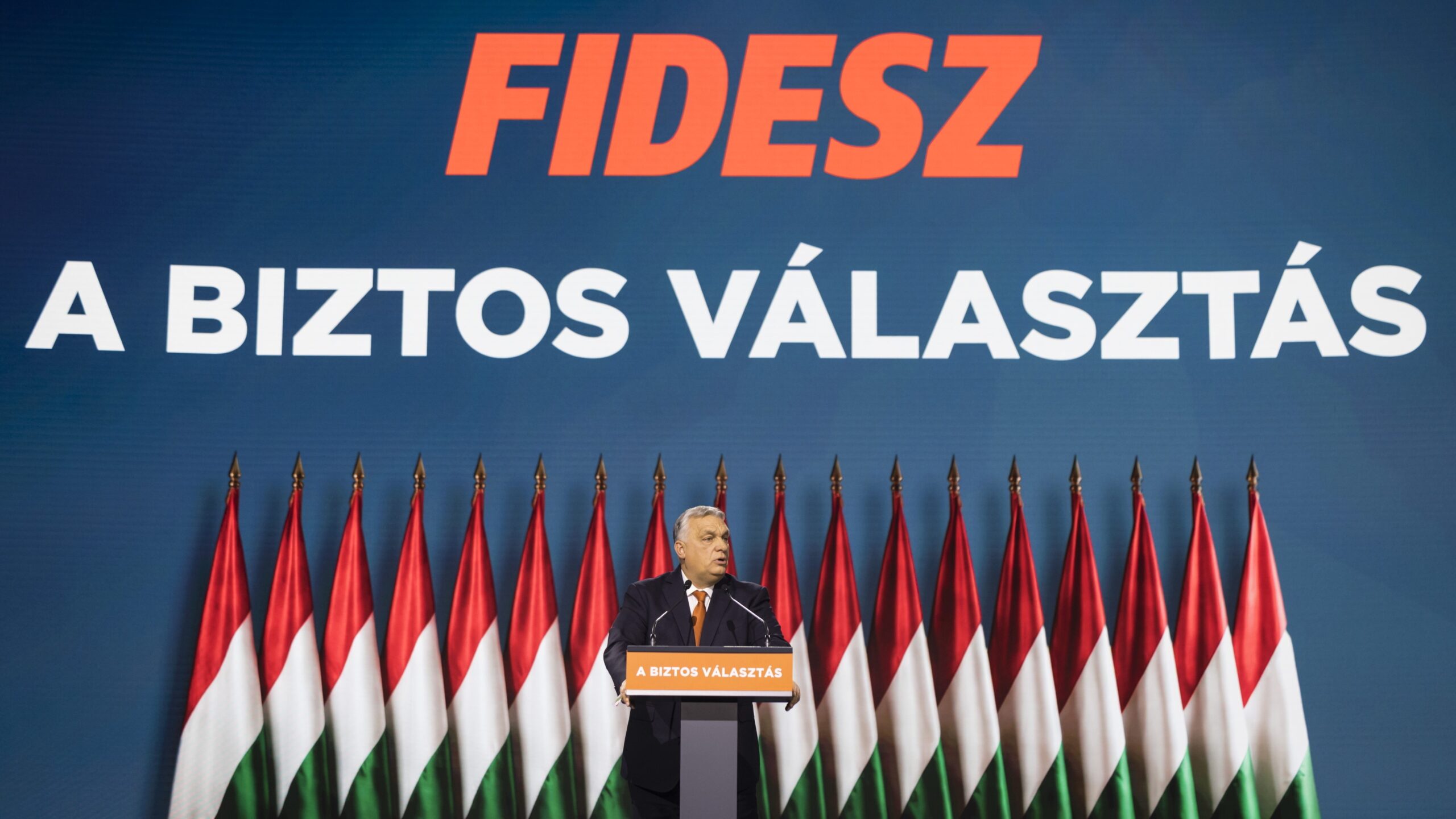
The institute noted that at its recent party congress, Fidesz emphasized an image of calm and stability, positioning itself as a safe choice amid what it described as a period of global uncertainty. Analysts suggested that government competence, leadership experience and international connections may become increasingly important factors in the coming months.
Support for the governing parties has also been reinforced by welfare measures, the researchers said, which appear to reduce the protest potential among government-critical voters.
By contrast, the Tisza Party was described as struggling to find a clear thematic focus even during the holiday period. Following a temporary pause in candidate statements, the party concentrated its efforts on grassroots campaigning, but this did not result in measurable gains in support.
According to the analysis, the government’s law-and-order response to recent issues and the lack of direct political involvement limited the Tisza Party’s ability to capitalize politically. The campaign was also not helped by the re-emergence of former prime minister Gordon Bajnai, the institute argued, noting that while he still has ties to opposition circles, his popularity remains low. Only 13 per cent of voters view him favourably, while 56 per cent do not, and 11 per cent are unfamiliar with him.
‘These factors help explain why the balance of the party competition has essentially not changed, and why Fidesz’s lead solidified over the Christmas break,’ the researchers concluded.
Compared with a mid-December survey, support for Fidesz–KDNP rose slightly from 46 to 47 per cent, while the Tisza Party saw a similarly marginal increase within the margin of error, from 39 to 40 per cent.
The poll also found that the Democratic Coalition remains at 3 per cent, while the Hungarian Two-Tailed Dog Party slipped to an estimated 4 per cent in January, placing it below the parliamentary threshold.
Related articles:
At a time when public debate is increasingly polarized and superficial, Hungarian Conservative remains committed to depth, intellectual honesty, and independent conservative thought.
Producing high-quality journalism requires resources. Your contribution helps us expand our coverage, reach new audiences, and keep our content accessible.

Please consider supporting our mission.