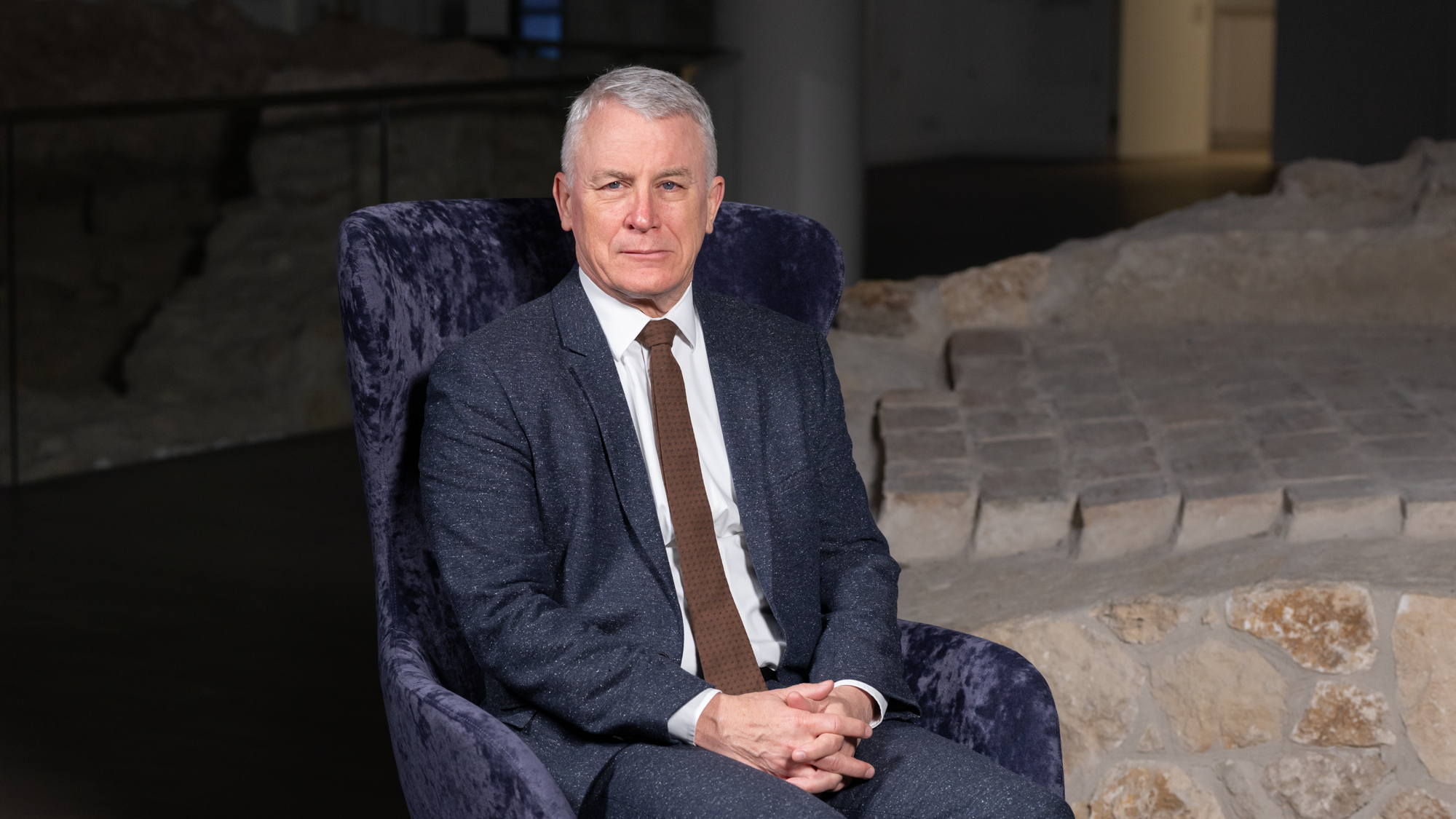
Michael Doran is an American analyst and scholar specializing in international politics and the Middle East. He studied history at Stanford University and earned his PhD in Near Eastern studies from Princeton University. He served at George W Bush’s White House as a senior director in the National Security Council and at the US Department of Defense as deputy assistant secretary for public diplomacy. He is now the director of the Hudson Institute’s Center for Peace and Security in the Middle East.
***
I met you last year, and you said that the aim of Moscow was to conquer Odessa and all the sea ports so Ukraine would be a landlocked country, dependent on Russia or maybe the West. Is this Russia’s final goal in 2025 too?
Well, I don’t think that Putin now has a lot of hope of taking Odessa. Back then, I thought he did, but I think he wants Ukraine to be a completely dysfunctional country. It’s harder for him to do it now because he can’t. As long as Odessa remains a viable, independent Ukrainian port, it will be hard for him to completely put that country under his thumb.
What is the minimum programme of the Kremlin for demonstrating victory?
I think Donald Trump has offered Putin a way forward here, because we can see pretty clearly that the Russian chance of actually taking all the territory that it wants is minimal. But Donald Trump is now offering Putin the way to take territory without actually conquering it, because the Americans are pressing the Ukrainians to make significant territorial concessions. I don’t know exactly what Putin wants, but I think he is going to want to explore that to the extent possible. I mean, because of the shift in the American position, the diplomacy of Putin is working to his advantage right now.
And what is the minimum programme of Ukraine at the moment? Because it seems that territorial losses for Ukraine are unavoidable.
A lot of that has to do with not just what Zelensky can say, but what his public will accept. Personally, I don’t have a clear view on where their lines are. My concern from watching this is that Donald Trump has signaled to Putin that he really wants to shut down the war, and wants to go as far as he can toward Russia to shut down the war.
‘Because of the shift in the American position, the diplomacy of Putin is working to his advantage right now’
And when you’re dealing with a character like Putin, he’s going to pocket those concessions and then demand more. So the appetite increases with the eating with the Russians.
When do you expect a permanent ceasefire or peace treaty?
I’m reluctant to predict because it depends on Putin agreeing to stop the war. It’s not clear to me that the pressures on him are so great that he feels a need to stop the war, especially when he sees that Donald Trump is moving in his direction. So he’s going to try to wrench as much advantage out of Trump as he possibly can.
Back in 2022, in my first interview with you, you said that the Russian narrative was that Europeans were misrepresenting Russia because they did not want a war. Yet only days later, Russia launched a war. Now Moscow claims that it is only the Europeans who want war. Could there be a scenario in which Russia becomes directly involved in a wider European war?
It’s certainly possible. I don’t know exactly what Putin is thinking, but I would expect that he, given the amount of deaths that he’s suffered, would probably want to consolidate his gains a bit before pushing. I would assume that when it comes to pushing, he’s going to be looking at Moldova, or maybe the Baltic countries, not necessarily to invade, but to disrupt them, convince them that taking a hardline stance against Moscow is a mistake. But very crude uses of power are always going to be in the Russian toolkit. You don’t have to be a great student of Russian history to see that they like big, crude muscle movements, which is not to say they’re crude people.
The Trump administration wants to establish a new security infrastructure between Europe and Russia, taking Russian security concerns into account, while most European leaders want Washington to be more hawkish toward Russia. Does the American or European stance better reflect the realities of war?
There are a number of things happening simultaneously in the American position. One of them is that there’s a domestic constituency within Trump’s MAGA coalition that strongly believes there’s a deal to be done with Russia, and that we were drawn into this conflict by Ukraine. That constituency also believes that there’s a deal to be had with Iran, and we were dragged into this conflict with Iran by Israel. So there’s a vocal and influential element in Trump’s coalition that thinks the allies are the problem. And you have Donald Trump himself who said many times that this is not his war. I think he has a sense of the things that he wants to get done in his presidency, and he doesn’t want his presidency eaten up with conflicts in the Middle East and conflicts in Europe. He has other business, and so he wants to just shut these wars down and get on with the business that he had.
Like China, right?
China, immigration, all the domestic reforms that he wanted to do.
‘He doesn’t want his presidency eaten up with conflicts in the Middle East and conflicts in Europe’
He doesn’t want to be remembered as the guy who was fighting the war in Ukraine and dealing with the Middle East. So those two things combined formulate a kind of desire to find an accommodation with President Putin, if possible.
From the American and the Israeli perspective, the eye of the storm in the Middle East was Iran, and not the Palestinian issue. But Iran was weakened by the Israeli and American bombardments. Is Iran still dangerous or not?
Iran is still dangerous. Iran is like a rabid dog. You know, a rabid dog is dying, but if it bites you, it can kill you. So that’s the kind of state it’s in right now. It is not given up. It is trying to rebuild itself. There are three areas of major concern with Iran. One is the nuclear programme. The second is its ballistic missile programme, or ballistic missile drones, and then cruise missiles; and the third is its proxies, the Houthis, Hezbollah, and so on. They’ve been weakened in all areas, but I expect that they’re going to rebuild. They’re trying to rebuild in Lebanon, for sure, and that’s creating friction with the Israelis right now. I presume they will try to rebuild their ballistic missile programme, and that will lead to another round of conflict with Israel.
You know, in October of 2024 the Israelis attacked with a pinpoint precision some of the manufacturing capabilities that the Iranians had built medium range ballistic missiles with, and these were the ones that were causing Israel the most damage. The Israelis calculated that they had taken the production capabilities of the Iranians off line for over a year. But that wasn’t the case. The Iranians quickly regained their production capability because the Chinese came in and gave them the machines that they needed to get their missile production going again. And when the Iranians started to rebuild it, they came up with a plan to increase their arsenal within five years by many times the size of what it was. And the Israelis regarded that as an existential threat, equal to a nuclear bomb, even if they didn’t have the nuclear capability, because it can completely overwhelm the defences.
‘Iran is like a rabid dog. You know, a rabid dog is dying, but if it bites you, it can kill you’
And the rebuilding of the ballistic missile programme is going to be a reason to go to war again. I expect we’ll see another round between the Iranians and the Israelis just over the ballistic missile question, even if they don’t retry to restart their nuclear programme.
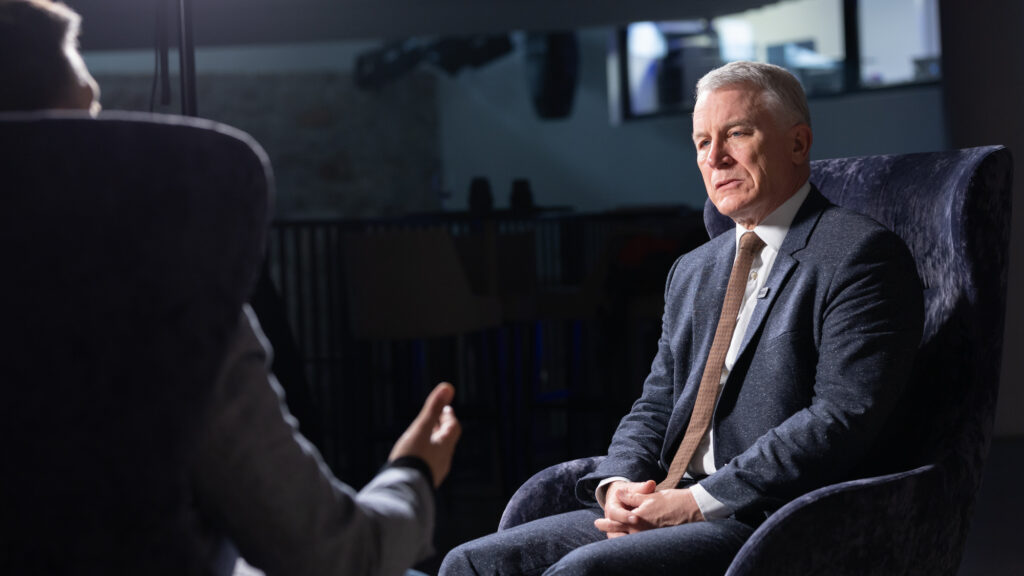
And what will happen to Gaza?
There’s two parts to Donald Trump’s peace plan. The first part, which was hostages for prisoners, plus a ceasefire and Israelis moving back somewhat—that was very clearly defined and relatively easy to implement. The second part, which is the disarming of Hamas and the introduction of an international stabilization force is a lot more conceptual. Donald Trump got everyone to agree to this conceptual idea. Each party, the Turks, the Egyptians, the UAE, the Israelis defined the second part of the agreement in a way that was comfortable for them. It’s very hard at this stage to look at that and see who’s going to be the party that’s going to put forces on the ground that’s going to point their guns at Hamas; no one wants to do it.
Is the two-state solution realistic?
The two-state solution is dead. There’s no two-state solution.
Arab countries are still pushing it.
It’s not going to happen. There are a lot of things people believe in the world, but reality gets a vote. People believe that we’re in an energy transition and that by the time you and I die, we’ll be generating all of our electricity from wind and solar. But this is not going to happen, even though everyone believes it will.
‘The two-state solution is dead. There’s no two-state solution’
Palestinians have hope for their own state.
There are no banks in Gaza. How do you rebuild the house, take a mortgage, build a business if there are no banks? Abu Mazen barely controls Ramallah, let alone all of the Judea and Samaria. Who’s going to run this? Where’s the state? Where’s the economy? You have to have these things to have a state. They don’t exist. The Israelis do not want a Palestinian state on their borders. And when I say the Israelis, I mean the entire society, from left to right. There’s a little cult around the newspaper Haaretz: it’s made up of the publisher and about three other people that really strongly believe in a two-state solution, but nobody else does. It’s not going to happen.
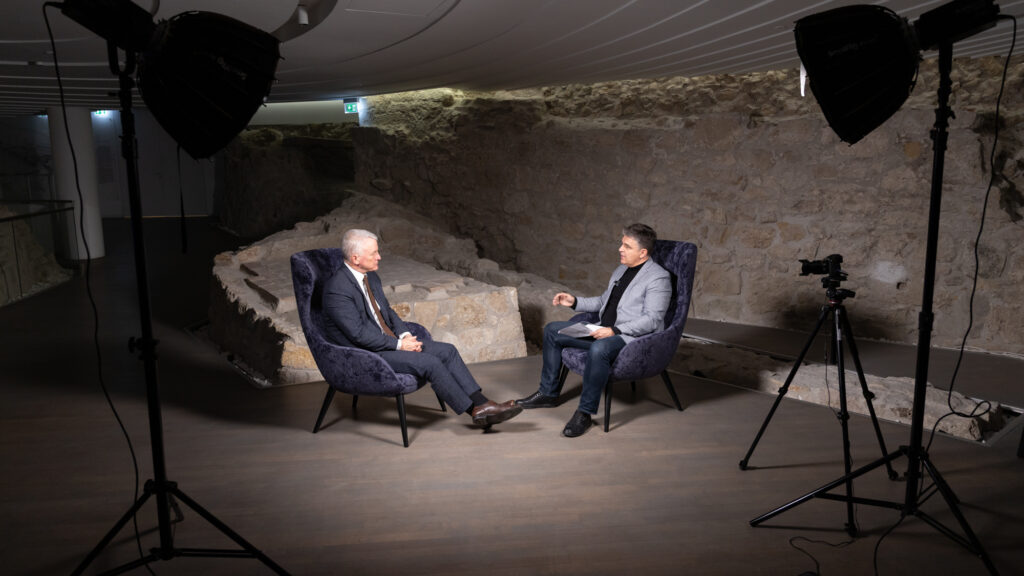
Putin visited India recently, and there will probably be new gas and oil cooperation between the two countries. Over the past decades, the US and Japan have tried hard to separate China and India from Russia, but they haven’t succeeded. What is the reason for that?
I expected the second Trump administration to be much closer to the Modi government than it is. I was very surprised by the role the President played in the recent conflict between Pakistan and India. He tilted significantly toward Pakistan, and the Indians sense it in several ways. They saw the Chief of Staff of the Pakistani military visiting the White House. They see Trump publicly mentioning that he is a great mediator between India and Pakistan. This is unacceptable for Modi—domestically, he cannot present himself to his own public as being subject to mediation by someone else with Pakistan. It also reminds Indians of the colonial era, when Britain used a divide-and-rule policy between Muslims and Hindus.
The Pakistanis, of course, understood that, and they nominated Donald Trump for a Nobel Peace Prize, because they understood that Modi cannot endorse that in the same way. There are other issues, like the visa issue, and the question of the tariffs and so on. But I was surprised by Trump’s policy, that Trump moved in this way toward Pakistan when Pakistan is about the only ally that China has. I mean, if the goal of the United States is to counterbalance the Chinese, then the Indians have to play a major role in that. But that’s not the way the President saw it. I’m expecting that over time, the logic of the conflict, or the contest between the United States and China will work its way back into the President’s thinking, and we’ll see a kind of correction in the direction of India.
‘If the goal of the United States is to counterbalance the Chinese, then the Indians have to play a major role in that’
Central Asia is a post-Soviet region, and its states have traditionally been allies of Russia. How can the West persuade them to cooperate?
We don’t have to persuade them. We’re not going to set up a security block against the Russians and the Chinese.
So connectivity is the thing.
Connectivity, mainly—that’s the number one thing, actually transportation connectivity, but also economic and digital connectivity. All of those countries are landlocked, and they are squeezed between Russia and China. All of them want greater autonomy for themselves, and the United States and the European Union can offer them that. They can offer avenues to exercise their autonomy, to diversify their suppliers and customers through the development of the Middle Corridor, which goes through Azerbaijan, Georgia, Türkiye, and then onto Europe. That will offer connectivity to Central Asia in a way that hasn’t been before. So it’s a great opportunity if the United States remains focused. In this aspect, Hungary can play a mediating role with the United States in terms of keeping the focus on Central Asia, because Hungary is an observer at the Organisation of Turkic States.
Watch the full podcast below:
Related articles: