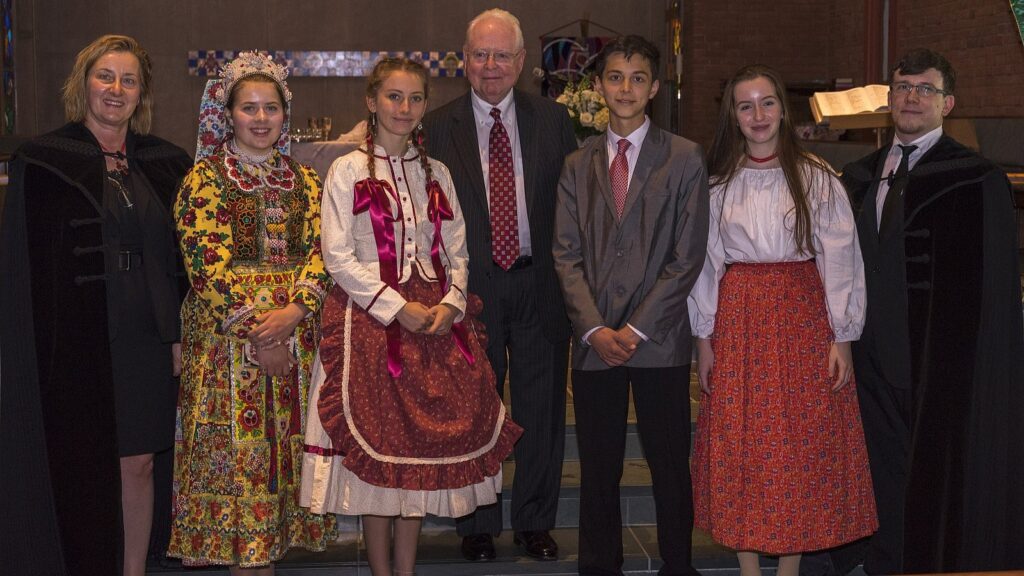
Katalin and Gusztáv Ilosvay left Hungary in the first days of 1973, and after spending nine months in Germany, they ended up in Australia. When their children reached school age, they joined the local Hungarian community, of which they have remained active members ever since—through Mozaik Radio Sydney, as well as Kati’s leadership of the local Hungarian weekend school and her various positions in community organizations. They also support the community in many other ways, such as organizing exhibitions. We first met online as members of the University of Pécs Worldwide Hungarians Media Network, then later in person at a Diaspora Council meeting in Budapest, after which I interviewed them extensively about their life journey, their work, and also about Hungarians in Australia.
***
When and how did you leave Hungary for Australia?
Katalin (Kati): We met in Budapest in 1970, and a year and a half later, in a restaurant called Gülbaba, over half a grilled chicken, my darling turned to me and asked: ‘Will you come with me to Australia?’ At the time, we were both still studying—Guszti studied window dressing and exhibition design at the Windowdressing School, while I attended the University of Economics. I instantly replied yes, which surprised him a bit, because he suddenly realized he would have to actually take steps toward this plan, as there was someone willing to join him to set out to the other side of the world. We began planning. Naturally, we didn’t talk about this to anyone then, not even to our parents.
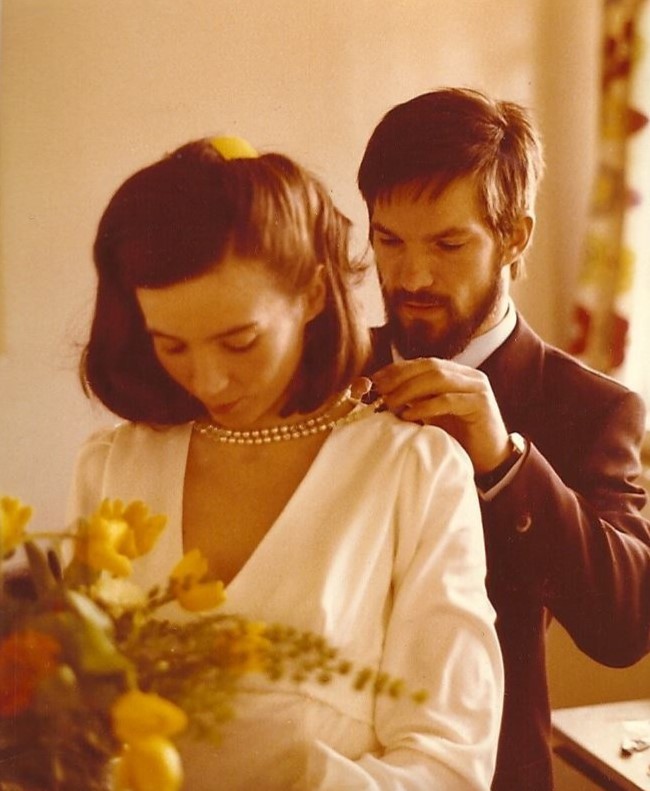
The following year, after we both graduated, we started working and also tried to obtain our passports. I justified my application, stating that I wanted to improve my English in the UK, while Guszti said he wanted to visit his aunt in Hamburg, Germany—so we applied separately and for seemingly different reasons. Surprisingly enough, we actually got them. The authorities didn’t connect our names because, officially, nothing tied us together. They didn’t know that on Christmas Day in 1972, Guszti proposed to me—poor him was so nervous he stumbled into our kitchen with the flowers, tripping over a chair. So I was his fiancée when I left for London on 1 January 1973, but even my parents didn’t know that Guszti would also leave the next day. We met in Vienna, Austria, where his uncle lived, but our final destination was Australia.
Why Australia?
Gusztáv (Guszti): Because it was very far away. Back then—as actually still today—Europe was a hornet’s nest. And to be honest, for the sake of having a secure livelihood, preserving our family and our Hungarian identity, I wanted to move as far away from Europe as possible. Living in a socialist country meant suffocating confinement and hopelessness. We are both very free-spirited, and we knew that the communist system would never offer us anything—not even the dictatorship of the Kádár era, which many call soft, but it really wasn’t that soft. We knew we had no place or room to move there. Australia—the Australia of that time, I’d emphasize—offered the free country we longed for. A lot has happened in the past 50-plus years; our eyes have opened, and we see the world differently today, but the fact remains that at the time, we felt we had to break free from that confinement. And although we experienced much since then, Australia has ‘worked out’ for us.
Kati: We actually had several choices: Canada, the U.S., South Africa, and Australia. Canada is cold, and I can’t stand the cold. They filled our heads with horror stories about the U.S.; growing up in the 50s, we were taught that the decaying capitalism was rotting worse there. South Africa already seemed unsuitable for whites then. So, Australia remained, about which we knew nothing—apart from what I had learned in geography classes. And we thought: if we know nothing about it, it must be a good place, because otherwise they would talk about it as much as they talk about the U.S…
How did you actually get there?
Guszti: From Vienna, we went to Hamburg, where my aunt, Maria von Ilosvay, was a lifetime member of the Hamburg Opera House. We stayed with her for nine months and learned German. I worked in Karlstadt as a window dresser, Kati worked in an office—she had studied German in school growing up—while we waited for our papers to be processed.
When we arrived in Germany, our Hungarian passports were taken, and we were given a Fremdenpass, essentially an ID card. We had to report to the police every month. Since we had already submitted an immigration application to Australia, they didn’t bother us much, since the authorities knew we weren’t planning to stay permanently.
‘I instantly replied yes, which surprised him a bit, because he suddenly realized he would have to actually take steps toward this plan’
There was one episode that confirmed I’d flee Europe no matter what. We created a spring shop window with live tulips in boxes, and a carpet of plastic tulips extending outside the glass. With the lighting, it looked great. When we finished, our supervisor yelled at us—because the German tulips were leaning slightly left and right. He made us dismantle the whole thing, grid the floor, and place each tulip perfectly on each intersection point. That absolutely finished me—I saw that creativity was not needed there. It was another reason for me not to stay in Germany or Europe.
Where did you settle in Australia, and what greeted you there?
Guszti: In Frankfurt, we were informed the plane was full, we had to wait until the next day, with only our clothes on, because the plane took our bags…The first plane left for Melbourne, while the next day’s flight was for Sydney. God clearly wanted us to end up in the latter…Our bags arrived seven weeks later. Nice start…We were taken by bus to a hostel for immigrants from around the world. Many came from Chile, Uruguay. There was even an English couple, but the husband turned out to be a Hungarian from Transcarpathia. As political refugees, we had six months of full support—housing and meals—after which we had to move out of the hostel. The state helped us find jobs, open bank accounts.
Kati: I remember the desolate landscape on the way from the airport, then the tiny wooden houses in Sydney that my mother-in-law later called dollhouses. I could type, and I soon got a job as a typist. Guszti initially worked as a metalworker. He had to pass an exam to get an Australian certificate—and despite not speaking English, he was the only one among 38 candidates who passed.
Did you meet Hungarians?
Kati: Yes. Guszti’s opera-singer aunt in Hamburg had helped many Hungarian refugees after 56, including a young girl from Sopron, Hungary, who later immigrated to Australia. We had her phone number—she was our only Hungarian connection. She, in turn, had two friends whose numbers she gave us. Her Hungarian friend showed us Sydney, while her Australian friend helped us financially. He liked our work ethic so much that he loaned us three times the amount we had, so we could move from the hostel straight into our own apartment. We paid it back in two years. Both of the numbers ‘worked out’, it was almost a miracle.
Especially, considering that one of our distant relatives, whom we also called when we arrived in Australia, congratulated us and then simply hung up the phone…
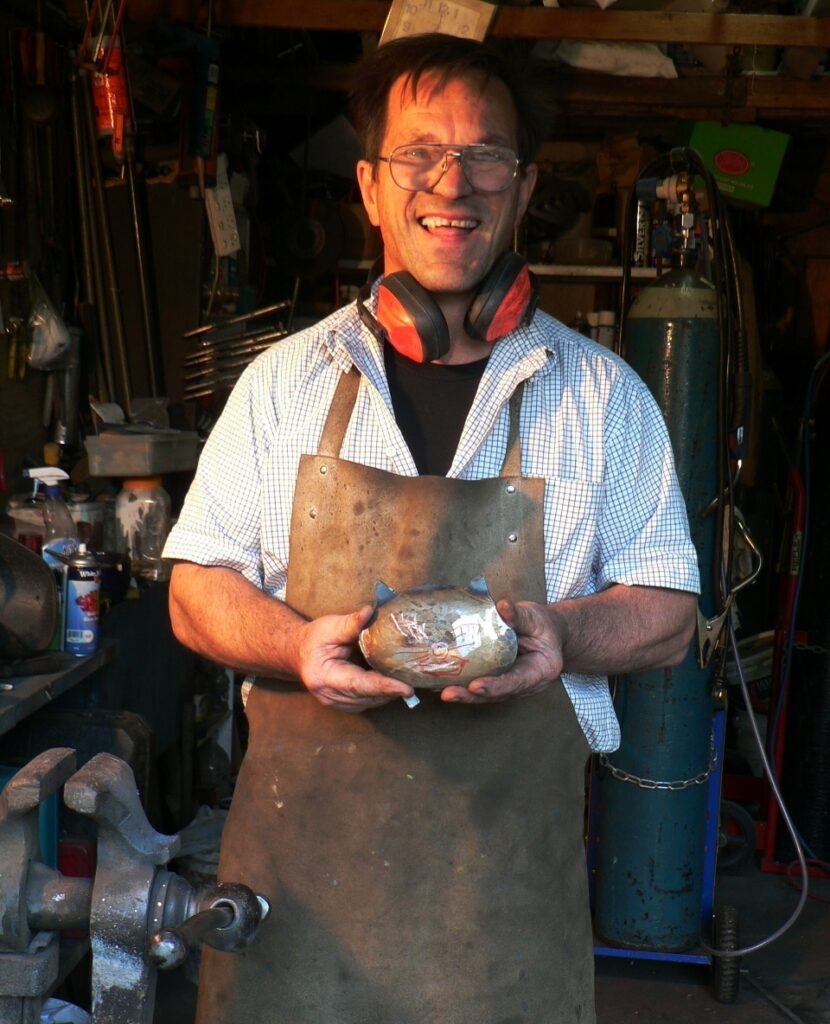
Guszti: Our start was excellent—apart from losing our luggage. But as soon as we settled into the new apartment, I lost my job. Not for long, though. I walked through an industrial area, knocking on every door, saying that I was a welder and metalworker. By the time I reached the end of it, I had been offered two jobs.
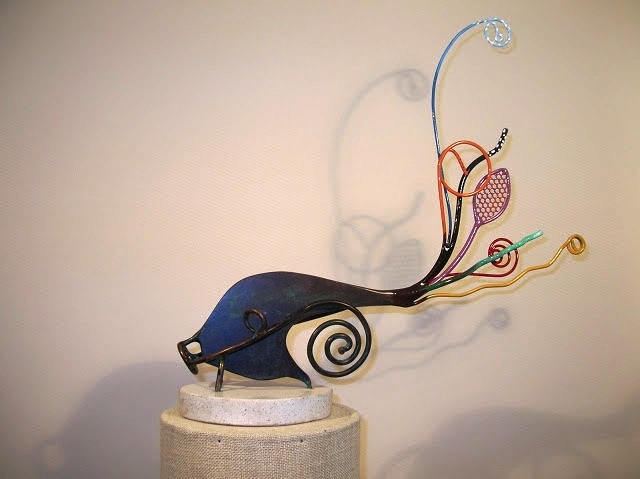
How did you become a sought-after blacksmith and sculptor?
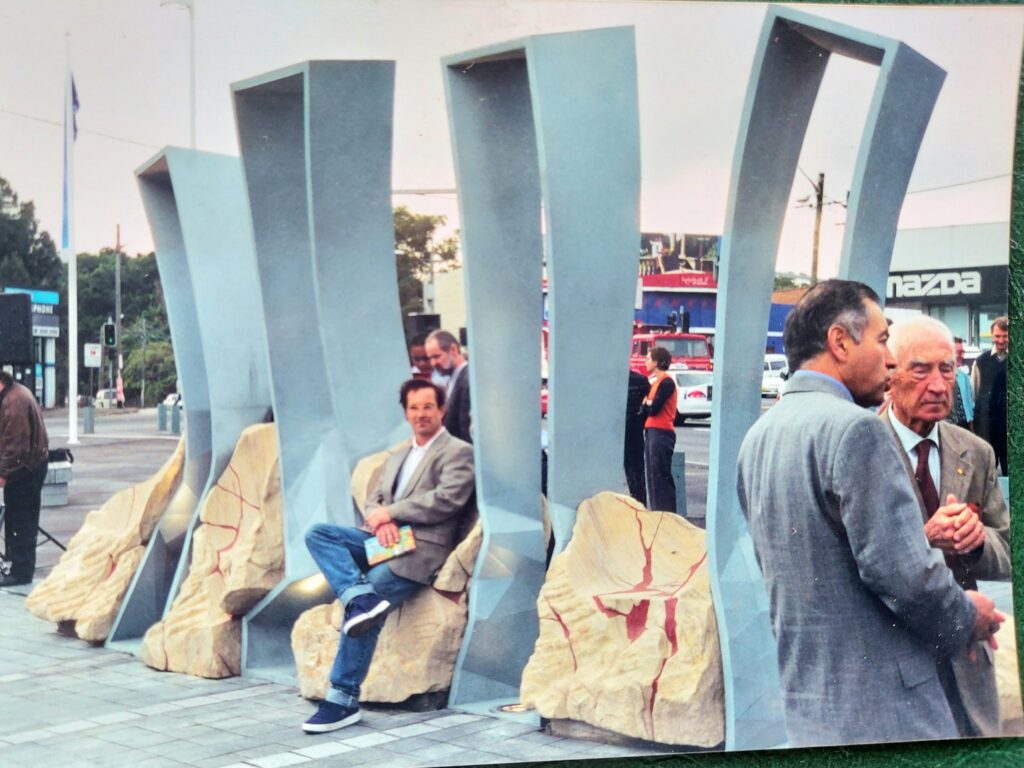
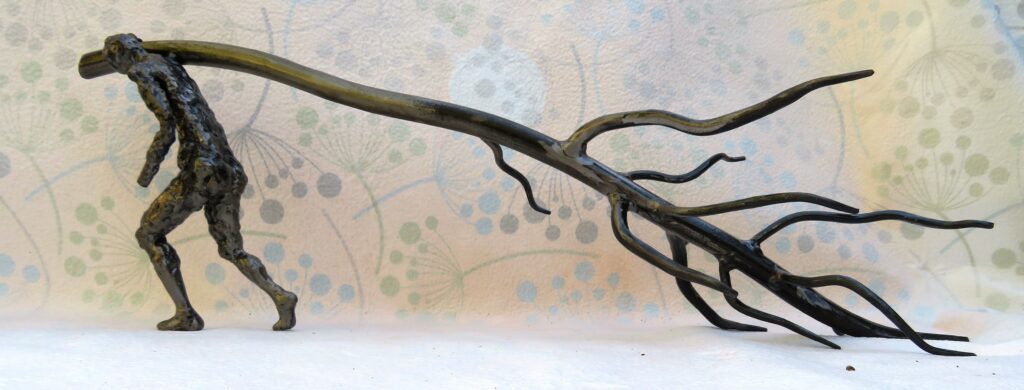
Guszti: Eventually, I opened my own wrought-iron workshop. I was doing more and more beautiful work. For the 200-year anniversary of Australia, cities were restored, and original objects sought. In the old town, four turn-of-the-century wrought-iron street lamps were found, and the plan was to decorate the entire district with similar lamps. They couldn’t find a proper blacksmith—someone tried but failed—then I was recommended. A man walked into my workshop with a huge roll of drawings and asked if I could make them. I created 48 such lamps. After that, I received a great deal of work from the government.
Kati: His marks are everywhere. He also made the candelabra in the Parliament. When Sydney won the Olympics, the first structure built was the swimming stadium; the company I worked at made its roof structure. They needed a mechanism to move the roof elements. When someone tried but failed, I suggested they ask my husband…
Guszti: My design worked perfectly. That led to the Olympic village job and the 8.5-kilometer-long railing—though I hadn’t intended to take part in the project, because earlier many people had gone bankrupt on state projects. But they sought me out because the contractor had done poor work.
What about your career, Kati?
Kati: Our first Hungarian friend mentioned above got me into the company he worked for. I worked in payroll and various departments as an accountant. Then our two children were born. There was no maternity leave in those days, so my mother-in-law came for three-month periods when the kids were born. There were no state daycares then; our children grew up in family daycare. When they reached school age, I switched to part-time work.
When did you join the Hungarian community?
Kati: We spoke Hungarian at home, but didn’t attend community events. When our eldest turned three, I searched for and found the weekend Hungarian school.
Guszti: There was a Hungarian primary school and a Hungarian high school where students could take a Hungarian matriculation exam. Both of our children joined that primary school, and the older one completed the Hungarian matriculation exam, too. Kati quickly became a leader at the school.
Kati: I think these organizations should be run by people whose children attend—that gives the strongest motivation. And each generation brings new ideas, so openness is essential. After one year, I became secretary of the parent body; after our second child was born, I served as principal for six years. We organized summer camps too.
Back then, Hungarian events drew hundreds. There were Hungarian industrial and commercial balls with 600 attendees. Every three years, the major cities hold an Australian Hungarian cultural festival. There was also the Shell Folklore Festival, where ethnic groups could perform. Our children danced in the Hungarian folk group, so we went as well. When Queen Elizabeth opened the redeveloped Darling Harbour precinct in 1988, our Hungarian dance group also performed at the ceremony. There were four active Hungarian dance groups in Sydney at the time.
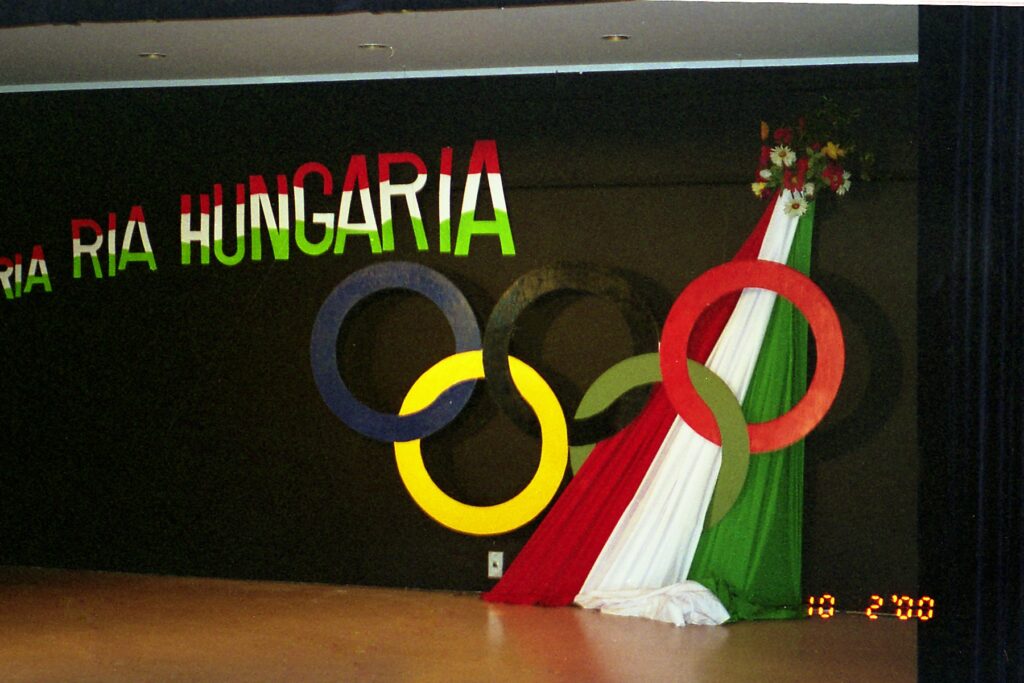
Guszti: Sydney is 90 km wide and 100 km long—distances are huge. We’ve always been active. As a window dresser, I made many artistic backgrounds for national celebrations. Later, we traveled around the country with exhibitions—Petrás Mária’s ceramics, Méry Gábor’s Árpád-age fresco photos, and other local Hungarian artists’ work. We organized an exhibition about the 56 Revolution that was displayed for a month in Parliament with great success.
Kati: We also exhibited it at the Polish consulate. It was so successful that they extended it. For the 70th anniversary, we want to do something similar—maybe with more help this time.
Guszti: No one ever financed these projects—we paid everything ourselves, because we wanted to create something beautiful for the community.
What about the Hungarian churches?
Kati: Sydney has a Hungarian Reformed Church with weekly services and a resident minister, Rev. Kund Péterffy. We hold events there, such as Hungarian Culture Day. We have, however, no Hungarian Catholic priest since Father Dénes Lédeczi returned home, though the Catholic community is large. But we do have a lovely Irish priest who learned Hungarian—he preaches, sings the Himnusz, and chats with the faithful in Hungarian. Every month, the St. Elizabeth Caritas gathers for a Hungarian mass and a dinner. In the Hungarian retirement home lives the 90-plus-year-old Father Szondi, who holds daily mass. There are two such homes in operation currently: the Árpád Home in Melbourne and the St. Elizabeth in Sydney.
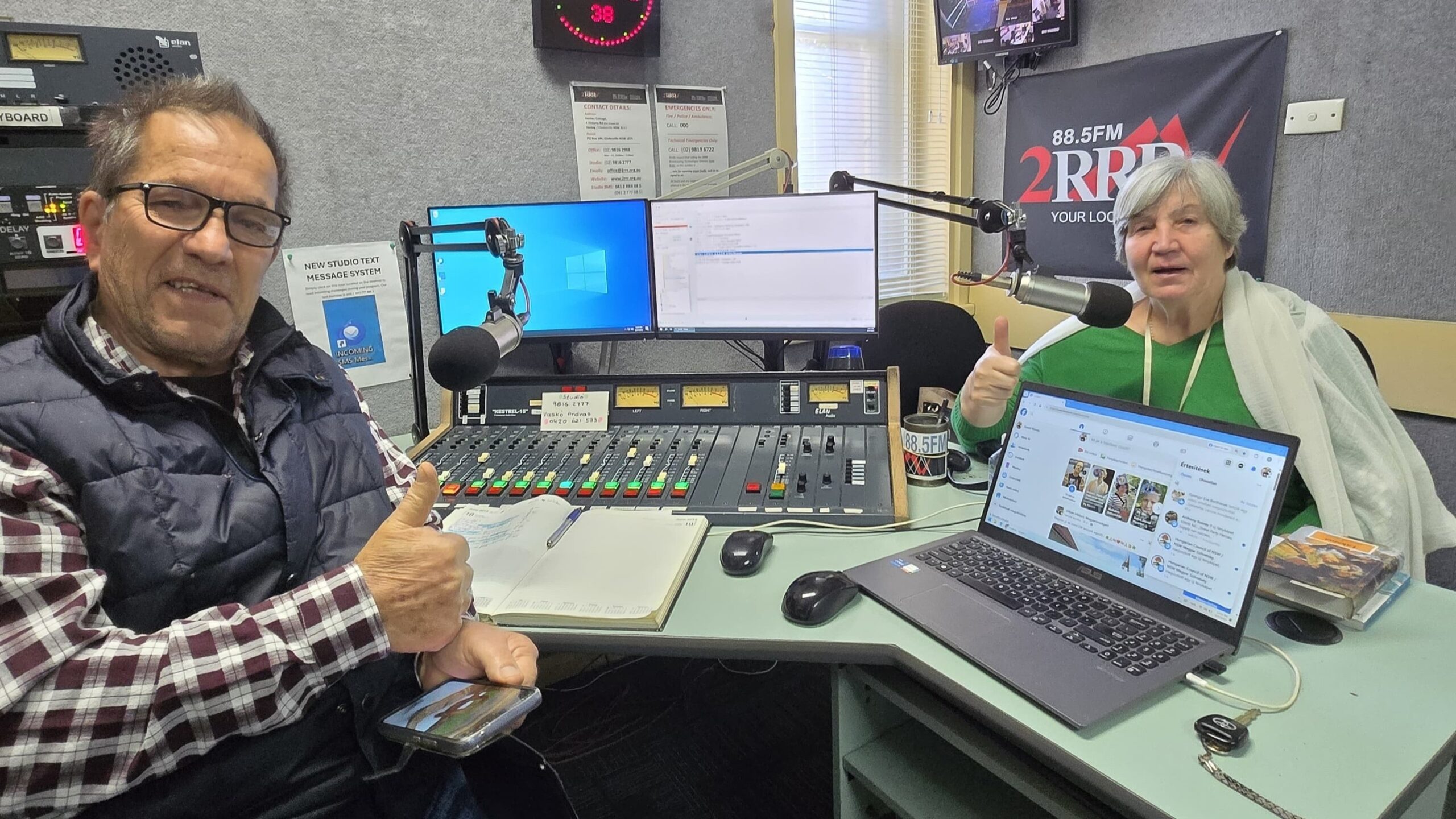
Now, please tell us about your radio work, thanks to which you are known worldwide.
Kati: In 1992, the Australian government launched a multicultural radio station, 2000 FM, offering airtime to many nationalities—including Hungarians. A friend asked me first to come in to record a poem; then they asked if I wanted to work with them. I told them I’m no radio man, only a blacksmith, but I love literature, so I started the Literary Corner. Over time, it became clear we disagreed about certain things, and after an incident, I left. Meanwhile, our child’s godfather had secured a two-hour morning slot at a local station, but found it too much to produce weekly, so he invited Guszti. Soon, they also realized they had different ideas, so he gave Guszti half an hour.
Guszti: We had no technician; we did everything—music, humor, literature, and a bit of politics. Then a midday slot opened up, they offered it to us, and we were thrilled. The Serbian program after us had a host who was always late, or absent, and who incited hatred during the war. Eventually, his slot was taken away and given to us, so we ended up with two full hours.
Kati: When Guszti got the one-hour broadcast, I joined him.We took the station’s technical and media-law training. 2000 FM still exists, but there is no Hungarian program anymore. In the meantime, SBS state radio station has been established with a weekly three-hour Hungarian program, alternatively from the Melbourne and Sydney studios. Unfortunately, first the Melbourne studio was closed, then the Sydney one as well, as the last host retired without developing successors. They now give slots to other growing immigrant communities.
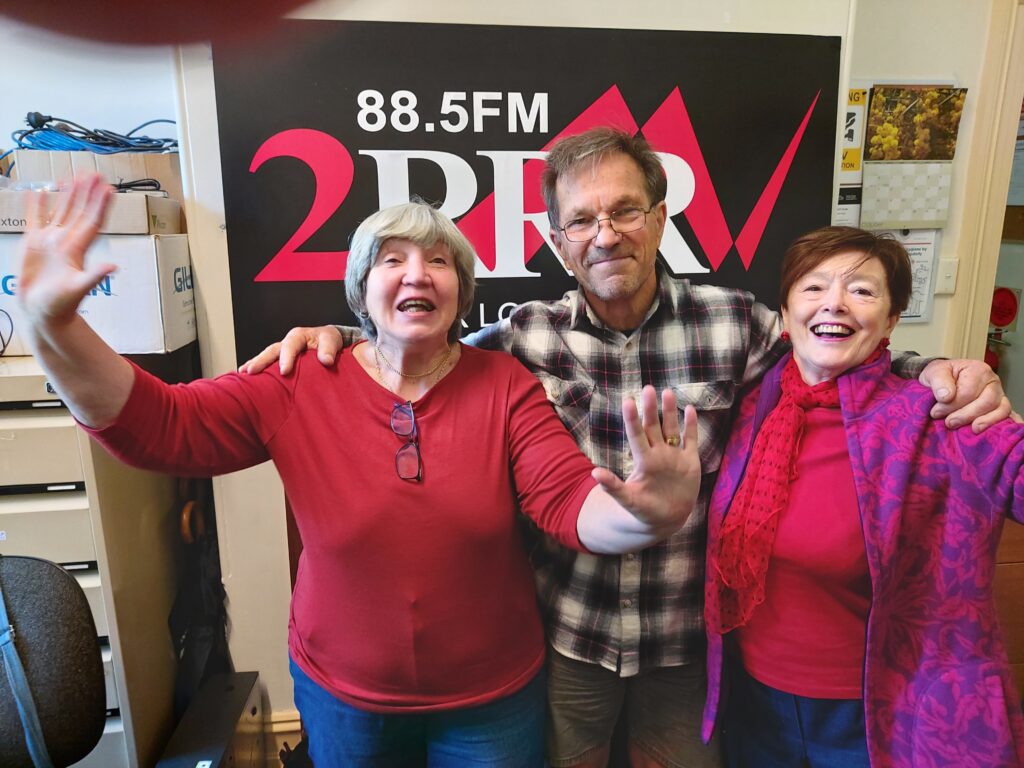
Guszti: When that Hungarian program on 2000 FM ended, we became the only Hungarian broadcast in New South Wales. With the Internet and social media, we became known worldwide. When we went online, we realized we needed a name—thus we continued as Mozaik Radio Sydney. Today, only Adelaide and Brisbane still have Hungarian radio programs besides us in Australia.
Who works at the radio, and how did you find them?
Kati: We have over a dozen correspondents worldwide, including throughout the Carpathian Basin, with the exception of Transcarpathia. In Budapest, a taxi driver, Szilárd Tóth, produced programs for us for 13 years—encouraged by Guszti, who said that taxi drivers see the world.
After him came Ágnes Kiss, who’s still with us today. We also have György Kicsi as our news editor, and our newest colleague from Hungary is Marci Bubnó, one of the founders of the St. Ephraim Male Choir. András Vaskó is our sports reporter from Melbourne. In Slovakia, historian Szabolcs Czáboczky was recommended. When he began research, he passed us on to a young art historian, Noémi Czinege, who presents the challenges of her generation.
We met Dr. Magor Kádár, head of the Media Department of Babeș-Bolyai University in Kolozsvár (Cluj, Transylvania), when he visited Australia. When he stopped, Krisztina Sándor, who works with Reverend László Tőkés and helps organize the annual Tusványos summer camp, took over. She sends fantastic reports. In Vojvodina, Bálint Csaba, editor-in-chief of Pannon Television, was connected by Zsolt Bede-Fazekas of Toronto’s Hungarian radio.
Dr. Gergely Tóth, a linguist, stayed with us during a photography trip and now reports on American Hungarians. In Canada, we have no permanent correspondent, but we occasionally interview regional Diaspora Council leader Anna Szenthe or Sándor Vörös from Edmonton, who created the Canada-wide fantastic Trianon 100 dance production.
Guszti: In 2018, we gathered many colleagues for a dinner at the Horváth restaurant in Budapest, where even the late Secretary of State Árpád Potápi attended. At this year’s Diaspora Council opening dinner, a waiter came up to us and said he remembered us from that radio meeting seven years earlier…
No wonder, there aren’t too many Australian media meetings in Budapest. What is the broadcast itself like?
Kati: It’s a magazine-style program, with many short, colorful items, and fewer long segments. Sometimes we host round-table conversations—recently we had one about artificial intelligence. It all evolved very organically.
Guszti: We cover topics that interest us. Over the years, we’ve created many very Hungarian, very colorful programs that attract interest. For example, Beautiful Regions of Our Beautiful Homeland, where people talked about the past and present of their villages or towns. Our late colleague Erzsi Kolozsi made a wonderful series about Australia, as she and her husband traveled extensively.
During the COVID pandemic, we were locked out of the station. We edited the program from home; the secretary went in and broadcast it. Churches were closed, so our Reformed minister came to us with the idea of offering spiritual nourishment. That’s how our Útravaló (Food for the Journey) segment began—four or five contributors rotate weekly, offering thoughts to help listeners have a better week. We still continue it.
Do you also cover Australian–Hungarian topics?
Kati: Of course—the Hungarian events here are part of our program. But the community is small, and not enough happens weekly to fill every show. When events take place, we talk about them or broadcast live from the Hungarian school, scouts, St. Elizabeth Home, etc. The key is being present, being trusted, and making a program people want to hear. But many listeners live abroad and want to know what happens also in the Carpathian Basin. That interests us too—and also Australian Hungarians, many of whom came from those regions.
Guszti: We do other community work too. For example, I love cooking. Recently, we hosted 40 people at Caritas with hortobágyi palacsinta. It’s important to understand: the moment you join a community—or take on leadership positions there—you operate on a different level; the impact is different. It’s incredibly important to be able to carry the community with you. The radio made that possible as well.
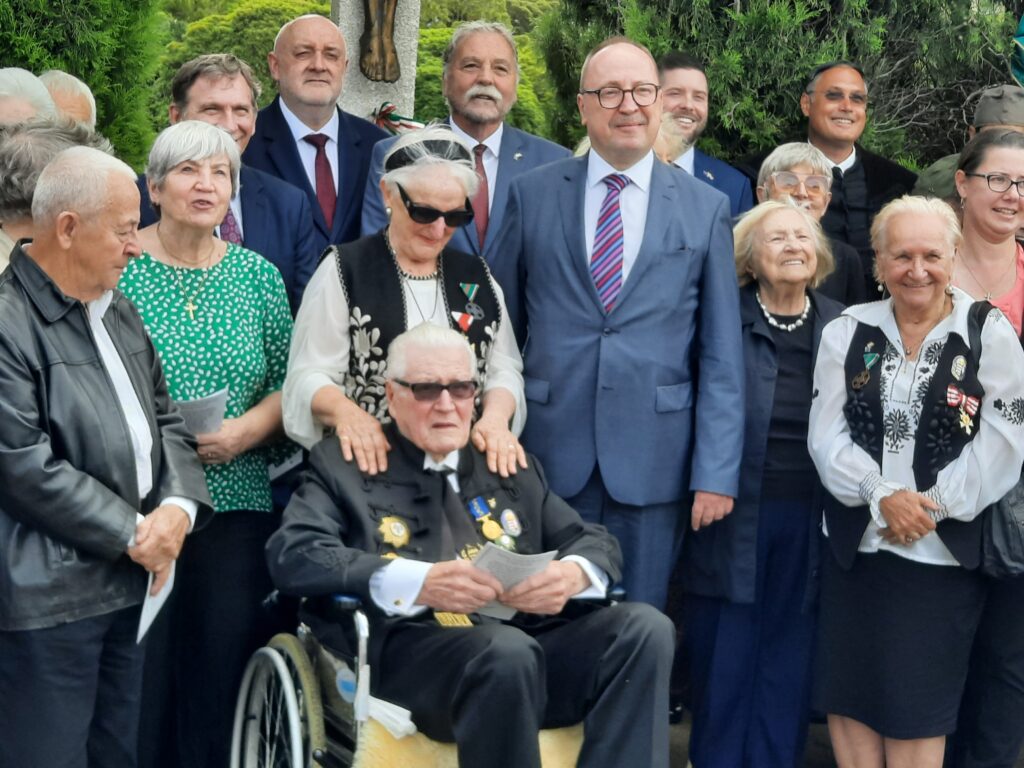
Kati: For example, before the latest triennial cultural meeting in Brisbane, Guszti gathered the local Hungarian artists. Ten or 12 painters and three sculptors came together; we filled a large hall with paintings and artwork. People met who had never known each other before, and during the process, we also got to know them. At the dinner we all sat together at one table, talked a lot, and on Sunday the radio broadcast a live on-site report about them. It was sensational.
‘We cover topics that interest us.’ Could you elaborate?
Guszti: The wonderful thing about radio is that you can turn it on and off. If I’m not interested, I turn it off. If a producer spent their time philosophizing about what people might be interested in, they would never broadcast anything, because they couldn’t possibly decide what truly interests people. People are interested in what you put in front of them. That’s the magic of radio: if something seems interesting to you, and you present it in an interesting way, then people will listen. A lot of people listen to us, so apparently we’re doing good radio. (laughs) In radio, so much depends on the atmosphere, on the personality and style of the presenters. On our radio, we have both.
‘That’s the magic of radio: if something seems interesting to you, and you present it in an interesting way, then people will listen’
Could you quantify that ‘a lot’?
Kati: On average, two to two and a half thousand people listen to us. Since the radio can be heard online, many follow us live from abroad as well. We also upload the programs to our website—people can even listen back to broadcasts from five years ago.
Guszti: We actually have relatively few callers, but most of them give praise. We get very little criticism—more often on social media, but that must be handled accordingly. It may sound anecdotal, but it really happened several times: our friends were traveling around Lake Balaton, chatting in a train compartment, when it came up that they were from Sydney. Someone then asked: ‘Do you know Guszti?’
Am I right that all this is volunteer work?
Kati: Absolutely—no one gets paid here. In fact, we have significant expenses. Since we became lifetime members four years ago, we no longer have to pay for broadcasting time, but before that, it also came out of our pockets—just like many other things needed for production.
Guszti: Everyone works with love, enthusiasm, and a sense of Hungarian identity. This radio is incredibly important to us. Every week, there is a new broadcast—even when we are not at home. We prepare programs even while traveling and then send them in.
Kati: There was only one weekend when we played a ‘re-run’—when Guszti was going through a spinal operation. Except for that, he even produced programs while lying in the hospital for six months, in terrible pain. Radio was his salvation—it forced him not to focus on the pain but on the task. His enormous sense of duty kept him going and prevented him from losing his mind because the whole situation, with even an infection, was horrible. And I must mention our colleagues: they always brought in their materials so he wouldn’t have to torture himself. They saved the radio—and in doing so, they saved us as well.
You seem to be a very well-synchronized and efficient duo. I’m amazed at how confidently you handle the technical side, too.
Kati: We surprise ourselves sometimes, too. (laughs) Guszti has technical skills, and I learned them because of my profession. When various accounting programs appeared, and later online banking, I had to learn them at our company.
Tell us about the federation you represented at this year’s Diaspora Council meeting in Budapest. How many people and organizations does it involve?
Kati: When I helped at the school, I already knew the Hungarian Federation of New South Wales existed, and we attended their events. It’s an umbrella organization—under it fall all local Hungarian groups. Every month, we have a meeting where we discuss what happened during the past month, what we are planning, and what problems people face. For 21 years, Béla Kardos was its leader; in 2013, he asked me to take over. I led it for a few years—that was when the Kőrösi Csoma Sándor Program (KCSP) began, and the Diaspora Council was created, so I attended the sessions in Budapest. After a few years, though, I felt it was too much and passed it on for a while. Three years ago, they asked me again to return. I said yes, because I felt I had grown into the task, and circumstances were different too—I received much more help than previously. There is an emerging young generation whom I strongly encourage and try to involve—for example, Eszter Romer Tóth, the scout representative.
Guszti: Each state—Western Australia, South Australia, Victoria, New South Wales, and Queensland—has its own Hungarian umbrella organization, and their representatives form the Australian Hungarian Federation, where Kati represents New South Wales and is currently the secretary. The number of people active in Hungarian community life varies by state. For example, in Melbourne, some events attract several thousand Hungarians. In Western Australia, there are far fewer Hungarians, but they can still gather a few hundred people for certain events. In New South Wales, we now talk in the hundreds.
Am I right in supposing that the Hungarian community there struggles with similar issues as elsewhere in the Western diaspora?
Kati: Yes, and that’s why the Diaspora Council is so useful. When we talk with others there, we realize we are not alone, and we exchange ideas on how each of us does things. At the same time, every country is different—for example, Canada has a fantastic theater culture: almost every major city has a Hungarian drama group, and they also have KAMASZ, the Federation of Canadian Hungarian Theaters, with its festival, which is wonderful. Here, somehow, this never took root—nor in the U.S. either. In Brisbane, there is a small theater group, though. Everything depends on what the community manages to create for itself. We all appreciate the KCSP program very much as KCSP fellows bring a huge new energy, reinvigorate the community; ours, for example, organizes very interesting programs.
Guszti: In fact, by creating the Diaspora Council, the Hungarian government undertook to represent 15 million Hungarians. Our dispersion is fundamentally a tragedy, but also an advantage—now you can find Hungarians anywhere in the world, people you can involve, whose opinions you can ask, and who can morally and/or financially support the local community. It’s an enormous thing that the Hungarian government has the capacity, the money, the enthusiasm to do this, and finds the right people for it. This should have been done much earlier. The previous government treated us as ideological enemies, but that’s no longer the case.
Our own—not unique—problem is that our community is constantly changing. New immigrants arrive who aren’t political but economic migrants, with entirely different political views and inner attitudes, because they left the country for completely different reasons. Their approach to Hungarian identity and volunteer work is also very different. Often, their Hungarian identity has not yet developed. They haven’t been here long enough to realize how important it would be for them to participate in the Hungarian community. I’m sure that in time, they too will realize that the streets are not paved with gold here either—one must work hard here as well.
But until they also realize how important it is to experience and preserve Hungarian identity, we can’t do much. They will learn what it means to be Hungarian only here; at home, this is not, or not sufficiently taught. There was a former Hungarian ambassador who said something unforgettable: ‘I became Hungarian in America…’
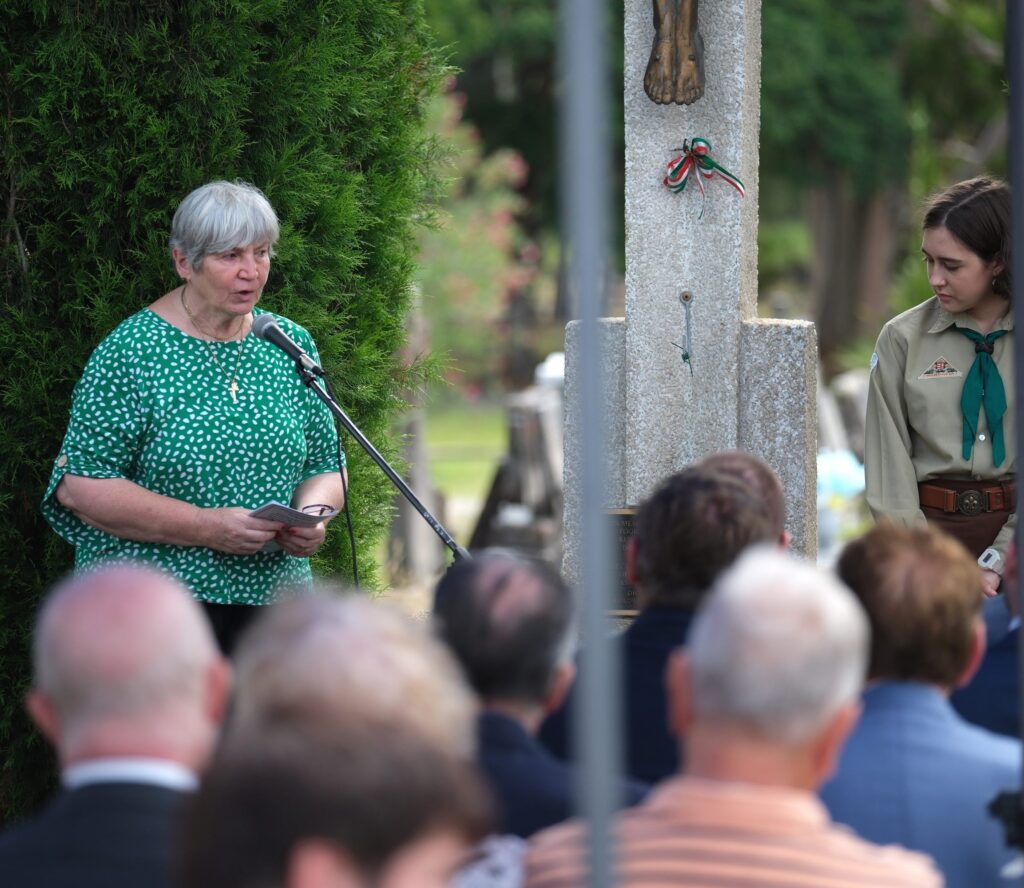
Kati: I would add that in 2024, for example, 22 new Cub Scouts appeared in the local scout troop. So the youth organizations do somehow bring in the young people. The Hungarian school does as well—many came to the Spring Festival, including people we had never seen before. Our son’s former classmate, for example, whom we hadn’t seen for 30 years, came with his family to the school tent. So we must give them opportunities and organize events that they will attend. During my previous presidency, we launched the Taste of Hungary festival in Sydney. It was a huge success, but we didn’t have enough helpers, and the local councils began demanding enormous sums just to allow gatherings in public parks, so it also became financially impossible, and we had to stop.
Guszti: What everyone must understand is this: you are the one people can count on. No one will do the work for you. It’s not enough to take your child to Hungarian school—you must get involved, contribute, and take part financially as well. And this is what many young people today lack, because they didn’t grow up in such environments. But here they are, eventually, forced to learn.
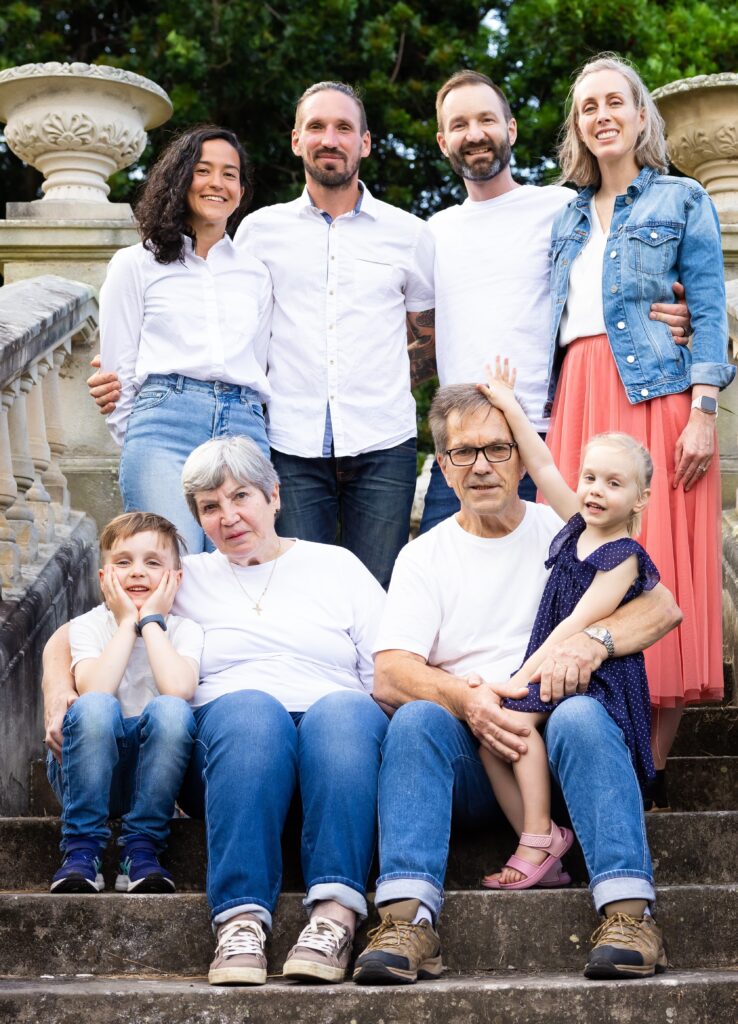
What about your children and grandchildren?
Kati: As I mentioned, both our sons attended Hungarian school, scouts, and the dance group, but since they didn’t find lasting friendships there, they didn’t remain in the Hungarian community. Péter lives in Sydney; his partner is from Brazil. He is now taking his master builder exams; the company he works for builds passive houses. They do not have children yet. He speaks Hungarian, but not as well as his older brother, who also has extraordinary musical talent.
Anthony worked for six years in the UK, where he met a Canadian woman. They lived for a year in Edmonton while she finished university, then moved to Calgary. They run a dental clinic together, led by our son, and she works there too. They have two children, Nathaniel and Evy. Unfortunately, they no longer speak much Hungarian, even though our son still speaks perfectly, but he has not managed to pass on the language. They speak French as well, so Hungarian would have been a third language, but their father was simply too busy.
Talking about passing on, does your radio team guarantee the next generation of broadcasters?
Kati: Not yet, but we are constantly searching.
Guszti: The situation is that we are doing the job too well. (laughs) The radio goes on air every weekend, yet people are less and less willing to join in and sacrifice time for the community. Until we find someone who falls in love with the radio—and through it, falls in love with the Hungarian community—we have no chance of ensuring the radio’s survival. We’ll keep doing it until the microphone falls out of our hands…
Related articles: