When one buys groceries, it is a pretty impersonal experience. You tap your card or hand over your cash, and you are done; the shop does not care about you.
But when you are buying a highly sophisticated weapon system, everybody notices. The seller notices that you have the money. Others notice that you are buying weapons. And the world notices that you want to use these weapons for certain goals, so to speak.
That is the hidden story of Hungary’s rearmament over the last ten years. We did not merely buy new toys for an army that badly needed them, but we substantially shaped our profile in the international system.
Hungary was known as a state that was selling its vast reserves of Soviet weaponry in the 1990s. The scale of disarmament may have been excessive, but the need was clearly there. While the country was, of course, buying some weapons in homoeopathic amounts, like the Gripens in the early 2000s, we needed to spend money on catching up to the West in economic development, not maintaining vast reserves of rusty Soviet machines.
Then, the Russian aggression against Ukraine since 2014 changed everything.
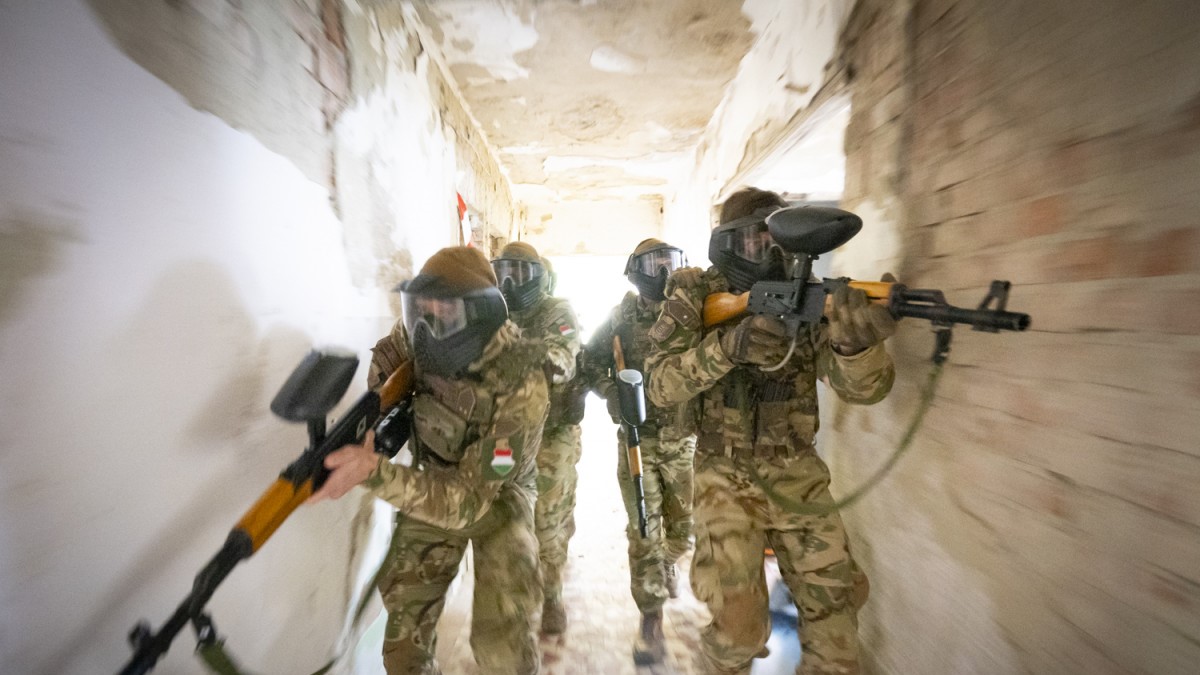
Hungary has since gone on a spending spree to build back an array of capabilities: tactical airlift, armour, artillery, while experimenting with the world of unmanned platforms as well.
‘Hungary has since gone on a spending spree to build back an array of capabilities’
Now, at the tail end of 2025, Hungary has built partnerships with both traditional and new partners.
The country bought German tanks, while Rheinmetall, the major German manufacturer, has a plant at Zalaegerszeg for its new Lynx APC (armoured personnel carrier) vehicles, and they are producing munitions at Várpalota as well.
Meanwhile, in Győr, the Turkish Ejder Yalçın company provided the know-how for the new Hungarian MRAP, the Gidrán.
We were also only the third country, after Brazil and Portugal, to buy the KC-390 planes, getting almost to the front of the long waiting list that developed after that. We now have Israeli missiles and radars as well. New acquisitions may be coming, too: Hungary is testing the successful Turkish Bayraktar drone, while developing reconnaissance UAV platforms of its own.
All across the region, countries are building new armament industries. Romania is building on traditionally good French industrial ties. Poland is experimenting with major Korean and American factories.
Hungary is looking to its traditional German suppliers, while also reaching beyond blocs to Türkiye and Brazil as well. This shapes the international standing of the country, showing that, for example, the close cooperation with Türkiye is bringing concrete results, not just rhetorical cheer. Getting the KC-390 so early showed that the country is open to experimenting with new suppliers without the anxiety of not considering traditional ones or signing up for platforms that may not live up to the promises.
In comparison with Poland, this is also a pattern of Central Europe discovering new industrial partnerships writ large. All of this is while keeping fealty to historical trading patterns as well.
The Hungarian military is noticing the vast amount of hulking metal machines streaming into garrisons as well. Before the Zrínyi programme, the goal was to keep the Hungarian approach to a minimum and rely on NATO.
‘Before the Zrínyi programme, the goal was to keep the Hungarian approach to a minimum and rely on NATO’
Hungary now presents itself as having credible defence capabilities, including its newly expanded reserve forces. The goal, of course, has not changed. Hungary is obviously not seen as a country planning any major aggression against its neighbours. NATO membership and the long-running close integration foreclosed any of those questions at least decades ago.
Of course, the question is money. Hungary has come a long way since the 2008 depression and has enjoyed hefty GDP increases. However, the country managed to keep its budget in reasonable order, not least because of relatively low defence spending levels. Now it faces the question that Europe as a whole faces: can it keep up with a much higher level of spending?
The question lies in its capability to secure a place in the supply chains of new technologies, which can boost GDP. And potentially, the armament industry can be a source of income as well in the long run.
As Europe rearms, Hungary tries to position itself as one of the winners of the new era, with old and new partners, and assertive strategies. That was the story so far. The country also has bold plans to maintain a robust army and ensure sound economic development at the same time. That will be the story for the coming years.
Related articles: