The United States released its new National Security Strategy, and the news has been hard at work pushing narratives of America’s abandonment of Europe. As an American who currently lives and works in Europe and previously served as a Director on President Trump’s most recent campaign, let me briefly summarize what this new strategy actually means, and what Europe should do about it.
First and foremost, this document should serve as proof once and for all for all the policy and academia hawks that, at least in the context of the United States, neoclassical realism, as it comes to the domestic attitudes of American voters, will serve as the primary predictors for how the US will behave in the alliance systems it helped create. Or, in Leyman’s terms, always pay attention to the perceptions of American voters if you want to know what President Trump or the US will do next.
Let me be clear: this strategy document does not call for the United States to abandon Europe; it simply puts pen to paper and underscores the transactional nature and the greater need for burden sharing that President Trump has publicly spoken about since the beginning of his second term. This strategy does not call for the abandonment of Europe, but the preservation of democratic Europe through the prevention of over-reliance on American commitments and calling for the reinvigoration of America’s European partners. This document should not shock anyone, least of all America’s allies in Europe. It simply states officially what has been stated plainly since January of this year.
‘This is not a dramatic shift in policy. Rather, it marks the end of a gradual process that has unfolded over decades’
America is going to place a greater emphasis on the direct security threats it faces in both Latin America and the Indo-Pacific region. However, this is not a dramatic shift in policy. Rather, it marks the end of a gradual process that has unfolded over decades. Americans’ dissatisfaction with their quality of life has grown in proportion to the drastic increase in military spending, rising from an average of $294 billion USD a year in 2000 to $916 billion USD in 2023. These factors have all led to an American electorate that demands a re-emphasis on what the American people perceive as a direct security threat to themselves first, and to demand increased burden sharing from America’s allies. These shifting attitudes were captured as early as 2018 when, in a Pew Research poll, only 30 per cent of respondents under 30 stated they believed America should remain the world’s security leader, and the vast majority believed the US should drastically reduce its military forces overseas.
Hindsight is always 20/20. Given the decisions being made, what should the nations of Europe do? Simply put, if the countries of Europe truly fear abandonment by the United States, they should first and foremost increase their share of the burden for their own security. And, great news, it seems like everyone is for the moment. However, if Europe not only wants to see the maintenance of, but the increase of American support, there are no greater examples than those of Estonia and Japan to follow.
From personal experience, both dealing with the countries of Europe and Asia professionally, whether it be working on various congressionally funded security programs I worked on in DC focusing on America’s alliances, or being a researcher at a think tank, Estonia and Japan have always stood out. Japan and Estonia, both frontline states facing militarily aggressive powers along their borders, depend on the US and others’ military aid to defend themselves. Logic would at first dictate that Estonia, a tiny nation of a million and a half people along Russia’s border, would forever be dependent on NATO and not a net contributor.
However, the opposite is true. Through skillful diplomacy and strategic resource allocation, Estonia has become a net security provider to the NATO alliance. From aiding the French in their African missions to providing cybersecurity expertise, Estonia has figured out the magic formula for filling its security gaps by securing others. So much so that, during President Trump’s first term back in 2020, I brought in the aforementioned security programs, taking elected and think tank officials from all across Europe to Estonia to be viewed as the model ally, in hopes that more of America’s allies would be as proactive as they were. (A proactivity that caused them to voluntarily increase their own defense spending to 3.2 per cent of GDP before Trump returned to the White House.)
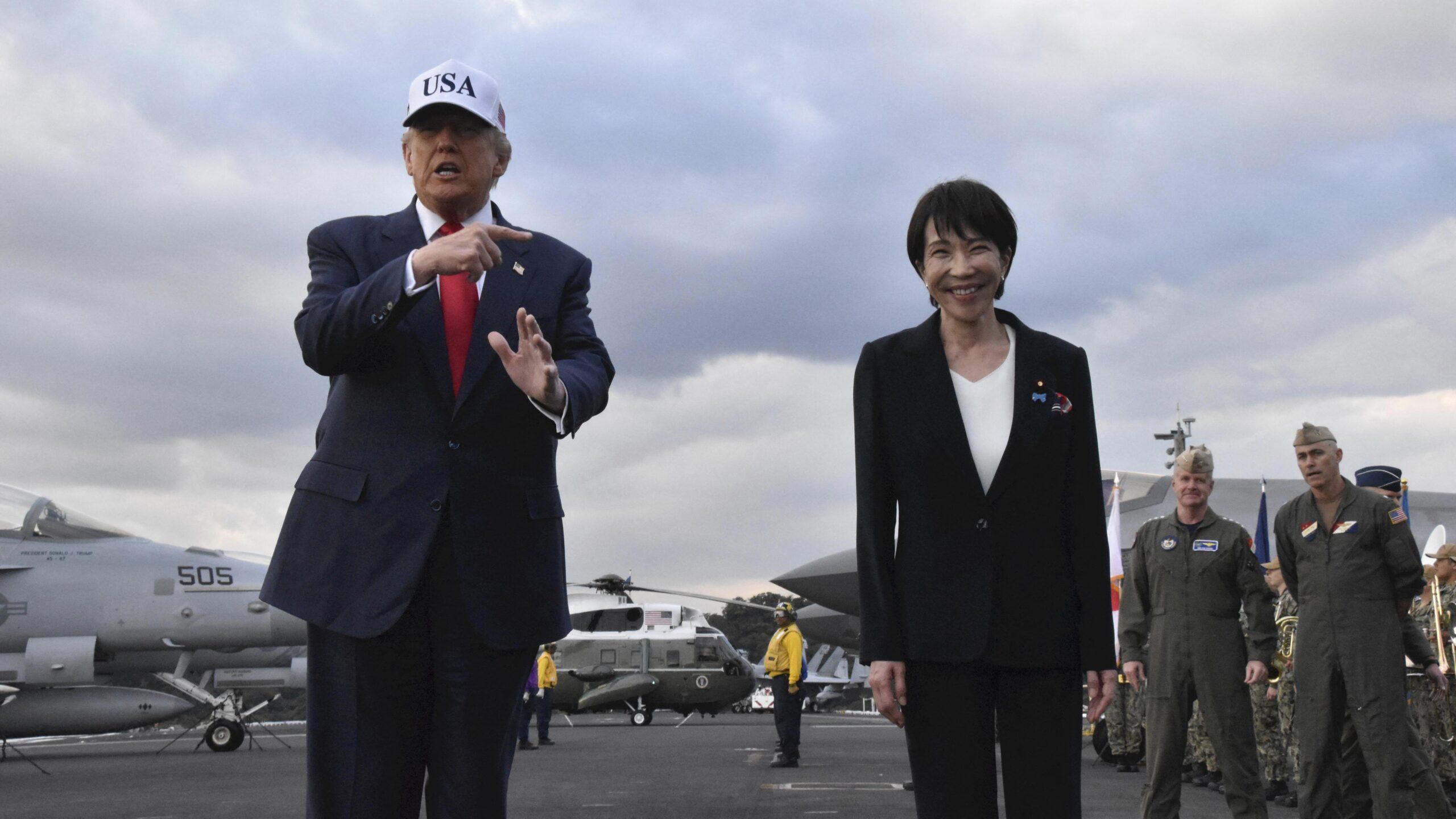
Similarly, Japan has managed to recapture American enthusiasm for the US–Japanese alliance. So much so that when I visited the US Embassy in Tokyo in late November of this year, the staff were quick to state that Japan was America’s greatest ally, period. The reason for this newfound enthusiasm? During President Trump’s meeting with Prime Minister Takaichi, she announced that Japan would increase its defense spending from 1.8 per cent to 2 per cent of GDP, not over the course of years, but by March of next year.
On top of this, Japan has been hard at work strengthening its alliances with other countries within the US-led security framework—forming stronger ties with Australia and countries like Indonesia, which has been music to Washington’s ears.
Given all this, what should the countries of Europe do to deal with America’s new transactional policies?
‘Specialize in that one facet that sets you apart, that the United States will see as an asset beyond the European theater’
First, each member state of the alliance, like Estonia, needs to identify the niche it can fill in providing security for NATO and aiding the United States in its foreign and security policy goals. Specialize in that one facet that sets you apart, that the United States will see as an asset beyond the European theater.
If you can identify your niche, whether it be in cybersecurity and troop deployments like Estonia, or specialization in AI or other new frontiers of warfare, double down on it.
Second, invest in the US defense industry and re-industrialization effort. The re-industrialization of the US is one of the primary security goals of President Trump. The more you invest in the US, the more the US will invest in you.
And this will work out for you greater in the long run. Remember, the Allies won WW2 in part due to American industry being able to constantly feed its allies in Europe and the Soviet Union with American-made military vehicles and ammunition.
Third, and possibly most importantly (though the toughest ask of the three): if the US says we should collectively increase defense spending to 5 per cent of GDP, go for 5.5 or 6 per cent. Just as the Estonians have been rewarded for their efforts in aiding the French in Africa and providing cyber expertise with a squadron of French and American fighter jets regularly patrolling Estonian skies, you go above and beyond for America—America will go above and beyond for you.
To be clear, America is not abandoning Europe; it is shifting its priorities to what Americans perceive as the greatest threats to their security. The US is here to stay in Europe, but it is looking to get the band back together and to lead a coalition of the willing and able as it did during the Cold War.
Related articles: