Transatlantic relations are witnessing their most tense period since US President Donald Trump took office for the second time in January 2025, after the European Commission decided on Friday to fine Elon Musk’s X under the Digital Service Act. The US billionaire described the fine as ‘bullsh*t’, framing it as an attack on free speech and American tech, a view echoed by high-ranking members of the Trump administration.
The European Commission fined X €120 million for breaching transparency and design rules under the Digital Services Act—in particular for misleading ‘blue-check’ verification, opaque ad-transparency practices, and restricting researcher access. Brussels launched its first-ever probe under the DSA in December 2023, and the current penalty is seen as a demonstration of the EU’s regulatory force over Big Tech.
While the investigation had already poisoned relations between the Commission and the Trump administration—even before the latter returned to power—Brussels likely underestimated the consequences of issuing the fine. Before the announcement, US Vice President JD Vance warned Brussels against imposing censorship on US firms, describing the potential fine as ‘garbage’. Secretary of State Marco Rubio criticized the move as more than a penalty for X, portraying it as ‘an attack on all American tech platforms and the American people by foreign governments’. US Ambassador to the European Union Andrew Puzder accused the EU of seeking to advantage European competitors over American firms.
US Deputy Secretary of State Christopher Landau went even further, openly questioning European allies’ role in NATO. In a post on X, Landau said that EU–US differences on key issues undermine the idea of a partnership despite the defence alliance. He argued that the EU’s regulatory stance threatens shared Western security and values.
‘When these countries wear their NATO hats, they insist that Transatlantic cooperation is the cornerstone of our mutual security,’ he wrote. ‘But when these countries wear their EU hats, they pursue all sorts of agendas that are often utterly adverse to US interests and security...This inconsistency cannot continue.’ He added: ‘We cannot pretend that we are partners while those nations allow the EU’s unelected, undemocratic, and unrepresentative bureaucracy in Brussels to pursue policies of civilizational suicide.’
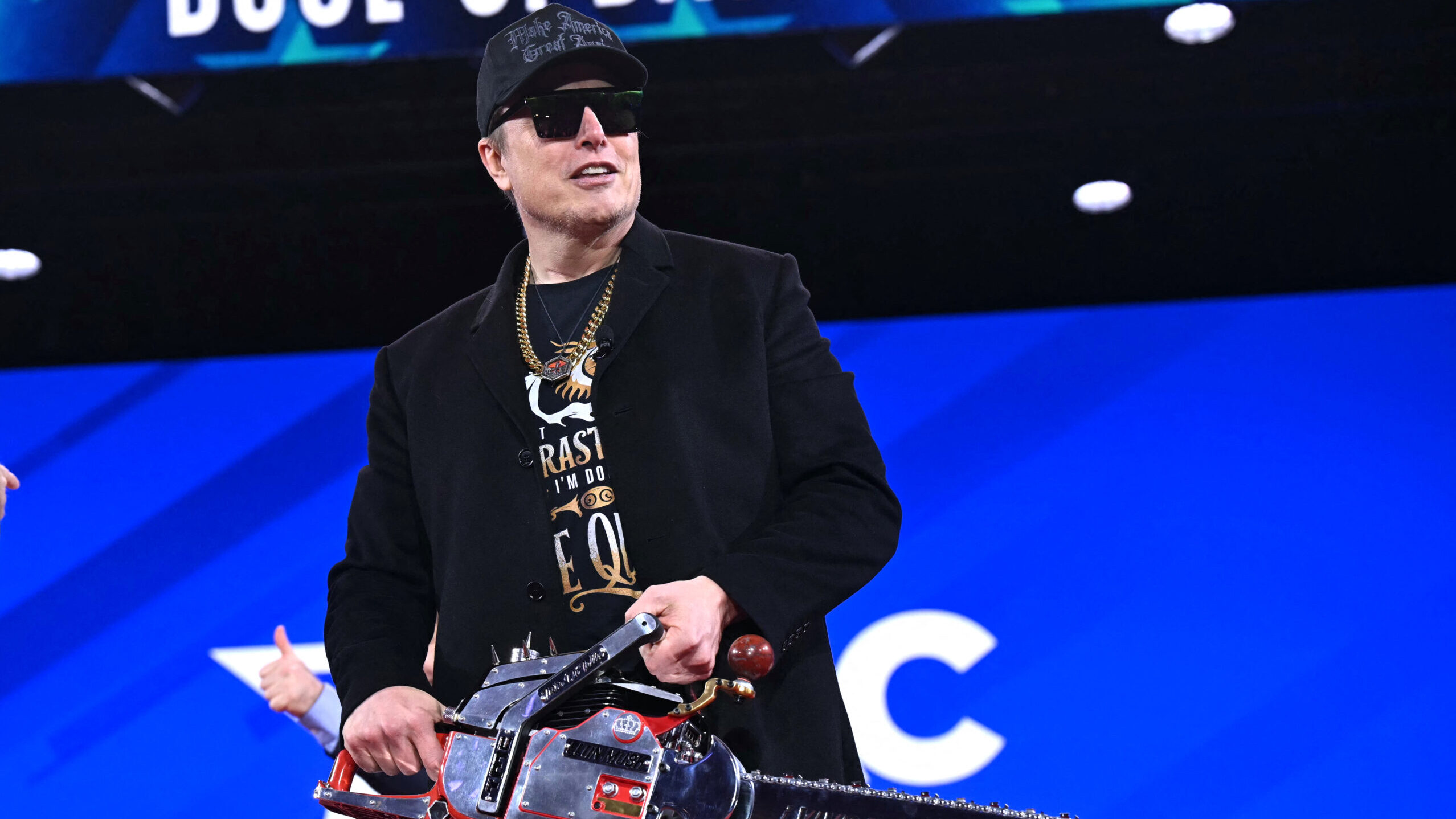
Musk, meanwhile, launched a direct counterattack against the European Union. Immediately after the announcement, X shut down the Commission’s ad account. Over the weekend, Musk flooded the platform with posts mocking the EU—in memes, calls to abolish the EU, and demands to restore sovereignty to member states. In one post, he compared the EU to the Third Reich, calling it a ‘tyrannical, unelected bureaucracy’.
Orbán Viktor on X (formerly Twitter): "The Commission's attack on X says it all. When the Brusselian overlords cannot win the debate, they reach for the fines. Europe needs free speech, not unelected bureaucrats deciding what we can read or say. Hats off to @elonmusk for holding the line. / X"
The Commission's attack on X says it all. When the Brusselian overlords cannot win the debate, they reach for the fines. Europe needs free speech, not unelected bureaucrats deciding what we can read or say. Hats off to @elonmusk for holding the line.
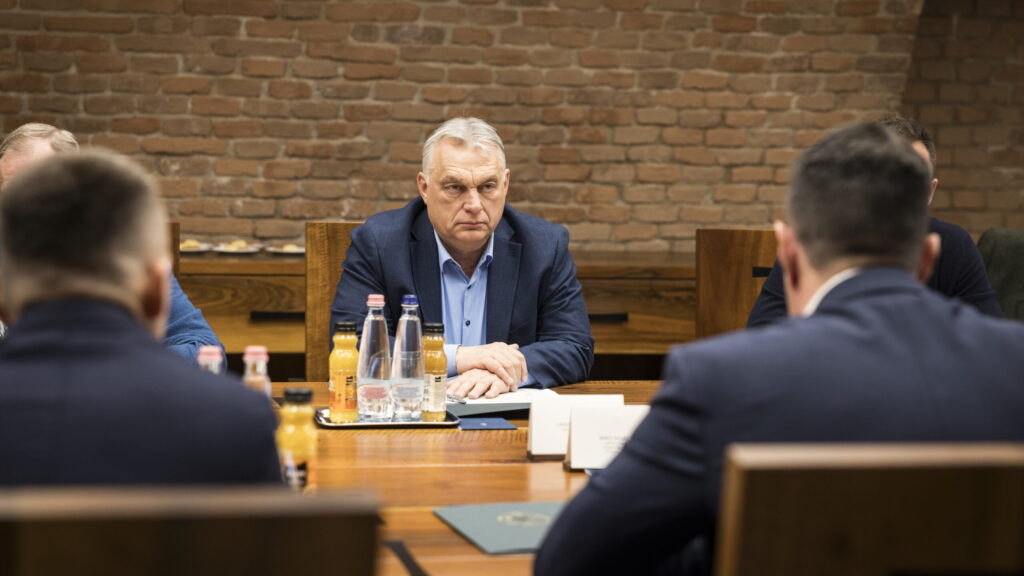
Hungarian Prime Minister Viktor Orbán, a close ally of both Trump and Musk, condemned the Commission’s actions. ‘When the Brusselian overlords cannot win the debate, they reach for the fines. Europe needs free speech, not unelected bureaucrats deciding what we can read or say,’ he wrote. ‘Hats off to @elonmusk for holding the line,’ Orbán added.
US lawmakers are already preparing a bill to protect US citizens from foreign censorship. The Guaranteeing Rights Against Novel International Tyranny and Extortion (GRANITE) Act—already enacted in Wyoming and proposed in New Hampshire—would strip foreign governments of sovereign immunity when they attempt to regulate or penalize US citizens or companies for speech or content, allowing those affected to sue foreign regulators in American courts.
Speaking to GB News, US Under Secretary of State Sarah B Rogers said efforts are under way to push the GRANITE Act before the House as a response to what she called overbroad foreign ‘online-safety’ laws. She warned that extraterritorial censorship of Americans is ‘a red line’ and ‘a deal-breaker’.
JavaScript is not available.
No Description
European Commission President Ursula von der Leyen has yet to issue a public response to the transatlantic accusations. However, prominent X accounts aligned with the progressive–mainstream EU establishment appeared to launch a coordinated counteroffensive, posting the EU flag with identical captions: ‘This is my flag. It stands for unity, freedom, peace, democracy, equality, civilization, diversity, rule of law, science, beauty and strength. There is nothing more important to fight for.’ Calls for EU politicians and institutions to leave X are also intensifying.
Léon Chaland 🇪🇺 on X (formerly Twitter): "This is my flag.It stands for unity, freedom, peace, democracy, equality, civilization, diversity, rule of law, science, beauty and strength.There is nothing more important to fight for. pic.twitter.com/vqQIiepSZa / X"
This is my flag.It stands for unity, freedom, peace, democracy, equality, civilization, diversity, rule of law, science, beauty and strength.There is nothing more important to fight for. pic.twitter.com/vqQIiepSZa
The fine came just a day after Trump’s new National Security Strategy was released, offering a stark critique of the EU’s migration policies and approach to free speech, warning that the continent could face ‘civilizational erasure’ if it continues along its current trajectory. The document explicitly encourages European right-wing, patriotic forces to promote what it describes as ‘shared transatlantic values’ of Christianity, national sovereignty and family. It also warns that, over the long term, certain NATO members will become majority non-European, raising the question of whether they will continue to view their global role—or their alliance with the US—in the same way as those who originally signed the NATO charter.
Meanwhile, negotiations continue on the new US–EU trade framework agreed by von der Leyen and Trump in July. During a visit to Brussels in late November, US Commerce Secretary Howard Lutnick openly criticized the EU’s digital rulebook, urging that ‘old cases’ be resolved as part of broader discussions on steel tariffs. He added that if the EU devises a regulatory system that Washington considers ‘balanced’ and fair, the US would be willing to ‘handle the steel and aluminium issues’—meaning reconsider tariffs or trade restrictions. After the fine, Lutnick wrote on X that the DSA is designed to stifle free speech and American tech companies. ‘We have made our position clear to our counterparts in Europe,’ he concluded.
Howard Lutnick on X (formerly Twitter): "The Digital Services Act is designed to stifle free speech and American tech companies. We have made our position clear to our counterparts in Europe. https://t.co/YCgosWMt8Y / X"
The Digital Services Act is designed to stifle free speech and American tech companies. We have made our position clear to our counterparts in Europe. https://t.co/YCgosWMt8Y
Related articles: