Next year will mark 40 years since the Hungarian national football team last appeared in a World Cup. The 1986 competition was not a successful one from any perspective: Hungary suffered a devastating 6–0 defeat to the Soviet Union in the group stage and were eliminated accordingly. Despite that, 1986 has taken on a transcendental meaning for every football-loving Hungarian over the past decades: it evokes the glorious days of the country’s rich and significant football history, from the Golden Team to our iconic Ferenc Puskás. Since 1986, generations of Hungarians have grown up wishing that they would once again see their national eleven compete on the biggest stage of world football—and this time it seemed realistically possible. However, a once-in-a-lifetime chance—or more accurately, once-in-generations—slipped away on 16 November.
Hungary hosted Ireland on Sunday afternoon in the last round of the qualification stage for the 2026 World Cup. With Portugal leading Group F, Hungary needed a win or a draw to finish second and advance to the playoffs to secure a place in next year’s competition.
For Ireland, trailing Hungary by one point before the game, a win was the only way to qualify, and the odds were against them. The two sides played a 2–2 draw in their first match in September in Dublin, and they arrived in Budapest having come from two very different previous rounds. While Hungary secured a mandatory victory in Armenia earlier that week, Ireland pulled off an upset win against Portugal at home, defeating Cristiano Ronaldo’s team 2–0.
These results arguably gave both teams very different mindsets heading into the match; nevertheless, we were playing at home, we had everyone available—including our Liverpool star captain Dominik Szoboszlai—and we were determined to make history yesterday.
And from the starting whistle, it truly felt as though we would. The atmosphere in the Ferenc Puskás Stadium, even through television screens, made it seem that Hungary was destined to finally break the 40-year-long World Cup drought. Thanks to Dániel Lukács’s header, Hungary was ahead as early as the third minute.
However, the answer came shortly thereafter: following a controversial penalty call by the referee, Troy Parrott equalized in the 15th minute. Despite that, the belief that Hungary would prevail did not fade. The team dominated Ireland, held possession, created chance after chance, and played high-level—some might even say world-class—football.
The performance was crowned by a spectacular strike from Barnabás Varga in the 37th minute, making it 2–1. The atmosphere was euphoric; my phone kept lighting up with messages in various chat groups, all expressing the same hope: a historic win that would bring us closer to our collective dream of reaching the World Cup.
Yet we all knew, deep down, that it was far from over. It is a universal truth in football that anything can happen until the final whistle, and many games are decided in the last ten minutes. This is particularly true for Hungarian football: for reasons we still cannot explain, we have repeatedly failed our most crucial matches in the closing minutes, even when leading. It happened against Portugal earlier in the qualification stage, and again in our first match against Ireland, when they equalized in the 93rd minute. Call it a curse or a lack of mental strength, but it is a defining characteristic of Hungarian football—and this time was no different.
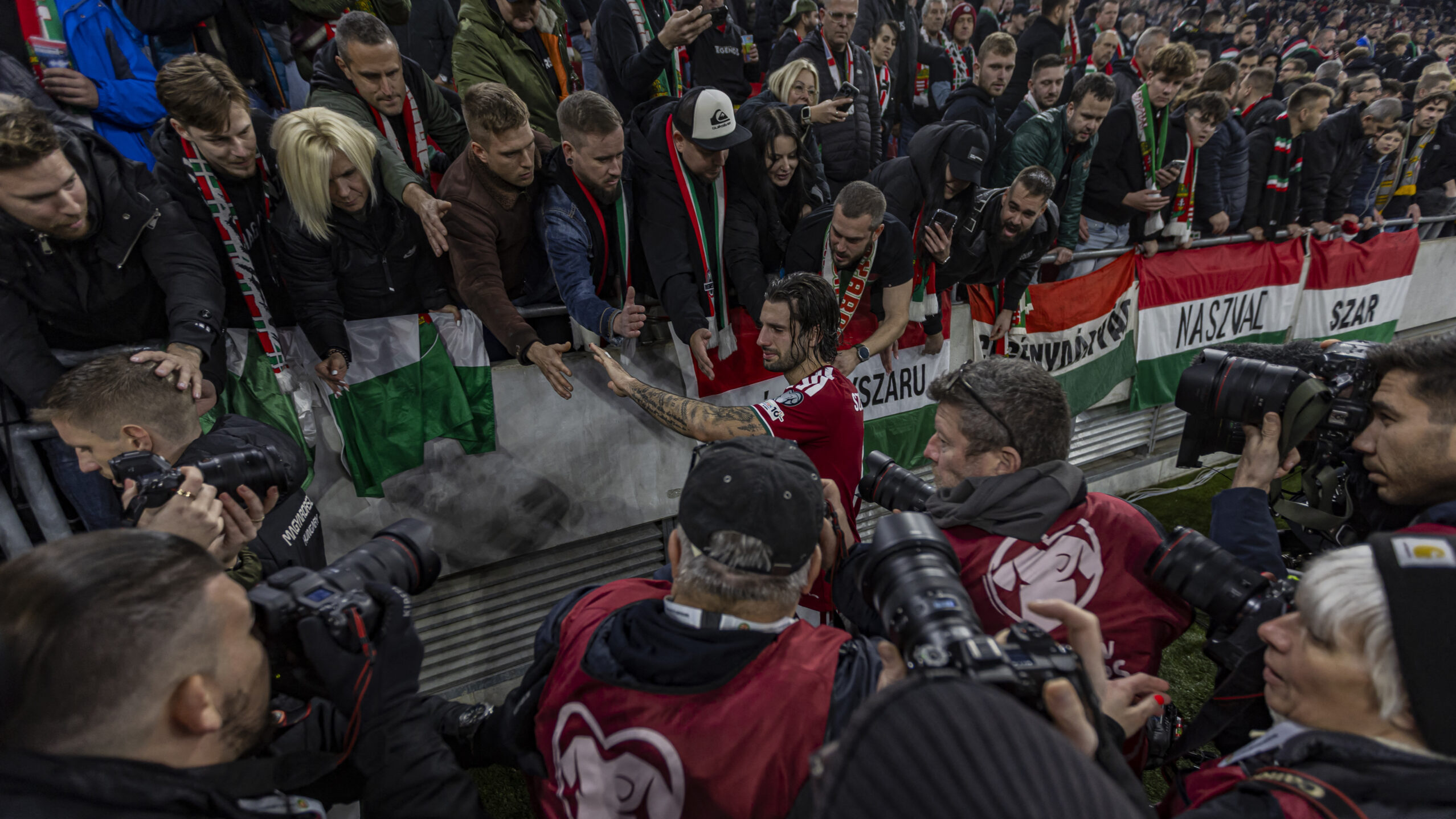
As soon as we entered the 80th minute, our World Cup dream began to crumble. Parrott equalized again to make it 2–2. In the final minute of stoppage time, he struck once more. It was over. Ireland won 3–2 and advanced to the playoff. The entire stadium fell from euphoria into dead silence in barely 15 minutes.‘I will not see our national team at a World Cup in my lifetime’—that was the first thought that entered my mind as I sat frozen, trying to process what had just unfolded before my eyes.
It is no exaggeration to say that, despite being only in my late twenties, I have already experienced a lifetime’s worth of devastating losses watching the Hungarian national team, including the 1–8 defeat to the Netherlands in 2013 and the loss to Andorra in 2017. Yet nothing comes close to the emotional blow of yesterday’s defeat—for me and for millions of fellow football-loving Hungarians. And it is not only the manner of the loss, but the realization of what is likely to follow: the understanding that we may have squandered our best chance in generations to qualify for a World Cup.
Before 2018, when Marco Rossi was appointed head coach, Hungarian football had been in a deep, decades-long crisis. After the fall of communism, the country’s club football suffered from financial troubles, the loss of state support, and the impact of the Bosman ruling, which weakened Hungarian clubs and, by extension, the national-team talent pool.
In 1996, the team hit its lowest-ever FIFA ranking at 87th (currently 37th). The atmosphere around the national team became one of repeated failure, low expectations, and embarrassment. You did not sit down to watch Hungary for the excitement or quality; you did it because it felt like a duty. That began to change somewhat after 2010, when Viktor Orbán’s government increased state support for football significantly—yet the results did not materialize until Rossi’s appointment.
‘For the first time in decades, Hungarians eagerly anticipated national-team matches, because there were finally real reasons to watch’
Then something arguably best described as the renaissance of Hungarian football began. Under Rossi, the team qualified for two consecutive European Championships, in 2020 and 2024; won its Nations League B Group; and began playing genuinely enjoyable football. We secured several major upset victories, including beating England twice (1–0; 4–0) and Germany (1–0) in 2022. The team finally looked like a decent, competitive side, with key players all in peak age, form, and position—this was the team that entered the 2025 World Cup qualifiers.
For the first time in decades, Hungarians eagerly anticipated national-team matches, because there were finally real reasons to watch. The hype and atmosphere surrounding the team—especially around Szoboszlai, who became the most expensive Hungarian player ever when he signed for Liverpool in 2023 for EUR 70 million—were unlike anything I had ever witnessed in my lifetime.
Four years from now, when the next World Cup qualification cycle begins, the spine of this team will be past its prime: Szoboszlai will be 30, Varga 35, Sallai 32, Schäfer 30, and so on. It is also entirely possible that Rossi will no longer be the head coach by then, and judging by the youth teams, with all due respect, it seems likely that a less skilled generation will replace the current one.
From our long, painful experience, we know how rare it is for all the necessary factors to align at once: a competent coach, several strong key players, exceptional cohesion and teamwork, and the special bond between fans and the team. It is very possible that we will not have such a successful national team again for another 30 years or more.
But that is the thrill of the beautiful game, isn’t it? Football would not be the world’s number one sport if it did not carry that unique emotional charge. And often, it is heartbreakingly unfair—for us Hungarians, perhaps more often than for others. The bleak scenario I described may well be the most realistic one, and we may indeed have to forget about the World Cup for generations.
However, that does not mean we will not sit down for the next match, just as we did on Sunday. We will be there. We will root for them. And we will continue to believe that one day Hungary will return to where it belongs: among the greatest football nations of history.
Related articles:
At a time when public debate is increasingly polarized and superficial, Hungarian Conservative remains committed to depth, intellectual honesty, and independent conservative thought.
Producing high-quality journalism requires resources. Your contribution helps us expand our coverage, reach new audiences, and keep our content accessible.

Please consider supporting our mission.